DIY Hydroponic Systems at Home: The Simple Beginner’s Guide

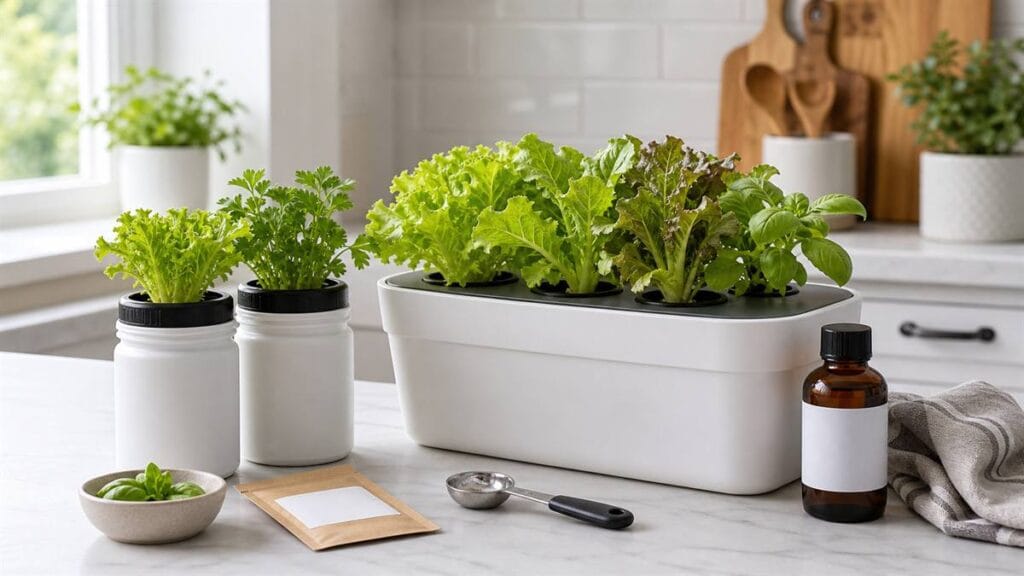
A DIY hydroponic system is a homemade setup that grows plants in water with nutrients instead of soil.

Unlike commercial kits, DIY systems use simple containers, basic materials, and straightforward designs. The goal is function, not aesthetics. Most DIY hydroponic systems rely on gravity, passive water movement, or minimal equipment rather than complex plumbing.

In practice, this usually means:

  • A container to hold water and nutrients
  • A way to support plants above the water
  • Light (sunlight or grow lights)
  • A nutrient solution designed for hydroponics

For beginners, the simplest systems are often the most reliable. You’re not trying to automate everything. You’re creating a stable environment where plants can grow consistently indoors.


How hydroponic systems work at home

Hydroponic systems work by delivering water, nutrients, oxygen, and light directly to plant roots.

In soil, roots search for nutrients. In hydroponics, nutrients are already dissolved in the water. This reduces guesswork and makes growth more predictable indoors.

At home, most hydroponic grow systems follow the same basic process:

  1. Plants sit in net cups or holders
  2. Roots extend into a nutrient solution
  3. Oxygen reaches roots through air exposure or water movement
  4. Light drives photosynthesis

For indoor hydroponic gardens, stability matters more than speed. You don’t need rapid circulation or high-pressure pumps. Many small home systems work well with still water and occasional maintenance.

Practical note: If a system requires constant monitoring to survive, it’s usually not beginner-friendly.


DIY hydroponic systems vs store-bought kits

DIY systems prioritize flexibility and simplicity, while store-bought kits prioritize convenience and design.

Here’s a clear comparison:

FeatureDIY Hydroponic SystemStore-Bought Countertop Kit
CostLow to moderateHigh upfront
CustomizationVery highLimited
RepairabilityEasyOften proprietary
Plant typesFlexibleOften restricted
Learning curveModerateLow initially

Store-bought kits can be useful for seed starting or herbs, but they often lock you into specific pods or replacement parts. DIY systems give you more control and scale more easily.

If you want a simple system designed specifically for food production rather than décor, a DIY approach is usually more sustainable long-term.


Types of DIY hydroponic systems

DIY hydroponic systems range from very simple passive setups to complex recirculating designs.

1. Passive water-based systems (simplest)

These systems use no pumps. Plants sit above a nutrient reservoir, and roots grow down into the water.

Best for:

  • Leafy greens
  • Beginners
  • Small spaces

This is often the easiest entry point into hydroponics for beginners.

2. Kratky-style systems (low-tech)

A variation of passive systems where water levels drop gradually as plants grow.

Pros:

  • No electricity required
  • Very low maintenance

Cons:

  • Less forgiving if water levels aren’t monitored

3. Wick systems

Nutrients travel upward through a wick material.

These work but tend to be slower and less consistent for food crops.

4. Recirculating systems (advanced)

Includes NFT or pumped systems.

Simple DIYComplex Recirculating
Few failure pointsMultiple failure points
QuietOften noisy
Beginner-friendlyExperience required

For most home growers, simple systems outperform complex ones in reliability.


Best DIY hydroponic system for small spaces

The best DIY hydroponic system for small spaces is a low-profile, horizontal system under 5 square feet.

Small space hydroponics works best when:

  • Plants grow outward, not upward
  • Systems are easy to access
  • Maintenance is minimal

Vertical towers look efficient but often create uneven lighting and maintenance issues. Horizontal systems are easier to manage indoors and fit well under shelves or along walls.

If you want the simplest small-space system, see this beginner-friendly indoor mini farm system.
[Internal link: /greens/]


Hydroponics for beginners: common mistakes

Most beginner problems come from overcomplicating the system.

Common mistakes include:

  • Adding pumps too early
  • Using too many nutrients
  • Growing fruiting plants first
  • Ignoring light quality

Hydroponic indoor gardens reward consistency. Leafy greens grow well even when conditions aren’t perfect. Tomatoes and peppers demand precision.

Practical rule: Start with plants that forgive mistakes.


Hydroponic seed starting

Hydroponic seed starting is easiest when seeds are started outside the main system.

A simple method:

  1. Start seeds in a hydroponic-friendly medium
  2. Keep moisture consistent
  3. Transplant once roots emerge

A hydroponic seed starter doesn’t need nutrients initially. Seeds contain enough energy to sprout on their own.

Once roots form, seedlings can move into your hydroponic grow system without shock.


Cost of DIY hydroponics at home

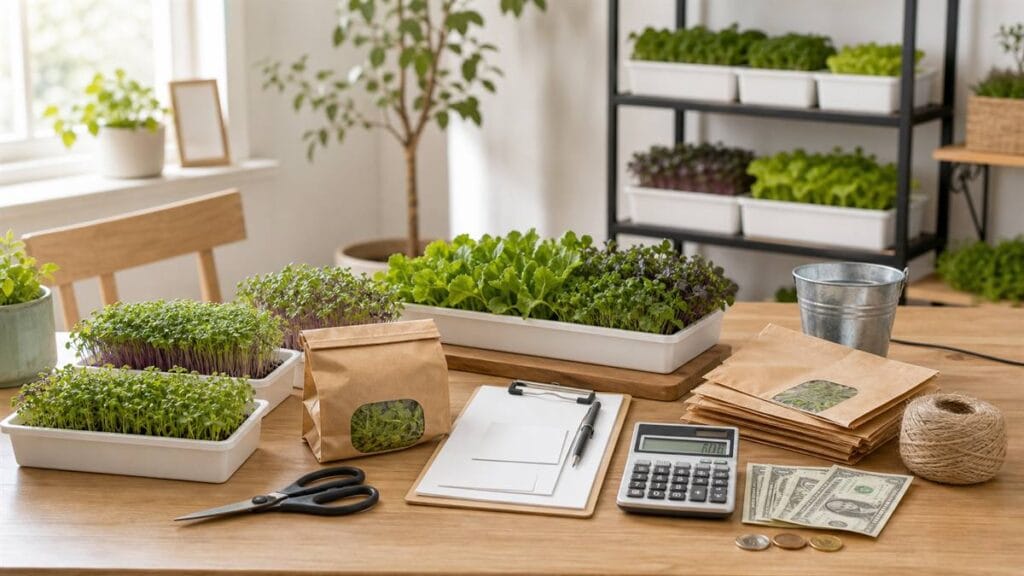
DIY hydroponics can cost anywhere from $40 to $200 depending on scale.

Typical costs:

  • Containers and plant holders
  • Nutrients
  • Lights (if no natural light)

Unlike store-bought kits, DIY systems don’t force recurring purchases. Most ongoing costs are limited to nutrients and electricity for lights.


Is DIY hydroponics worth it?

DIY hydroponics is worth it if you value reliability, food quality, and control.

It’s especially useful for:

  • Apartment dwellers
  • People without outdoor space
  • Anyone wanting year-round greens

For people interested in selling what they grow, see this guide on growing greens for income.
[Internal link: /grow/]


FAQs about DIY hydroponic systems

Is hydroponics hard for beginners?

No. Simple DIY hydroponic systems are often easier than soil gardening indoors because they remove guesswork around watering.

Can you do hydroponics without pumps?

Yes. Many beginner systems are passive and use no pumps at all.

How much space do you need?

Most small space hydroponics setups fit under 5 square feet.

What grows best in an indoor hydroponic garden?

Leafy greens, herbs, and fast-growing crops perform best indoors.

Do plants grown hydroponically taste different?

They often taste fresher because nutrients and water are consistent.

Is hydroponics expensive to maintain?

Ongoing costs are low once the system is built.

Do you need special seeds?

No. Standard seeds work fine for hydroponics.

How to Grow All Your Own Food on a Small Homestead (Even Without Land)

The phrase “grow all your own food” tends to conjure images of sprawling farms, root cellars, and people who’ve been doing this for generations. It feels big. Complicated. Like something that requires land you probably don’t have and time you definitely don’t.

Here’s what actually happens when you commit to it: you realize most of what your family eats can be grown in a surprisingly small space — and that the crops most worth growing are often the easiest. Fresh greens, herbs, cucumbers, tomatoes, beans. The things you buy every week at the grocery store. The things with the highest markup and the shortest shelf life.

This guide is the complete roadmap for growing as much of your own food as possible on a small homestead — or even a small yard, a balcony, or a spare room. We’ll cover what to grow, how to structure your production across seasons, when to use soil and when hydroponics makes more sense, and how to build toward genuine food self-sufficiency one step at a time.

Table of Contents

How Much Land Do You Actually Need?

The honest answer: less than you think, especially if you’re strategic about what you grow and how.

A family of four eating primarily vegetables, herbs, and greens can source a significant portion of their fresh produce from 200–400 square feet of well-managed growing space — especially when that space includes both outdoor beds and an indoor growing system. The key is focusing on high-yield, high-turnover crops rather than trying to grow everything.

The crops that make the most sense to grow yourself are the ones that are:

  • Expensive to buy organic — leafy greens, herbs, cherry tomatoes
  • Perishable — things that go bad before you use them, like fresh basil and salad greens
  • Space-efficient — crops that produce a lot of food in a small footprint
  • High-frequency — things your family eats every week, not occasionally

Calorie crops — grains, potatoes, dried beans — require much more space and are cheap to buy. Most small homesteaders are better served buying those and growing the high-value fresh crops themselves.

What to Grow First: The High-Value Crops

If you’re working with limited space, prioritize crops where growing your own makes the biggest financial and quality difference.

CropGrocery Cost (organic)Yield Per 4 sq ftGrow Method
Salad greens / lettuce$4–$7/head4–6 heads per cycleIndoors (hydroponic) or raised bed
Fresh basil$3–$5/bunchContinuous harvestIndoors (hydroponic) year-round
Cherry tomatoes$4–$6/pint10–20 lbs per seasonOutdoor raised bed or container
Cucumbers$1.50–$3 each15–25 per plantOutdoor trellis or container
Kale / spinach$3–$5/bunchContinuous cut-and-come-againIndoors year-round or outdoor seasonal
Green beans$3–$5/lb1–2 lbs per plantOutdoor raised bed
Zucchini$2–$4 each8–12 per plantOutdoor (needs space)
Fresh herbs (mixed)$2–$4/bunchContinuous harvestIndoors year-round

Notice the pattern: the best crops to grow yourself are either high-value greens and herbs (where indoor hydroponics excels year-round) or outdoor fruiting vegetables (tomatoes, cucumbers, beans) that produce prolifically during the warm season.

Growing Food Year-Round: The Seasonal System

True food self-sufficiency requires growing in every season — not just summer. The key is understanding which crops suit which seasons, and plugging the gaps with indoor growing.

Spring (March–May)

Start cool-weather crops outdoors as soon as the ground can be worked: lettuce, spinach, kale, peas, radishes, arugula, chard. These crops bolt in summer heat, so planting them early gives you a productive window before temperatures rise. Simultaneously, start tomatoes, peppers, and cucumbers indoors under grow lights to transplant after the last frost.

Your indoor hydroponic system keeps running through spring, bridging the gap between winter and the first outdoor harvests.

Summer (June–August)

Peak outdoor season. Fruiting crops — tomatoes, cucumbers, beans, zucchini, peppers — produce abundantly. Harvest daily to keep plants producing. This is also the season to preserve: can tomatoes, freeze beans, dry herbs. The work you do in summer extends your harvest into fall and winter.

Shift your indoor hydroponic system to heat-tolerant crops during summer: basil loves the warmth and grows explosively. Keep greens going indoors in an air-conditioned space if possible.

Fall (September–November)

A second cool-weather window. Replant spinach, kale, lettuce, and arugula outdoors for a fall harvest. Many fall crops are sweeter than their spring counterparts — frost actually improves the flavor of kale, Brussels sprouts, and carrots. Plant garlic in October for harvest the following summer.

Winter (December–February)

This is where indoor growing becomes essential. Unless you have a greenhouse or live in a mild climate, outdoor production stops. Your indoor hydroponic system is what keeps fresh greens and herbs on the table through winter — the indoor hydroponic garden setup runs completely independent of outdoor conditions and produces just as well in January as in July.

Indoor vs. Outdoor: Using Both Strategically

The most productive small homesteads don’t choose between indoor and outdoor growing — they use both for what each does best.

Grow IndoorsGrow Outdoors
Lettuce and salad greens (year-round)Tomatoes, peppers, cucumbers (summer)
Fresh herbs — basil, cilantro, mint (year-round)Beans, peas (spring/fall)
Kale, spinach, chard (year-round)Zucchini, squash (summer)
Watercress, arugula (year-round)Root vegetables — carrots, beets (spring/fall)
Seedling starts for outdoor transplantingGarlic, onions (fall planting, summer harvest)

The indoor system fills the gap that every outdoor garden has: winter. It also means you never run out of salad greens or herbs regardless of what’s happening outside. That continuity is what makes the difference between “we have a garden” and “we actually feed ourselves from it.”

Where Hydroponics Fits In

Soil gardening outdoors is excellent for fruiting crops, root vegetables, and large-volume production. But for leafy greens and herbs grown indoors year-round, hydroponics outperforms soil in almost every measurable way: faster growth, no pests, no mess, minimal water use, and consistent results regardless of season.

A simple Kratky passive hydroponic system — no pump, no electricity beyond a grow light — can produce a continuous supply of lettuce and herbs from a single shelf. Scale up to two or three shelving units and you’re producing more fresh food than most families can eat.

For a full breakdown of how hydroponics works and the best beginner systems, the complete DIY hydroponics guide covers everything from first setup to ongoing harvest.

The crops that benefit most from moving indoors to hydroponics:

  • Lettuce — year-round, 30–45 days per cycle, no outdoor space needed
  • Basil — continuous harvest, thrives under grow lights
  • Spinach and kale — grow faster hydroponically than in soil, even in winter
  • Watercress and arugula — premium crops rarely available fresh locally

Small Homestead Garden Layout

How you arrange your growing space matters as much as what you grow. Here’s a layout that maximizes production from a small footprint — around 200–400 square feet outdoors plus an indoor shelf system.

Raised Bed Zone (Outdoors)

Two to four 4×8 ft raised beds give you 64–128 sq ft of highly productive growing space. Raised beds warm up faster in spring, drain better than in-ground beds, and can be intensively planted — no wasted space for walking rows. Fill with a quality mix of compost, topsoil, and perlite.

Dedicate one bed to perennial crops that come back every year: asparagus, strawberries, perennial herbs like thyme and oregano. Rotate the remaining beds between heavy feeders (tomatoes, squash), light feeders (beans, greens), and root crops to maintain soil health.

Vertical Growing Zone

Any fence, wall, or trellis structure is untapped growing space. Cucumbers, pole beans, and even small squash varieties grow vertically, freeing up ground space for other crops. A 6-ft trellis along a fence line can support 4–6 cucumber plants and produce more than a 4×4 bed of the same crop planted flat.

Container Zone (Patio or Balcony)

Large containers (5-gallon minimum, 15-gallon for tomatoes) expand your growing space onto hard surfaces — patios, driveways, balconies. Cherry tomatoes, peppers, and herbs all do well in containers. Container-friendly crops are a great complement to raised bed production.

Indoor Growing Zone

A wire shelving unit with LED grow lights in a spare room, basement, or garage corner. This is your year-round greens and herb production — running continuously regardless of what’s happening outdoors. Two shelves with one tote per shelf can supply a family’s entire salad and herb needs.

Preserving the Harvest: Stretching What You Grow

Growing food is only half the equation. Preserving the summer surplus extends your harvest through the months when outdoor production is low or nonexistent.

Easiest Preservation Methods for Small Homesteaders

  • Freezing — The simplest method. Blanch and freeze beans, kale, spinach, peas, and corn. Freeze tomatoes whole for winter soups and sauces. Freeze herb-infused oils and butters.
  • Canning — Best for tomatoes, pickles, jams, and salsa. Requires more equipment and technique but produces shelf-stable food that lasts 1–2 years.
  • Drying/dehydrating — Perfect for herbs, hot peppers, tomatoes, and beans. A basic food dehydrator ($30–$60) handles most home production needs.
  • Root cellaring — Winter squash, potatoes, carrots, beets, and garlic store well in a cool, dark location. No equipment needed beyond a suitable space.
  • Fermentation — Sauerkraut from cabbage, kimchi, fermented pickles. Requires only salt and a jar. Preserves food and adds probiotics.

The Self-Sufficiency Math

Let’s put real numbers to what a small growing operation can actually produce and save.

SourceWhat It ProducesAnnual Grocery Value
Indoor hydroponic shelf (2 totes)Lettuce and herbs year-round$600–$1,200
Two 4×8 raised bedsTomatoes, cucumbers, beans, greens$800–$1,500
Vertical trellis (6 ft)Cucumbers, pole beans$200–$400
4–6 containersCherry tomatoes, peppers, herbs$300–$600
Preserved summer surplusFrozen vegetables, canned tomatoes$300–$700
Total$2,200–$4,400/year

That’s $2,000–$4,000 a year in grocery savings from a setup that fits in a small backyard and a spare shelf indoors. For a family spending $800–$1,200/month on groceries, that’s a meaningful reduction — and it grows each year as you refine what you grow and how you preserve it.

When You Grow More Than You Can Eat

Most serious home growers hit a point where they produce more than their family can consume. That surplus is an opportunity.

The indoor hydroponic side of a small homestead is particularly well-suited to selling, because the output is consistent and predictable year-round — you’re not at the mercy of a good or bad outdoor season. Neighbors who want fresh, local produce are often happy to pay $30–$50 for a ready-to-harvest living lettuce tote they can keep on their windowsill for weeks.

That model — selling living plants rather than harvested produce — is what makes indoor growing profitable without requiring a farmer’s market booth or restaurant accounts. It’s the system behind the Indoor Mini Farm System, which walks through exactly how to structure a small neighborhood selling operation alongside your regular family growing.

And if the food savings angle resonates more than the income angle, the greens-focused overview breaks down exactly what an indoor growing system saves a family per month in real grocery costs.

Frequently Asked Questions

How much land do you need to grow all your own food?

For a complete caloric diet — all food including grains and protein — estimates range from half an acre to several acres depending on growing methods and diet. But for the high-value fresh produce that makes the biggest dent in a family grocery bill (greens, herbs, tomatoes, cucumbers), 200–400 square feet outdoors plus an indoor growing system is genuinely sufficient for a family of four.

What are the most productive crops for a small homestead?

Lettuce and salad greens, fresh herbs (especially basil), cherry tomatoes, cucumbers, zucchini, kale, and pole beans consistently deliver the highest value per square foot for small homesteaders. These crops are expensive to buy, perishable, and grow prolifically in small spaces — especially when combined with indoor hydroponic production for greens and herbs year-round.

Can you grow food year-round without a greenhouse?

Yes — with an indoor hydroponic growing system. Greens, herbs, and many vegetables grow just as well indoors under LED grow lights as they do in a greenhouse, at a fraction of the cost. An indoor shelf setup running year-round eliminates the seasonal gap that makes “growing your own food” feel incomplete for most people in northern climates.

Is it cheaper to grow your own food?

For high-value crops like organic salad greens, fresh herbs, cherry tomatoes, and cucumbers — yes, significantly cheaper after the first season’s setup costs. The ongoing cost of running a small raised bed and indoor hydroponic system is typically $20–$50 per month, producing food worth $200–$400 at grocery store prices. The savings compound each year as you improve your system and preservation skills.

What’s the easiest way to start growing your own food?

Start with one thing done well rather than trying to do everything at once. Either: (1) build a single indoor hydroponic tote for year-round lettuce and herbs — results in 30–45 days, minimal investment, and teaches the fundamentals — or (2) build one raised bed outdoors and plant the crops your family eats most. Master one before expanding to the other.


Growing your own food doesn’t require a farm or a perfect climate. It requires a system — one that uses both indoor and outdoor space strategically, produces in every season, and focuses on the crops that actually move the needle on your grocery bill. If you’re ready to start with the indoor piece, the Indoor Mini Farm System is the complete guide to getting a productive system running fast.

Container Gardening for Beginners: Grow Real Food Anywhere

Most gardening advice assumes you have a backyard. A patch of earth. Somewhere to put raised beds and drive stakes for tomato cages. But a huge portion of people who want to grow their own food live in apartments, townhouses, or homes with a concrete patio and not much else.

Container gardening is the answer — and it works better than most people expect. I’ve grown enough cherry tomatoes in a 15-gallon pot to supply my family through most of the summer. I’ve had basil in a 5-gallon bucket that outlasted three store-bought plants. And I’ve watched neighbors with nothing but a south-facing balcony grow more cucumbers than they knew what to do with.

This guide covers everything a beginner needs to know to start growing food in containers — what containers to use, what soil to fill them with, which crops work best, and how to keep everything alive without it becoming a second job.

Table of Contents

Why Container Gardening Works

Growing in containers isn’t a consolation prize for people without a yard. It has genuine advantages over in-ground gardening in many situations:

  • Total control over soil quality — You fill the container with exactly what the plant needs. No rocky clay, no compacted subsoil, no drainage problems.
  • Mobility — Move plants to follow the sun, bring them in before a frost, rearrange as needed.
  • Fewer soil-borne pests and diseases — Fresh potting mix in a clean container starts pest-free every season.
  • Works anywhere — Patio, balcony, rooftop, driveway, fire escape. Any surface that can hold weight and receives light.
  • Easy to scale — Start with two pots. Add more as you get comfortable. No commitment to permanent beds.

The limitations are real too — containers dry out faster than in-ground beds, need more frequent fertilizing, and limit root space for large crops. But for most vegetables and all herbs, these are manageable tradeoffs.

Choosing the Right Containers

Size is the most important factor. The single biggest container gardening mistake beginners make is choosing pots that are too small. Roots need room to grow, and small containers dry out in hours during summer heat.

CropMinimum Container SizeNotes
Herbs (basil, cilantro, chives)1–2 gallonCan share a larger pot
Lettuce and salad greens2–5 gallonWide, shallow containers work well
Spinach, kale, chard5 gallonDeeper is better for kale
Cherry tomatoes10–15 gallonBigger = better yield. Don’t undersize.
Full-size tomatoes15–20 gallonNeed strong support too
Cucumbers5–10 gallonTrellis or cage required
Peppers5–10 gallonExcellent container crop
Bush beans5–7 gallonWide container, multiple plants
Zucchini15+ gallonVery large plant — needs space

Container Materials

Plastic pots — Lightweight, inexpensive, retain moisture well. The standard choice for most container gardeners. Look for food-safe plastic if you’re concerned about leaching (most nursery pots are fine).

Fabric grow bags — Excellent drainage and air pruning of roots (prevents root circling). Affordable, collapsible for storage. Dry out faster than plastic, so water more frequently in hot weather.

Terracotta — Beautiful but heavy and dries out very quickly. Better for herbs that prefer drier conditions (rosemary, thyme) than for moisture-loving vegetables.

Food-safe buckets — 5-gallon buckets from hardware stores work perfectly for most vegetables. Drill 4–6 drainage holes in the bottom. Cheap, durable, and stackable.

Whatever you have — Old colanders, wooden crates lined with burlap, galvanized tubs, even grow bags made from burlap feed sacks. Container gardening is forgiving of improvisation as long as there’s adequate drainage and volume.

Drainage Is Non-Negotiable

Every container must have drainage holes. Roots sitting in waterlogged soil rot quickly. If a container doesn’t have holes, drill or punch them before planting. Don’t put gravel at the bottom — it doesn’t improve drainage and actually raises the water table inside the pot.

The Right Soil Mix for Containers

Never use garden soil or topsoil from your yard in containers. It compacts, drains poorly, and often introduces pests and diseases. Container plants need a light, well-draining mix that holds moisture without becoming waterlogged.

A Simple DIY Container Mix

Equal parts of:

  • Quality potting mix (not “potting soil” — the mix, which is lighter and airier)
  • Perlite — improves drainage and aeration
  • Compost — adds nutrients and beneficial biology

This mix drains well, holds enough moisture between waterings, and provides a good nutrient base. It works for vegetables, herbs, and flowers alike.

For a pre-made option, a quality premium potting mix (FoxFarm, Black Gold, or similar) is excellent out of the bag and doesn’t require amendment for most crops.

Best Crops for Container Gardening

Absolute Beginners: Start Here

Cherry tomatoes are the gateway crop for container gardeners. Varieties like ‘Tumbling Tom,’ ‘Sweet 100,’ and ‘Sun Gold’ were practically bred for container growing — compact, prolific, and forgiving. A 15-gallon pot in full sun produces more tomatoes than most families can eat fresh, with plenty for sauce and preserving.

Basil grows so well in a pot that it becomes almost effortless. One large basil plant in a 2-gallon pot, harvested regularly by pinching the tips, provides all the fresh basil most families need through the season.

Lettuce and salad greens are ideal for wide, shallow containers — even window boxes. They don’t need deep root space, grow quickly, and can be harvested leaf by leaf for weeks. In hot climates, move the container to afternoon shade to prevent bolting.

High Reward for a Little More Effort

Cucumbers grow vertically, so a 5–10 gallon pot against a fence or trellis produces an impressive harvest from a small footprint. Water consistently — uneven watering causes bitter fruits.

Peppers — both sweet and hot — are outstanding container crops. They’re compact, heat-loving, and productive over a long season. A single pepper plant in a 7-gallon pot will produce more than most families use fresh.

Kale and chard in a 5-gallon pot can be harvested repeatedly for months as a cut-and-come-again crop. Start them in early spring, harvest outer leaves through fall.

Avoid in Containers (Usually)

Corn, melons, full-size pumpkins, and indeterminate tomato varieties in anything smaller than a 20-gallon container. These crops need significant root space and won’t perform well when constrained. Stick to compact or dwarf varieties if you want to try them.

Watering: The Most Common Mistake

Inconsistent watering is the leading cause of container gardening failures. Containers dry out much faster than in-ground beds — especially in summer heat, especially in fabric grow bags, especially with large thirsty plants like tomatoes.

How to Know When to Water

Stick your finger 2 inches into the soil. If it’s dry at that depth, water thoroughly. If it’s still moist, wait. This simple check beats any schedule because it responds to actual conditions rather than the calendar.

In peak summer heat, large containers with fruiting crops may need watering daily. Smaller herb pots may need it every 2–3 days. Check rather than guess.

How to Water Properly

Water slowly and deeply until it runs freely from the drainage holes. This ensures the entire root zone is moistened and flushes any salt buildup from fertilizers. Shallow watering that only wets the top inch encourages roots to stay near the surface, making the plant more vulnerable to drying out.

Self-Watering Containers

Self-watering containers have a reservoir at the bottom that wicks water up to roots as needed. They dramatically reduce watering frequency and are excellent for tomatoes and peppers, which need consistent moisture. Worth the slightly higher upfront cost if you travel or have a busy schedule.

Fertilizing Container Plants

Nutrients wash out of containers faster than in-ground soil — every time you water, some fertility leaches through the drainage holes. Container plants need regular feeding to maintain productivity through the season.

  • Slow-release granular fertilizer — Mix into the potting medium at planting time. Feeds plants for 3–6 months with no further attention. Good base-level nutrition.
  • Liquid fertilizer — Applied every 2–4 weeks during the growing season. More precise and immediately available to plants. Fish emulsion and liquid kelp are good organic options; balanced synthetic fertilizers work faster.
  • Compost top-dressing — Add an inch of compost to the surface of containers each season. Feeds plants slowly and improves soil structure.

Watch your plants: pale yellow leaves often indicate nitrogen deficiency (needs more fertilizer); purple-tinged leaves often indicate phosphorus deficiency; brown leaf edges can mean over-fertilizing or inconsistent watering.

Sunlight and Placement

Most vegetables need 6–8 hours of direct sunlight per day. This is the constraint that determines what you can grow more than anything else.

Light LevelHours of Direct SunWhat You Can Grow
Full sun6–8+ hoursTomatoes, peppers, cucumbers, beans — everything
Partial sun4–6 hoursLettuce, spinach, kale, chard, herbs (most)
Partial shade2–4 hoursLettuce, mint, chives, parsley — shade-tolerant crops only
Full shade<2 hoursVery limited. Consider an indoor setup with grow lights instead.

If your outdoor space doesn’t get adequate sun, the most practical solution is to move growing indoors with artificial lighting. A simple LED grow light setup produces excellent results for leafy greens and herbs regardless of your home’s orientation — and it works year-round, not just in summer. That’s where an indoor hydroponic garden becomes the better tool for the job.

Container Garden Setups for Small Spaces

Apartment Balcony (50–100 sq ft)

Use railing planters for herbs and trailing plants. Stack containers vertically with a tiered plant stand. One or two large containers (15 gallon) for cherry tomatoes or cucumbers. Stick to compact varieties bred for containers. Check weight limits if you’re stacking heavy pots on a balcony.

Patio or Driveway (100–300 sq ft)

A rolling cart or plant trolley lets you move large containers to chase sun across the day. Group containers close together to reduce evaporation. A simple DIY self-watering container system using 5-gallon buckets nested inside each other creates excellent moisture management for almost no cost.

Small Backyard With Limited Sun

Grow shade-tolerant crops (lettuce, kale, herbs) in the shadier spots. Use containers to move sun-loving crops (tomatoes, peppers) to whatever patches of full sun you do have — even if it’s just the sunniest corner of the yard. Supplement with an indoor growing setup for year-round greens.

When to Upgrade to Hydroponics

Container gardening is excellent for outdoor crops — tomatoes, peppers, cucumbers, and herbs in the warm season. But it has one significant limitation: it doesn’t work well indoors for year-round growing, because soil-based containers are messy, heavy, attract fungus gnats, and don’t perform well under artificial light.

That’s the gap hydroponics fills. For indoor year-round growing of leafy greens and herbs, a simple Kratky hydroponic system outperforms soil containers in every meaningful way — faster growth, no pests, no mess, and consistent results in any season. Many home growers end up with both: containers outdoors for summer vegetables, hydroponics indoors for year-round greens. It’s a natural and very effective combination.

For a full picture of the best crops to grow in each system and how they complement each other, the crop selection guide covers both approaches side by side.

And if you’re curious what it looks like when indoor growing goes beyond feeding your family and starts generating a small income from selling living plants to neighbors — the Indoor Mini Farm System is the complete guide to that model.

Frequently Asked Questions

What is the easiest vegetable to grow in containers?

Cherry tomatoes, lettuce, and herbs (especially basil) are consistently the easiest and most rewarding container vegetables for beginners. Cherry tomato varieties like ‘Tumbling Tom’ and ‘Sweet 100’ are compact, prolific, and forgiving. Lettuce grows quickly in any wide, shallow container and can be harvested leaf by leaf for weeks.

Can you grow tomatoes in containers?

Absolutely — cherry tomatoes especially. Use at least a 15-gallon container, a quality potting mix, consistent watering, and full sun (6–8 hours). Support the plant with a stake or cage. Choose compact varieties labeled “determinate” or “patio” for best results in containers. Full-size indeterminate tomatoes can be grown in containers but need at least 20 gallons and significant support.

How often should I water container vegetables?

Check rather than schedule — stick a finger 2 inches into the soil and water when it’s dry at that depth. In summer heat, large containers may need daily watering. Smaller pots and cooler weather require less frequent watering. The goal is consistent moisture without waterlogging — let the soil guide you rather than the calendar.

What soil should I use for container gardening?

Use a quality potting mix — not garden soil or topsoil, which compacts and drains poorly in containers. A mix of potting mix, perlite, and compost in equal parts is excellent DIY option. Pre-made premium potting mixes (FoxFarm, Black Gold) work well straight from the bag for most vegetables.

Can I do container gardening without a balcony?

Yes — a sunny windowsill handles herbs and lettuce. A grow light opens up almost any indoor space for year-round growing. If you have no outdoor space at all, an indoor hydroponic setup is often more practical than trying to grow in containers indoors with natural light alone. Many people in apartments without outdoor access run productive indoor growing systems year-round using LED grow lights and a simple hydroponic setup.


Container gardening is one of the most accessible ways to start growing your own food — and one of the most flexible. Start with a pot of cherry tomatoes and a pot of basil. Go from there. When you’re ready to add year-round indoor growing to the mix, the Indoor Mini Farm System is the complete guide to getting it running.

Year-Round Vegetable Garden Plan: Grow Food Every Month

Most vegetable gardens produce for about four months a year. You plant in spring, harvest through summer, and by October it’s over until next May. Six months of nothing — while grocery prices keep climbing and the produce section keeps disappointing.

It doesn’t have to work that way. With a little planning and one key addition to your growing setup, you can have fresh vegetables and herbs available every month of the year. Not just salad greens — real, varied, productive growing in every season.

This is the year-round vegetable garden plan I’ve refined over several growing seasons: which crops to plant and when, how to bridge the seasonal gaps, and how to use indoor growing to fill the months that outdoor gardening simply can’t cover.

Table of Contents

Why Most Gardens Only Produce Half the Year

The typical vegetable garden plan goes like this: wait until after the last frost, plant everything in May, harvest through July and August, watch it wind down in September. That’s four months of production in a twelve-month year.

The gaps exist because most gardeners only think about one season at a time. They miss the cool-weather window in early spring when lettuce, spinach, and peas thrive. They don’t replant in fall when temperatures drop back into the ideal range for greens. And they have no system at all for winter.

Closing those gaps doesn’t require a greenhouse or a complicated system. It requires paying attention to what grows in each season — and having a simple indoor solution for the months that outdoor growing genuinely can’t cover.

The Four-Season System

A true year-round garden operates in four distinct modes, each with its own crop focus and timing:

  1. Cool-season outdoor growing (spring and fall) — Leafy greens, brassicas, root vegetables, peas
  2. Warm-season outdoor growing (summer) — Tomatoes, cucumbers, peppers, beans, squash
  3. Indoor growing year-round — Lettuce, herbs, spinach, kale, and other greens running continuously regardless of season
  4. Preservation — Extending the summer harvest into fall and winter through freezing, canning, and drying

The indoor piece is what most gardeners are missing. A simple indoor hydroponic setup produces fresh greens and herbs in January just as readily as in July — and it takes about 30 minutes a week to maintain. It’s the piece that turns a seasonal garden into a year-round food source.

Spring Planting Plan (March–May)

Spring is the most underutilized season in most vegetable gardens. Gardeners wait until it’s warm enough for tomatoes — but a whole class of crops thrives in cool, even frost-tolerant conditions that arrive weeks earlier.

Early Spring (Soil Temperature 40°F+, 6–8 Weeks Before Last Frost)

These crops can go in the ground while nights are still cold — some even tolerate light frost:

  • Peas — Direct sow. One of the earliest crops possible. Sweet, productive, and done before summer heat arrives.
  • Spinach — Direct sow or transplant. Germinates in cold soil (as low as 35°F). Ready in 40–50 days.
  • Lettuce — Transplant starts (or direct sow). Thrives in cool temps. Bolts when summer heat arrives.
  • Kale and chard — Transplant or direct sow. Cold-hardy, productive, and cut-and-come-again.
  • Radishes — Direct sow. Ready in 25–30 days. Quick indicator crop while waiting for slower plants.
  • Carrots and beets — Direct sow. Germinate slowly but handle cold well once up.

Mid-Spring (2–4 Weeks Before Last Frost)

Start warm-season crops indoors under lights — they’ll be ready to transplant after the last frost date:

  • Tomatoes (6–8 weeks before last frost)
  • Peppers (8–10 weeks before last frost — they’re slow)
  • Cucumbers (3–4 weeks before last frost)
  • Squash and zucchini (3–4 weeks before last frost)

Starting transplants indoors extends your warm-season production window by 4–6 weeks compared to direct sowing after the last frost.

Summer Planting Plan (June–August)

Summer is when most gardeners feel confident — and when most of the visible, satisfying harvest happens. The key is keeping production continuous rather than having a glut in July and nothing in August.

What to Grow

  • Tomatoes — The centerpiece of most summer gardens. Plant after last frost, stake or cage, water consistently. Harvest from July through first frost.
  • Cucumbers — Fast producers. Plant near a fence or trellis. Pick frequently to keep plants producing — leaving mature cucumbers on the vine signals the plant to stop flowering.
  • Zucchini and summer squash — Enormously productive. One or two plants is usually enough for a family. Check daily at peak season — they go from small to enormous overnight.
  • Beans (bush and pole) — Direct sow after last frost. Bush beans mature quickly (50–55 days); pole beans produce longer. Succession plant every 3 weeks for continuous harvest.
  • Basil — Loves heat. Plant after last frost, harvest frequently by pinching growing tips.
  • Peppers — Slow to start but productive through summer. Both sweet and hot varieties are excellent.

Midsummer Plantings (July)

July isn’t just for harvesting — it’s also time to plan for fall. Start these crops now for a fall harvest:

  • Broccoli and cabbage transplants (for fall harvest)
  • A second succession of beans (for late summer harvest)
  • Kale starts (for fall and winter harvest)
  • Fall lettuce starts (transplant out in August when temperatures drop)

Fall Planting Plan (September–November)

Fall is the most underrated growing season. Temperatures drop back into the ideal range for cool-weather crops, pest pressure is usually lower than in spring, and many crops taste better after a light frost.

Fall Cool-Season Crops

Plant 6–8 weeks before your first expected frost date for a solid fall harvest:

  • Spinach — Very frost-hardy. Can be harvested well into November in many climates, and will overwinter under a cold frame.
  • Lettuce — Fast fall crop if started from transplants. Harvest before hard freezes.
  • Kale — Improves with frost. One of the most cold-hardy vegetables — many varieties survive well below freezing. A late-fall kale harvest is often the sweetest of the year.
  • Arugula — Cold-tolerant and fast. Excellent under row cover through November and December in mild climates.
  • Garlic — Plant in October, harvest the following July. The lowest-maintenance crop in the garden — put it in and forget it until summer.
  • Overwintering onions — Sets planted in fall produce early spring onions before anything else is growing.

Extending Fall with Row Cover

A simple row cover (floating fabric draped over plants, $10–$20 for a season supply) adds 4–6°F of frost protection and extends your fall harvest by 3–6 weeks. It’s one of the highest-return investments in season extension — cheap, reusable, and requires no special structure.

Winter Growing: The Indoor Solution

Here’s the honest reality: in most of North America, outdoor growing stops somewhere between November and March. No row cover, cold frame, or season extension technique fully replaces that lost production time. To grow food in winter, you need to grow it indoors.

The good news is that indoor growing has become remarkably simple and affordable. A basic hydroponic setup on a shelf — LED grow light, a tote or two of nutrient solution, and some net pots — produces a continuous supply of lettuce, herbs, kale, spinach, and arugula through even the darkest winter months.

The Kratky method is the simplest entry point: no pump, no electricity beyond a grow light, no complexity. Set it up once and it runs with minimal attention — checking pH and water level every few days, harvesting when plants are ready, replanting immediately after. The cycle never stops.

This is the piece that transforms a seasonal vegetable garden into a genuine year-round food source. Everything else in this guide extends your outdoor season — the indoor system is what actually closes the gap.

For a complete walkthrough of setting up an indoor growing system, the DIY hydroponics guide covers system options, costs, and the best crops for indoor production.

Succession Planting: The Key to Continuous Harvest

The most common feast-or-famine problem in vegetable gardens — too much zucchini in July, nothing in August — is solved by succession planting: staggering your plantings so that as one batch finishes, the next is just starting to produce.

Simple succession planting rules:

  • For fast crops (lettuce, radishes, beans): plant a new batch every 2–3 weeks
  • For slow crops (tomatoes, peppers): one planting is usually enough — they produce over a long window
  • For cut-and-come-again crops (kale, chard, basil): harvest regularly to keep plants productive rather than planting new successions
  • Indoors, stagger your hydroponic totes — start a new tote every 2 weeks and you’ll always have plants at different stages of growth, meaning continuous harvests rather than a glut all at once

Quick Reference: Crops by Season

CropSpringSummerFallWinter (Indoor)
Lettuce⚠️ Bolts
Spinach⚠️ Bolts
Kale✅ (best)
Basil⚠️ After frost✅ (best)⚠️ Before frost
Tomatoes🌱 Start indoors✅ (best)✅ Until frost
Cucumbers✅ (best)⚠️ Until frost
Peppers🌱 Start indoors✅ (best)✅ Until frost
Peas✅ (best)❌ Too hot
Beans⚠️ After last frost✅ (best)⚠️ Early fall
Garlic🌱 Growing✅ Harvest July✅ Plant Oct🌱 Dormant
Herbs (mixed)✅ Indoors

Preserving the Surplus for Lean Months

A year-round garden plan isn’t just about what you’re growing in real time — it’s about stretching summer’s abundance into the months when production slows. Preservation is what makes the math work for true food self-sufficiency.

  • Freeze tomatoes whole (no prep needed) for winter soups, sauces, and stews. One productive summer plant can yield enough frozen tomatoes for most of winter’s cooking needs.
  • Freeze herbs in ice cube trays with olive oil — ready-to-use herb cubes for winter cooking.
  • Freeze beans and peas — blanch for 2 minutes, cool in ice water, freeze in portions. Lasts 8–12 months.
  • Dry herbs — bundle and hang basil, oregano, and thyme upside down in a warm, dry space. Ready in 1–2 weeks.
  • Can or ferment cucumbers into pickles — extends a summer glut into a year-round pantry staple.
  • Store winter squash — properly cured butternut and acorn squash keep 3–6 months in a cool, dry location with no processing needed.

Combined with your year-round indoor growing, a well-preserved summer harvest means your dependence on the grocery store’s produce section gets genuinely small — and that’s a good feeling.

For the indoor piece that keeps fresh greens and herbs going through every month, the Indoor Mini Farm System is the complete guide — from setup through to selling the surplus if you end up growing more than your family can eat.

Frequently Asked Questions

Can you grow vegetables year-round without a greenhouse?

Yes — with a combination of outdoor cool-season growing in spring and fall, warm-season growing in summer, and an indoor hydroponic setup for winter. A greenhouse extends outdoor growing and is a great investment if you have space and budget, but it’s not necessary for year-round food production when you have a simple indoor growing system.

What vegetables can I grow in winter?

Outdoors in mild climates (zones 7–10): kale, spinach, arugula, chard, and overwintering onions and garlic survive light frosts and can be harvested through winter with row cover protection. In colder climates, indoor growing is the practical solution — leafy greens and herbs grow extremely well under LED grow lights year-round regardless of outdoor temperatures.

What should I plant first in a new vegetable garden?

Start with crops that give quick feedback and high value: lettuce, radishes, and herbs in spring — they’re ready in 25–45 days and teach you the fundamentals of your space. Add tomatoes and cucumbers for summer. The fastest path to a year-round system is adding an indoor growing setup in parallel with your first outdoor season.

How do I keep a vegetable garden producing all summer?

Succession planting is the key — stagger new plantings of fast crops every 2–3 weeks rather than planting everything at once. Harvest frequently to keep plants productive: pick cucumbers, beans, and zucchini every 1–2 days at peak season. Remove spent plants promptly and replant the space immediately rather than leaving beds empty.

What’s the most productive vegetable garden layout?

Raised beds with intensive planting (no walking rows) maximize production per square foot. Group crops by water and light needs. Use vertical space with trellises for cucumbers, beans, and tomatoes. Add a permanent perennial bed for asparagus, strawberries, and perennial herbs. Complement all of it with an indoor growing setup for year-round greens and herbs.


A year-round vegetable garden is simpler than it sounds — it’s mostly a matter of knowing what to plant when, and having a plan for the months that outdoor growing can’t cover. If you’re ready to set up the indoor piece that makes it genuinely year-round, the Indoor Mini Farm System is the complete guide to getting it running fast.

Vertical Gardening for Small Spaces: Double Your Harvest Without More Ground

The most underused growing space in any small yard, patio, or balcony isn’t on the ground — it’s above it. Fences, walls, railings, and simple trellis structures represent hundreds of square feet of potential growing space that most gardeners never use.

Vertical gardening is the practice of training plants upward instead of letting them sprawl — or mounting growing containers on vertical surfaces to make use of walls and fences. Done well, it can double or triple the productive capacity of a small space without requiring an inch more of ground.

Here’s how to do it effectively, what grows best vertically, and how to structure a vertical garden that actually produces food rather than just looking interesting.

Table of Contents

Why Vertical Gardening Works

The math is compelling. A 4×8 ft raised bed gives you 32 square feet of growing space. Add a 6-foot trellis along the back of that bed and you’ve effectively added another 48 square feet of productive surface — with no additional footprint. That’s a 150% increase in growing capacity from one simple structure.

Beyond the space efficiency, vertical growing has practical benefits:

  • Better air circulation — reduces fungal disease problems common in dense ground-level plantings
  • Easier harvesting — cucumbers and beans at eye level are far easier to pick consistently than those hidden under sprawling foliage
  • More sun exposure — vertical plants don’t shade each other the way sprawling crops do
  • Cleaner produce — fruits growing off the ground have fewer pest and rot issues
  • Better use of rental or shared spaces — a trellis against a fence or wall uses space that’s “free” in a way ground space often isn’t

Best Crops for Trellis Growing

Not every plant grows vertically naturally — but many of the most productive food crops are natural climbers or can be trained upward with simple support.

Cucumbers

Cucumbers are among the best vertical crops available. They climb naturally using tendrils, grow quickly, and produce far more prolifically when grown vertically than when left to sprawl on the ground. A single cucumber plant on a 5-ft trellis produces more fruit than the same plant sprawling over 8 square feet — and the fruits are straighter, cleaner, and easier to spot.

Plant 12–18 inches apart along the base of a trellis. Guide young vines upward for the first few weeks and they’ll take over from there. Pick every 1–2 days at peak season to keep plants producing.

Pole Beans

Pole beans grow 6–8 feet tall and produce over a much longer season than bush beans. They’re one of the most space-efficient food crops you can grow vertically — a row of poles or a simple A-frame trellis supports 6–8 plants in a 2-foot footprint and produces beans for 8–10 weeks.

A traditional Native American “Three Sisters” planting — corn, beans, and squash — uses the corn stalks as the trellis for the beans, an elegant vertical solution that predates modern gardening by centuries.

Tomatoes

Indeterminate tomato varieties (the ones that keep growing all season) are most productive when trained vertically. The standard approach — cage or stake — is vertical gardening in its simplest form. But you can take it further: a Florida weave trellis system using T-posts and twine allows you to plant tomatoes in a dense row and train them upward, packing more plants into a linear bed than any cage system allows.

Peas

Sugar snap peas and snow peas climb naturally and grow quickly in cool weather. A simple netting or wire mesh trellis handles them easily. They’re a perfect spring vertical crop — productive before the season warms up enough for cucumbers and beans.

Winter Squash and Pumpkins (Small Varieties)

Small-fruited varieties like ‘Delicata,’ ‘Acorn,’ and small sugar pumpkins can be trained up a sturdy trellis. Heavier fruits need support — a simple mesh sling made from netting or old pantyhose cradling each fruit works perfectly and prevents the trellis from being pulled over.

Crops That Don’t Work Vertically

Root vegetables, corn, and sprawling crops like watermelon and large pumpkins don’t translate well to vertical growing. For these, ground-level beds or containers are still the right approach.

Wall Planters and Pocket Gardens

Beyond trellising climbing plants, vertical growing includes mounting containers directly on walls, fences, and structures to grow crops that don’t climb naturally.

Felt Pocket Planters

Fabric pocket planters — available in sizes from a dozen pockets to 50+ — mount on any fence or wall with simple hooks. Each pocket holds a small plant: herbs, lettuce, strawberries, or small flowering plants. A single 12-pocket panel on a 4-foot fence section can grow 12 herb plants in a space that would otherwise be completely unused.

They dry out quickly, so pocket planters work best for crops that don’t need deep root space (herbs, lettuce, strawberries) and require attention to watering — daily in hot weather.

Rail Planters

Planters designed to hang from railings are excellent for balcony and deck growing. Both the inner and outer surface of a railing can support planters — a balcony with 20 feet of railing can effectively have 40 feet of linear planting space using both sides. Best for herbs, lettuce, strawberries, and trailing plants.

Pallet Gardens

A wooden pallet stood vertically, lined with landscape fabric, and filled with potting mix becomes an instant vertical garden. Works well for shallow-rooted herbs and lettuce. Use heat-treated (HT) pallets only — avoid pallets marked MB (methyl bromide treated). Free from many hardware stores and construction sites.

Tower Gardens and Vertical Systems

Tower garden systems — vertical columns with planting pockets around the outside — take vertical growing to its logical extreme. They grow 20–30 plants in a 2-foot circular footprint. Most use a pump to circulate nutrient solution from a reservoir at the base up through the column, where it drips down past the roots of each plant.

Commercial tower systems (like Tower Garden’s branded product) are expensive — $500–$800+. But DIY versions using PVC pipe or stacked containers can be built for $50–$150 and work on the same principle. They’re excellent for lettuce, herbs, spinach, and strawberries — crops with compact root systems that grow well in the limited soil volume of a tower pocket.

If you’re interested in a tower system for indoor growing, the NFT (Nutrient Film Technique) tower approach used in indoor hydroponic gardens is a well-proven option that scales easily from a single tower to a full shelf of them.

Trellis Structures: What to Build or Buy

Simple A-Frame Trellis

Two wooden panels (1×2 lumber with twine or wire mesh stapled across) leaned against each other and tied at the top. Plant on both sides — cucumbers on the outside, lettuces in the shaded interior. Folds flat for storage. Cost to build: $15–$25.

T-Post and Wire/Netting

Metal T-posts (from any farm supply or hardware store, $3–$6 each) driven into the ground with livestock wire or netting strung between them. Extremely durable, handles heavy crops. Best for a permanent or semi-permanent installation along a fence line or at the back of raised beds. A 10-foot section costs $20–$40 and lasts many years.

Florida Weave (Tomatoes)

T-posts or wooden stakes placed between tomato plants, with twine woven back and forth between stakes at each successive height as plants grow. No cages needed — efficient, cheap, and allows dense planting. Add a new row of twine every 6–8 inches as the plants grow.

Existing Structures

Fences, deck railings, pergolas, and even downspout brackets are all potential trellis supports. Before buying anything, walk around your space and identify existing vertical structures that could support a climbing plant with nothing more than a few hooks or zip ties.

Vertical Gardening on a Balcony or Patio

A balcony is almost entirely vertical surface — railing on at least two sides, walls on one or two more. Used well, a 60-square-foot balcony can grow a surprising amount of food:

  • Railing planters on both sides of the railing — 20 feet of railing = 40 ft of herb and lettuce growing space
  • One or two large containers (15 gallon) on the floor for cherry tomatoes, cucumbers, or peppers with vertical support
  • A wall-mounted pocket planter on any solid wall surface — 12–20 pockets of herbs
  • An overhead trellis or string system from the balcony ceiling or railing supports for a trailing cucumber or bean plant

The weight consideration is real on balconies — check your building’s load rating before putting multiple large containers in one spot. Distribute weight along the railing edges rather than concentrating it in the center.

Going Vertical Indoors

Vertical growing isn’t just for outdoor spaces. Indoors, a wire shelving unit with LED grow lights mounted on the underside of each shelf is the most common and effective form of vertical indoor growing — each shelf is its own growing level, stacked vertically in a 4-foot footprint.

A standard 5-tier wire shelf unit gives you five growing levels in less than 4 square feet of floor space. With a grow light under each shelf and a Kratky hydroponic tote on each level, you can grow 30–60 plants in a spare corner of a room.

That kind of density — growing vertically indoors with hydroponics — is exactly what makes a small indoor system capable of producing more food than most families can eat. And when you’re growing more than you can eat, that surplus becomes something worth selling. The Indoor Mini Farm System is built around precisely this kind of efficient, vertically-stacked indoor production.

Tips for Success with Vertical Growing

Train early. Guide young vines onto their trellis when they’re small and flexible. Once they’ve sprawled on the ground, they’re harder to redirect without damage. A few minutes per week of tucking and tying at the start of the season pays off through summer.

Water more often. Wall planters and pocket gardens dry out faster than ground-level beds. Check them daily in summer and be prepared to water twice a day during heat waves. A drip irrigation system is worth the investment for any significant wall planting.

Use the shade strategically. Tall trellised plants cast shade — use it. Plant heat-sensitive crops (lettuce, spinach) on the north side of a trellis where they’ll be shaded in summer afternoon heat. This extends their productive season by weeks.

Build your trellis before planting. Trying to install a trellis structure around established plants damages roots and stems. Put the support in place first, then plant at the base.

Harvest frequently. This is doubly important for vertical crops like cucumbers and beans — plants produce more when harvested consistently. A cucumber left to yellow and go to seed on the vine signals the whole plant to stop producing. Pick young and often.

For more on the best crops to grow in small spaces generally — both vertically and in containers — the crop selection guide covers what grows best where. And if you’re thinking about combining outdoor vertical growing with an indoor hydroponic system for year-round production, the small homestead food production guide maps out how the two systems work together.

Frequently Asked Questions

What vegetables grow best vertically?

Cucumbers, pole beans, peas, tomatoes (indeterminate varieties), and small-fruited squash are the most productive vertical food crops. They’re natural climbers or easily trained upward, produce prolifically when given adequate support, and are significantly easier to harvest when grown vertically than when left to sprawl.

How do I build a simple vegetable trellis?

The simplest functional trellis is two 6-foot wooden stakes (or T-posts) driven into the ground 4–6 feet apart, with garden netting or wire mesh stapled or zip-tied between them. Total cost: $10–$20. Sufficient for cucumbers, beans, and peas. For tomatoes, add a third stake in the middle and use the Florida weave method with twine.

Can I do vertical gardening in an apartment?

Yes — railing planters, wall-mounted pocket planters, and tiered plant stands all work on apartment balconies. Indoors, a wire shelving unit with LED grow lights is one of the most effective vertical growing systems available, allowing you to grow 30–60 plants in a small floor footprint year-round.

What is the most space-efficient way to grow vegetables?

Combining vertical outdoor growing (trellised cucumbers, beans, and tomatoes) with an indoor hydroponic shelf system maximizes food production per square foot more than any other approach. The outdoor trellis turns linear fence space into productive growing area; the indoor shelf system stacks multiple growing levels vertically in a small footprint.

Do vertical gardens need special soil?

Wall planters and pocket gardens need a very lightweight, well-draining potting mix — standard potting mix with added perlite works well. Heavy garden soil compacts in vertical containers and can pull the structure off the wall. For climbing crops grown at ground level or in raised beds, normal well-amended garden soil or raised bed mix is fine.


Vertical growing is one of the highest-return changes you can make to a small garden — it costs little, requires no new ground space, and dramatically increases what you can produce. Combine it with an indoor growing system and you’ve got year-round food production in a genuinely small footprint. If you’re ready to set up the indoor piece, the Indoor Mini Farm System is the complete guide to getting it running.

How to Start a Backyard Homestead (Even on a Small Lot)

The word “homestead” used to mean 160 acres and a covered wagon. Today it means something different — and more accessible — for most people who are drawn to it. It means intentional self-reliance. Growing some of your own food. Reducing dependence on a supply chain that seems less reliable every year. Living a little closer to where things actually come from.

You can do all of that on a quarter-acre lot. On a tenth of an acre. Even on a patio with containers and a shelf indoors. The scale is up to you. What matters is the system — starting with the pieces that give you the most return for your effort and building from there.

This is the guide I wish I’d had at the beginning: what to set up first, what to grow, how to structure your time and space, and how to think about backyard homesteading as a progression rather than an all-or-nothing commitment.

Table of Contents

What Backyard Homesteading Actually Means

Backyard homesteading is the practice of using your available space — whatever that is — to produce food, reduce waste, and increase self-reliance. It’s not about being completely off-grid or feeding yourself entirely from your property. It’s about shifting the needle from full dependence on the grocery store toward something more balanced and intentional.

What that looks like in practice varies enormously. For some people it’s a productive vegetable garden and an herb shelf indoors. For others it’s chickens, fruit trees, a large vegetable garden, a root cellar, and a chest freezer full of preserved summer produce. Both are homesteading. Neither is wrong.

The key principle: start with what gives you the most return for the least complexity, build skills and systems gradually, and expand only when what you have is running well.

Start With Food: The Highest-Return First Step

New homesteaders often want to do everything at once — chickens, bees, fruit trees, a large garden, composting, rainwater collection. The result is usually overwhelm, half-finished projects, and abandonment within a year.

The better approach: start with food growing, specifically the crops that give you the fastest feedback and highest grocery savings for the effort involved. That means leafy greens, herbs, and summer vegetables — not grain crops, not large livestock, not complex preservation projects.

Here’s why this order matters: growing food teaches you the fundamentals of working with plants, seasons, and your specific microclimate. That knowledge transfers to everything else you add later. Chickens are easier to manage when you already have composting infrastructure. Fruit trees integrate naturally into a space you’ve already mapped and understood. Start with the garden — everything else builds on it.

Assess Your Space Honestly

Before you build or plant anything, spend a few weeks observing your space. Where does full sun hit, and for how long? Where does water pool after rain? Which areas are shaded by the house or neighboring trees at different times of day?

This observation period is one of the most valuable investments you can make. Gardens planted in the wrong spot fail regardless of how much work you put into them. Knowing your space well before committing to a layout saves enormous time and frustration.

What to Look For

  • Full sun zones (6–8+ hours of direct sun) — your primary vegetable growing areas
  • Partial sun zones (4–6 hours) — good for cool-season greens, herbs, some fruits
  • Shade zones — compost bins, storage, maybe chickens or rabbits eventually
  • Water access — where are your outdoor taps? Long hose runs are friction you’ll resent by August.
  • Wind exposure — exposed areas need windbreaks for tall crops; sheltered spots are warmer and extend your season
  • Existing trees and perennials — these define your space permanently; work with them rather than planning around their removal

First Projects: What to Set Up in Year One

A productive first year on a backyard homestead focuses on three things: soil, growing infrastructure, and a reliable harvest. Here’s what I’d prioritize in order.

1. Compost System

Set this up first, even before you plant anything. Compost is the foundation of productive soil, and it takes time — the pile you start now feeds the garden you’ll expand next year. A simple two-bin system (one actively building, one finishing) handles a household’s kitchen and yard waste and produces rich compost with minimal effort.

If you don’t have space for an outdoor compost system, a small vermicomposting bin (worm composting) works indoors or in a garage — no smell, very little space, and exceptional compost output from kitchen scraps.

2. Raised Beds or In-Ground Beds

Two 4×8 ft raised beds is an excellent starting point — enough to grow a meaningful quantity of food without being overwhelming to manage. Raised beds warm up earlier in spring, drain better than most native soil, and can be intensively planted without wasted walkway space.

Fill with a mix of quality topsoil, compost, and perlite or coarse sand for drainage. Build with untreated cedar (naturally rot-resistant), pine (cheap, shorter-lived), or composite lumber. First-year cost for two beds, filled: $100–$250 depending on materials.

3. Perennial Plantings

Plant perennials in year one so they’re productive by year two and three. Asparagus takes two years to produce but then gives you 20+ years of spring harvests with zero replanting. Strawberries establish their first year and fruit prolifically the second. Perennial herbs — thyme, oregano, sage, chives — spread and fill space with zero maintenance once established.

Dedicate a permanent bed or border to perennials so you’re not disturbing them with annual crop rotation.

4. Vertical Structure

Add a trellis structure along the back of your raised beds or against a fence. Cucumbers, pole beans, and tomatoes grown vertically produce more food in less space than any other garden configuration. A simple T-post and netting trellis costs $20–$40 and doubles the productive capacity of the bed behind it. Full details in the vertical gardening guide.

5. Seed Starting Setup

Starting your own transplants from seed saves significant money over buying starts each spring, and gives you access to far more variety. A basic seed starting setup — a wire shelf, a grow light, seed trays, and a heat mat — runs $60–$100 and pays for itself in the first season. Start tomatoes, peppers, eggplant, and cucumbers indoors 6–8 weeks before your last frost date.

Don’t Overlook Indoor Growing

Most backyard homestead guides focus entirely on outdoor growing — which leaves a critical gap. Outdoor gardens produce roughly half the year in most North American climates. For year-round food production, you need an indoor system running in parallel.

A simple indoor hydroponic setup — a shelf, LED grow lights, and a passive Kratky system — produces fresh lettuce, herbs, kale, and spinach through every month of the year, regardless of what’s happening outside. It runs on about 30 minutes of attention per week and costs $4–$10 per month to operate.

For most families, the indoor growing piece delivers more consistent, year-round value than any single outdoor addition in the first year. It’s the part of a backyard homestead setup that closes the winter gap — and it’s where the DIY hydroponics system fits perfectly alongside an outdoor garden.

Some homesteaders find they grow more food indoors from two shelving units than they do from their outdoor beds — simply because the indoor system runs 12 months a year while the outdoor garden runs 4–6. Factor that into your planning from the start.

Year Two and Beyond: Expanding Intelligently

Once your first year’s food growing system is established and running well, you have the foundation to add more complexity. Here’s how I think about the expansion sequence:

Year Two: Preservation and Fruit

Add fruit trees, berry bushes, or grape vines — perennial plants that take a year or two to establish but then produce for decades. Plant them in year two so they’re productive by year three or four. Invest in a chest freezer and basic canning equipment to start preserving the summer surplus. A well-stocked freezer of home-grown tomatoes, beans, and herbs significantly extends the value of your garden into winter months.

Year Three: Small Livestock (If Desired)

Backyard chickens are the most common livestock addition for small homesteads. Four to six hens provide a family with most of their egg needs, eat garden pests and kitchen scraps, and produce manure for compost. Check local zoning before committing — many suburban areas allow hens but not roosters, and some require minimum lot sizes.

Other small-scale livestock options: rabbits (very space-efficient, excellent meat and manure), ducks (eggs, pest control, more forgiving than chickens on garden plants), and quail (tiny footprint, rapid egg production, quiet enough for dense neighborhoods).

Ongoing: Soil Building

The most productive backyard homesteads have exceptional soil — and building it is a multi-year process. Every year, add compost to your beds. Grow cover crops in the off-season. Mulch heavily to suppress weeds and retain moisture. The soil you have in year five will be dramatically better than what you started with, and your yields will reflect it.

Common Backyard Homestead Mistakes

Doing too much at once. The most common reason people quit homesteading isn’t failure — it’s overwhelm. Three half-finished projects produce less food and less satisfaction than one finished one. Pick one or two things, do them well, then add more.

Starting with difficult crops or livestock. Bees, goats, and corn are not beginner projects. Lettuce, herbs, tomatoes, and chickens are. Match your first projects to your current skill level, not your aspirational one.

Ignoring the indoor growing window. A homestead that only grows outdoors is a seasonal homestead. Add an indoor growing system and you turn it into a year-round food source — which is where the real value and satisfaction comes from.

Underestimating water needs. Vegetable gardens need consistent moisture — typically 1–2 inches per week. Install drip irrigation or a soaker hose system early. Hand watering a large garden through a hot summer is exhausting and leads to inconsistent results.

Not tracking what you grow and eat. Keep a simple garden journal — what you planted, what produced well, what the family actually ate. This data is invaluable for refining your planting plan each year toward the crops that actually move the needle on your grocery bill.

Being Realistic About Time

Backyard homesteading adds to your life, not replaces it. A well-designed system shouldn’t require hours of daily attention — it should integrate into your existing routine.

SystemTime Per Week (Established)
Raised bed garden (2–4 beds)2–4 hours (more in peak planting/harvest season)
Indoor hydroponic system (1–2 shelves)30 minutes
Compost system10–15 minutes
4–6 backyard chickens20–30 minutes daily (mostly feeding and egg collection)
Fruit trees (established)30–60 minutes per month, more at harvest

The indoor growing system is genuinely the lowest time-to-value ratio on that list — 30 minutes a week for continuous year-round produce. It’s often the first piece that makes the biggest dent in a family’s grocery bill, which is why it’s the foundation of the Indoor Mini Farm System — a complete guide to setting up and running a productive indoor growing operation that works alongside whatever you’re doing outdoors.

Frequently Asked Questions

How much land do you need to start homesteading?

None, technically — a productive indoor growing setup on a shelf requires no land at all. For a backyard homestead that combines indoor growing with an outdoor garden, a standard suburban lot (1/8 to 1/4 acre) is genuinely sufficient to produce a significant portion of a family’s fresh vegetables and herbs. Focus on high-value crops per square foot rather than trying to produce calorie crops like grain, which require much more space.

What should I grow first on a backyard homestead?

Start with the crops your family eats most frequently that are most expensive to buy organic: salad greens, fresh herbs, cherry tomatoes, and cucumbers. These deliver the highest grocery savings for the space and effort invested. Add a simple indoor hydroponic setup for year-round greens and herbs, and an outdoor raised bed for summer vegetables. Master those before adding anything more complex.

Is backyard homesteading worth it financially?

For most families who stick with it: yes, significantly. The break-even point on setup costs is typically 1–2 seasons for a vegetable garden, and often within the first month for an indoor hydroponic system growing fresh herbs and salad greens. Beyond grocery savings, many backyard homesteaders generate additional income from selling surplus produce, eggs, or seedlings to neighbors.

Can you have a homestead in a suburb or city?

Yes — urban and suburban homesteading is a well-established movement precisely because most of what makes homesteading valuable doesn’t require rural land. Container gardens, raised beds, vertical growing systems, indoor hydroponic setups, backyard chickens (where zoning permits), and small-scale food preservation all work in urban and suburban settings. Check local zoning laws before adding livestock, but food growing is almost universally permitted.


The best time to start a backyard homestead is now — with whatever space and time you have. Pick one project, do it well, and build from there. If you’re starting with indoor growing, the Indoor Mini Farm System is the complete guide to getting a productive system running fast — and it pairs naturally with everything you’ll add outdoors over time.

Best Crops for Self-Sufficiency: What to Grow to Actually Feed Your Family

Self-sufficiency isn’t about growing everything — it’s about growing the right things. The crops that make the biggest difference to your actual food independence are rarely the ones that get the most attention in gardening media.

Corn looks impressive. Giant pumpkins are fun. But neither is going to meaningfully reduce your dependence on the grocery store. What will? Fast-growing leafy greens you eat every week. Herbs that cost $4 a bunch and take 30 days to grow. Tomatoes that produce 20 pounds from a single plant through the summer.

This guide cuts through the noise and focuses on the crops that genuinely move the needle — ranked by their practical value to a home grower trying to feed their family from their own land.

Table of Contents

How to Evaluate a Crop for Self-Sufficiency

When deciding what to grow, I use four criteria:

  1. Grocery value per square foot — How much would this cost to buy, and how much can I produce per unit of growing space?
  2. Frequency of use — Does my family eat this every week, or occasionally? Weekly staples have the highest impact.
  3. Ease of growing — Does it require specialized knowledge or equipment, or can a beginner grow it reliably?
  4. Season length — Does it produce once a year, or continuously over a long window?

The crops that score highest on all four criteria are almost always leafy greens, herbs, and summer fruiting vegetables. Not grains, not large livestock feed crops, not exotic specialty items — the fundamentals.

Tier 1: Grow These First (Highest Value Per Effort)

Salad Greens and Lettuce

Nothing in the garden delivers faster, more consistent value than lettuce and salad greens. A head of organic lettuce costs $4–$7 at the grocery store and lasts 3–5 days in the fridge. A hydroponic tote growing six heads takes 35 days and costs about $2 in nutrients and seeds to run. The math is immediate and obvious.

The additional advantage: greens grow year-round indoors. A passive Kratky hydroponic system on a shelf produces continuous lettuce in January just as readily as in July. No other crop offers that combination of speed, value, and year-round availability. For anyone serious about food self-sufficiency, this is the first system to build.

Value per sq ft per year: $40–$100+
Time to first harvest: 30–45 days
Season: Year-round indoors; spring and fall outdoors

Fresh Herbs

Fresh herbs are the single highest value-per-square-foot crop most home growers never think of as strategic. A bunch of fresh basil at the store costs $3–$5 and wilts in four days. A single basil plant in a hydroponic system, harvested regularly by pinching the tips, produces more basil than most families can use — continuously — for months.

Multiply that across cilantro, mint, parsley, chives, dill, and thyme, and you’ve eliminated one of the most consistent weekly grocery purchases most families make. Fresh herbs are expensive precisely because they’re perishable — and growing your own solves the perishability problem entirely.

Value per sq ft per year: $60–$150+
Time to first harvest: 28–40 days
Season: Year-round indoors

Kale and Spinach

Both are cut-and-come-again crops that produce continuously when harvested regularly. Both are expensive to buy organic and used frequently by health-conscious families. Both grow exceptionally well in hydroponic systems indoors, meaning they’re available in December as easily as in June.

Kale in particular is one of the most nutritionally dense crops you can grow — and one of the most cold-tolerant outdoors, extending your outdoor season well into fall. Grow it both indoors year-round and outdoors in spring and fall for maximum output.

Value per sq ft per year: $30–$80
Time to first harvest: 40–60 days (then continuous)
Season: Year-round indoors; spring, fall, and winter outdoors in mild climates

Tier 2: High-Value Summer Crops

Cherry Tomatoes

A single cherry tomato plant in a 15-gallon container or raised bed will produce 10–20 pounds of fruit through the summer. At $4–$6 per pint at the store, that’s $40–$80 of produce from one plant. Cherry tomato varieties — especially ‘Sun Gold,’ ‘Sweet 100,’ and ‘Juliet’ — are prolific, disease-resistant, and significantly better-tasting than anything available in supermarkets.

Grow 3–4 plants for a family of four and you’ll have more tomatoes than you can eat fresh, with plenty to freeze whole for winter cooking.

Cucumbers

Cucumbers are one of the most productive crops per square foot when grown vertically. A single plant trained up a trellis produces 15–25 cucumbers through the season — more if harvested consistently every 1–2 days. They’re also excellent for preserving: a summer’s cucumber surplus becomes a year of homemade pickles.

Zucchini and Summer Squash

The most prolific vegetable in the garden — to a fault. One or two plants is genuinely sufficient for a family of four. Plant only what you can use or give away. The upside: zero effort for enormous production. The downside: you will be giving zucchini to your neighbors whether they want it or not.

Beans

Pole beans in particular are excellent for self-sufficiency — they produce over a long season, grow vertically, fix nitrogen in the soil (improving it for subsequent crops), and freeze beautifully for winter use. A 10-foot row of pole beans produces enough fresh beans for regular family meals plus a full freezer supply.

Peppers

Both sweet and hot peppers are compact, productive, and store well dried or frozen. Hot peppers are particularly efficient — a single plant produces more than most families use fresh, and dried hot peppers keep for years. Sweet peppers freeze well and are expensive to buy organic year-round.

Tier 3: Calorie and Storage Crops

These crops provide calories and long-term storage rather than fresh weekly produce. They require more space but contribute meaningfully to genuine food self-sufficiency — the ability to feed yourself through winter from what you’ve grown and preserved.

Winter Squash

Butternut, acorn, and delicata squash store for 3–6 months in a cool location with no processing required. A 4×8 raised bed or trellis system can produce 20–40 pounds of winter squash — a meaningful calorie contribution that lasts from fall harvest through the following spring.

Potatoes

One of the most calorie-dense crops per square foot available to home growers. Grow in deep raised beds, straw bales, or large containers. A 4×4 bed can produce 25–50 pounds of potatoes. Store in a cool, dark location for months. Fingerling and specialty varieties that are expensive at the store are easy to grow at home.

Garlic

Plant in October, harvest in July. Zero maintenance in between. A 4×4 bed planted with garlic cloves produces 50–80 heads — a year’s supply for most families from a single planting. Hardneck varieties store 6–8 months; softneck varieties store up to 12 months. Garlic is one of the highest grocery value-per-square-foot crops that most home growers underutilize.

Dried Beans

Grow pole or bush bean varieties specifically for dry bean production — let them fully mature and dry on the vine, then shell and store. Dried beans store for years and provide significant protein. More space-intensive than other options but contributes meaningfully to true food security.

Perennial Crops: Plant Once, Harvest for Years

Perennial food crops are among the highest long-term return investments a homesteader can make. You do the work once and harvest for years or decades. Every self-sufficiency garden should include a perennial zone.

CropYears to ProductionProductive LifespanNotes
Asparagus2–320+ yearsPlant crowns, not seeds. Worth the wait.
Strawberries1 (partial), 2 (full)3–5 years per plantingRunners fill in gaps. Very high value.
Raspberries210–15 yearsProduce prolifically once established.
Blueberries3–550+ yearsSlow to establish, extraordinary long-term return.
Apple/pear trees3–5 (dwarf varieties)25–50 yearsDwarf varieties suit small spaces.
Perennial herbs1IndefiniteThyme, oregano, sage, chives — plant once.
Rhubarb220+ yearsVery low maintenance. Excellent for preserves.

Crops That Aren’t Worth It for Most Home Growers

Corn — Requires large blocks for pollination, produces once per season, and takes up enormous space for relatively low grocery value. Not worth it unless you have significant land.

Melons — Space-hungry, require extended heat, and inexpensive to buy in season. The space is better used for higher-value crops.

Wheat and other grains — Possible to grow in large quantities but require significant acreage, specialized harvesting equipment, and processing infrastructure to be practical at the homestead scale. Buy grains; grow vegetables.

Celery — Notoriously difficult to grow, requires consistent moisture and a long season, and is cheap to buy. Not worth the effort for most home growers.

Making Greens and Herbs Year-Round with Hydroponics

The single biggest limitation of a self-sufficiency garden is the seasonal gap — the months when nothing is producing outdoors. In northern climates that’s 4–6 months per year. During that window, the grocery store reclaims all the ground you gained during the growing season.

Closing that gap is the highest-leverage thing most home growers can do to improve their actual food independence. And the most practical way to close it is with indoor growing — specifically, a simple hydroponic system that produces leafy greens and herbs continuously, regardless of season.

The best crops for indoor hydroponic growing — lettuce, kale, spinach, basil, cilantro, watercress, arugula — are exactly the Tier 1 crops in this guide. The same crops that are most valuable to grow are also the most suited to indoor hydroponic production. That’s not a coincidence.

Set up an indoor system running year-round alongside your outdoor garden and you’ve effectively doubled or tripled your productive season. That’s where real food self-sufficiency starts to feel achievable — and where the Indoor Mini Farm System fits in as the indoor complement to everything you’re growing outside.

Frequently Asked Questions

What crops give the best return for a self-sufficient garden?

Salad greens, fresh herbs, cherry tomatoes, cucumbers, kale, and garlic consistently deliver the highest value per square foot for self-sufficiency gardeners. These crops are expensive to buy organic, perishable (meaning you’re always buying them fresh), and productive in small spaces. Start with these before expanding to calorie crops that require more space and experience.

What vegetables should I grow to be self-sufficient?

Focus on crops your family eats every week that are expensive or perishable: salad greens, herbs, tomatoes, cucumbers, peppers, beans, and winter squash for storage. Add garlic, potatoes, and dried beans if you have space. Include an indoor growing system for year-round greens and herbs — the seasonal gap is the biggest obstacle to genuine self-sufficiency.

How much garden space do I need to feed a family?

For fresh vegetables, herbs, and some preserved surplus, a family of four can source a significant portion of their produce from 200–400 square feet of well-managed raised bed space plus an indoor growing system. Complete caloric self-sufficiency requires much more land — typically half an acre or more — but most homesteaders focus on high-value fresh crops rather than staple calories, which makes a small space genuinely meaningful.

What is the most productive food crop per square foot?

Fresh herbs and salad greens consistently rank highest in value produced per square foot — especially when grown hydroponically indoors year-round. A single square foot of hydroponic growing space can produce $40–$150 worth of herbs and greens per year. Outdoor crops with high value per square foot include cherry tomatoes, pole beans, and garlic.


Start with the high-value crops — the ones your family eats every week that cost the most to buy. Add an indoor system for year-round greens. Build outward from there. That’s the path to genuine food self-sufficiency, one harvest at a time. If you’re ready to set up the indoor piece, the Indoor Mini Farm System is the place to start.

Winter Gardening Techniques: Grow Food All Year (Even in the Cold)

Most gardeners put the garden to bed in October and don’t think about it again until March. That’s five months of buying everything from the grocery store — five months of gap in what could be a year-round food production system.

Winter gardening isn’t about fighting the cold to grow tomatoes in January. It’s about understanding which crops thrive in cool and even cold conditions, using simple structures to extend those crops further, and — for the months when outdoor growing genuinely isn’t possible — having an indoor system that doesn’t stop just because it’s cold outside.

Here’s what actually works for growing food through winter, organized from the simplest techniques to the more involved.

Table of Contents

Cold-Hardy Crops That Grow Through Winter

Before you invest in any season extension structure, understand what can survive winter outdoors in your climate without protection. More crops handle cold than most gardeners realize — and many of them actually taste better after frost.

Crops That Survive Hard Frost (Below 28°F)

  • Kale — The most cold-hardy common vegetable. Many varieties survive temperatures well below 20°F. Flavor improves dramatically after frost — the plant converts starches to sugars as a cold protection mechanism. A kale harvest in January is often the sweetest of the year.
  • Collard greens — Even hardier than kale. A staple of winter gardens in the American South, collards handle repeated freezing and thawing without damage.
  • Brussels sprouts — Planted in summer, harvested in fall and through winter. Frost improves flavor. One of the best long-season cold-weather crops.
  • Parsnips and carrots — Left in the ground through frost, these root vegetables become sweeter. In many climates you can harvest directly from frozen ground through winter. Heavy mulching keeps the soil workable longer.
  • Garlic — Planted in fall, overwinters in the ground, harvested the following summer. Fully frost-hardy.
  • Overwintering onion sets — Planted in fall, produce early-spring onions before anything else is growing.

Crops That Handle Light Frost (28–32°F)

  • Spinach — Hardy to around 20°F with some protection. Can be sown in fall for overwintering in mild climates (zones 6+). Survives light snow and emerges in early spring.
  • Arugula — Surprisingly cold-tolerant. Grows slowly through winter under row cover and picks up speed as days lengthen in late winter.
  • Claytonia (miner’s lettuce) — One of the most cold-hardy salad crops available. Grows through winter in most zones with minimal protection.
  • Mâche (corn salad) — Specifically bred for winter growing. Germinates in cold, grows slowly all winter, and is ready to harvest in early spring. Mild, nutty flavor.
  • Swiss chard — Hardy to around 25°F. May die back in hard freezes but often regrows from the root when temperatures moderate.

The Frost Sweetening Effect

Many cold-hardy crops taste significantly better after frost exposure. Kale, Brussels sprouts, parsnips, carrots, and collards all convert starches to sugars when temperatures drop — a natural antifreeze mechanism that makes them noticeably sweeter. A November harvest of frost-kissed kale is genuinely different from the same plant harvested in August. This is one of the underappreciated pleasures of winter gardening.

Row Cover: The Cheapest Season Extender

Floating row cover — lightweight spunbonded fabric draped directly over plants — is the single most cost-effective season extension tool available. It admits light and water while trapping warmth from the soil, typically adding 4–8°F of frost protection depending on the weight used.

Row Cover Weights

  • Lightweight (0.5–0.9 oz/sq yd) — Primarily for pest exclusion and light frost protection (to about 28°F). Transmits 85–95% of light. Suitable for spring and fall use.
  • Medium weight (1.0–1.5 oz/sq yd) — Protection to about 24–26°F. Good all-purpose winter cover. Transmits 70–85% of light.
  • Heavy weight (2.0 oz/sq yd) — Protection to about 20°F. Transmits less light (30–50%) so best for short periods or crops that tolerate low light.

How to Use Row Cover

Drape directly over plants and secure edges with soil, rocks, or landscape staples. For taller crops, use wire hoops (made from 9-gauge wire bent into arches) to keep fabric off plants — fabric touching plants transmits cold more readily than fabric held above them. A roll of row cover ($10–$20) handles a full 4×8 bed and lasts multiple seasons.

Remove on warm days (above 40°F) to prevent overheating under heavy cover. Lightweight cover can stay on continuously — it’s breathable and won’t overheat plants even on mild winter days.

Cold Frames: A Step Up in Protection

A cold frame is essentially a bottomless box with a transparent lid — a mini greenhouse that sits directly on the garden bed. It captures solar heat during the day and releases it slowly at night, creating a microclimate that’s typically 10–15°F warmer than outside air temperatures.

In zone 6 (where winter lows regularly reach 0–10°F), a well-built cold frame extends the growing season by 4–6 weeks in both spring and fall, and allows cold-hardy crops like spinach, mâche, and arugula to survive through most of winter.

Simple Cold Frame Build

The simplest cold frame uses a salvaged storm window or old glass door as the lid, supported by four boards forming a rectangular box. The back should be taller than the front (angling the lid toward the south to capture more winter sun). A 4×4 ft cold frame with an old window lid costs almost nothing to build and dramatically extends your season.

Prop the lid open on warm days to prevent overheating — temperatures inside a cold frame can spike rapidly on sunny winter days even when outside air is cold. A simple stick prop works fine.

What to Grow in a Cold Frame

  • Spinach — sow in fall, overwinter in cold frame, harvest through winter and early spring
  • Mâche and claytonia — specifically bred for cold frame winter production
  • Arugula — grows slowly through winter, more productive than outdoors
  • Lettuce — survives milder winters (zones 7+) in a cold frame; marginal in colder zones
  • Kale and chard transplants — protection from the worst cold extends harvest

Low Tunnels and Hoop Houses

A low tunnel is a row cover or plastic film stretched over wire hoops — a step up from draping fabric directly on plants. It creates a more structured microclimate and makes it easier to vent on warm days by simply rolling up one side.

A hoop house (also called a high tunnel) is the larger version — tall enough to walk in, covering a full bed or section of garden. It’s the most effective season extension structure short of a full greenhouse, and can be built for $200–$500 for a 10×20 ft structure using EMT conduit and greenhouse plastic.

What Hoop Houses Enable

  • Zone 5–6: Year-round cold-hardy greens; tomatoes and peppers 4–6 weeks earlier in spring and later in fall
  • Zone 7–8: Near year-round outdoor vegetable production; winter lettuce, spinach, and herbs without supplemental heat
  • Zone 9–10: Essentially year-round growing for all crops including warm-season vegetables

A hoop house is a significant investment — both in cost and in time to build — but the payoff in growing season extension is substantial. For serious homesteaders in cold climates, it’s often the single most impactful infrastructure addition after the basic garden beds are established.

Heavy Mulching for Root Crop Overwintering

Many root crops can be left in the ground through winter and harvested as needed — a living root cellar that requires no infrastructure beyond a thick layer of mulch. This works particularly well for:

  • Carrots — Cover with 6–12 inches of straw mulch after the ground begins to freeze. Harvest directly from under the mulch through winter. Flavor improves continuously with cold exposure.
  • Parsnips — Even more cold-tolerant than carrots. Leave in ground all winter; harvest in early spring after frost sweetening. Some growers leave them until after the first spring thaw for maximum sweetness.
  • Beets — Hardy to about 25°F. Cover with mulch for deeper cold. Harvest until the ground freezes solid.
  • Jerusalem artichokes — Extremely cold-hardy tubers. Leave in the ground, harvest as needed through winter wherever the ground isn’t frozen solid.

Indoor Growing: The Real Winter Solution

All of the techniques above extend your outdoor season — they don’t replace it when temperatures drop below what even cold-hardy crops can handle. In zones 5 and colder, there are genuinely months where outdoor growing stops entirely regardless of how many cold frames you have. That’s when indoor growing becomes not just convenient but essential.

A simple indoor hydroponic setup — a shelf with LED grow lights and one or two passive growing totes — produces fresh lettuce, herbs, kale, spinach, and arugula in January just as readily as in July. It runs completely independent of outdoor conditions, costs $4–$10 per month to operate, and requires about 30 minutes of attention per week.

This isn’t a seasonal supplement — it’s a parallel system that runs 12 months a year. Combined with outdoor cold-frame growing and preserved summer produce, it closes the winter gap that makes “year-round food production” feel unachievable for most northern-climate gardeners.

The Kratky method is the simplest indoor starting point: no pump, no electricity beyond a grow light, no complexity. The complete DIY hydroponics guide covers all system options and costs. And for the full picture of how an indoor system integrates with an outdoor garden across all four seasons, the year-round vegetable garden plan maps it all out.

Winter Growing Calendar

CropPlant/SowMethodHarvest Window
GarlicOctoberIn-groundFollowing July
Overwintering onion setsOctoberIn-groundMarch–April
Spinach (overwintering)August–SeptemberCold frame or row coverNovember–April
MâcheSeptember–OctoberCold frameDecember–March
ArugulaSeptemberCold frame or row coverNovember–February
KaleJuly–August (transplant)Outdoors (very cold-hardy)November–February
Carrots (overwintering)SummerIn-ground under heavy mulchNovember–February
Lettuce (indoor hydroponic)Any timeIndoor grow light30–45 days after sowing, continuous
Herbs (indoor hydroponic)Any timeIndoor grow light28–35 days after sowing, continuous

If you’re ready to build the indoor piece that makes this calendar work through the coldest months, the Indoor Mini Farm System is the complete guide to getting it running — from setup through to harvesting consistently every week of the year.

Frequently Asked Questions

What vegetables can you grow in winter outdoors?

Kale, collard greens, and Brussels sprouts are the hardiest, surviving temperatures well below 20°F. Spinach, arugula, mâche, and claytonia survive light to moderate frost with or without protection. Carrots and parsnips can be left in the ground under heavy mulch through most northern winters. The colder your climate, the more you’ll rely on cold frames, row cover, and indoor growing to extend your season.

Do vegetables taste different after frost?

Many do — and better. Kale, Brussels sprouts, parsnips, carrots, and collards all convert starches to sugars as a cold-adaptation mechanism. Frost-sweetened kale harvested in November or December is noticeably milder and sweeter than the same variety harvested in August. This is one of the genuine pleasures of winter and fall gardening.

How do you keep a garden going in winter?

Use a combination of approaches: plant cold-hardy crops (kale, spinach, garlic) in fall for winter harvest; extend their season with row cover or a cold frame; overwinter root crops (carrots, parsnips) under heavy mulch; and run an indoor hydroponic growing system for fresh greens and herbs year-round regardless of outdoor temperatures. No single technique covers all of winter — the combination does.

Is a cold frame worth building?

Yes, for most gardeners in zones 5–8. A simple cold frame built from salvaged materials costs almost nothing and extends your outdoor season by 4–6 weeks in both spring and fall. For overwintering spinach, mâche, and arugula through winter, it’s the most cost-effective structure available. A more sophisticated hoop house extends the season further and is worth considering once you’re committed to year-round outdoor growing.

What is the easiest winter vegetable to grow?

Outdoors: kale requires the least intervention of any winter vegetable — plant it in summer, harvest through fall and winter with no protection needed in most zones. In a cold frame: mâche (corn salad) is specifically designed for winter production and requires almost no attention. Indoors: lettuce in a simple Kratky hydroponic setup is the easiest year-round crop available — 30–45 days from seed to harvest, continuous production, minimal maintenance.


Winter gardening isn’t about fighting the cold — it’s about working with it. Plant the right crops, use the right structures, and build an indoor system for the months outdoor growing genuinely can’t cover. If you’re ready to set up that indoor piece, the Indoor Mini Farm System is the complete guide to year-round food production from inside your home.

Growing Greens for Profit: The Home Grower’s Income Guide

Of all the crops a home grower can produce for income, leafy greens — lettuce, kale, spinach, arugula, watercress — offer one of the most favorable combinations of fast growth, high value, year-round demand, and minimal production cost.

The challenge with selling greens isn’t demand — it’s the model. Harvesting individual leaves and selling them by the pound is labor-intensive for modest return. But there’s a better way that most growers never consider: selling the living plant rather than the harvested crop.

This guide covers the most practical model for growing greens for profit at home — what to grow, how to grow it efficiently, how to sell it, and what you can realistically earn from a small indoor operation.

Table of Contents

Why Greens Are One of the Best Profit Crops

Fresh leafy greens check every box for a viable small-scale profit crop:

  • High grocery value. Organic lettuce runs $4–$7 per head. Specialty greens like watercress and arugula run $4–$8 per bunch. These are expensive relative to their weight — which means the margin for a grower is significant.
  • Short production cycle. Lettuce is ready to harvest in 30–45 days from transplant. That’s 8–12 crop cycles per year from the same growing space, compounding your annual production.
  • Year-round demand. Unlike summer squash or corn, salad greens are purchased every week by most families, regardless of season. The demand doesn’t stop in November.
  • Excellent indoor growing candidates. Greens grow just as well — often better — under LED grow lights as they do in a summer garden. That means year-round production from an indoor setup regardless of climate or season.
  • Low production cost. Seeds, nutrients, water, and electricity for a Kratky hydroponic setup cost $2–$4 per tote of 6 plants. The margin between production cost and retail value is exceptional.

The Living Plant Model: Why It Works Better Than Selling Cut Greens

The conventional model for selling greens is to harvest them, bag them, and sell them by weight. A bag of mixed salad greens sells for $5–$8. You spend significant time harvesting, washing, drying, and bagging. Your margin per hour of labor is modest.

The living plant model is different — and significantly more profitable per hour of work.

Instead of harvesting your greens, you sell the entire growing tote — plant, growing medium, and remaining nutrient solution — to your customer. They take it home, put it on a sunny windowsill or under a simple grow light, and harvest from it themselves for weeks. When the tote is spent, they come back for another.

Here’s why this model works so much better economically:

  • Higher price point. A living lettuce tote sells for $30–$50. The same plants harvested and bagged would sell for $8–$15. The living plant delivers ongoing value the customer can see — they’re willing to pay for it.
  • Less labor. You do zero harvesting, washing, or packaging. You grow the plants, hand the customer a tote, and immediately plant a new one. The customer does the harvesting work.
  • Longer “shelf life.” A bag of cut greens lasts 5–7 days. A living tote lasts 4–8 weeks on a customer’s windowsill. That longevity justifies the premium price and reduces the urgency pressure on your growing schedule.
  • Natural recurring sales. When the tote is done, the customer needs a new one. This creates an organic repeat purchase cycle without any marketing effort.

This is the exact model the Indoor Mini Farm System is built around — growing living plants efficiently and building a neighborhood customer base that generates consistent recurring income.

Best Greens to Grow for Profit

GreenDays to HarvestSell Price Per ToteNotes
Butterhead lettuce35–45$30–$45Classic, broad appeal. Most popular seller.
Romaine35–45$30–$45Familiar variety. Very productive per tote.
Mixed leaf lettuce30–40$30–$50Visual variety appeals to customers.
Kale50–60 (then ongoing)$35–$50Superfood appeal. Cut-and-come-again longevity.
Spinach40–50$30–$45Very popular. Prefers cooler temperatures.
Arugula30–40$35–$55Premium positioning. Less common, commands higher price.
Watercress20–30$35–$55Fastest growing. Rarely available fresh locally.
Swiss chard (rainbow)50–60$35–$50Visual appeal. Cut-and-come-again longevity.

Start with butterhead or romaine lettuce — they’re fast, reliable, and have the broadest customer appeal. Once you have a steady flow of lettuce customers, add kale or arugula as premium options for health-conscious buyers.

The Growing System: Kratky Hydroponics

The Kratky passive hydroponic method is the ideal production system for a living plant selling operation. Here’s why:

  • No pump required. No pump means no electricity cost beyond the grow light, no equipment maintenance, no noise.
  • Self-contained totes. Each tote is a complete, portable unit. When you sell a tote, you hand the customer the entire self-contained system — the plant, the growing medium, and the remaining nutrient solution. The customer doesn’t need to do anything except put it in a light.
  • Minimal maintenance. Check pH and water level every 3–4 days. That’s genuinely all the active maintenance required during a grow cycle.
  • Scales simply. Add more totes as demand grows. No additional infrastructure beyond shelf space and grow lights.

The full setup — shelving unit, LED grow lights, totes, net pots, nutrients, and pH kit — runs $150–$250 for a system that produces 2–3 totes per week. That’s the complete capital investment for a production system generating $240–$450 per month at market prices.

For a detailed setup guide, the indoor hydroponic garden setup guide covers everything from equipment to first harvest. And if you want to understand nutrient management for a production system, the hydroponic nutrients guide covers what you need.

Production Math: What You Can Actually Earn

Let’s run the numbers honestly.

Single Tote Production Cycle

ItemCost
Seeds (lettuce, 6 plants)$0.30
Nutrients (per tote)$0.50
Electricity (grow light, 35 days)$1.50
WaterNegligible
Growing medium (amortized)$0.50
Total production cost per tote~$2.80
Selling price per tote$35–$45
Gross margin per tote$32–$42

Monthly Production Scenarios

Totes Sold Per WeekMonthly RevenueMonthly Production CostNet Monthly Income
2$280–$360~$22$258–$338
4$560–$720~$45$515–$675
8$1,120–$1,440~$90$1,030–$1,350

The time to produce and sell 4 totes per week — planting, monitoring, and delivery — is approximately 2–3 hours. That’s an effective hourly rate of $170–$225 per hour of work. These are genuinely exceptional economics for a home-based operation.

The limiting factor isn’t usually production capacity — it’s customer demand. Building from 2 totes/week to 8 requires finding and maintaining 8–10 recurring customers. That process takes a few months of consistent effort but compounds: happy customers refer neighbors, and each referral adds to a growing passive income stream.

How to Find Buyers

Start With Your Immediate Network

Your first customers are almost certainly people you already know. Tell your neighbors what you’re doing. Bring a tote to a neighbor’s door and offer it at a discount for their first try. Word of mouth from one enthusiastic customer is worth more than any marketing you’ll do.

Nextdoor and Neighborhood Facebook Groups

A simple post — “I’m a local grower producing organic living lettuce totes ready to harvest from your windowsill — $35, I deliver within [X] miles” — reaches hundreds of nearby households instantly. A photo of a lush, ready-to-harvest tote does the selling. This is the most effective single marketing channel for a neighborhood selling operation.

Local Facebook Marketplace

List your totes as a local pickup or delivery item. Consistent presence in local food groups builds name recognition over time. Respond promptly to inquiries — speed of response is one of the biggest factors in whether a marketplace inquiry converts to a sale.

Farmers Markets

A living lettuce tote display at a farmers market is genuinely unusual — most vendors sell cut produce. The novelty draws attention and creates conversations that lead to sales. More importantly, every market customer who buys a tote is a potential weekly neighbor customer. Follow up with a card that includes your contact info and encourage them to reach out directly for future orders.

Local Restaurants and Cafes

Restaurants that focus on fresh, local ingredients are worth approaching — especially for specialty greens like arugula, watercress, and herb varieties they struggle to source fresh. A consistent weekly supply is more valuable to a restaurant buyer than occasional availability. Pricing for restaurant sales is typically below direct consumer pricing but the volume and reliability offset the lower margin.

Scaling Up

Once your initial customer base is established and you’re consistently selling your current production, scaling is a matter of adding shelf capacity and grow lights — the same infrastructure, more of it.

A second shelving unit doubles production with no additional customer acquisition cost if your existing customers have referred others. The marginal cost of additional capacity is low; the marginal revenue from existing customers at higher production is high.

At larger scale — 20+ totes per week — you’ll want to think about production scheduling more systematically: staggering plantings so you have 3–4 totes ready every week rather than 20 all at once, optimizing your nutrient mixing routine, and possibly adding a subscription model so customers pre-commit to regular deliveries.

The full system for building from first customer to a consistent weekly production and selling operation is exactly what the Indoor Mini Farm System walks through — from growing setup through customer acquisition and the subscription model that makes it genuinely passive income.

Frequently Asked Questions

Is growing greens for profit realistic from a home?

Yes — it’s one of the most realistic small-scale agricultural income models available. The economics are straightforward: low production cost, high retail value, short production cycle, and year-round demand. The living plant model specifically is well-suited to home growing because it eliminates the labor-intensive harvesting and packaging steps that make cut produce sales less efficient at small scale.

How much can you make growing lettuce at home?

A home operation selling 4 living lettuce totes per week at $35–$45 each generates $560–$720 per month in revenue with production costs under $50/month. At 2–3 hours of work per week, that represents an effective hourly rate of $150–$225. Scaling to 8 totes per week at the same pricing generates $1,100–$1,400 per month from a spare bedroom shelf system.

What greens are most profitable to grow?

Butterhead and romaine lettuce sell most consistently due to broad customer appeal and fast production cycles. Arugula and watercress command premium prices ($35–$55 per tote) due to their specialty positioning and limited local availability. Kale totes have strong appeal to health-conscious buyers and last longer than lettuce, justifying their price point. Starting with lettuce and adding specialty greens as your customer base grows is the optimal progression.

Do I need a license to sell home-grown greens?

In most states, selling fresh produce and living plants directly to consumers requires no license at small scale. See the guide to selling produce from home legally for a full breakdown of what’s required in your state and situation.


Growing greens for profit is one of the most accessible home-based income streams available — fast to start, inexpensive to set up, and genuinely excellent economics per hour of work. The Indoor Mini Farm System is the complete guide to building the production and selling system that makes it work consistently.

Hydroponic Lettuce Business From Home: The Complete Setup Guide

A home-based hydroponic lettuce business sounds like something between a hobby and a pipe dream. It’s neither. It’s one of the most straightforward small-scale agricultural income models available — and one that works especially well because it doesn’t require land, a commercial kitchen, or a farmers market permit to get started.

The model is simple: grow full-size lettuce in a passive hydroponic system, sell the living plant rather than the harvested crop, deliver to neighbors, repeat. The economics are genuinely good. The time requirement is minimal. The startup cost is low enough to recoup within the first month of sales.

Here’s exactly how to build it.

Table of Contents

Why Lettuce Is the Right Starting Crop

Lettuce isn’t glamorous. It’s not a high-status crop. But it has a combination of characteristics that make it nearly ideal as a home business crop:

  • Fast. 30–45 days from seed to a ready-to-sell tote. That’s 8–10 complete crop cycles per year from the same growing space.
  • Reliable. Lettuce is one of the most forgiving hydroponic crops. pH variation, minor temperature swings, and beginner mistakes rarely cause complete crop failure. You will produce sellable plants consistently.
  • High perceived value. Organic lettuce at the grocery store costs $4–$7 per head. A living tote of six heads, ready to harvest continuously for weeks, has obvious value well above that.
  • Universal demand. Every household buys salad greens. The market for lettuce is not a niche — it’s everyone around you.
  • Year-round indoors. Unlike outdoor crops, hydroponic lettuce grows the same in December as in June. Your production is constant; your income is constant.

You can add specialty greens — kale, arugula, watercress, spinach — as your business grows. But lettuce is the crop that builds your customer base and proves the model. Start there.

The Business Model Explained

The key insight that separates a profitable home lettuce operation from a labor-intensive one is the selling model: you sell living plants, not harvested greens.

Traditional produce selling requires harvesting, washing, drying, packaging, and selling — significant labor for modest margins. The living plant model eliminates all of that. You grow the plant to full size in a hydroponic tote, hand the entire tote to your customer, and they harvest it themselves over the following weeks from their windowsill.

Your production workflow is simply: seed, transplant, grow, sell, repeat. No harvesting. No packaging. No perishability pressure on your end. When the customer’s tote is done, they contact you for another one. The product sells itself through the experience of using it.

This model works because customers are paying for ongoing value — weeks of fresh food that’s better than anything in the grocery store — not just a single purchase. The price reflects that ongoing value rather than the cost of a single head of lettuce. A tote priced at $35–$45 is a bargain for the customer and a highly profitable product for you.

Startup Costs and Equipment

The complete equipment list for a home hydroponic lettuce operation producing 3–4 totes per week:

ItemCostNotes
Wire shelving unit (5-tier, 18×48″)$60–$90Holds 2 totes per shelf, 5 shelves = 10 totes capacity
LED grow lights (one per shelf)$25–$40 each45W full-spectrum panel; need one per shelf
Outlet timers (one per shelf)$10–$15 eachSet 16 hrs on / 8 hrs off
Storage totes with lids (10–18 gal, opaque)$5–$10 eachStart with 4–6; add as demand grows
2-inch net pots (50-pack)$6–$8Lasts many grows
Hydroton clay pebbles (small bag)$10–$15Reusable indefinitely
Hydroponic nutrients (MaxiGro or similar)$12–$18Lasts 6+ months for small operation
pH test kit and pH Up/Down$15–$20Essential — don’t skip
Seeds (lettuce varieties)$5–$10Start with 2–3 varieties
Total startup investment~$200–$300For 4-tote/week capacity

At $35–$45 per tote and 4 totes per week, you recoup this investment in 2–3 weeks of sales. The ongoing monthly cost — nutrients, seeds, electricity — runs $15–$25 for this scale of operation.

Production: From Seed to Sale

Week 1: Germination

Sow lettuce seeds in small rockwool cubes or directly into net pots with clay pebbles. Keep moist and in a warm location (65–72°F). Germination takes 3–5 days. Once seeds have sprouted and show their first true leaves, they’re ready to move to the Kratky totes.

Weeks 2–5: Main Grow

Transplant seedlings into net pots in your prepared totes. Mix nutrient solution to the correct concentration (EC 0.8–1.4 for lettuce), adjust pH to 5.8–6.2, and fill totes to just below the net pot bottom. Place under grow lights on a 16-hour timer. Check pH every 3–4 days. Monitor water level weekly.

Growth accelerates in weeks 3–5. By week 5–6, you have a full, lush tote ready to sell.

Sale and Replant

When the tote is ready, arrange delivery or pickup with your customer. The tote goes with them — growing medium, plants, and remaining nutrient solution included. They don’t need any equipment or knowledge beyond a windowsill or lamp. Immediately rinse the net pots, prepare a new tote, and plant the next batch. The cycle never stops.

To maintain consistent weekly supply, stagger your plantings. If you want to sell 4 totes per week and each tote takes 5 weeks to grow, you need 20 totes in various stages of growth at any given time. A 5-tier shelving unit with 4 totes per shelf handles this volume comfortably.

Pricing Your Lettuce Totes

Price based on value to the customer, not cost of production. A tote of 6 heads of ready-to-harvest organic lettuce that will produce food for 4–8 weeks is worth $35–$50 to most households. That’s less than a week’s worth of bagged salad from the grocery store, for weeks of fresh food.

Pricing guidelines:

  • Standard lettuce tote (6 plants): $30–$45
  • Premium or mixed variety tote: $40–$55
  • Kale or specialty greens tote: $35–$50
  • Delivery surcharge (optional): $3–$5 for deliveries beyond 1 mile
  • Subscription discount: 10–15% off for customers who commit to monthly orders

Don’t underprice to compete with grocery stores — you’re not competing with grocery stores. You’re offering something fundamentally different: a living food source with no waste, no wilting, and weeks of harvests from a single purchase.

Finding Your First Customers

Your first customer is almost certainly a neighbor. Here’s the progression that works:

  1. Give one away first. Bring a ready-to-harvest tote to a neighbor and say “I’m starting a small growing operation — I’d love your feedback on this.” Most people are delighted. Most become customers.
  2. Post on Nextdoor. A photo of a lush, ready-to-harvest tote with a simple description gets attention. “Local grower — organic living lettuce totes, harvest-ready, $35 delivered to your door” is enough to start.
  3. Ask for referrals. Every happy customer knows 5–10 people who would be interested. Ask explicitly: “Do you know anyone else who’d like one?”
  4. Build a subscription list. Once you have 5–6 regular customers, offer a monthly subscription at a small discount. Predictable recurring revenue makes production planning much easier.

Weekly Operations Routine

TaskFrequencyTime
Check pH on all totesEvery 3–4 days10 minutes
Check water levelsWeekly5 minutes
Plant new totes (to replace sold ones)Weekly15 minutes
Harvest assessment (which totes are ready)Weekly5 minutes
Customer communication and delivery coordinationAs needed15–20 minutes
Total weekly time50–60 minutes

For 4 totes per week sold, the total active work time is under an hour per week. That’s the core appeal of this model — exceptional economics per hour of effort.

Realistic Income Projections

Net Income
StageTotes/WeekMonthly RevenueMonthly Cost
Getting started2$280–$360~$20$260–$340
Established (3 months)5$700–$900~$40$660–$860
Scaled (6–12 months)10$1,400–$1,800~$75$1,325–$1,725

The trajectory from 2 to 10 totes per week is primarily a customer acquisition challenge, not a production challenge. The production infrastructure scales cheaply. Finding and retaining 10–12 regular customers is the real work of building this business — and it’s work that mostly happens in the first 3–6 months.

Selling fresh produce and living plants directly to consumers is permitted in virtually every state with no special license at the scale a home operation operates. You’re selling an agricultural product, not a processed food — the regulatory burden is minimal. For a full breakdown, the guide to selling produce from home legally covers what each state requires and what you need to know about taxes on home-based produce sales.

The complete production-to-customer system for building this business — including the exact growing setup, customer acquisition process, and subscription model — is what the Indoor Mini Farm System walks through in full detail.

Frequently Asked Questions

How much can you make selling hydroponic lettuce from home?

A home operation selling 4–5 living lettuce totes per week at $35–$45 each generates $560–$900 per month in revenue with production costs under $50. Scaling to 10 totes per week generates $1,400–$1,800 monthly. The time requirement is under two hours per week at either scale, making this one of the highest hourly-rate home businesses available.

Is a home hydroponic lettuce business realistic?

Yes — it’s one of the more realistic small-scale agricultural income models precisely because it doesn’t require land, a commercial kitchen, a business license (for fresh produce in most states), or significant startup capital. The main constraint is customer acquisition, not production. Once you have 8–12 regular customers, the operation is self-sustaining with minimal marketing effort.

How long does it take to grow lettuce hydroponically?

30–45 days from transplant to a full, ready-to-sell tote of lettuce. Some faster varieties are ready in 28–30 days. This short production cycle means you can complete 8–10 full crop cycles per year from the same growing space — a major advantage over slower crops.

What hydroponic system is best for a lettuce business?

The Kratky passive method is ideal for a home lettuce business because it requires no pump, no electricity beyond a grow light, and produces self-contained portable totes that the customer takes home with the plant. It’s the simplest setup, the cheapest to run, and the most compatible with the living plant selling model. The Kratky method guide covers the full setup.


A home hydroponic lettuce business is genuinely achievable — straightforward economics, minimal time commitment, and a product that sells itself through the experience of using it. The Indoor Mini Farm System is the complete guide to building it from setup through to a consistent weekly income.

Selling Herbs From Your Garden: The Complete Home Grower’s Guide

Herbs are the sleeper crop of home-based income growing. A bunch of fresh basil at the grocery store costs $3–$5 and wilts in four days. A cilantro plant costs the same and lasts a week if you’re lucky. The grocery store model for fresh herbs is genuinely bad — expensive, wasteful, and rarely what you actually want when you reach for it.

That structural problem in how herbs are sold is your opportunity. You can grow fresh herbs continuously at home — indoors, year-round — and sell them to neighbors who are tired of paying high prices for something that goes bad before they use it. The demand is reliable, the margins are excellent, and the growing is simple.

This guide covers exactly which herbs sell best, how to grow them productively at home, how to price and sell them, and how to build a reliable herb income stream alongside other growing activities.

Table of Contents

Why Herbs Are an Ideal Home Income Crop

Fresh herbs have a combination of characteristics that make them unusually well-suited to home growing for income:

  • High value per ounce. Fresh herbs are among the most expensive produce items by weight in any grocery store. Basil runs $25–$40 per pound retail. That’s a meaningful margin for a home grower producing it for cents per ounce.
  • Perishable — the best kind of product to sell. Herbs wilt and lose flavor quickly. Customers who want fresh herbs need them regularly, which creates reliable recurring sales that don’t need to be resold each time.
  • Continuous harvest. Unlike tomatoes or cucumbers that produce in a defined window, herbs like basil, mint, and chives produce continuously when harvested regularly. One plant can provide months of product.
  • Indoor-friendly. Herbs grow exceptionally well under LED grow lights, making them a year-round crop for indoor growers regardless of season or climate.
  • Broad appeal. Every household uses herbs. The market isn’t niche — it’s everyone who cooks.

Best Herbs to Sell (and What They Earn)

HerbRetail Price (grocery)Living Plant Sale PriceCut Bunch PriceNotes
Basil$3–$5/bunch$8–$15/plant$3–$5/bunchBest seller. Grows explosively under lights. Year-round indoors.
Cilantro$2–$4/bunch$6–$10/plant$2–$4/bunchHigh demand. Bolts in heat — ideal for indoor growing.
Mint$3–$5/bunch$6–$12/plant$3–$5/bunchExtremely vigorous. Multiple varieties (peppermint, spearmint, mojito mint).
Chives$2–$4/bunch$6–$10/plant$2–$3/bunchFast, reliable, cut-and-come-again. Very low maintenance.
Parsley$2–$4/bunch$6–$10/plant$2–$4/bunchBoth flat-leaf and curly sell well. Good fill-in crop.
Dill$2–$4/bunch$6–$10/plant$2–$4/bunchSeasonal in many areas; indoor growing makes it year-round.
Thai basil$4–$6/bunch$10–$16/plant$4–$6/bunchSpecialty positioning. Popular with Asian food lovers and restaurants.
Lemon balm$4–$7/bunch$8–$14/plant$4–$6/bunchLess common, premium price. Herbal tea and cocktail market.
Shiso (perilla)$5–$8/bunch$10–$18/plant$5–$8/bunchSpecialty herb, excellent restaurant market. Hard to find locally.

Start with basil, cilantro, and mint — the three herbs that have the widest customer appeal, grow fastest, and sell most consistently. Add specialty herbs like Thai basil and shiso once you have an established customer base that includes restaurant buyers.

Growing Herbs for Sale: Indoor vs. Outdoor

Indoor Hydroponic Growing (Recommended)

Growing herbs hydroponically indoors under LED grow lights is the most reliable approach for year-round production. The Kratky passive method works extremely well for most herbs — no pump, minimal maintenance, consistent production.

Key advantages of indoor herb growing for selling:

  • Year-round production regardless of season
  • No outdoor pests or disease pressure
  • Controlled environment produces consistent, clean, visually appealing plants
  • Faster growth under optimal conditions than outdoor soil growing
  • Ability to produce herbs like cilantro and dill year-round that bolt quickly outdoors in warm weather

Herbs that grow especially well hydroponically: basil (grows explosively — needs frequent harvesting to stay productive), cilantro, mint, chives, dill, and watercress. The complete crop guide covers the best herbs for hydroponic growing in more detail.

Outdoor Growing (Seasonal Supplement)

Outdoor herb growing is excellent as a seasonal supplement to an indoor operation. Perennial herbs — thyme, oregano, sage, chives, mint — establish themselves outdoors and require almost zero maintenance once planted. They provide consistent product through the outdoor growing season and can be propagated to expand your indoor collection through the winter.

Basil grown outdoors in full sun during summer is faster and more productive than indoor growing, though it’s vulnerable to the first frost. Use outdoor production to supplement your indoor system during peak summer months.

Selling Living Plants vs. Cut Bunches

You have two basic options for how to sell herbs: as cut bunches or as living plants. Both have a place in a well-rounded herb selling operation.

Living Herb Plants

A living basil plant in a pot sells for $8–$15 — significantly more than a cut bunch at $3–$5. The customer gets weeks of fresh basil rather than a bunch that wilts in days. They’re happy to pay more because the value is obvious and ongoing.

For an indoor hydroponic operation, selling living herbs in small net pots or transplanted into soil containers is the most natural model. Customers take the plant home, harvest from it, and come back for another when it’s spent. The repeat purchase cycle is built into the product.

Cut Bunches

Cut herb bundles are the right product for farmers markets, where customers want something to take home and use today. Bundles of 3–5 stems wrapped with a rubber band or twist tie, priced at $3–$5 each, sell quickly at market booths. Mix variety bundles (basil + chives + parsley) are popular because they replicate the fresh herb variety most recipes call for.

The best strategy: sell living plants direct-to-neighbor for recurring income, and sell cut bunches at farmers markets to reach new customers who then become living plant customers over time.

How to Price Your Herbs

Price living plants at 2–3x the retail grocery price for a single bunch — you’re selling something that lasts much longer and delivers much more value. A $4 grocery bunch of basil wilts in 4 days. An $12 living basil plant harvests for 4–6 weeks. The value proposition is clear and the price is justified.

For cut bunches, price at grocery store specialty shop levels — not discount grocery levels. You’re providing something local, fresh, and often organic; price accordingly.

  • Living herb plant (single): $8–$15
  • Living herb trio (3 complementary herbs in one pot or tray): $20–$30
  • Cut bunch (single herb): $3–$5
  • Mixed herb bundle (3 herb varieties): $6–$10
  • Specialty herb (Thai basil, shiso, lemon balm): 25–50% premium over standard pricing

Where to Sell Your Herbs

Neighbors (Best Starting Point)

Direct neighbor sales through Nextdoor and neighborhood Facebook groups build the most valuable customer relationships. A neighbor who buys a basil plant from you every month is low-effort recurring income. Start there, build your base, and add other channels once the neighbor operation is running smoothly.

Farmers Markets

Herb displays are among the most visually compelling at any farmers market — fragrant, colorful, and immediately appealing. A well-arranged herb booth draws customers who wouldn’t have stopped for produce. Cut bunches and living pots both sell well. The farmers market guide covers booth setup and selling strategy in detail.

Restaurants and Cafes

Restaurants are excellent buyers for specialty herbs they struggle to source locally — Thai basil, fresh dill, shiso, lemon balm, and microherb garnishes. Approach restaurants with a sample of what you grow and a simple weekly availability and pricing sheet. Restaurant buyers pay wholesale prices (typically 40–60% of retail) but order consistently and in quantity, making them efficient to supply.

Local Grocery Stores and Co-ops

Smaller independent grocery stores and food co-ops often source from local growers where the large chains won’t. Approach the produce manager with samples. Expect to supply on consignment initially (you’re paid for what sells) or at wholesale pricing. This channel requires consistent, reliable supply and is better suited to an established operation than a startup.

Value-Added Herb Products

Extending fresh herbs into preserved products dramatically increases margin and shelf life. Where cottage food laws permit:

  • Dried herb blends — Herbes de Provence, Italian seasoning, chimichurri blend, za’atar. $8–$14 per small jar. Very long shelf life. Excellent gift market.
  • Herb-infused oils — Garlic-herb olive oil, basil oil, rosemary oil. $10–$16 per bottle. Popular at farmers markets and as gifts. Check your state’s cottage food law — infused oils sometimes have specific requirements.
  • Herb-infused vinegars — Tarragon vinegar, basil vinegar, herb blends. Lower regulatory complexity than oils. $8–$12 per bottle.
  • Herb salts — Blend dried herbs with flaky sea salt. Incredibly easy to make. $8–$14 per jar. One of the highest-margin value-added products available from a herb garden.
  • Fresh herb tea blends — Mint, lemon balm, chamomile, and other herbal tea herbs dried and blended. $6–$12 per tin. Strong market among tea drinkers.

Value-added herb products work best as a complement to fresh herb sales — they extend your seasonal outdoor production into a year-round product line and give you something to sell at holiday markets when fresh produce isn’t available.

For the complete model of building a home-based growing income from scratch — starting with herbs and lettuce and building into a consistent monthly income — the Indoor Mini Farm System covers everything from setup through to a stable customer base.

Frequently Asked Questions

What herbs are most profitable to grow and sell?

Basil consistently tops the profitability list for home herb growers — it grows fast, harvests continuously, sells at a premium as a living plant, and has universal demand. Specialty herbs like Thai basil, shiso, and lemon balm command higher per-unit prices due to their limited local availability. For cut bunches at farmers markets, cilantro and mixed herb bundles are reliable high-volume sellers.

Can you make money selling herbs from a home garden?

Yes — it’s one of the more accessible home-based produce income streams precisely because herbs are expensive to buy, perishable, and used by virtually everyone. A small indoor herb operation selling living plants to neighbors and cut bunches at a farmers market can generate $200–$600 per month from a single shelving unit with minimal time investment.

Do I need a license to sell herbs from my garden?

For fresh herbs and living plants sold directly to consumers, most states require no license at small scale. Processed herb products — dried blends, infused oils, herb salts — fall under cottage food laws that vary by state. See the guide to selling produce from home legally for the full breakdown.

What is the fastest herb to grow for profit?

Basil and cilantro are both ready for first harvest in 28–35 days from transplant under good growing conditions. Chives are even faster — 20–25 days for established plants to regrow after cutting. For a home hydroponic operation, basil is generally the fastest path to sellable product with the highest per-unit return.


Herbs are one of the highest-margin crops a home grower can sell — high value, continuous harvest, year-round demand. Start with basil, cilantro, and mint, build a small neighbor customer base, and expand from there. If you’re building the indoor growing system that makes it year-round, the Indoor Mini Farm System is the complete guide.

Homestead Business Plan: A Practical Framework for Small-Scale Income

A homestead business plan sounds formal. It doesn’t have to be. What it needs to do is answer four questions: What will you sell? Who will buy it? What does it cost to produce? And what will you realistically earn?

This guide walks you through building a practical homestead business plan — not a 40-page document for a bank loan, but the kind of working plan that helps you make smart decisions about what to grow, what to sell, and how to build toward actual profit rather than busy activity that doesn’t move the needle.

Table of Contents

Step 1: Define Your Product

The most important decision in a homestead business plan is what you’re selling. Not what you enjoy growing — what customers will pay for reliably. These overlap more than you might think, but the starting point is the customer, not your preferences.

The homestead products with the most consistent demand at small scale:

  • Living lettuce and herb plants (indoor hydroponic, year-round)
  • Fresh cut herbs (year-round indoors, seasonal outdoors)
  • Pasture-raised eggs
  • Specialty garlic and heirloom vegetable starts
  • Value-added preserved foods (jams, pickles, dried herbs)
  • Cut flowers

Choose one primary product to start. It should be something you can produce reliably, that has clear local demand, and that you can sell at a price that makes economic sense. For most beginners, living plants or fresh herbs from an indoor hydroponic system is the lowest-friction starting point — fast to set up, fast to first sale, and year-round.

The homestead income ideas guide covers each product category with honest economics, which is worth reading before finalizing your product choice.

Step 2: Know Your Market

Your market is the people who will actually buy from you. For a small homestead, that’s almost always local — neighbors, farmers market customers, local restaurants. National or regional e-commerce is possible for shelf-stable products but adds complexity that’s worth avoiding at the start.

Market Research Questions

  • Who is your ideal customer? Health-conscious families? Busy professionals who cook? Restaurant chefs? The answer shapes everything from what you grow to how you communicate about it.
  • How many potential customers are within reach? A neighborhood of 200 households where you can reach 10–15 regular customers is a viable market. A rural road with 12 houses may not be.
  • What are they currently buying? Check local farmers market vendor variety, specialty grocery store pricing, and neighborhood social media to understand what’s available and what people are looking for.
  • Is there a gap you can fill? A local market well-supplied with cut produce but no living plants. A neighborhood with no local herb source. A restaurant cluster with no reliable fresh herb supplier. Gaps create easier market entry.

Simple Market Test Before Committing

Before investing in production infrastructure, test demand. Post on Nextdoor: “I’m considering growing locally and selling direct — would anyone be interested?” Responses tell you more than any formal market research. If 10 neighbors express interest, you have a market. If none do, you need to reconsider your product or channel.

Step 3: Map Your Cost Structure

Costs break into two categories: fixed costs (one-time setup expenses) and variable costs (ongoing per-unit production costs).

Fixed Costs (Example: Indoor Lettuce Tote Operation)

ItemCostLifespan
Wire shelving unit$8010+ years
LED grow lights (4)$1205+ years
Outlet timers (4)$503+ years
Storage totes (10)$603–5 years
Net pots, clay pebbles, pH kit$401–2 years
Total fixed costs$350

Variable Costs (Per Tote)

ItemCost Per Tote
Seeds$0.30
Nutrients$0.50
Electricity$1.50
Growing medium (amortized)$0.50
Total variable cost per tote~$2.80

Understanding your cost structure tells you your break-even point and minimum viable price. In this example, you need to sell each tote for more than $2.80 to profit — which at a $35 selling price gives you a margin of $32.20 per unit. That’s an exceptional margin; most homestead products won’t look quite this good, but most should still pencil out clearly.

Step 4: Set Your Pricing

Price based on value to the customer and comparable market prices — not on your cost of production. Your cost structure tells you the minimum; market research tells you the ceiling; your pricing should be somewhere in between, on the higher end.

Rules for homestead pricing:

  • Never price below your full cost of production including your time
  • Match or exceed specialty/local grocery pricing, not commodity pricing
  • Price living plants at 2–3x the retail price of the equivalent harvested product — the ongoing value justifies the premium
  • Offer a subscription discount (10–15%) to incentivize recurring orders without dramatically reducing margin
  • Start higher than you think — it’s easy to discount, hard to raise prices

Step 5: Build Your Income Projections

Realistic income projections require three numbers: your average sale price, your weekly unit volume, and your operating weeks per year. For a year-round indoor operation, that’s 52 weeks. For a seasonal outdoor operation, it might be 20–28 weeks.

ScenarioUnits/WeekPriceWeekly RevenueAnnual RevenueAnnual CostsAnnual Profit
Conservative start2 totes$35$70$3,640$500$3,140
Established (6 months)5 totes$38$190$9,880$900$8,980
Scaled (12+ months)10 totes$40$400$20,800$1,500$19,300

These projections assume year-round indoor production. Outdoor-only operations should calculate based on their actual growing season length. The indoor growing advantage — no seasonal downtime — is significant in annual income calculations.

Step 6: Calculate Startup Capital Needed

Add your fixed costs plus 2–3 months of variable costs and operating expenses before you expect revenue. This is your startup capital requirement. For most small homestead operations, this is $300–$1,000 — within range for most people without external financing.

If your startup capital requirement exceeds what you have available, start smaller. A $150 single-shelf setup generating $70/week is a real business that funds its own expansion. You don’t need to be fully scaled from day one.

Step 7: Plan Your Operations

An operations plan answers: what does a typical week look like? When do you plant? When do you sell? How do you handle delivery? What happens if you go on vacation?

For a small indoor growing operation, the weekly operations plan is simple:

  • Monday: Check pH on all totes, assess which are ready to sell this week
  • Tuesday/Wednesday: Customer communication, schedule pickups or deliveries
  • Thursday: Plant replacement totes for any sold this week
  • Weekend: Deliver or arrange pickup for ready totes

Total time: 45–90 minutes per week. That’s sustainable alongside any other commitments — which is why this model works for most people.

Before your first sale, understand the legal requirements for your specific product and state. For fresh produce and living plants sold directly to consumers:

  • License requirements: Typically none for direct produce sales at small scale in most states
  • Business structure: Selling as a sole proprietor under your own name is the simplest starting point. An LLC provides liability protection as your business grows — consult a local attorney if you’re scaling significantly.
  • Taxes: Report income on Schedule C or Schedule F. Keep records of income and deductible expenses (seeds, nutrients, equipment) from day one.
  • Zoning: Most residential zones permit home-based agricultural sales; check local ordinances if you’re in an HOA or have deed restrictions.

The guide to selling produce from home legally covers the legal framework in more detail.

Sample One-Page Homestead Business Plan

Here’s what a simple, practical homestead business plan looks like when you put it all together:


Indoor Mini Farm — Home Business Plan

Product: Living hydroponic lettuce totes (6 plants, ready-to-harvest), fresh herb plants (basil, cilantro, mint)

Target customer: Health-conscious households within 5 miles; families who buy fresh salad greens and herbs weekly

Sales channel: Direct-to-neighbor via Nextdoor and word of mouth; monthly subscription for regular customers; farmers market once established

Pricing: Lettuce totes $35–$45; herb plants $8–$15; subscription customers receive 10% discount

Startup costs: $350 (shelving, lights, timers, totes, growing supplies)

Variable cost per tote: ~$3

Year 1 goal: 5 regular customers, 3–4 totes/week, $500–$700/month revenue

Year 2 goal: 10 regular customers + farmers market, 8–10 totes/week, $1,200–$1,600/month revenue

Weekly time commitment: 1–2 hours

Legal: Sole proprietor, direct produce sales (no license required in [state]), income reported on Schedule F


That’s a working business plan. It’s not a formal document — it’s a decision-making tool. Review it monthly in the first year and update as you learn what’s actually working.

For the complete production system this plan is built around, the Indoor Mini Farm System covers everything from setup through to a stable, recurring customer base.

Frequently Asked Questions

Do I need a business plan to start a homestead business?

Not a formal one. But answering the core questions — what you’ll sell, who will buy it, what it costs, and what you’ll charge — before you invest in equipment saves significant time and money. Even a one-page plan clarifies your thinking and helps you make better decisions as you go.

How do I start a small homestead business with no money?

Start with the lowest-cost viable product. A single Kratky jar for herbs costs $10–$15 to set up and can generate your first sales within 30 days — which then funds the next tote. A spring seedling sale requires only seed trays and seeds, which cost under $20, and can generate hundreds of dollars in a single weekend. Scale from whatever you can fund yourself before investing in more infrastructure.

Is a homestead a business for tax purposes?

If you’re generating income from homestead activities, yes — you have a business for tax purposes. Report income on Schedule C (business) or Schedule F (farm). Your production expenses are deductible, which significantly reduces your taxable income. Consult a tax professional as your income grows, but keeping a simple income and expense spreadsheet from the start makes tax time straightforward.


A homestead business plan doesn’t need to be complicated — it needs to be honest. Know your costs, know your market, price accordingly, and start small enough to learn without significant financial risk. If you’re ready to build the production system the plan runs on, the Indoor Mini Farm System is the complete guide.

CSA Business Plan: How to Start a Small Homestead Subscription

A CSA — Community Supported Agriculture — is one of the most elegant small farm business models ever devised. Customers pay you at the beginning of the season before you’ve planted anything. You get working capital when you need it most. They get a season of fresh, local food and a direct connection to where it comes from.

For a small homestead or backyard grower, the traditional CSA model needs some adaptation — you’re not a farm with a certified commercial kitchen or a dedicated delivery vehicle. But the core principle translates perfectly, and in some ways the small-scale version works better than the large one.

This guide covers how to set up a simple, profitable CSA or subscription model from a small homestead — what to grow, how to structure shares, what to charge, and how to find your first members.

Table of Contents

What Is a CSA and How Does It Work?

In a traditional CSA, customers (“members” or “shareholders”) pay upfront at the start of the season — typically $400–$800 for a full season — in exchange for a weekly box of produce throughout the growing season. The customer shares in the farm’s harvest: good weeks bring abundance, difficult growing weeks might bring less.

The genius of the model for growers is cash flow: you collect payment in March or April, when you need money for seeds and supplies, and deliver product from June through October. You’re not chasing invoices or worrying about weekly sales. The money is already there.

For members, the appeal is access to genuinely fresh local food and a direct relationship with who grows it. Many CSA members will tell you the CSA box changed how they cook — forced to use whatever the farm produced, they discovered vegetables they’d never tried and became more adventurous in the kitchen.

Adapting the CSA Model for a Small Homestead

A traditional full-season CSA requires significant production volume — you’re feeding 20–100 families every week for 20+ weeks. That’s a commercial farming operation, not something most backyard homesteaders can deliver.

But the CSA model scales down beautifully. A micro-CSA — 5–15 members, a focused product selection, neighborhood-scale distribution — is achievable from a backyard garden plus an indoor growing system. The adaptation looks like this:

  • Fewer members: 5–15 is manageable for one person; 20+ requires significant time commitment
  • Focused product: Rather than 10–15 different vegetables per week, offer 3–5 consistent items you produce reliably
  • Smaller shares: $25–$50 per week rather than the $20–$40 from large CSAs (small-scale premium pricing)
  • Shorter season or year-round: Outdoor CSAs are seasonal; adding indoor growing extends to year-round delivery
  • Neighborhood distribution: No truck or delivery route needed when all your members live within a mile

Subscription Model vs. Traditional CSA: Which Is Better for You?

For most small homesteaders, a subscription model works better than a traditional CSA. Here’s the difference:

Low (cash collected upfront)
Traditional CSASubscription Model
Payment timingFull season upfrontMonthly or per-delivery
Member commitmentFull seasonMonthly, cancel anytime
Grower riskHigher (ongoing collection)
Member acquisitionHarder (large upfront ask)Easier (lower commitment)
FlexibilityLowHigh
Year-round viabilitySeasonal for most growersYear-round with indoor growing

A monthly subscription — “I’ll deliver one living lettuce tote and a fresh herb plant to your door once a month for $55” — is easier to sell than a $600 season commitment, runs year-round with an indoor system, and builds the same recurring relationship. For a small homestead, this is usually the better model.

What to Grow for a CSA

The key to a small homestead CSA is reliability. You’re promising your members a consistent delivery. That means growing crops you can produce predictably every week, not crops that might or might not produce depending on weather or pests.

Most reliable for a small CSA:

  • Indoor hydroponic greens — Lettuce, kale, spinach, arugula. Completely weather-independent, 30–45 day production cycle, consistent quality every week of the year.
  • Fresh herbs — Basil, cilantro, mint, chives. High perceived value, continuous harvest from established plants, year-round indoors.
  • Cherry tomatoes — Reliable producers through a long summer season. Freeze the surplus for winter share additions.
  • Cucumbers — Prolific summer producers. Consistent enough for weekly shares during the outdoor season.
  • Specialty garlic — One large annual harvest that stores for months — include in fall and winter shares.

Avoid in a CSA until you’re experienced: Crops with highly variable yields (melons, peppers in marginal climates), crops prone to pest damage that could wipe out a week’s supply, and anything you haven’t grown successfully for at least one full season.

How to Structure Your Shares

A simple share structure works better than a complex one. Here are three models that work for small homesteads:

The Salad Subscription

Monthly delivery of one living lettuce tote + two herb plants. $45–$60/month. Year-round with indoor growing. Low production complexity — you’re delivering the same product consistently, making planning simple. This is the most scalable model for an indoor grower.

The Seasonal Produce Box

Weekly or bi-weekly box during the outdoor growing season (typically 16–24 weeks). Contents vary with what’s ready to harvest: greens, herbs, tomatoes, cucumbers, beans. $25–$45 per box. Classic CSA format. Requires more production variety but gives members more variety per delivery.

The Hybrid Year-Round

Year-round subscription with indoor greens and herbs as the consistent base, supplemented by outdoor produce during the growing season. Members receive indoor-grown items year-round plus the bonus of seasonal outdoor produce in summer and fall. $35–$55/month. The most comprehensive model — requires both indoor and outdoor growing infrastructure.

How to Price Your CSA Shares

Start with your production costs and work outward:

  1. Calculate what each weekly or monthly delivery costs to produce (seeds, nutrients, electricity, growing medium)
  2. Add your time at a fair hourly rate (minimum $20/hour for growing and delivery)
  3. Add packaging and delivery costs
  4. Apply a 3–5x markup on production costs, aiming for retail value of the produce included
  5. Compare to what the same products would cost retail — your CSA price should be competitive with specialty grocery pricing, not discount pricing

A monthly salad subscription delivering one living lettuce tote ($35–$45 retail value) and two herb plants ($8–$12 retail value each) has a total retail equivalent of $51–$69. Pricing the subscription at $50–$60/month is fair, offers slight savings versus retail, and leaves you with good margins. Members who understand the value will find this reasonable — you’re delivering convenience, freshness, and a relationship, not just produce.

Finding Your First Members

Your first CSA members are almost certainly people you already know. Here’s the sequence that works:

  1. Start with a test delivery. Give a sample box to 2–3 neighbors. Let the product sell itself. Follow up a week later and ask if they’d like to sign up for a monthly subscription.
  2. Post on Nextdoor. “Starting a neighborhood CSA — local organic greens and herbs delivered monthly. Limited spots available.” The scarcity framing (limited spots) is accurate — you can only serve a finite number of members — and creates appropriate urgency.
  3. Ask for referrals. Your first satisfied member is your best marketing. “Do you have any friends who might be interested in the same delivery?” often yields your next 2–3 members from a single conversation.
  4. Local Facebook groups. Neighborhood food and buying groups, local parenting groups, and health-focused community groups are all good places to announce a neighborhood CSA.
  5. Build a waiting list. Once you have more interested people than production capacity, create a waiting list. This creates social proof and gives you a pipeline for growth.

Running Your CSA Week to Week

The operational simplicity of a small CSA is one of its main advantages. For a 10-member monthly subscription:

  • Production: Plant totes on a rolling schedule so 10 are ready to sell at the same time each month. This takes planning upfront but becomes routine after the first cycle.
  • Communication: Send a simple message to members the week of delivery — what’s in their share, when to expect it. This takes 15 minutes.
  • Delivery or pickup: Neighborhood delivery takes 1–2 hours for 10 members. Pickup at your home takes zero additional time. Many small CSAs offer both options.
  • Billing: Monthly auto-pay via Venmo, PayPal, or Stripe makes collection effortless. Set it up once and it runs automatically.

The Indoor Growing Advantage for CSAs

The biggest limitation of a traditional CSA is seasonality — you’re delivering produce for 20 weeks, not 52. Members cancel in October and you start over in April with a new membership round.

An indoor hydroponic growing system changes this entirely. Lettuce, herbs, kale, and spinach grown indoors under grow lights produce just as well in December as in June. Your CSA runs 12 months a year. Members stay subscribed through winter. Your income doesn’t stop in October.

For a small homestead CSA, combining outdoor summer production with indoor year-round greens production is the model that delivers the best member experience and the most consistent grower income. The Indoor Mini Farm System is the complete guide to the indoor production side of that equation — from setup through to running a consistent weekly supply for CSA members.

Frequently Asked Questions

How many members do I need for a CSA to be profitable?

For a small homestead operation, 5–10 members is a viable and manageable starting point. At $45–$60/month per member, 10 members generates $450–$600/month in recurring revenue. That’s meaningful supplemental income from a manageable production volume. Scale to 15–20 members as your growing infrastructure expands.

How do I start a small CSA from home?

Define your product, set your price, find your first 3–5 members through your personal network, deliver consistently, and ask for referrals. Start with a subscription model (monthly payment) rather than a full upfront seasonal commitment — it’s easier to sell and builds the same recurring relationship. Grow your member base as your production capacity allows.

What’s the difference between a CSA and a subscription box?

A traditional CSA collects full payment upfront at the beginning of the season and delivers weekly for a fixed number of weeks. A subscription model collects monthly and is easier to cancel — lower commitment for members, slightly less cash flow security for the grower. For small homestead operations, the subscription model is usually easier to sell and more flexible to manage.

What should I include in a CSA share?

Prioritize crops you can produce reliably every week over variety for its own sake. A weekly share of living lettuce tote + two herb plants + whatever outdoor produce is ready is simpler and more consistent than trying to include 8–10 different items. Members value freshness and reliability over variety — focus on delivering both.


A small homestead CSA or subscription model is one of the most satisfying income streams available — you’re building real relationships with people who value what you grow. Start with a handful of neighbors, deliver consistently, and let the model grow through word of mouth. If you’re building the indoor production system that makes year-round delivery possible, the Indoor Mini Farm System is the complete guide.

How Much Money Can You Really Save Growing Food Indoors?

(The Honest Family Produce Budget Breakdown)

You already know how much groceries cost. Here’s what a $100 diy hydroponic setup does about the part of it you can actually control.


Marcus pulled up the family’s bank app while his wife was putting the kids to bed.

He didn’t mean to do the math. He was just looking.

But there it was — twelve weeks of receipts, lined up like a slow confession.

One sixty. One seventy. One eighty. Ticking upward, week after week, for reasons that never quite got explained on the news.

He scrolled back to 2020. Same cart. Same store. Same family. Sixty dollars cheaper, every single week.

He sat with that for a minute.

Then he pulled up a calculator and did the math forward instead of back.

His kids were six and nine. In six years the nine-year-old would be fifteen — a teenage boy, the kind that opens the fridge, stares into it for forty-five seconds, and eats everything grab-able, still hungry. The six-year-old would be twelve. Starting the same arc.

Two kids. Both growing. Both getting hungrier every year, reliably, without apology.

He put the phone face-down and stared at the ceiling for a long time.


You already know your own version of Marcus’s number. You don’t need me to tell you what the average American family spends — you know what you spent last Tuesday. You know whether it went up from the Tuesday before. You know the quiet, grinding feeling of putting the same stuff in the same cart and watching the total be somehow different every time.

And here’s the part nobody likes to say out loud:

There isn’t a coupon app that fixes this.

You can switch to store brands, clip the digital coupons, skip the organic section, stop buying the good yogurt — and you’ll still be staring at a total that climbs, because your kids climb too. Bigger bodies. Bigger appetites. More food, more often, every year, while the price of everything they eat keeps moving in the same direction it’s been moving since 2020.

So what can you actually do about it?

I want to give you a real, honest answer to that question. Including the part that most people writing about indoor growing tend to leave out.


Let’s Be Clear About What a DIY Hydroponic Tote Can and Can’t Do

I grow food indoors. Have been for years — on a couple of shelves, in our North Carolina home, in plastic storage totes that cost less than a dinner out. I teach other families to do the same thing, and I’ve watched it quietly change their grocery math month after month.

But I’m not going to tell you a bookshelf of greens is going to fix your whole grocery bill.

It won’t.

You cannot grow chicken thighs in a tote. You cannot grow ground beef, eggs, a gallon of whole milk, a block of cheddar, a dozen tortillas, or a box of pasta. Those things come from animals and fields and supply chains and in an urban setting, you’re likely going to keep buying them at the store, full stop.

What you can grow — consistently, cheaply, and year-round, in five square feet of shelf space — is produce. Specifically: leafy greens, fresh herbs, baby spinach, kale, arugula, and some fruits like strawberries, tomatoes, cucumbers, and more. The items that sit in the most expensive corner of the produce section, spoil the fastest, and show up in your cart over and over again every single week.

That’s the target. Not the whole bill. A specific, meaningful, permanently recurring slice of it.

And that slice gets more expensive every year that your kids get older and hungrier. Which means the sooner you start cutting it, the more you save over time.


What That Slice Costs You at the Store Right Now

Here’s what you’re paying in a typical produce aisle today:

  • Bag of lettuce or salad mix: $4–$6, lasts maybe three days before it turns
  • Fresh basil, one small clamshell: $3–$4, wilts by Thursday no matter what you do
  • Baby spinach, 5-oz bag: $4–$5, gone in two days if the kids make smoothies
  • Kale bunch: $3–$4, often half-wilted before you even open it
  • Microgreens, small container: $5–$8 depending on the store

None of these are luxuries. They’re the “trying to feed my family actual vegetables” baseline — the minimum viable produce aisle. And as your kids get older and graduate from small portions to full adult-sized salads, from one smoothie to three, from picking at greens to actually eating them — you will buy more of all of it, at whatever the store has decided to charge that week.

The direction of travel is not in your favor, and it gets less favorable every time a kid outgrows a pair of shoes.


What It Costs to Grow the Same Things at Home

Most posts on this topic bury the numbers in hedging. So let’s skip that.

Here’s what it costs to grow lettuce, spinach, basil, kale, and microgreens at home using a simple tote-based hydroponic setup — the same method I’ve used in my own kitchen for years:

One-time setup cost: about $100 for the DIY gardening system I teach. A few opaque storage totes, basic LED grow lights, a bag of net cups, a small collection of nutrients, seeds. That’s genuinely the whole list.

Ongoing monthly cost per tote: $2–$4. Seeds and nutrients. Water is negligible. Running the grow light costs about $1–$2 a month in electricity — less than a cup of coffee.

What one tote produces: starting around week three, continuous harvests of loose-leaf greens or herbs — the equivalent of 3–5 bags of grocery store salad greens every month, indefinitely, as long as you keep replanting. Fruits take longer and depend on the variety. My wife recently got mini cucumbers at week 8, for instance.

Here’s what that means in actual dollars:

What You’re GrowingStore Cost / MonthTote Cost / MonthMonthly Savings
Salad greens (4 bags)$20–$24$2–$3~$18–$21
Fresh basil (weekly)$12–$16$0.50–$1~$11–$15
Baby spinach (4 bags)$16–$20$2–$3~$13–$17
Kale (4 bunches)$12–$16$1–$2~$10–$14
Microgreens$20–$32$2–$3~$17–$29

Conservative monthly savings from one or two totes: $40–$70.

That’s $600–$840 a year from a setup that cost under $100 to build and takes about 20 minutes a week to maintain.

It won’t pay your mortgage. But it carves a permanent, compounding notch out of a bill that only grows — and it does it every single month, regardless of what the store charges, regardless of what inflation does next, and regardless of how much taller your kids get between now and then.


The Part Nobody Mentions: This Gets More Valuable Every Year

Here’s the thing about Marcus’s forward math, and the thing that most indoor growing posts completely ignore.

If you have kids under twelve right now, your grocery bill has a guaranteed, built-in growth rate that has nothing to do with inflation. Kids just eat more every year. More volume. More variety. More snacks, more smoothies, more standing at the open fridge at 9pm looking for something they can’t quite name.

A bag of spinach that lasted five days when your kid was seven lasts two days when she’s thirteen. The basil you bought to make one pasta dish now disappears into a phase where she’s suddenly very interested in cooking. The salad you used to stretch across three meals is now gone before the second one.

This isn’t a complaint. It’s just what happens. And it means the produce section of your grocery bill has a second engine running underneath the inflation engine — your own family’s biology, growing on its own schedule, indifferent to your budget.

The tote doesn’t care about any of that. It just keeps producing. Same cost, same 20-minute weekly routine, same harvest — whether you’re feeding a seven-year-old or a fifteen-year-old or both at once. As your family’s appetite for produce grows, the offset the tote provides grows with it in real terms. You’re replacing more and more store-bought produce with the same $2–$4 monthly tote cost.

Start now, while the savings are modest and the setup is simple.

Wait until you have two teenagers, and you’ll wish you’d started when they were six.


What Crops Save You the Most (Ranked by Grocery Price)

Not all vegetables are equal on your budget. Here’s the ranking — with notes on which ones scale up best as appetites grow.

#1 — Fresh Herbs

The single highest-ROI crop you can grow indoors, and it isn’t close. One basil clamshell at the store runs $3–$4 and wilts in days. A tote of basil produces continuously for weeks for roughly $0.50 a month in seeds. Cilantro, parsley, chives — same math, same payoff. A single dedicated herb tote saves a family that cooks $15–$25 a month on herbs alone, immediately, from the first harvest.

#2 — Leafy Greens (Lettuce, Arugula, Baby Kale)

Fast-growing, forgiving, and perfectly suited to the pump-free passive hydroponic method I teach. Loose-leaf lettuce gives cut-and-come-again harvests for weeks before you replant. One tote can replace your weekly bag of salad mix. When your kids hit the age where they’re eating full dinner salads and assembling their own lunches, this one pays for itself faster and faster every year.

#3 — Spinach and Baby Greens

Slightly slower than lettuce, still very productive. If your family runs morning smoothies, a spinach tote pays for itself inside 30 days. Kids in sports go through this faster than seems physically possible — and the tote keeps pace with them whether they want one serving or four.

#4 — Microgreens

Ready in 10–14 days. Seeds cost almost nothing. Store price is $5–$8 for a small container that disappears in one meal. For families who use them, growing microgreens is a meaningful, fast-cycling offset. For anyone curious about eventually selling a little food to neighbors, this is also where most people start.

What to skip at first:

Tomatoes, peppers, cucumbers, strawberries. All growable indoors hydroponically — but they need more space, more light, and more nutrients. Greens and herbs first. Prove the system to yourself over one or two harvests, then expand if you want.


The Savings, Year by Year

Here’s what a two-tote setup saves over three years — and what happens to those savings as the kids grow:

Year 1 — Kids still young, portions still manageable. Setup cost ~$60–$75. Month two onward: $40–$70 a month in produce savings. Estimated savings: $400–$600.

Year 2 — Appetites noticeably bigger. The kids are eating more salad, more smoothies, more off the shelf. The totes keep producing at the exact same cost. Estimated savings: $480–$840. Setup is fully paid off; every harvest from here is free food.

Year 3 — Two years bigger, two years hungrier. You’ve probably added a third tote to keep up, and the per-tote cost is still $2–$4 a month. The gap between what the family consumes and what the store would have charged for it keeps widening. Estimated savings: $600–$1,000+.

Three-year produce savings: roughly $1,500–$2,400 — a number that goes up, not down, as your household grows, and that doesn’t even account for grocery prices continuing to rise on top of your kids’ biology.

Not a windfall. A slow, steady, permanent improvement to a bill you’d otherwise have no control over.


“Is It Really That Simple?”

Yes — with one honest caveat.

There’s a learning curve the first time. Small, but real.

The first time I filled a tote with nutrient solution and stuck seeds in net cups, I made some mistakes. Set the light too high. Missed a refill. Planted something too ambitious for a beginner. What I needed, and didn’t have, was someone to say: Start with lettuce. Then herbs. In this order, for these reasons.

That’s why I built the Indoor Mini Farm System. It’s the checklist I wish someone had handed me: exactly which totes, which lights, how to set them up, what to plant first, and a simple perpetual planner so nothing gets neglected when life gets busy.


“I’ve Tried to Grow Things Before. Everything Dies.”

Fair. Completely fair. I hear this constantly.

Windowsill herbs that shriveled. Patio tomatoes that never produced. That AeroGarden sitting on the counter like a small, expensive accusation.

Most indoor growing fails for three boring, completely fixable reasons.

Inconsistent water. Soil dries out. Life gets busy. The plant dies quietly while you were at work.

Inconsistent light. A windowsill isn’t enough for most food crops, and the light through it changes by season, by weather, by which direction your windows face.

No system. You’re guessing at what the plant needs and when. The plant doesn’t forgive sustained guessing.

The tote method solves all three — structurally, not by willpower.

No soil to dry out. Roots sit directly in nutrient solution and drink exactly what they need, when they need it. You refill every week or two and otherwise leave it alone. A basic LED grow light on a timer handles the light problem entirely. The perpetual planner in the Indoor Mini Farm System handles the “what do I do this week” problem, step by step.

You don’t need a green thumb.

You need a checklist and a tote.


Why This Beats a Traditional Garden for Most Families

I grew up in North Carolina. We have land. I planted a real garden.

The traditional vegetable garden is more seasonal, more weather-dependent, more pest-prone, and more work than most people expect before they try it.

You plant in spring and spend the next few months fighting deer, aphids, drought, and whichever fungus found you this year. You get a glut of zucchini in July that you genuinely cannot process fast enough. And then September comes and the season ends and you’re back to buying everything at the store for the next seven months.

The indoor tote farm runs in January. In August. On the third floor of an apartment with no outdoor space, no balcony, and a north-facing window.

It doesn’t care about weather, pests, frost dates, or the deer that’s been working on the fence since April.

It just keeps producing, quietly, under the grow light, while homework gets done and teenagers raid the fridge and the grocery prices move in the direction they always move.

This isn’t a garden replacement. For the specific problem of fresh produce — the category that’s most expensive, most perishable, and most consistent in a family’s weekly cart — it’s something more reliable.


Frequently Asked Questions

Is it actually cheaper to grow your own produce?

For greens and herbs specifically, yes — by a significant margin and from the very first harvest. A bag of arugula that costs $5 at the store costs roughly $0.30–$0.50 to grow. Fresh basil that costs $4 and wilts in three days costs pennies a week to grow continuously. For meat, dairy, and eggs, you’d need animals — not a tote. This method targets produce deliberately, because that’s where a small indoor setup genuinely and immediately competes.

How long until it pays for itself?

A tote costing $50–$75 to build typically breaks even within the first month or two of full harvests. Lettuce is ready in about three weeks from seeding. Herbs in three to four. By the end of month two you’re in positive territory, and from that point the ongoing cost is only $2–$4 a month per tote.

Do I need expensive equipment?

No — and this is where a lot of beginner guides send people in the wrong direction. You don’t need an AeroGarden, a nutrient film system, a smart device, or anything with an app or a subscription. One opaque storage tote. One basic LED grow light. Net cups. A small bottle of nutrients. Seeds. The pump-free method means there’s not even a water pump to manage.

What does running a grow light cost in electricity?

A basic LED grow light for one or two totes runs about 30–45 watts. At average U.S. electricity rates, running it 14–16 hours a day costs roughly $1–$2 a month. That’s already included in the $2–$4 monthly cost figure above.

What if I go on vacation?

This is one of the underrated advantages of the tote method. Because roots sit in a reservoir of nutrient solution rather than soil, the plants can go several days — generally two weeks or longer — without any attention at all. Most families take a week off with no issues. Going two weeks? Ask a neighbor to top off the water once. That is genuinely the whole ask.

Can I do this in an apartment?

Yes. The setup fits on a single bookshelf or a wire rack. No soil, no dirt, no smell, no noise. One grow light on a timer. Neighbors won’t know it’s there until they come over — at which point they usually ask where you get your greens.


What This Looks Like in a Real Home

Sara from Columbus started with one tote on a weekend. Set it up next to the kitchen table. Five weeks later her first harvest covered the salad budget for the week.

She added a second tote. Then a third.

A couple of months in, she sent me a note:

“I was skeptical, but my first few harvests more than covered the cost. Now my kids snack on greens instead of chips.”

That last sentence is the one I keep coming back to.

The kids snack on greens instead of chips.

Not because Sara lectured them. Not because she hid anything or bought expensive alternatives. Because the food was right there — fresh, on the shelf, something her kids had watched grow from seeds into something real. When kids have a hand in growing food, they want to eat it. That doesn’t happen with a bag from the store. It does happen with a tote of lettuce three feet from the kitchen table.

No savings calculator captures that. But it shows up in your kids, every single day.


Back to Marcus

Six weeks after that night of ceiling-staring, Marcus had a tote of loose-leaf lettuce on the bottom shelf of the pantry rack beside the fridge. The grow light was on a timer. His kids had named two of the plants after cartoon characters, for reasons he’d stopped trying to follow.

He didn’t buy a bag of salad that week.

Or the week after.

By month three he’d added a second tote — basil and spinach — and the grocery app still said what it said. But the produce section was shrinking. Quietly, steadily, a few dollars at a time, in the direction he needed it to go.

He still did the forward math sometimes. Still thought about what the bill would look like when his son was fifteen and his daughter was twelve and both of them were eating like people twice their size. Still didn’t love the number.

But he’d stopped being frustrated that something he could easily grow at home was too expensive.

He’d taken back the part he could control.

Not all of it. Just that part — the leafy greens that went bad in three days, the basil that wilted before Thursday, the spinach that disappeared into two smoothies and was gone. That specific, recurring, fixable slice of the weekly damage. Running quietly on a shelf, producing food while the rest of the bill did whatever it was going to do.

It’s not everything.

But it’s real. And it compounds.


If You Want to Start

One shelf. One tote. One grow light. Half a Saturday.

Start with lettuce. Add basil. Three weeks later you’ll have your first harvest, and the produce section of that receipt will start — slowly, permanently, in a way that gets more valuable as your kids grow — getting smaller.

The Indoor Mini Farm System is the exact setup guide I wish I’d had: what to buy, how to build it, what to plant first, and a weekly planner that keeps it running even when life is loud. $47. Most families save that by month two.

Get the Indoor Mini Farm System →


Real Readers. Real Savings.

“Grocery bill down, month after month” ★★★★★ “This gave me a simple plan I could follow after the kids went to bed. The mini farm fits on a cheap bookshelf in our hallway. We eat off it every week — fresh greens, no more wilted bags from the store.” — Jen S., Houston, TX

“Finally something that actually works” ★★★★★ “I’ve tried so many systems that overpromised and fizzled out. This one quietly does what it says. Ten minutes twice a week. The rest just… grows.” — Sam L., Raleigh, NC

“Feels like cheating the grocery store” ★★★★★ “We’re on the third floor with no balcony. The tote fits next to our dining table and now my 7-year-old helps me harvest ‘our’ salad every night.” — Pam D., Boise, ID

Get the Indoor Mini Farm System →


Tyler Brown runs ProfitableHomesteader.com, where he writes about growing real food indoors and building small income streams that don’t depend on anyone else’s algorithm or agenda. He lives in North Carolina with his family, where a few totes on a shelf produce more useful food than his actual backyard ever did.

Get the Indoor Mini Farm System →

How to Build a Hydroponic System at Home (Step-by-Step for Beginners)

The first hydroponic system I ever built cost me $23 and about two hours on a Saturday afternoon. By the following month, it was producing more lettuce than my family could eat.

I’m going to show you exactly how to build a hydroponic system at home — three different builds at three different price points, so you can start wherever makes sense for your space and budget. No prior experience needed. If you can drill a hole and mix a solution, you can do this.

If you’re still deciding whether hydroponics is right for you, start with our complete guide to DIY hydroponics at home — it covers how the different system types work and what you can realistically grow. This post is for when you’re ready to actually build.

Table of Contents

Before You Build: What Every System Needs

No matter which system you build, every hydroponic setup shares the same four requirements. Get these right and everything else falls into place.

  • Water + nutrients — Plants feed through a liquid nutrient solution instead of soil. You’ll mix this yourself using a simple 2-part hydroponic fertilizer.
  • Root support — Since there’s no soil, roots sit in a growing medium (clay pebbles, rockwool, or perlite) held in a net pot.
  • Oxygen at the roots — Roots need air as much as water. In passive systems like Kratky, an air gap forms naturally. In active systems, an air pump does the job.
  • Light — Sunlight through a bright window or an LED grow light. Leafy greens need 14–16 hours; fruiting plants need 16–18 hours.

You’ll also need a pH test kit for every build. This is non-negotiable — the single most common reason beginner grows fail is pH drift, and it costs less than $8 to prevent it.

Build 1: The Kratky Jar (Under $15)

This is the build I recommend to every single beginner. No pump. No electricity. No timers. Just a jar, some nutrients, and a seed — and you’ll have living proof that hydroponics works within a week.

What You’ll Need

ItemWhere to Get ItApprox. Cost
Wide-mouth mason jar (quart or half-gallon)Hardware store, Amazon$2–$4
2-inch net potAmazon, hydroponics store$0.25–$0.50 each
Hydroton clay pebbles (small bag)Amazon, garden center$8–$12
Liquid hydroponic nutrients (2-part)Amazon, hydroponics store$15–$25 (lasts months)
pH test kit or dropsAmazon, pet store$5–$8
Lettuce or basil seedsAny garden center$2–$4

Total first-time cost: ~$35–$55 (nutrients and pH kit are shared across all future grows — the jar itself costs under $5 to replicate).

Step-by-Step Build

Step 1: Make the lid

If your jar has a standard two-piece mason jar lid, simply cut or punch a 2-inch hole in the flat center disc. A sharp pair of scissors works for thin lids; use a hole saw or step drill bit for thicker plastic lids. The net pot should sit snugly in the hole without falling through.

Important: cover any remaining gap around the net pot with electrical tape or foil. Light hitting the nutrient solution causes algae — blocking it out is worth 30 seconds of effort.

Step 2: Mix your nutrient solution

Fill the jar with water. If you’re on city water, let it sit uncovered for 24 hours first to off-gas chlorine, or use a cheap carbon filter pitcher. Mix in your hydroponic nutrients at the seedling/low-growth rate listed on the bottle (usually half-strength to start). Test pH and adjust to 5.8–6.2. Pour into the jar.

Step 3: Prepare your net pot

Rinse your clay pebbles thoroughly — they’re dusty from the bag and that dust will cloud your water. Fill the net pot about one-third with pebbles, place your seedling or seed in the center, then fill around it with more pebbles to hold it upright. Don’t pack too tightly.

Step 4: Set the water level

This is the key to Kratky. The water level should just barely touch the very bottom of the net pot — about ¼ inch of contact. As the plant grows and drinks, the water level drops and an air gap forms between the water surface and the bottom of the net pot. That gap is where the roots get oxygen. Don’t top up the reservoir constantly — let the gap form.

Step 5: Provide light and wait

Place on a sunny windowsill (south-facing, 6+ hours of direct light) or 8–10 inches below a small LED grow light. Lettuce germinates in 3–7 days. You’ll see roots poking through the net pot within 2 weeks. Harvest in 30–45 days.

That’s the whole build. Scale it up by lining up a dozen jars on a shelf under grow lights — same principle, same simplicity, 12x the output.

Build 2: The Storage Tote DWC System ($25–$45)

This is the next step up — a deep water culture system built from a standard plastic storage tote. It holds 6–12 plants, costs under $50 to build, and is still simple enough to finish in an afternoon. This is where most serious home growers land for leafy greens and herbs.

What You’ll Need

ItemNotesApprox. Cost
10–20 gallon opaque storage tote with lidBlack or dark colored — no clear totes$8–$15
2-inch net pots (6–12)Pack of 25 is cheapest per unit$5–$8
Small aquarium air pumpAny basic pump works for one tote$8–$12
Air stone + tubingUsually bundled with the pumpIncluded or $3–$5
Clay pebbles1–2 liters is enough$8–$12
2-inch hole saw drill bitOne-time purchase$8–$15

Step-by-Step Build

Step 1: Mark and drill your holes

On the lid of your tote, mark evenly spaced circles for your net pots. For lettuce, space them 6 inches apart. For larger plants like kale, go 8–10 inches. Drill each hole with the 2-inch hole saw. Test-fit a net pot — it should sit flush in the hole without wobbling or falling through.

Step 2: Set up your air system

Cut a small notch in the rim of the tote (where the lid meets the body) just big enough to pass the air tubing through without crushing it. Connect the tubing to the air pump on the outside and the air stone on the inside. Place the air stone on the bottom of the tote. The pump will sit outside the reservoir.

Step 3: Mix and add nutrient solution

Fill the tote with your nutrient solution — mixed, pH-adjusted to 5.8–6.2, at seedling strength. Fill to about 1 inch below where the net pots will sit. The roots will grow down to the water; you don’t want the net pots submerged from the start.

Step 4: Plant and run

Fill your net pots with rinsed clay pebbles, add seedlings or seeds, and place them in the holes. Snap the lid on, plug in the air pump, and you’re running. The bubbles from the air stone oxygenate the roots — this is what makes DWC grow so much faster than Kratky for some crops.

Maintenance: Check pH every 2–3 days. Top up water level as needed (add plain water, not nutrient solution, for top-ups). Do a full reservoir flush and refill every 2–3 weeks.

Build 3: The PVC Pipe NFT System ($60–$120)

This is the system that bridges hobby growing and actual production. A PVC pipe hydroponic system uses a thin film of nutrient solution flowing continuously through channels, with plants sitting in net pots along each pipe. It’s what you see in most small commercial operations — and it’s very buildable at home.

A 4-pipe system holds 24–32 plants. A 6-pipe system holds 36–48. Either fits in a spare room, a garage, or a greenhouse.

What You’ll Need

ItemNotesApprox. Cost
3-inch or 4-inch PVC pipe (4–6 lengths, 5 ft each)Available at any hardware store$20–$35
PVC end caps (2 per pipe)Drill a drain hole in one end$8–$12
2-inch net pots6–8 per pipe$5–$10
Submersible water pump (200–400 GPH)Fits in the reservoir$15–$25
Food-safe reservoir (10–20 gallon tote or bucket)Sits below the pipes$8–$15
PVC fittings + irrigation tubingTo connect pump to pipe inlets$10–$20
Wire shelving unit or wooden frameTo angle pipes for drainage$20–$40 or free from scrap

Step-by-Step Build

Step 1: Cut net pot holes in each pipe

Mark holes along the top of each PVC pipe, spaced 6–8 inches apart. Use a 2-inch hole saw to cut them out. Smooth any rough edges with sandpaper. Test-fit net pots — they should sit snugly without falling through.

Step 2: Cap the ends and set up drainage

Glue end caps on both ends of each pipe. On the lower end (where the pipe angles downward), drill a ¾-inch hole near the bottom for drainage. This is where the nutrient film exits the pipe and drains back to the reservoir below.

Step 3: Mount pipes at a slight angle

The NFT system works because gravity pulls a thin film of water along the bottom of each pipe. You need a slight downward slope — about 1 inch of drop per 10 inches of length. Mount your pipes on a wire shelving unit or a simple wooden frame, shimming the back end up slightly to create the angle.

Step 4: Connect your pump and reservoir

Place your submersible pump in the reservoir below the pipes. Run irrigation tubing from the pump up to the high end of each pipe — use a T-fitting or manifold to split the flow evenly across all pipes. The pump pushes nutrient solution up to the top of each pipe; gravity pulls it down through the pipe and back into the reservoir. A continuous loop.

Step 5: Fill reservoir, test flow, and plant

Mix your nutrient solution in the reservoir, check pH (5.8–6.2), and turn on the pump. Watch how the water flows through each pipe — you want a thin film, not a river. Adjust flow rate with the pump’s built-in valve if it has one, or add a ball valve inline. Once flow looks good, add your plants and you’re growing.

Adding Grow Lights to Any System

Natural light works if you have a strong south-facing window. But if you want to grow year-round regardless of season or window placement, a basic LED grow light changes everything.

For leafy greens and herbs, you don’t need anything fancy. A 45W full-spectrum LED panel ($25–$45) hung 8–12 inches above your plants on a 16-hour timer will grow lettuce and basil reliably year-round. Two panels on a wire shelving unit effectively doubles your production space.

For fruiting crops — tomatoes, cucumbers, peppers — you’ll want more light intensity. Look for 200W+ LED grow lights and expect to spend $80–$150 for a quality panel that covers a 3×3 ft space.

Mixing Your First Nutrient Solution

This step intimidates a lot of beginners but it’s actually straightforward. Here’s the basic process for any of the three builds above:

  1. Start with clean water. Tap water that’s sat for 24 hours, filtered water, or rainwater all work. Avoid softened water (too much sodium).
  2. Add Part A nutrient, stir. For a 2-part nutrient system, always add Part A first and mix before adding Part B — combining them concentrated causes precipitation.
  3. Add Part B nutrient, stir. Mix thoroughly.
  4. Test pH. Aim for 5.8–6.2 for leafy greens. Use pH Up (a few drops at a time) or pH Down to adjust. Retest after each adjustment.
  5. Check EC (optional but helpful). For seedlings and leafy greens, target 0.8–1.4 EC. For established plants, 1.6–2.2.
  6. Add to reservoir. You’re ready to grow.

Change your reservoir solution every 1–2 weeks for active systems (DWC, NFT), or top up with fresh solution for Kratky as the level drops.

Which Build Is Right for You?

If you…Start with…
Have never done hydroponics, want proof of concept fastBuild 1: Kratky Jar
Want to grow enough for your family’s salads year-roundBuild 2: Storage Tote DWC
Want to grow at volume — to sell or heavily supplement groceriesBuild 3: PVC NFT System
Have limited space and want to maximize itBuild 2 or 3 on wire shelving with grow lights
Want to try before committing any real moneyBuild 1 — seriously, a mason jar and $10 in supplies

Most people who get serious about home growing end up running a combination — Kratky jars for herbs and quick greens, a DWC or NFT system for steady lettuce production. You can build all three incrementally as your confidence grows.

If you want the full picture — exact materials lists for each build, where to source supplies for the lowest cost, a 30-day startup plan, and how to turn any of these systems into consistent income — that’s what the DIY Hydroponics Setup Guide covers in detail.

Frequently Asked Questions

What is the easiest hydroponic system to build at home?

The Kratky method in a mason jar is the simplest hydroponic system you can build — no pump, no electricity, no timer. It takes about 20 minutes to set up and costs under $15 if you already have a jar. It’s the best starting point for any beginner.

Do I need electricity to run a hydroponic system at home?

Not necessarily. The Kratky method requires zero electricity — no pump, no air stone. You’ll still want light, but if you have a bright south-facing window, you can run a Kratky system completely off-grid. DWC and NFT systems do require a small air or water pump.

How long does it take to build a hydroponic system?

The Kratky jar takes 20–30 minutes. The storage tote DWC system takes 1–2 hours including drilling, setup, and mixing your first nutrient solution. The PVC pipe NFT system is a half-day project the first time, mostly because of the measuring and pipe cutting — subsequent builds go much faster.

Can I build a hydroponic system indoors?

Absolutely — all three systems in this guide work perfectly indoors. The main thing to add is a grow light if your natural light is limited. A single LED grow light panel turns any spare room, closet, or garage corner into a year-round growing space.

What is the cheapest hydroponic system to build?

A single Kratky mason jar costs under $10 to build if you source materials locally (just a jar, a net pot, some clay pebbles, and nutrients). The nutrients and pH kit are shared across future grows, so the per-jar cost drops dramatically after your first setup.

How much space do I need for a home hydroponic system?

As little as a countertop for a Kratky jar. A storage tote DWC system fits on a folding table or shelf — roughly 2×4 feet. A full PVC pipe NFT system with 6 pipes and grow lights fits in a 4×4 foot footprint on a wire shelving unit. Hydroponics is one of the most space-efficient ways to grow food that exists.


Whichever system you build, the most important step is just starting. A $10 mason jar and a packet of lettuce seeds is all it takes to prove to yourself that this works — and once you see those roots growing and those leaves coming in, you’ll want to build something bigger. The complete DIY hydroponics guide is a good next read when you’re ready to level up.

Hydroponic Nutrients for Beginners: What to Use and How to Mix Them

The nutrient aisle at a hydroponics store is designed to make you feel like you need a chemistry degree. There are bottles for every stage of growth, supplements for bigger roots, boosters for bigger yields, additives for flavor, additives for the additives. It’s overwhelming — and most of it is unnecessary when you’re just getting started.

Here’s what I’ve learned after years of running indoor hydroponic systems: beginners need two things. A solid base nutrient formula and a basic understanding of pH. That’s it. Everything else can come later, once you’ve got a few successful harvests under your belt.

This guide breaks down exactly what hydroponic nutrients are, what your plants actually need, which products work well for beginners, and how to mix a nutrient solution that grows healthy food from day one.

Table of Contents

Why Hydroponic Nutrients Are Different from Regular Fertilizer

In a soil garden, fertilizer doesn’t feed plants directly. It feeds the microbes and biology in the soil, which then break compounds down into forms plant roots can absorb. The soil acts as a buffer, a filter, and a slow-release system all at once.

In a hydroponic system, there is no soil biology. Nutrients go straight to the roots in the water. That means two things:

  • You need fully soluble nutrients — anything that doesn’t dissolve completely will clog your system and be unavailable to plants
  • You need a complete formula — every element your plant needs must be present in the water, because there’s no soil to fill in the gaps

This is why you can’t just dissolve a scoop of garden fertilizer in water and call it a hydroponic nutrient solution. It won’t contain everything your plants need, and what it does contain may not be in plant-available form.

What Plants Actually Need

Plants need 17 essential elements to grow. In hydroponics, your nutrient solution provides all of them. They’re grouped into macronutrients (needed in large amounts) and micronutrients (needed in small but critical amounts).

Macronutrients

NutrientSymbolWhat It Does
NitrogenNDrives leafy green growth. The most important for greens and herbs.
PhosphorusPRoot development and flowering/fruiting.
PotassiumKOverall plant health, water regulation, disease resistance.
CalciumCaCell wall strength. Deficiency causes tip burn in lettuce.
MagnesiumMgCentral atom in chlorophyll. Deficiency causes yellowing between leaf veins.
SulfurSProtein synthesis and enzyme function.

Micronutrients

Iron, manganese, zinc, copper, boron, molybdenum, and chlorine are all needed in tiny amounts but cause visible deficiency symptoms when missing. A good complete hydroponic nutrient formula will include all of these — you don’t need to source them separately.

The key takeaway: choose a formula specifically designed for hydroponics, and it handles all of this for you. Your only job is to mix it correctly and keep the pH in range.

Best Hydroponic Nutrients for Beginners

There are hundreds of hydroponic nutrient products on the market. Here are the ones that consistently work well for beginners growing leafy greens and herbs — which is exactly the crop focus for a beginner indoor system.

General Hydroponics Flora Series (3-Part)

This is the industry standard for a reason. FloraGro, FloraBloom, and FloraMicro are mixed in different ratios depending on what you’re growing and what growth stage your plants are in. It’s flexible enough to use from seedling to harvest, and GH publishes a free simple feed chart that takes all the guesswork out of ratios.

For leafy greens and herbs in a Kratky or beginner system, the “Lucas Formula” — a simplified 2-part version using just FloraMicro and FloraBloom — is a popular shortcut. Many growers use it for years without ever needing the full 3-part system.

General Hydroponics MaxiGro / MaxiBloom (Dry Powder)

If you’re watching the budget, MaxiGro is an excellent choice. It’s a dry powder that you dissolve in water — one scoop per gallon for most leafy greens. It’s a complete one-part formula, which makes mixing extremely simple. A small container lasts a long time and costs a fraction of liquid nutrients per gallon mixed.

Use MaxiGro for leafy greens and herbs. Switch to MaxiBloom when plants start to flower and fruit.

MasterBlend 4-18-38 (True Budget Option)

MasterBlend is what many commercial hydroponic growers use — and it’s available in small quantities online for a surprisingly low price. It’s a 3-part system (MasterBlend base, calcium nitrate, and Epsom salt) that requires a bit more measuring but gives you complete control and an extremely low cost per gallon. If you’re planning to scale up and run multiple totes or sell what you grow, this is worth learning.

What to Avoid

Skip anything marketed as “organic” unless it’s specifically formulated for hydroponics. Most organic fertilizers aren’t fully water-soluble and can cause root problems and unpleasant smells in a hydroponic reservoir. Stick to mineral-based hydroponic nutrients until you’re comfortable with the basics.

How to Mix a Nutrient Solution Step by Step

This is the process I use every time I set up a new reservoir — whether it’s a single Kratky tote or a larger system. The steps are the same regardless of which nutrient brand you choose.

What You’ll Need

  • Your nutrient formula
  • Clean water (filtered, or tap water left to sit 24 hours to off-gas chlorine)
  • pH test kit or digital pH meter
  • pH Up and pH Down solutions
  • A measuring cup or syringe for nutrients
  • A stir stick or spoon

Step 1: Start with Water

Always add nutrients to water, not water to nutrients. Fill your reservoir or mixing container with the amount of water you need. If using tap water, check the starting pH — most tap water runs between 7.0 and 8.0, which is too high for hydroponics and will need to be adjusted after adding nutrients.

Step 2: Add Nutrients

Follow the mixing instructions for your specific product — usually listed in ml per gallon or teaspoons per gallon. For multi-part formulas, add each part separately and stir between additions. Never mix concentrated nutrients together directly before adding to water — some combinations will react and become unavailable to plants.

For leafy greens, use the lower end of the recommended dose or the “seedling” rate. Greens don’t need as much nutrient as fruiting crops, and overfeeding is a more common mistake than underfeeding.

Step 3: Stir Thoroughly

Give the solution a good stir to make sure everything is fully dissolved. Dry formulas may need a minute or two of stirring. The solution should be clear — not cloudy — when properly mixed.

Step 4: Check and Adjust pH

This is the most important step. Test your solution’s pH after adding nutrients (nutrients change pH, which is why you test after mixing, not before). Target range for most hydroponic crops: 5.5–6.5, with 5.8–6.2 being the sweet spot for leafy greens.

If pH is too high, add a few drops of pH Down, stir, and retest. If too low, add a few drops of pH Up. Make small adjustments — it’s easy to overshoot. Retest after each adjustment until you’re in range.

Step 5: Fill Your Reservoir

Your nutrient solution is ready. Pour it into your system and get your plants in. For a Kratky setup, fill to just below the net pot bottom. For active systems, fill to the operating level specified for your design.

pH: The One Thing You Cannot Ignore

If there’s one thing that separates successful hydroponic growers from frustrated ones, it’s pH management. Plants can only absorb nutrients within a specific pH range. Outside that range, nutrients are present in the water but chemically locked — the plant can’t take them up no matter how much you’ve added.

This is called nutrient lockout, and it’s the cause of most yellowing, stunted growth, and tip burn that beginners blame on bad nutrients or bad seeds.

pH Range by Nutrient

NutrientOptimal pH Range
Nitrogen6.0–7.0
Phosphorus6.0–7.0
Potassium6.0–7.5
Calcium6.0–7.5
Magnesium6.0–7.5
Iron5.5–6.5
Manganese5.5–6.5

Notice that 5.8–6.2 sits inside the optimal range for virtually every nutrient. That’s why it’s the target. Check pH every 3–4 days, especially during the first two weeks of a grow when plants are actively drinking and the solution chemistry is shifting.

pH Tools

  • pH test kit (drops) — $5–$8. Works fine for beginners. Slightly less precise than a meter but perfectly adequate for leafy greens.
  • Digital pH meter — $15–$25. Faster, easier to read, and more precise. Worth the upgrade once you’re running multiple systems. Calibrate regularly with calibration solution.
  • pH Up — potassium hydroxide solution. Raises pH. A small bottle lasts a long time.
  • pH Down — phosphoric acid solution. Lowers pH. Also lasts a long time with small adjustments.

EC and PPM: Measuring Nutrient Strength

EC stands for electrical conductivity — it’s a measure of how many dissolved minerals are in your water. More nutrients dissolved = higher EC. PPM (parts per million) is just EC expressed in a different unit. Most budget meters show both.

EC matters because it tells you whether your nutrient solution is too weak (plants will be pale and slow) or too strong (plants will show nutrient burn — brown leaf tips and edges).

Crop TypeTarget ECTarget PPM (approx)
Seedlings0.5–1.0350–700
Leafy greens (lettuce, spinach, kale)0.8–1.6560–1120
Herbs (basil, cilantro, mint)1.0–1.6700–1120
Fruiting crops (tomatoes, peppers)2.0–3.51400–2450

A basic EC/TDS meter runs $10–$15 online and is a worthwhile investment once you’re growing seriously. For a first Kratky grow with leafy greens, you can get by without one by simply following the nutrient manufacturer’s recommended dose for “seedlings” or “vegetative growth” — this will put you in a safe EC range without measuring.

Simple Feeding Schedule for Leafy Greens

For a beginner running a Kratky system or a simple passive setup, here’s all you need to track:

WeekActionNotes
Week 1Mix full reservoir at seedling/low doseEC 0.5–1.0. pH 5.8–6.2.
Weeks 2–4Check pH every 3–4 days. Adjust as needed.Top up with fresh nutrient solution if level gets low.
Week 4–6Harvest or begin harvesting outer leavesLettuce typically ready at 30–45 days.
After harvestFull reservoir change for new cropClean container, mix fresh solution, replant.

That’s genuinely it for a passive Kratky system. No weekly feeding schedules, no complex dosing. Mix once, monitor pH, harvest.

Reading Deficiency Symptoms

Even with a good nutrient formula, things occasionally go off. Here’s how to diagnose what you’re seeing — and remember, the first thing to check is always pH, since most visible deficiency symptoms in hydroponics are actually pH lockout, not missing nutrients.

SymptomLikely CauseFix
Overall yellowing of older leavesNitrogen deficiency or pH too highCheck and lower pH; increase nutrient concentration slightly
Yellowing between veins on older leavesMagnesium deficiencyAdd Epsom salt (1 tsp/gallon); check pH
Yellowing between veins on new leavesIron deficiency (usually pH too high)Lower pH to 5.8–6.0
Brown tips and edgesNutrient burn (EC too high) or calcium deficiencyCheck EC; ensure calcium is in formula
Tip burn on lettuce inner leavesCalcium deficiency or poor airflowAdd small fan; ensure calcium in nutrient mix
Purple stems and undersides of leavesPhosphorus deficiency or cold tempsRaise temps above 65°F; check pH
Pale, washed-out color overallNutrient solution too weakIncrease nutrient concentration; check EC

Common Nutrient Mistakes Beginners Make

Overfeeding. More nutrients does not mean faster growth — above a certain EC, nutrients become toxic and cause burn. Follow the manufacturer’s recommended dose for leafy greens and start at the lower end.

Ignoring pH after mixing. Nutrients change the pH of your water when you add them. Always test pH after mixing, not before. This is the most common beginner mistake, and it causes the most frustration.

Topping up with plain water without checking EC. As plants drink, they consume nutrients and water at different rates. Over time, your reservoir can become either more or less concentrated. If you’re topping up regularly, test EC occasionally and mix fresh nutrient solution rather than plain water if concentrations have dropped.

Using expired or improperly stored nutrients. Liquid nutrients can degrade over time, especially if exposed to light or extreme temperatures. Store in a cool, dark place and check the expiry date if results seem off.

Buying too many products at once. You do not need a root stimulator, a bud enhancer, a silica supplement, and a beneficial bacteria formula for your first lettuce grow. Start with a complete base nutrient, get comfortable with pH management, and add complexity only when you have a reason to.

If you’re building your first system and want a complete walkthrough — not just nutrients, but the full setup from choosing a system to your first harvest — the complete DIY hydroponics guide covers it all in one place.

And if you’re curious about what a working indoor system looks like at the scale where it actually produces income — enough to sell to neighbors and offset your grocery bill — the Indoor Mini Farm System is exactly what we’ve built it around.

Frequently Asked Questions

Can I use regular plant fertilizer for hydroponics?

Not reliably. Most garden fertilizers aren’t fully water-soluble and don’t contain the complete micronutrient profile your plants need without soil. Use a fertilizer specifically formulated for hydroponics — it dissolves completely and delivers every element in a plant-available form.

How often should I change my hydroponic nutrient solution?

For passive Kratky systems, you typically don’t do a full change during a 30–50 day grow cycle — just top up as needed with fresh nutrient solution. For active recirculating systems, a full reservoir change every 1–2 weeks prevents nutrient imbalances and salt buildup.

What happens if my pH is wrong?

Nutrients become chemically unavailable to plants outside the correct pH range. You’ll see symptoms that look like deficiencies — yellowing, tip burn, stunted growth — even if your nutrient solution is perfectly mixed. Always check pH first when something looks wrong.

How much do hydroponic nutrients cost?

A small bottle of liquid nutrients (like GH Flora Series) runs $15–$30 and makes dozens of gallons of solution. Dry formulas like MaxiGro or MasterBlend are even cheaper per gallon. For a small beginner system, nutrient costs are typically $1–$3 per month — genuinely negligible compared to the food value produced.

Do I need different nutrients for different plants?

For leafy greens and herbs, one complete formula at a moderate concentration works across virtually all varieties. Where nutrients differ more significantly is between leafy crops (lower EC, higher nitrogen) and fruiting crops like tomatoes (higher EC, more phosphorus and potassium during fruiting). If you’re growing a mix, prioritize the needs of your leafy greens and keep fruiting crops in a separate system.


Get the nutrients right and pH dialed in, and you’ve solved 80% of what makes or breaks a hydroponic grow. If you’re ready to build a system around those fundamentals — one that feeds your family and generates a little income on the side — the Indoor Mini Farm System is the place to start.

Best Plants for DIY Hydroponics (Grow These First)

One of the fastest ways to get discouraged with hydroponics is to start with the wrong plant. Tomatoes are exciting, but they’re also demanding — they need more nutrients, more oxygen, more light, and more time before you see results. Start there and you might give up before you ever experience what hydroponics can actually do.

Start with the right plants and the opposite happens. You’re harvesting in 30 days, the system basically runs itself, and you’re already thinking about what to grow next. That’s the experience most beginners should have — and it’s completely achievable if you match your first crop to your system.

This guide covers the best plants for DIY hydroponics at home — starting with the easiest wins and working toward more ambitious crops as your confidence grows.

Table of Contents

What Makes a Plant Good for Hydroponics?

Not every plant is a natural fit for growing in water. The best hydroponic crops tend to share a few key traits:

  • Fast growth cycle — shorter time from seed to harvest means faster feedback and faster replanting
  • Moderate nutrient needs — plants that don’t require extremely high or rapidly shifting nutrient levels are more forgiving of beginner mistakes
  • Compact root systems — plants with smaller, less aggressive roots do better in the confined spaces of most beginner setups
  • Tolerance for consistent moisture — some plants hate wet roots; hydroponic crops need to be comfortable with high moisture at the root zone
  • High leaf-to-root ratio — leafy crops produce a lot of food relative to the space and nutrients they consume

Leafy greens and herbs tick every one of these boxes. That’s why they dominate beginner hydroponic growing — and why they’re also the backbone of the DIY hydroponic systems that work best at home.

Best Plants for Beginners

1. Lettuce

Lettuce is the quintessential hydroponic crop — fast, forgiving, and incredibly productive. A head of romaine or butterhead goes from seed to harvest in 30–45 days, tolerates a range of pH and nutrient levels, and produces abundantly in small spaces. A single 10-gallon tote can grow six full heads at once.

It grows beautifully in a Kratky passive setup — no pump required. You can have a fully functional lettuce system running for under $30 and harvesting in about five weeks. For a first crop, there’s nothing better.

Best varieties: Buttercrunch, Romaine, Green Leaf, Red Leaf, Little Gem
Days to harvest: 30–45
System: Kratky, DWC, NFT
Difficulty: ⭐ Very Easy

2. Spinach

Spinach is one of the most nutrient-dense crops you can grow and one of the most expensive to buy organic at the grocery store — which makes it a satisfying choice for a home hydroponic system. It grows well in cooler conditions, making it an excellent winter or shoulder-season crop when other plants struggle.

Spinach prefers slightly lower temperatures (60–70°F) and lower light intensity than some other crops, which can actually be an advantage in a spare bedroom or basement setup.

Days to harvest: 40–50
System: Kratky, NFT
Difficulty: ⭐ Very Easy

3. Kale

Kale is a cut-and-come-again crop, which means you harvest outer leaves repeatedly rather than pulling the whole plant. A well-maintained hydroponic kale plant can produce for months. It’s hardier than lettuce, tolerates more pH variation, and grows vigorously in most beginner setups.

As a superfood green, it also carries high perceived value — important if you’re eventually growing food to share or sell.

Days to first harvest: 50–60 (then continuous)
System: DWC, NFT, Kratky
Difficulty: ⭐⭐ Easy

4. Swiss Chard

Swiss chard is underrated in hydroponic gardens. It’s colorful, grows quickly, handles a wide range of conditions, and — like kale — can be harvested repeatedly from the same plant. Rainbow chard varieties are particularly striking and photograph well, which matters if you’re building a social presence around your garden.

Days to first harvest: 50–60
System: Kratky, DWC
Difficulty: ⭐⭐ Easy

Herbs: The High-Value Crop

If lettuce is the workhorse of hydroponic growing, herbs are the prize. Gram for gram, fresh herbs are among the most expensive items at any grocery store or farmers market — and they grow extraordinarily well in water.

Basil

Hydroponic basil grows so fast it almost seems like a different plant from the scraggly pots you find at the grocery store. In a well-lit system, a single basil plant can be harvested every 2–3 weeks indefinitely by pinching the growing tips. It’s also one of the best-selling herbs at farmers markets and to restaurants.

Basil loves warmth (above 70°F) and high light. It’s an ideal companion to lettuce in a shared setup, as both prefer similar nutrient levels and pH ranges.

Days to first harvest: 28–35
System: Kratky, DWC
Difficulty: ⭐ Very Easy

Cilantro

Cilantro bolts (goes to seed) quickly in hot conditions, which frustrates soil gardeners — but in a controlled indoor environment, you can manage temperature and light to keep it in the leafy stage much longer. Grow it in cooler seasons or in a space that stays below 70°F.

Days to harvest: 30–40
System: Kratky, DWC
Difficulty: ⭐⭐ Easy

Mint

Mint grows aggressively in hydroponics — almost too well. Keep it in its own dedicated container rather than mixing with other herbs, as it will take over. That vigorous growth also means near-constant harvesting, which is a good problem to have. Peppermint and spearmint both do well.

Days to harvest: 30–40
System: Kratky, DWC
Difficulty: ⭐ Very Easy

Chives and Green Onions

Both are cut-and-come-again crops that grow well in modest light conditions. Green onions in particular are extremely fast — you can start harvesting in 3–4 weeks. They’re also a great candidate for windowsill growing if you don’t have a grow light yet.

Superfood Greens Worth Growing

One of the underappreciated advantages of a home hydroponic system is the ability to grow high-nutrition crops that are hard to find fresh, expensive when you do find them, or simply not available locally. These are the crops that make a real difference in what your family is eating — and that carry genuine market value if you choose to sell.

Watercress

Watercress is one of the most nutrient-dense leafy greens on the planet — and it’s practically made for hydroponic growing. It loves water, grows quickly, and is rarely available fresh in most grocery stores. If you can find a local restaurant or health food buyer, fresh watercress commands a premium price.

Days to harvest: 20–30
System: Kratky, DWC, NFT
Difficulty: ⭐⭐ Easy

Arugula

Arugula grows fast, has a distinctive peppery flavor that commands premium prices, and does well in cooler conditions. It’s a great option for fall and winter growing. Like spinach, it prefers temperatures in the 60–68°F range and will bolt in heat — use that to your advantage seasonally.

Days to harvest: 30–40
System: Kratky, NFT
Difficulty: ⭐ Very Easy

Bok Choy

Bok choy is fast, compact, and productive — a full head is ready in 30–45 days. It’s popular with Asian grocery stores and restaurants if you’re looking for a selling channel beyond neighbors and farmers markets. Baby bok choy varieties are even faster and fit more plants per tote.

Days to harvest: 30–45
System: Kratky, DWC
Difficulty: ⭐⭐ Easy

Intermediate Crops to Grow Next

Once you’ve got a few cycles of leafy greens under your belt and you’re comfortable with pH management and nutrient mixing, these crops are the natural next step.

Strawberries

Hydroponic strawberries take longer to establish than leafy greens — you’re typically growing from runners rather than seed, and the first fruiting takes a couple of months. But the results are spectacular. Strawberries grown hydroponically are sweet, clean, and produce continuously once established. NFT tower systems are popular for strawberries and look impressive in photos.

Days to first fruit: 90+ from runners
System: NFT, Kratky towers
Difficulty: ⭐⭐⭐ Intermediate

Cucumbers

Cucumbers grow fast and produce prolifically in an active hydroponic system. They need vertical support (a trellis or string), good light, and a slightly higher nutrient concentration than leafy greens. Mini cucumber varieties work especially well in smaller systems. Expect fruit in 55–65 days from transplant.

System: DWC, Drip
Difficulty: ⭐⭐⭐ Intermediate

Peppers

Peppers take time — 70–90 days to fruit — but a well-established hydroponic pepper plant is an extraordinary producer. They love heat and high light. Once they start fruiting, they keep going for months. If you have a warm, bright space and patience, peppers are very rewarding.

Plants to Avoid Until You’re Experienced

Tomatoes — Everyone wants to grow hydroponic tomatoes, and they absolutely can be done at home. But they’re nutrient-hungry, need high light, require support structures, and take 60–80 days to fruit. They’re not a beginner crop. Get comfortable with greens first, then revisit.

Melons and squash — Too large and too vigorous for most home setups. They need a lot of space, a lot of nutrients, and a lot of light. Not practical at small scale.

Root vegetables — Carrots, beets, radishes, and potatoes grow underground, which doesn’t translate well to most hydroponic systems. They need specialized setups and aren’t a good fit for beginners.

Corn — Too large, too light-hungry, and produces a poor ratio of food to space in a home system. Not worth it indoors.

Best Plants If You Want to Sell What You Grow

If part of your goal is to turn your hydroponic system into a small income stream — selling to neighbors, at a farmers market, or to local restaurants — crop selection matters more than you might think. Not everything that grows well sells well.

CropMarket ValueEase of SellingNotes
Living lettuce (in tote)$8–$15 per unit⭐⭐⭐⭐⭐ Very EasyNeighbors love a living plant they can harvest at home. Easy to move in volume.
Basil$3–$6 per bunch⭐⭐⭐⭐ EasyHigh demand, short shelf life means repeat customers.
Salad mix (lettuce + arugula + spinach)$5–$8 per bag⭐⭐⭐⭐ EasyFamiliar format, easy to price.
Watercress$4–$8 per bunch⭐⭐⭐ GoodLess common, commands premium, best sold to restaurants or health-conscious buyers.
Herb bundles (mixed)$4–$6 per bundle⭐⭐⭐⭐ EasyGreat farmers market item. Bundle mint, basil, chives together.
Strawberries$6–$10 per pint⭐⭐⭐⭐⭐ Very EasySells itself. Higher setup investment but strong ongoing returns.

The model that works best for most home growers isn’t selling harvested produce — it’s selling living plants. A neighbor who buys a ready-to-harvest lettuce tote from you gets weeks of fresh food from their windowsill. You free up your growing space to start the next batch. Everyone wins — and you can price a living tote at $30–$50, far more than a bag of cut lettuce. That’s the model behind the Indoor Mini Farm System.

Matching Plants to Your System

SystemBest Plant Choices
Kratky (passive, no pump)Lettuce, spinach, kale, basil, arugula, bok choy, watercress, Swiss chard
Deep Water Culture (DWC)All of the above + cucumbers, peppers, larger herbs
NFT (nutrient film)Lettuce, herbs, strawberries, spinach, watercress
Drip systemTomatoes, peppers, cucumbers, larger fruiting crops

If you’re still figuring out which system to build first, the complete DIY hydroponics guide walks through how each system works and which setup makes most sense depending on your space, budget, and goals. And if you’ve already got a Kratky system running, lettuce and basil are your best next crops — they’re the combination that makes a beginner system genuinely productive from the very first cycle.

Frequently Asked Questions

What is the easiest plant to grow hydroponically?

Lettuce is universally considered the easiest hydroponic crop. It’s fast (30–45 days to harvest), forgiving of pH and nutrient variation, grows well in passive systems with no pump, and produces abundantly in small spaces. It’s the ideal first crop for any beginner.

Can I grow tomatoes hydroponically at home?

Yes, but they’re not a beginner crop. Tomatoes need high light, active aeration (a pump), support structures, and 60–80 days before you see fruit. Get comfortable with leafy greens first — the fundamentals of pH management and nutrient mixing transfer directly, and you’ll have much better results when you do tackle tomatoes.

What herbs grow best in hydroponics?

Basil, mint, cilantro, chives, and green onions all grow extremely well hydroponically. Basil in particular grows faster and more vigorously in water than most people expect — a well-lit basil plant in a Kratky setup can be harvested repeatedly for months. Avoid woody herbs like rosemary and thyme for your first grow, as they’re slower and prefer drier root conditions.

How many plants can I grow in a beginner hydroponic system?

A standard 10–20 gallon storage tote used as a Kratky reservoir will typically hold 6–12 plants depending on spacing. For lettuce, 6–8 plants per tote is comfortable. For herbs like basil, you can fit more — 8–12 per tote — since the plants stay more compact when regularly harvested.

What plants are not suitable for hydroponics?

Root vegetables (carrots, potatoes, radishes), large vining crops (melons, squash, corn), and tall grain crops don’t work well in most home hydroponic systems. They either need soil structure to develop properly, take up too much space, or require far more light and infrastructure than a beginner setup can provide.


Start with lettuce and basil. Nail those. Then expand. That’s the path that turns a beginner setup into a system that genuinely feeds your family — and eventually earns a little income on the side. If you want the full blueprint for building that kind of system from scratch, the Indoor Mini Farm System is exactly what we built it around.

Indoor Hydroponic Garden Setup: A Beginner’s Complete Guide

Most people picture hydroponics as something between a science experiment and a commercial greenhouse — complicated, expensive, and definitely not something you could set up in a spare bedroom or on a kitchen shelf.

That’s not what it looks like in practice. My indoor hydroponic setup fits on two wire shelving units in a spare room, costs less than $200 to run year-round, and produces more fresh food than my family can eat in a week. The surplus goes to neighbors. It takes about 30 minutes of attention per week.

This guide walks you through how to set up an indoor hydroponic garden from scratch — the equipment you actually need, how to choose the right system for your space, which crops to start with, and how to keep it running without it taking over your life.

Table of Contents

Why Grow Hydroponics Indoors?

An outdoor garden is at the mercy of weather, seasons, pests, and soil conditions. An indoor hydroponic garden answers to none of those things. You control the temperature, the light cycle, the nutrients, and the humidity. Plants don’t know what month it is — they just grow.

That consistency produces a few concrete advantages:

  • Year-round harvests — lettuce in January, basil in November, no gaps
  • No seasonal downtime — you’re always growing, always harvesting
  • No outdoor pests — aphids, slugs, and deer can’t get to a shelf in your spare room
  • Faster growth — plants in a controlled indoor environment often grow 30–50% faster than outdoors
  • No weather dependency — a late frost, a heat wave, or a drought doesn’t touch your indoor garden
  • Works in any living situation — apartment, townhouse, small yard, no yard at all

For homesteaders and urban growers alike, the indoor hydroponic garden is the piece that makes year-round food production genuinely achievable without land.

What You Actually Need (and What You Don’t)

Before you spend anything, it helps to separate what’s essential from what’s marketed aggressively to new growers.

What You Need

  • A reservoir/container — an opaque storage tote, a 5-gallon bucket, or a dedicated system
  • Net pots — 2-inch is standard for most crops
  • Growing medium — hydroton clay pebbles or rockwool
  • Hydroponic nutrients — a complete 2-part or single-part formula
  • pH test kit and adjustment solutions — non-negotiable
  • Grow light — unless you have a very bright south-facing window
  • Light timer — $10–$15, keeps your light cycle consistent automatically
  • Seeds or seedlings

What You Don’t Need (Yet)

  • An expensive commercial grow tent
  • CO2 supplementation
  • Beneficial bacteria or enzyme supplements
  • A water chiller
  • Automated dosing systems
  • Multiple nutrient additives

Start simple. The fundamentals — clean water, correct pH, adequate nutrients, and good light — produce excellent results without any of the extras. Add complexity only after you’ve seen what a basic system can do.

Choosing the Right System for Your Space

The best indoor hydroponic system is the one that fits your space, budget, and how hands-on you want to be. Here’s how the main options compare for indoor growing specifically.

Kratky (Passive — No Pump)

A storage tote with net pot holes in the lid, filled with nutrient solution. Plants sit in the net pots above the water and grow roots down into the reservoir. As they drink the water down, an air gap forms that oxygenates the roots. No pump, no electricity beyond lighting, no noise.

This is the ideal first indoor system — it’s quiet (important in an apartment or shared space), cheap to build, and forgiving of beginner mistakes. Full walkthrough in the Kratky method guide.

Best for: Beginners, apartments, anyone who wants minimal maintenance
Budget: $25–$50 per tote
Crops: Lettuce, herbs, spinach, kale, arugula

Deep Water Culture (DWC)

Similar to Kratky but with an air pump and airstone continuously oxygenating the nutrient solution. Roots stay submerged at all times. The added oxygen drives faster growth and supports a wider range of crops. The trade-off is a small air pump running continuously — quiet models exist, but there’s a low hum.

Best for: Growers who want slightly faster growth and more crop variety
Budget: $35–$75 per system
Crops: Everything Kratky grows, plus cucumbers and larger plants

NFT (Nutrient Film Technique) — Shelf or Tower

A small pump circulates a thin film of nutrient solution through channels or towers. Plants sit in net pots in the channels, roots dangle in the flowing water. NFT systems are scalable, space-efficient, and look impressive — a tower system can grow 20–30 plants in a single 2×2 ft footprint.

Best for: Growing more food in less floor space; growers ready to scale up
Budget: $80–$200 depending on scale
Crops: Lettuce, herbs, strawberries

Grow Lights: The Most Important Decision

Indoor plants live and die by their light. This is the single most important investment in your setup — cheap out here and everything else suffers. The good news is that effective grow lights have become dramatically more affordable over the past few years.

LED Grow Lights

LED is the right choice for almost every home grower. Modern LEDs are energy-efficient, produce very little heat, last 50,000+ hours, and cover the full spectrum plants need. A quality 45W LED panel runs $25–$45 and handles one to two growing trays of leafy greens comfortably.

Look for lights with both blue (for vegetative growth) and red (for flowering/fruiting) spectrum coverage — often labeled “full spectrum.” For leafy greens, a light with higher blue spectrum output is ideal.

Light Placement and Duration

  • Distance from plants: 6–18 inches depending on the light’s intensity. Seedlings need it closer (6–8 inches); mature plants can handle more distance.
  • Duration for leafy greens: 14–16 hours per day. Use a basic outlet timer ($10–$15) so you never have to remember to turn it on or off.
  • Duration for fruiting crops: 16–18 hours during vegetative growth, 12 hours once flowering begins.

Can I Use a Window Instead?

A south-facing window with 6+ hours of direct sunlight can support leafy greens and herbs, especially in summer. In winter, or in rooms with limited natural light, a grow light is the more reliable option. Even a basic LED significantly outperforms a north-facing window in terms of growth rate and consistency.

Setting Up Your Indoor Garden Step by Step

Here’s the sequence I use when setting up a new shelf-based indoor hydroponic garden. This is the setup that produces the most food for the least cost and complexity — a wire shelving unit with one or two Kratky totes per shelf and LED lights mounted above each level.

Step 1: Choose Your Location

You need a space that’s reasonably temperature-stable (65–78°F is ideal for most crops), accessible to an electrical outlet, and where a bit of water spillage isn’t a disaster. Good options: a spare bedroom, a basement corner, a laundry room, a section of a garage that stays warm, or even a kitchen counter for a single-tote setup.

Avoid spaces that get extremely cold at night (below 60°F slows growth significantly) or that have no access to power.

Step 2: Set Up Your Shelving

A standard wire metro shelving unit (5 tiers, 18×48 inches) from a hardware or restaurant supply store gives you multiple growing levels in a 4-foot footprint. Each shelf can hold one or two storage tote systems and support a grow light mounted from the shelf above.

Zip-tie your grow lights to the underside of each shelf so they hang above the tote below. Adjust height as plants grow.

Step 3: Prepare Your Totes

Cut net pot holes in the lids of your storage totes, mix your nutrient solution (see the full process in the hydroponic nutrients guide), adjust pH to 5.8–6.2, and fill each tote.

Step 4: Plant and Position

Place your seedlings or seeds in net pots with growing medium, set the water level to just touch the bottom of each net pot, and place the lids on. Position totes on the shelves and hang grow lights 8–12 inches above the top of the net pots.

Step 5: Set Your Timer and Start

Plug your grow lights into outlet timers set for 16 hours on / 8 hours off. Write the date on each tote. Check pH in 3–4 days. That’s your setup done.

Best Crops for an Indoor Hydroponic Garden

Indoors, you have the most control — which means you can grow almost any leafy green or herb year-round without compromise. The crops that make the most sense for a home indoor setup are fast-growing, high-yield, and genuinely useful in the kitchen.

Lettuce, basil, kale, spinach, arugula, Swiss chard, bok choy, cilantro, and watercress are all excellent choices. For a detailed breakdown of each — including which systems they work best in and what to expect at harvest — the best plants for DIY hydroponics guide covers them all.

Setup Ideas for Different Spaces

SpaceRecommended SetupApprox. PlantsBudget
Kitchen counterSingle Kratky tote + 1 LED panel4–6 plants$50–$80
Windowsill (south-facing)2–3 mason jar Kratky setups3–6 plants$20–$35
Spare bedroom cornerWire shelf unit + 2 totes per shelf + LED panels24–48 plants$150–$250
BasementWire shelf unit + full LED lighting setup30–60 plants$200–$350
Garage (heated)Larger NFT or DWC system + LED40–80 plants$300–$500

The spare bedroom shelf setup in the middle of that table — 24–48 plants, $150–$250 total — is the sweet spot for most home growers. At that scale you’re producing more food than your family can eat, which is exactly when selling the surplus starts to make financial sense.

Weekly Maintenance Routine

One of the biggest surprises for new growers is how little maintenance an indoor hydroponic system actually requires once it’s running. Here’s the full routine:

TaskFrequencyTime
Check water levelEvery 4–5 days2 minutes
Check and adjust pHEvery 3–4 days5 minutes
Top up reservoir if lowAs needed (weekly or less)5 minutes
Check plants for issuesEvery few days (can be visual while watering)2 minutes
Harvest outer leavesWeekly for cut-and-come-again crops5–10 minutes
Full reservoir change and replantAfter each complete harvest cycle (30–60 days)20–30 minutes

Add it up and you’re looking at 20–30 minutes a week for a full shelf system. That’s the number that surprises people most — and it’s the reason an indoor hydroponic setup is sustainable alongside a full life.

Common Setup Mistakes to Avoid

Using a translucent container. Light reaching your nutrient solution causes algae. Use opaque containers or wrap translucent ones in black tape or paint before filling.

Setting grow lights too far away. Weak, distant light causes leggy, pale plants that stretch toward the source. Start with lights 8–10 inches above seedlings and raise gradually as plants grow.

Skipping the pH check. This is where most beginner failures originate. Even a perfectly mixed nutrient solution becomes unavailable to plants outside the 5.5–6.5 pH range. Check it. Every time.

Starting with too many systems at once. It’s tempting to set up four totes right away. Start with one or two, get comfortable with the routine, then scale. One successful cycle teaches you more than four struggling ones.

Overcomplicating the nutrients. You don’t need six bottles of supplements. A complete base nutrient formula, correctly mixed and properly pH’d, grows excellent food. Keep it simple until you have a reason not to.

If you want to see exactly how a working indoor setup translates into consistent food production — and what it looks like when it starts generating a small income from selling living plants to neighbors — the Indoor Mini Farm System is the model we’ve built everything around.

Frequently Asked Questions

How much does it cost to set up an indoor hydroponic garden?

A functional single-tote Kratky setup with a grow light runs $50–$80. A full shelf system with multiple totes and lighting for 24–48 plants costs $150–$250. Ongoing costs — mainly nutrients and electricity — typically run $10–$20 per month for a small system, far less than the food value produced.

Can I set up a hydroponic garden in an apartment?

Yes — this is one of the best use cases for indoor hydroponics. A Kratky setup requires no pump (no noise), no soil (no mess), and fits on a shelf or countertop. The only things you need are an electrical outlet and a space that stays reasonably warm. Many apartment growers run productive systems in a kitchen corner or spare closet.

How much light do indoor hydroponic plants need?

Leafy greens and herbs need 14–16 hours of light per day. A quality LED grow light on a timer handles this automatically. Fruiting crops need slightly more during vegetative growth (16–18 hours) and a shift to 12 hours once flowering starts. Natural window light can supplement but rarely fully replaces a dedicated grow light for year-round indoor growing.

Is an indoor hydroponic garden worth it?

For most people who actually set one up and run it, yes — decisively. The combination of year-round fresh food, low ongoing cost, and minimal time investment makes it genuinely worth the upfront setup. For those who go further and sell their surplus, the system often pays for itself within the first two or three months.

Do I need a grow tent for indoor hydroponics?

No. Grow tents are useful for maximizing light efficiency and controlling smell for strong-smelling crops, but they’re not necessary for leafy greens and herbs. A wire shelving unit with LED lights mounted on the underside of each shelf is simpler, cheaper, and works just as well for most home growers.


An indoor hydroponic garden is one of the most practical things a homesteader or home grower can build — year-round food, minimal space, minimal time. If you’re ready to go from setup to system, the Indoor Mini Farm System walks through exactly how to make it produce enough to feed your family and generate a small income on the side.

Cheapest Hydroponic Setup: Grow Food in Water for Under $50

The hydroponics industry has a vested interest in making you think you need a $400 grow tent, a $150 nutrient kit, and a $200 LED system before you can grow a single leaf of lettuce. You don’t. Not even close.

I grew my first hydroponic lettuce in a $4 storage bin from a dollar store. It worked perfectly. That crop — and the dozen that followed — taught me everything I needed to know before I invested in anything more sophisticated.

Here’s exactly how to build the cheapest hydroponic setup that actually works, what each component costs, and where you can cut corners without hurting your results.

Table of Contents

What You Actually Need (The Non-Negotiables)

Before we price anything out, it helps to understand what a hydroponic system actually requires at minimum. Strip away all the marketing and you need five things:

  1. A container to hold your nutrient solution
  2. A way to suspend plants above or in the solution (net pots)
  3. Something to anchor the plant in the net pot (growing medium)
  4. Nutrients dissolved in the water (hydroponic fertilizer)
  5. A way to check and adjust pH (the one thing you truly cannot skip)

Light is the sixth requirement — but if you have a sunny south-facing window, you already have it for free. Everything else on any product page beyond these five is optional, at least for your first grow.

The $5–$10 Setup: Single Jar Kratky

This is the absolute floor — the simplest hydroponic setup that actually grows food. It uses the Kratky passive method: no pump, no electricity, no moving parts.

What You Need

ItemWhere to Get ItCost
Mason jar or opaque container (32 oz+)Dollar store, kitchen cupboard$0–$2
1–2 net pots (2-inch)Amazon, garden center$1–$2 (sold in packs)
Small bag of clay pebbles or rockwoolAmazon, garden center$3–$5 (lasts many grows)
Hydroponic nutrients (small bottle)Amazon, garden center$8–$12 (lasts months)
pH test dropsAmazon, pet store (aquarium section)$5–$8
Seeds (lettuce or basil)Dollar store, garden center$1–$3

Total first-time cost: $18–$32. But here’s the thing — the nutrients, pH drops, clay pebbles, and net pots will last through many, many grows. Your true per-grow cost after the first setup is closer to $1–$2 in seeds and a small amount of nutrients.

Pro tip: The aquarium section of a pet store often sells pH test kits for less than the garden section of a hardware store. Same product, different aisle.

What it grows: 1–2 plants. Ideal for herbs on a windowsill — one basil jar on a sunny kitchen counter is genuinely useful and requires almost zero attention.

The $20–$30 Setup: Storage Tote Kratky (6–12 Plants)

This is where the math starts to get interesting. For about $25–$30 total, you can build a system that grows 6–12 plants simultaneously — enough lettuce and herbs to make a real dent in your grocery bill.

ItemWhere to Get ItCost
Opaque storage tote with lid (10–18 gallon)Dollar store, Walmart, hardware store$4–$8
Pack of 2-inch net pots (50 count)Amazon$5–$7
Small bag hydroton clay pebblesAmazon, garden center$8–$12
Hydroponic nutrientsAmazon (MaxiGro dry powder is cheapest per gallon)$10–$15
pH test kitAmazon, pet store$5–$8
SeedsDollar store, Amazon$2–$4
2-inch hole saw bit (for lid)Hardware store, or use a sharp knife$0–$8

Total first-time cost: $34–$62. Again, most of this is reusable. After the first grow, you’re replacing seeds and a small amount of nutrients — maybe $3–$5 per crop cycle.

If you already have a sunny window, this setup produces a continuous supply of fresh lettuce and herbs essentially for free after the initial investment. Six heads of lettuce every 35 days, at $3–$5 per head at the grocery store, pays back the setup cost in one or two harvests.

The Cheapest Tote Hack

Dollar Tree sells 5-gallon buckets and rectangular storage containers for $1.25–$4. These are thinner than hardware store versions but work perfectly for a Kratky system — you’re not putting stress on them, just filling them with water. Many growers run their first several systems from dollar store containers exclusively.

The $40–$50 Setup: Full Beginner System with Grow Light

Add a grow light and you’re untethered from the sun entirely. This is the setup that makes year-round growing truly independent of season, window placement, or weather — and it can all be done for under $50 if you shop smartly.

ItemBest Budget OptionCost
Storage tote setup (as above)Dollar store tote + Amazon net pots$20–$30
LED grow light (basic panel)Amazon — search “45W full spectrum LED grow light”$18–$28
Outlet timerAny hardware store or Amazon$8–$12

Total: $46–$70 for everything. The grow light and timer are one-time purchases that last years. At the lower end of shopping — dollar store container, Amazon net pots and nutrients in small quantities, a basic LED panel — this comes in right at $50.

This is the setup described in the complete DIY hydroponics guide as the ideal starting point: simple enough to build in an afternoon, productive enough to grow real food, and cheap enough that there’s no financial pressure if your first grow isn’t perfect.

Where to Buy Hydroponic Supplies Cheap

The markup at dedicated hydroponics stores is significant. Here’s where experienced growers actually shop:

Amazon

The best source for net pots, clay pebbles, nutrients in small quantities, pH kits, and grow lights. Search for the generic product rather than brand names — “2 inch net pots 50 pack” rather than a specific brand. Read reviews carefully on nutrients and lights; quality varies.

Dollar Tree / Dollar General

Containers, buckets, and basic supplies. Some locations carry seed packets for $1.25. Black spray paint for making translucent containers opaque. Measuring cups and spoons for mixing nutrients.

Walmart Garden Center

General Hydroponics nutrients are sometimes stocked here at prices competitive with Amazon. Also a good source for perlite, which works as a growing medium in a pinch.

Pet Stores (Aquarium Section)

pH test kits marketed for aquariums are chemically identical to hydroponic pH kits and often cheaper. Air pumps and airstones for DWC systems are also usually cheaper in the aquarium section than at a garden store.

Facebook Marketplace / Buy Nothing Groups

Growers who’ve scaled up often give away or sell cheaply their starter equipment. Worth a search for “hydroponics,” “grow light,” or “storage totes.” You can sometimes build your entire first system for free this way.

What to Skip Entirely as a Beginner

The hydroponics market is full of products that solve problems you don’t have yet. Here’s what experienced growers wish they hadn’t bought first:

  • Grow tents — Useful for light efficiency and smell control, not necessary for leafy greens and herbs on a shelf
  • Expensive multi-part nutrient systems — A single complete formula like MaxiGro works beautifully for all leafy greens
  • Root stimulators and bloom boosters — You’re growing lettuce, not trying to win a cannabis yield contest
  • Automated pH dosing systems — A $6 test kit and manual adjustment is all you need at small scale
  • CO2 supplementation — Only relevant in sealed, high-intensity growing environments
  • High-end EC/TDS meters — A $10 budget meter is fine for a beginner setup; upgrade later if you scale
  • Hydroponic “kits” — Pre-packaged starter kits almost always include things you don’t need and charge a premium for the convenience

Ongoing Costs: What You’ll Spend Per Month

One of the best things about a simple Kratky or beginner hydroponic system is how cheap it is to run after the initial setup. Here’s a realistic monthly cost breakdown for a single-tote system growing 6–8 plants:

ExpenseMonthly CostNotes
Seeds$1–$2One packet grows many, many crops
Nutrients$1–$3A $10 bag of MaxiGro makes ~100 gallons of solution
Electricity (grow light)$2–$545W LED, 16 hrs/day ≈ 21 kWh/month
WaterNegligibleA passive Kratky tote uses very little water
pH adjustment solutions<$1A small bottle lasts 6–12 months
Total$4–$11/month

Compare that to what a tote producing 6 heads of lettuce per month is worth — $18–$30 at grocery store prices — and the return on a cheap hydroponic setup is genuinely remarkable. That math is exactly why so many people who start growing to save money end up growing enough to sell too.

Is a Cheap Hydroponic Setup Worth It?

The question isn’t really whether a cheap setup works — it does, reliably, if you get the pH right and give it decent light. The real question is whether the produce value justifies the time and initial investment.

For most people who try it: yes, clearly. A $30–$50 setup that runs for years and produces $15–$30 worth of fresh food per month is a genuinely good deal. And that’s just feeding your family.

The growers who take it a step further — setting up multiple totes and selling living plants to neighbors — find the numbers get even more interesting. A ready-to-harvest lettuce tote sells for $30–$50. Three totes a week at that price is meaningful income from equipment that cost less than a tank of gas to buy.

If that model appeals to you, the Indoor Mini Farm System is exactly what we built around it — a complete guide to going from a cheap beginner setup to a small neighborhood selling operation, without needing land, a green thumb, or a big upfront investment.

Frequently Asked Questions

What is the cheapest way to start hydroponics?

The cheapest functional hydroponic setup is a single mason jar using the Kratky method — a net pot, a handful of clay pebbles or rockwool, nutrient solution, and a pH test kit. Total cost is $10–$20 for the first grow, with subsequent grows costing under $2. It’s not the most scalable setup, but it absolutely works and teaches you every fundamental you need.

Can you do hydroponics for under $50?

Yes — including a grow light. A dollar store storage tote, a pack of net pots, a small bag of clay pebbles, a basic nutrient formula, a pH kit, and a budget LED grow light with a timer can all be assembled for $45–$55. Shopping at dollar stores for the container and Amazon for the grow components brings this in at or under $50 for most people.

Do I need a pump for a cheap hydroponic setup?

No. The Kratky method requires no pump whatsoever. Plants sit above the nutrient solution and develop an air gap naturally as they drink the water down — that gap provides the oxygen roots need. For leafy greens and herbs, a pumpless Kratky system produces results that are indistinguishable from more complex active systems.

What is the cheapest hydroponic system to build at home?

A Kratky storage tote system is the cheapest to build and one of the cheapest to run. It requires no pump, no timer (beyond one for the grow light), and no electricity beyond lighting. Materials can be sourced from dollar stores and Amazon for $25–$40 total. It scales easily — add more totes as your confidence grows.

How long until a cheap hydroponic setup pays for itself?

A $50 setup growing 6 heads of lettuce every 35 days produces roughly $18–$30 worth of food per harvest at grocery store prices. Most setups pay for themselves within 2–3 harvests — about 2–3 months. After that, the ongoing cost is $4–$10 per month in seeds, nutrients, and electricity.

Is hydroponics cheaper than buying vegetables?

For high-turnover crops like lettuce, basil, and spinach — yes, significantly cheaper after the first harvest or two. Organic lettuce runs $3–$6 per head at most grocery stores. A hydroponic tote growing 6 heads costs $4–$8 per month to run. The savings compound quickly, especially for families that eat a lot of salads and fresh herbs.


The cheapest hydroponic setup is the one you actually build and run. Start with a tote and a bag of seeds. Get one harvest under your belt. Then decide how far you want to take it. If you’re ready to see what it looks like when a simple setup turns into something that also earns a little income, the Indoor Mini Farm System is the place to start.

Hydroponic System Troubleshooting: Fix Every Common Problem Fast

Something is wrong with your plants and you’re not sure what. The leaves are yellowing, or the roots look brown and slimy, or everything just seems… stunted. You’ve done everything right — or so you thought.

Here’s the reassuring truth: almost every problem that shows up in a hydroponic system has a clear cause and a straightforward fix. Unlike soil gardening, where diagnosing problems can feel like guesswork, hydroponics gives you direct control over every variable — which means when something goes wrong, you can usually identify exactly why and correct it within a day or two.

This guide covers the most common hydroponic problems, how to diagnose them accurately, and what to do to get your system back on track.

Table of Contents

Diagnose Before You Act

The most common mistake when something goes wrong in a hydroponic system is reacting immediately — dumping in more nutrients, changing the water, adding supplements. This often makes things worse by masking the real problem or introducing new variables.

Before you do anything, check these three things in order:

  1. pH — Test it right now. Write it down. More than 80% of visible plant problems in hydroponics trace back to pH being out of range, not to a missing nutrient or a system failure.
  2. Water level — Is the reservoir full enough? Is it too full (preventing the air gap in a Kratky system)?
  3. Light — Is the grow light working? Is it close enough? Has anything blocked it?

If all three are fine, then you dig deeper into the specific symptom. Let’s go through them one by one.

Yellow Leaves

Yellowing is the most common thing beginners worry about — and the most commonly misdiagnosed. The pattern of yellowing tells you a lot about what’s actually happening.

Yellowing Starts on Older (Lower) Leaves

Most likely cause: Nitrogen deficiency or pH lockout.

Nitrogen is a mobile nutrient — when a plant is deficient, it pulls nitrogen from older leaves to feed new growth. You’ll see yellowing start at the bottom of the plant and move upward.

Before assuming you need more nitrogen, check your pH. If pH is above 7.0, nitrogen becomes chemically locked and unavailable even if it’s present in the solution. Fix the pH first, wait 48 hours, and watch whether the yellowing stops progressing.

Fix: Adjust pH to 5.8–6.2. If pH was already correct, increase your nutrient concentration slightly (raise EC by 0.2–0.3).

Yellowing Between Veins on Older Leaves (Veins Stay Green)

Most likely cause: Magnesium deficiency.

This pattern — called interveinal chlorosis — is a classic magnesium deficiency signature. Magnesium is central to chlorophyll production, so when it’s lacking, the tissue between leaf veins loses its green color while the veins themselves stay green.

Fix: Add a small amount of Epsom salt (magnesium sulfate) to your reservoir — start with ½ teaspoon per gallon. Also check pH, as magnesium is most available between 6.0 and 6.5.

Yellowing Between Veins on New (Upper) Leaves

Most likely cause: Iron deficiency — almost always caused by pH being too high.

Iron is an immobile nutrient, so deficiency shows up in new growth first. Iron becomes unavailable above pH 6.5. This is one of the clearest signs that your pH has drifted upward.

Fix: Lower pH to 5.8–6.0 using pH Down solution. Don’t add iron supplements until you’ve corrected pH — they won’t be absorbed anyway.

Overall Pale, Washed-Out Color

Most likely cause: Nutrient solution too weak (low EC) or inadequate light.

Fix: Check EC/PPM — if it’s below 0.8 for leafy greens, mix a fresh batch at a slightly higher concentration. If EC is fine, assess your light — pale plants without yellowing are often just light-starved.

Root Rot and Slimy Roots

Healthy hydroponic roots are white or off-white and slightly fuzzy-looking (those fine root hairs are a good sign). Brown, slimy roots with an unpleasant smell indicate root rot — a fungal infection caused by the pathogen Pythium.

Causes of Root Rot

  • Light reaching the reservoir — This is the #1 cause. Any light penetrating your container warms the water and triggers algae and Pythium growth.
  • Water temperature too warm — Pythium thrives above 72°F. Ideal reservoir temperature is 65–68°F.
  • Insufficient oxygen at roots — More relevant to active systems; in Kratky, ensure the air gap is forming properly.
  • Stagnant, unchanged water — In active systems, water that sits too long without a reservoir change accumulates pathogens.

How to Fix Root Rot

  1. Remove the plant and gently rinse roots in clean, pH-adjusted water
  2. Trim away severely affected (black, mushy) root sections with clean scissors
  3. Empty and thoroughly clean the reservoir with a dilute hydrogen peroxide solution (3% H2O2, 1 part to 10 parts water)
  4. Refill with fresh nutrient solution at correct pH
  5. Block ALL light from reaching the reservoir — seal gaps around net pots, ensure the container is fully opaque
  6. Consider adding a small air pump and airstone to increase dissolved oxygen if you’re running a passive system and seeing repeat issues

Caught early, plants often recover fully. Caught late (roots are more brown than white), recovery is less certain but still worth attempting.

Algae in the Reservoir

Green or brown algae growing in your reservoir is frustrating but not immediately fatal to your plants. It does compete for nutrients and oxygen, however, and it signals a problem you need to fix to prevent root rot down the line.

Cause: Light reaching the nutrient solution. Always. Algae needs light to grow — no light, no algae.

Fix:

  • Cover all gaps around net pots — use aluminum foil, black tape, or cut foam to seal them
  • If your container is translucent, paint the outside black or wrap it in black plastic
  • Do a full reservoir clean and refill with fresh solution
  • Check for cracks or gaps in the lid or container walls letting light through

Once you’ve blocked all light, algae will not return. This is a fixable, preventable problem.

Slow or Stunted Growth

If your plants are alive but barely growing — small, slow, and underwhelming — work through this checklist:

Possible CauseHow to CheckFix
pH out of rangeTest pH — should be 5.5–6.5Adjust to 5.8–6.2
Nutrients too weakTest EC — should be 0.8–1.6 for leafy greensMix fresh solution at slightly higher concentration
Insufficient lightIs the grow light close enough? Working?Lower light to 8–10 inches above canopy; check bulb
Temperature too coldIs the room below 60°F?Move to a warmer location; most greens prefer 65–75°F
Seedlings too youngHow long since germination?Patience — the first 1–2 weeks are slow; growth accelerates
Wrong light scheduleIs your timer set correctly?Set to 14–16 hours on for leafy greens

The most common culprit for slow growth, in my experience, is light — either too far away, too few hours, or a cheap light that doesn’t deliver what its packaging claims. If you’re using a grow light and growth is disappointingly slow, try lowering it or running it longer before changing anything else.

Wilting Despite Full Reservoir

This one is counterintuitive and alarming: your reservoir is full, but your plant is wilting as if it has no water. Two likely causes:

No Air Gap (Kratky Systems)

In a Kratky system, if you’ve been topping up the reservoir constantly and the water level has never dropped, the roots have been fully submerged with no oxygen. They suffocate and lose the ability to transport water to the plant — hence wilting despite wet roots.

Fix: Lower the water level by removing some solution until the bottom of the net pot has 1–2 inches of air gap. Let the plant recover over 24–48 hours. If the roots have already rotted, treat as root rot above.

Root Rot (Advanced)

If root rot has progressed to the point where most of the root system is compromised, the plant cannot uptake water even if it’s surrounded by it. Check roots for browning and sliminess. Treat as described in the root rot section above.

Tip Burn on Lettuce

Tip burn is the browning of leaf edges and tips on inner lettuce leaves — not to be confused with the outer leaf browning caused by nutrient burn. It’s one of the most common issues specifically with hydroponic lettuce, and it has a specific cause.

Cause: Calcium deficiency at the leaf tips, caused by poor internal water movement — not necessarily a lack of calcium in the solution. Fast-growing inner leaves don’t receive enough calcium because transpiration (water movement through the plant) is low in those sheltered inner leaves.

Fixes:

  • Add a small fan — gentle airflow increases transpiration and calcium uptake dramatically. This is the most effective single fix for tip burn.
  • Check calcium in your nutrient formula — ensure your formula includes calcium (most complete formulas do; single-part powders sometimes don’t)
  • Lower nutrient concentration slightly — very high EC can worsen tip burn by reducing water uptake
  • Choose tip-burn resistant varieties — ‘Buttercrunch’ and ‘Nevada’ lettuce varieties are notably more resistant than loose-leaf types

Brown Leaf Tips and Edges

Brown tips on outer leaves — especially if accompanied by a slight curling — typically indicate nutrient burn: the nutrient concentration is too high and salts are accumulating at leaf edges where water evaporates.

Fix: Check EC. If it’s above 2.0 for leafy greens, your solution is too strong. Do a partial or full reservoir change with fresh solution at a lower concentration. Water your plants with pH-adjusted plain water once to flush salt buildup from the growing medium.

Leggy, Stretched Seedlings

Seedlings stretching tall with long gaps between leaves (called etiolation) are reaching desperately for light. This isn’t a nutrient problem — it’s purely a light problem.

Fix: Move your grow light closer to the seedlings — start at 6–8 inches above the canopy. Increase the light duration to 16 hours. If you’re relying on a window, move to a brighter location or add a grow light. Leggy seedlings can recover once they get adequate light, though they may remain slightly weaker than well-lit plants.

pH Keeps Swinging

If you’re finding that pH drifts significantly between checks — jumping up or down by more than 0.5 per day — a few things could be happening:

  • Algae growth — Algae dramatically affects pH, causing it to rise during daylight hours and drop overnight. Fix the light leak causing algae and pH will stabilize.
  • Plants actively drinking and changing the solution chemistry — Normal and expected, especially in the first few weeks of growth. Check every 2–3 days and adjust as needed.
  • Reservoir too small for the plant size — A small reservoir with large, thirsty plants will swing in pH and EC quickly. Scale up your reservoir or change solution more frequently.
  • Tap water with high alkalinity — Some tap water has a high carbonate buffer that fights pH adjustment. Use filtered water or let tap water sit 24+ hours before using.

Pests in an Indoor System

One of the advantages of indoor hydroponics is that outdoor pests can’t reach your plants. But a few problems can still appear indoors:

Fungus Gnats

These tiny flies are attracted to moist growing medium. They’re mostly a nuisance, but larvae can damage roots. They most often appear when growing medium stays excessively wet near the surface.

Fix: Let the top layer of growing medium dry out slightly between checks. Yellow sticky traps catch adults. A layer of sand on top of clay pebbles prevents larvae from reaching roots.

Spider Mites

Tiny mites that cause stippled, silvery leaf damage. They thrive in hot, dry conditions. Check the undersides of leaves for tiny moving dots or fine webbing.

Fix: Increase humidity, lower temperature. Wipe leaves with a damp cloth. For serious infestations, neem oil spray (diluted per instructions) applied to leaves works well. Keep affected plants isolated from healthy ones.

Aphids

Small soft-bodied insects that cluster on new growth and undersides of leaves. They can spread quickly.

Fix: A strong stream of water to knock them off, followed by neem oil spray. Introduce them from outside (on new plants or tools) — always inspect anything coming into your growing space.

Prevention: The 5-Minute Weekly Check

Most of the problems in this guide are caught and fixed easily when you check your system regularly. Here’s the quick routine that prevents 90% of issues from becoming serious:

  1. Check pH — 2 minutes. Adjust if outside 5.5–6.5.
  2. Check water level — 30 seconds. Top up with fresh nutrient solution if low.
  3. Look at roots — 30 seconds. Peek through a net pot. White and healthy? Good. Any browning? Act early.
  4. Scan leaves — 1 minute. Any yellowing, spots, or tip burn starting? Note it and monitor.
  5. Check the light — 30 seconds. Is it on? Is it the right distance from the canopy?

That’s it. Five minutes, done. Problems caught at this stage are almost always minor and easy to fix. Problems ignored for two weeks can mean losing a crop.

If you’re just getting started and want to make sure your system is set up to avoid these issues from the beginning, the complete DIY hydroponics guide walks through setup from scratch, and the hydroponic nutrients guide covers getting your solution right from the first mix. And if you’re growing with a Kratky passive system, the most important prevention tip is the simplest: block all light from your reservoir and let the air gap form naturally.

Once you’re past the first few grows and your system is running consistently, most of these issues fade away entirely. The learning curve in hydroponics is real — but it’s short.

If your goal is to get to the point where your system produces enough to feed your family and sell the surplus to neighbors, the Indoor Mini Farm System shows you exactly how to get there.

Frequently Asked Questions

Why are my hydroponic plants turning yellow?

The most common cause is pH being out of the 5.5–6.5 range, which locks nutrients out of the plant even if they’re present in the water. Check pH first. If pH is correct, look at the pattern of yellowing — older leaves yellowing first suggests nitrogen deficiency or lockout; yellowing between veins on new growth suggests iron or magnesium issues.

What causes root rot in hydroponics?

Root rot (Pythium) is almost always caused by light reaching the nutrient solution, which warms it and triggers pathogen growth, or by reservoir water that’s too warm (above 72°F). Insufficient oxygen at the roots is a secondary cause, especially in active systems where the pump fails. Block all light from your reservoir and keep water temperatures cool to prevent it.

Why is my hydroponic system growing algae?

Algae needs light and nutrients to grow. If algae is appearing in your reservoir, light is reaching your nutrient solution somewhere. Check for translucent container walls, gaps around net pots, and cracks in the lid. Block all light access and algae will not return.

Why are my hydroponic plants growing slowly?

The most common causes are insufficient light, pH out of range, or nutrient solution that’s too weak. Check all three before changing anything. Most slow-growth problems in beginner setups trace back to a grow light that’s either too far away, running too few hours, or simply underpowered for the growing area.

How do I fix tip burn on hydroponic lettuce?

Add a small fan to improve airflow over the canopy — this is the single most effective fix for tip burn. Gentle air movement increases transpiration in the inner leaves, improving calcium uptake. Also check that your nutrient formula includes calcium, and consider switching to a tip-burn resistant variety like Buttercrunch for future grows.

Can I save a plant with root rot?

Often yes, if caught early. Remove the plant, rinse the roots, trim the worst-affected sections, clean the reservoir with dilute hydrogen peroxide, refill with fresh nutrient solution, and block all light from reaching the water. Plants with some healthy white roots remaining often recover fully within a week or two.


Every hydroponic grower runs into these problems at some point. The ones who stick with it learn that the fixes are almost always simple — and that a system running well is genuinely low-maintenance. If you’re ready to build a setup that produces consistently, the Indoor Mini Farm System is the complete guide to getting there.