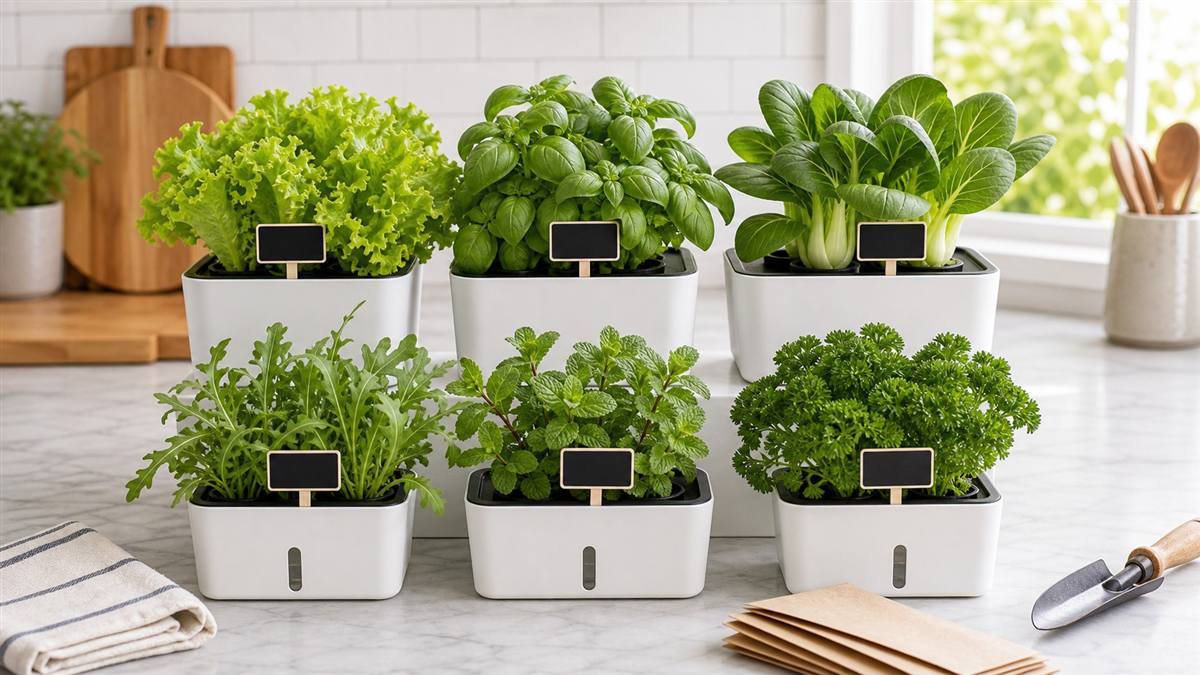
Herbs are the best crop a home hydroponic grower can choose. They grow fast, they’re expensive at the grocery store, they produce continuously from the same plant, and — if you ever want to sell what you grow — they’re the easiest thing to move at a farmers market or to neighbors.
A hydroponic herb setup also doesn’t require much. A couple of totes, a grow light, and a basic nutrient solution is all you need to keep a kitchen stocked with fresh herbs year-round. This guide covers which herbs grow best in hydroponic systems, how fast each one produces, what they’re worth if you sell them, and the setup details that get the best results from each one.
Table of Contents
- Why Herbs Are the Ideal Hydroponic Crop
- Basil
- Cilantro
- Mint
- Chives and Green Onions
- Parsley
- Dill
- Oregano and Thyme
- Setup Tips That Apply to All Herbs
- Selling Hydroponic Herbs: What Works
- Frequently Asked Questions
Why Herbs Are the Ideal Hydroponic Crop
Most grocery store herbs come wilted, wrapped in plastic, and priced at $3–5 for a small bunch that lasts three days. Growing the same herb hydroponically costs pennies and produces harvests you can take from the same plant repeatedly for weeks or months.
Compared to fruiting crops like tomatoes or peppers, herbs have several major advantages for home growers:
- Fast turnaround. Most herbs are harvestable in 28–40 days from seed, versus 60–90+ days for tomatoes.
- Cut-and-come-again growth. Properly harvested herbs regenerate. One plant can produce for months.
- Low nutrient requirements. Herbs thrive at moderate EC levels — they’re forgiving of beginner mistakes.
- High value per square foot. A single basil plant harvested every three weeks has a retail value of $30–60 over its productive life.
- No pollination needed. Unlike fruiting crops, herbs don’t need bees or hand-pollinating indoors.
If you’re growing hydroponically in a small space — a kitchen shelf, an apartment setup, a spare closet — herbs are where you get the best return on that space.
Basil
Basil is the standout hydroponic herb. It grows faster in water than almost anyone expects — a plant that would struggle in a pot on a windowsill becomes a dense, fragrant bush in a hydroponic system. The reason is simple: basil loves consistent moisture at its roots and warm temperatures, and a Kratky tote delivers both perfectly.
| Detail | Notes |
|---|---|
| Days to first harvest | 28–35 from seed |
| Harvest method | Pinch growing tips above a leaf node. Never cut the main stem. |
| Productive lifespan | 3–5 months with regular harvesting |
| Ideal temperature | 70–85°F. Basil suffers below 60°F — leaves blacken and growth stalls. |
| Light needs | High. 14–16 hours under a grow light, or a very bright south-facing window in summer. |
| Target EC | 1.0–1.6 |
| Target pH | 5.8–6.2 |
| Best varieties | Genovese (classic pesto basil), Thai basil, Lemon basil, Purple Opal |
Key tip: Never let basil flower if you want continuous leaf production. The moment you see flower buds forming at the top, pinch them off. Once basil goes to seed, leaf production slows dramatically and flavor becomes bitter. Stay on top of pinching and one plant will keep producing for months.
Selling potential: Basil is the most commercially valuable herb you can grow at small scale. Fresh bunches sell for $3–6 at farmers markets. Living basil plants in totes sell for $10–18 to neighbors. Restaurants buying weekly are the highest-value customer if you can establish the relationship.
Cilantro
Cilantro has a reputation for being difficult — it bolts (goes to seed) fast in heat and seems to disappear before you can use it. In a controlled indoor hydroponic environment, that problem largely goes away. You control the temperature and can keep it below the bolting threshold far longer than an outdoor garden allows.
| Detail | Notes |
|---|---|
| Days to first harvest | 30–40 from seed |
| Harvest method | Cut outer stems at the base, leaving the center growing point intact. |
| Productive lifespan | 6–8 weeks before bolting, even indoors. Succession plant every 3 weeks for continuous supply. |
| Ideal temperature | 60–70°F. Cooler is better. Above 75°F it bolts quickly. |
| Light needs | Moderate. Does well with 12–14 hours of light. Tolerates lower light better than basil. |
| Target EC | 0.8–1.4 |
| Target pH | 5.8–6.2 |
| Best varieties | Calypso (slow-bolt), Santo, Leisure |
Key tip: Because cilantro has a relatively short productive window even indoors, succession planting is the strategy. Start a new tote of cilantro every 3 weeks so you always have plants at different stages. When one batch bolts, the next is just hitting peak production.
Mint
Mint is aggressively productive in hydroponics — almost to a fault. It sends out runners, fills its container quickly, and can crowd out other plants if you mix it in a shared tote. Give it its own dedicated container and it becomes one of the most low-maintenance, high-yield crops you can grow.
| Detail | Notes |
|---|---|
| Days to first harvest | 30–40 from seed; faster from cuttings |
| Harvest method | Cut stems back by one-third, just above a leaf node. It regrows vigorously. |
| Productive lifespan | Indefinite with regular harvesting. Mint is perennial and doesn’t bolt. |
| Ideal temperature | 65–75°F. More temperature-tolerant than basil or cilantro. |
| Light needs | Moderate. Does well in lower-light spots that basil wouldn’t like. |
| Target EC | 1.0–1.6 |
| Target pH | 6.0–6.5 |
| Best varieties | Peppermint, Spearmint, Chocolate Mint, Mojito Mint |
Key tip: Start mint from cuttings rather than seed if you can. Take a 4-inch cutting from any grocery store mint bunch, strip the lower leaves, and place it directly in a net cup with growing medium. It roots in a Kratky tote within 1–2 weeks — faster and easier than seed starting.
Chives and Green Onions
Chives and green onions are among the fastest hydroponic crops and the most tolerant of lower light levels, making them ideal for kitchen windowsill setups or spots that don’t get full grow-light coverage. They’re also perpetually useful in cooking — a snip of fresh chives or green onion elevates almost any dish.
| Detail | Notes |
|---|---|
| Days to first harvest | Chives: 30–40 days. Green onions: 20–30 days. |
| Harvest method | Snip leaves or stems to about 2 inches from the base. Regrows continuously. |
| Productive lifespan | Many months. Chives especially are long-lived and rarely need replacing. |
| Ideal temperature | 60–75°F. One of the most cold-tolerant herb options. |
| Light needs | Low to moderate. One of the few herbs that grows acceptably in a north-facing window. |
| Target EC | 1.4–1.8 |
| Target pH | 6.0–6.5 |
Key tip: Green onions regrow reliably from the rooted bases of store-bought bunches. Cut off the tops for cooking, place the white root end in a net cup with an inch of growing medium, and add nutrient solution. New shoots emerge within days. It’s the fastest possible way to start a hydroponic herb.
Parsley
Parsley is slower to establish than most herbs — it’s notoriously slow to germinate (10–21 days) and takes longer to reach harvestable size. But once it’s established in a hydroponic system, it’s a steady, long-lived producer. It tolerates a range of temperatures and light levels better than basil and keeps producing long after cilantro has bolted.
| Detail | Notes |
|---|---|
| Days to first harvest | 70–90 days from seed (slow to establish) |
| Harvest method | Cut outer stems at the base, leaving the inner crown to keep growing. |
| Productive lifespan | Several months. Parsley is biennial and doesn’t bolt in its first year. |
| Ideal temperature | 60–75°F |
| Light needs | Moderate. Less demanding than basil. |
| Target EC | 0.8–1.8 |
| Target pH | 6.0–6.5 |
| Best varieties | Italian flat-leaf (more flavor, preferred by cooks), Curly (traditional garnish) |
Key tip: Speed up germination by soaking parsley seeds in warm water for 24 hours before planting. They still take longer than most herbs, but this meaningfully cuts the time to sprout. Worth the patience — once established, parsley needs almost no attention.
Dill
Dill is underused in home hydroponic setups and undervalued at farmers markets, which makes it a quiet opportunity. It grows quickly, prefers cooler conditions, and the feathery fronds have a distinctive flavor that’s genuinely hard to find fresh in many areas.
| Detail | Notes |
|---|---|
| Days to first harvest | 40–60 days from seed |
| Harvest method | Snip fronds from the outside in. Leave the central growing tip to keep producing. |
| Productive lifespan | 6–10 weeks before bolting. Like cilantro, succession plant every 4 weeks. |
| Ideal temperature | 60–70°F. Bolts in heat. |
| Light needs | Moderate to high. Does well under a standard grow light. |
| Target EC | 1.0–1.6 |
| Target pH | 5.8–6.4 |
| Best varieties | Fernleaf (compact, ideal for containers), Bouquet |
Oregano and Thyme
Oregano and thyme are woody Mediterranean herbs that grow more slowly in hydroponics than soft herbs like basil or cilantro. They prefer drier root conditions than most hydroponic crops, which means they do better with a slightly lower water level in the tote — more air gap between the water surface and the net cup.
They’re not the most productive hydroponic herbs, but they’re worth growing if you use them regularly in cooking. The flavor of fresh oregano or thyme compared to dried is genuinely noticeable.
| Detail | Notes |
|---|---|
| Days to first harvest | 80–100 days from seed; start from cuttings or transplants instead |
| Harvest method | Snip stem tips. Both herbs bush out with regular trimming. |
| Productive lifespan | Many months. Both are perennial. |
| Ideal temperature | 65–80°F |
| Special note | Let the air gap in the tote be larger than usual — these herbs want their roots somewhat drier than lettuce or basil. |
Recommendation: Start oregano and thyme from nursery transplants or cuttings rather than seed. Starting from seed takes months before you have harvestable plants. A small transplant establishes in a hydroponic tote in 2–3 weeks and starts producing much faster.
Setup Tips That Apply to All Herbs
A few things that improve results across all hydroponic herbs, regardless of which ones you’re growing:
- Keep herbs with similar temperature preferences together. Basil likes warmth; cilantro and dill prefer cool. Running them in the same tote with the same solution creates one happy plant and one struggling one. Match roommates by temperature preference.
- Harvest regularly. The biggest mistake with hydroponic herbs is being too gentle with harvesting. Regular cutting signals the plant to produce more growth. If you rarely harvest, the plant puts energy into flowering instead of leaves.
- Keep light on for 14–16 hours. A simple outlet timer handles this. Most herbs grown for leaf production benefit from long light days — it delays flowering and maximizes leaf output.
- Maintain pH at 5.8–6.2. Check every 3–4 days, especially in the first two weeks. Most herb problems that look like nutrient deficiencies are actually pH being out of range. Fix pH first before adjusting nutrients.
- Use opaque totes. Light reaching the nutrient solution grows algae, which competes with your plants and smells bad. Opaque containers — or totes with solid lids — prevent this entirely.
Selling Hydroponic Herbs: What Works
If you grow more than your household uses — which happens quickly once your system is running well — herbs are one of the easiest home-grown products to sell. Here’s what the market actually looks like at small scale:
| Herb | Format | Price Range | Best Buyers |
|---|---|---|---|
| Basil | Cut bunches (4–6 stems) | $3–6 | Neighbors, farmers markets, Italian restaurants |
| Basil | Living plant in tote | $12–20 | Neighbors who want to harvest at home over several weeks |
| Mixed herb bundle | Basil + chives + parsley + mint | $5–8 | Farmers markets, CSA add-ons |
| Cilantro | Cut bunches | $2–4 | Neighbors, Mexican and Asian restaurants |
| Mint | Cut stems or living pot | $3–5 cut / $8–12 living | Cocktail enthusiasts, tea drinkers, bakers |
| Specialty herbs (dill, watercress) | Cut bunches | $3–6 | Restaurants, health food buyers |
The living plant model — selling a tote or pot the customer harvests themselves over several weeks — consistently commands 3–5x the price of cut herbs. The customer gets more value (weeks of harvests versus a few days of cut herbs), and you free up growing space sooner to start your next batch. It’s the highest-margin format for most home growers.
The Sold Out Every Time guide covers the selling side of this in detail — how to price, how to find buyers, and how to keep demand ahead of supply once you’re producing consistently.
Frequently Asked Questions
What is the easiest herb to grow hydroponically?
Basil and mint are the easiest for most growers. Basil germinates quickly, grows fast, and responds well to regular harvesting. Mint is nearly indestructible and produces continuously once established. Both thrive in a basic Kratky tote with minimal attention.
Do herbs grow faster hydroponically than in soil?
Yes, noticeably. Hydroponic basil in particular grows two to three times faster than potted basil under similar light conditions. The reason is direct root access to nutrients and water — the plant doesn’t expend energy developing a large root system to search for what it needs. Everything is delivered directly.
Can I grow multiple herbs in the same tote?
Yes, with some considerations. Match herbs by temperature preference — don’t mix basil (warm) with cilantro (cool) in the same tote. Keep mint in its own container since it spreads aggressively. Good combinations: basil + chives, lettuce + parsley, cilantro + dill (both cool-preferring).
How much can I earn selling hydroponic herbs?
At small scale — a 3–4 tote herb setup — realistic monthly income from selling to neighbors and a local market is $100–$300 depending on what you grow and how you sell it. The living plant model (selling totes rather than cut herbs) is the most efficient path to that range. Scaling to 10–15 totes dedicated to herbs, with a consistent customer base, puts $500–$800 per month within reach for most growers.
Do I need a special hydroponic system for herbs?
No. A basic Kratky passive setup using shallow storage totes works extremely well for all the herbs covered in this guide. No pump, no timer, no complex equipment. If you’re growing woody herbs like oregano and thyme, give them a slightly larger air gap in the tote than you would for basil or lettuce.
Fresh herbs are the fastest way to see real results from a home hydroponic system — and the easiest product to sell if you grow more than you need. If you want the full system for turning a shelf of totes into consistent food and income, the Indoor Mini Farm System is where to start.