The internet is full of homestead income ideas that look great in theory and quietly fail in practice. Selling honey sounds romantic until you’ve priced out the equipment and found out what local honey actually sells for. Raising meat rabbits pencils out on paper until you calculate the feed costs and your actual hourly rate.
This guide skips the wishful thinking and focuses on homestead income ideas that consistently work at small scale — where the math actually holds up, the demand is real, and the model fits into a life that already has other things in it.
Table of Contents
- Tier 1: Best Returns for Least Effort
- Tier 2: Solid Income With More Setup
- Tier 3: Seasonal or Niche Opportunities
- Ideas That Usually Don’t Work Out
- How to Stack Income Streams
- Frequently Asked Questions
Tier 1: Best Returns for Least Effort
1. Selling Living Hydroponic Plants to Neighbors
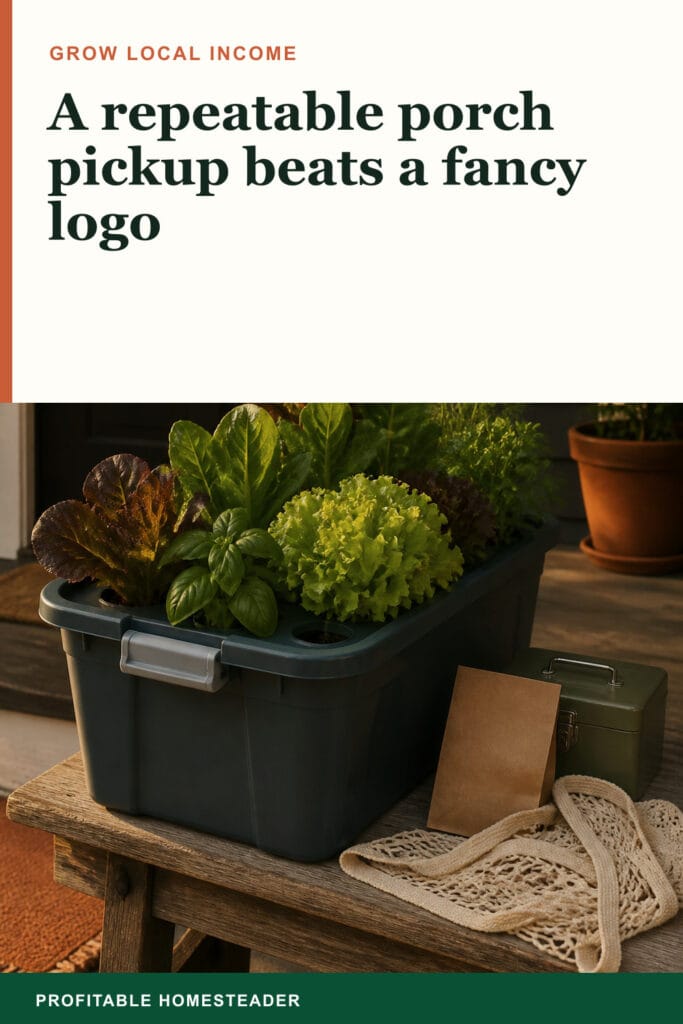
This is the single most overlooked homestead income idea — and consistently one of the best performing. You grow full-size lettuce, kale, basil, or spinach in simple hydroponic totes using the Kratky passive method. Instead of harvesting and selling cut greens, you sell the entire living tote ready to harvest. Neighbors keep it on a windowsill, harvest from it for weeks, and come back for another.
A tote that costs $3–$4 to produce sells for $30–$50. Three totes a week is an estimated $360–$600 per month from a shelf in a spare room, about an hour of work per week. Year-round, no seasonality, no market booth, no commercial kitchen. The complete model is in the Indoor Mini Farm System.
2. Fresh Herbs — Year-Round
Fresh herbs grown indoors hydroponically produce continuously regardless of season. Basil, cilantro, mint, chives, and dill all sell easily — direct to neighbors, at farmers markets, or to local restaurants. A single indoor shelf of herbs produces $50–$150 worth of product per week at retail pricing.
The herb selling guide covers which herbs sell best and how to price them. For exact profit margins and annual income per square foot by herb variety, see the herb profit margins guide.
3. Spring Seedling Sales
Every spring, demand for vegetable transplants vastly exceeds what local garden centers can supply. Tomato starts sell for $3–$6 each; peppers for $3–$5; herb six-packs for $4–$6. A well-organized spring plant sale can generate $800–$2,000 in a single weekend from a garage full of transplants.
4. Backyard Eggs
Six to eight hens produce 4–5 dozen eggs per week. Net of feed costs, a small flock typically generates $50–$80 per month in profit. Not a primary income stream, but a reliable supplemental one with added benefits: manure for compost, pest control, and better eggs than anything at retail.
5. Specialty Cut Flowers
A 4×8 raised bed of dahlias, zinnias, lisianthus, and ranunculus produces $500–$1,500 worth of cut flowers per season. They sell quickly at farmers markets and to florists. Exceptional per-square-foot returns for a seasonal crop.
Tier 2: Solid Income With More Setup
6. Farmers Market Produce
A well-stocked booth can generate $300–$800 per market day. The trade-off is significant time commitment — 6–8 hours per market day plus booth fees. Best as a supplement to a neighborhood selling model. See the farmers market guide for what sells and how to get accepted.
7. Value-Added Food Products
Jams, pickles, hot sauce, dried herbs, and infused oils all command 4–8x the price of raw ingredients. A jar of strawberry jam from your own berries sells for $8–$12; the berries themselves sell for $4–$6 per pint. Check your state’s cottage food laws before selling any processed products — rules vary significantly by state.
8. Garlic
Specialty hardneck garlic sells for $12–$20 per pound at farmers markets versus $3–$5 for grocery store garlic. A 4×8 raised bed planted in October produces 50–80 heads the following July. One of the few crops where a small home garden can genuinely compete on quality and variety.
9. Homestead Workshops
A 3-hour workshop for 8–10 participants at $60–$80 per person generates $480–$800 from a single morning. Topics: seed starting, hydroponics, preserving, fermentation, chicken keeping. Cost to run one is minimal if you’re already doing the activity yourself.
10. Vegetable CSA or Subscription Box
10–20 households receiving a weekly box generates reliable upfront income and strong customer relationships. Indoor growing operations can run year-round subscriptions with living plants and herbs, avoiding the seasonal limitation of outdoor-only CSAs. See the CSA business plan guide for how to structure shares and find members.
Tier 3: Seasonal or Niche Opportunities
11. Strawberries (U-Pick)
U-pick strawberries command $4–$6 per pound — 2–3x picked pricing. Even a small patch (200–300 sq ft) can attract enough U-pick customers to generate $500–$1,500 in a season with zero harvesting labor on your part.
12. Hatching Eggs and Chicks
Heritage breed hatching eggs sell for $3–$8 each; started chicks for $5–$15 each. Requires a rooster and an incubator but excellent margins for the right breeds.
13. Soap, Candles, and Herbal Products
Herbal soap sells for $7–$12 per bar; salves for $10–$18 per tin. Long shelf lives, ship easily, sell well at markets and online. Extends value from existing herb production.
14. Composting Services
Collecting kitchen scraps from neighbors ($10–$20/month per household) builds soil fertility while generating income. Simple, overlooked model that works well in dense neighborhoods.
15. Online Content and Courses
Documenting your homestead journey builds an audience that eventually becomes a sales channel for physical products, affiliate commissions, and digital courses. Timeline is long (12–24 months to meaningful traffic) but the income compounds.
Ideas That Usually Don’t Work Out
Honey. Beekeeping equipment costs $500–$1,000 to start, hive losses are common, and local honey prices rarely cover costs at small scale.
Selling bulk vegetables at commodity prices. You cannot out-scale a commercial operation. The answer is always premium prices through direct relationships.
Meat rabbits or meat chickens as a primary income. Processing time, feed costs, and legal complexity make this difficult to profit from at small scale without significant infrastructure.
How to Stack Income Streams
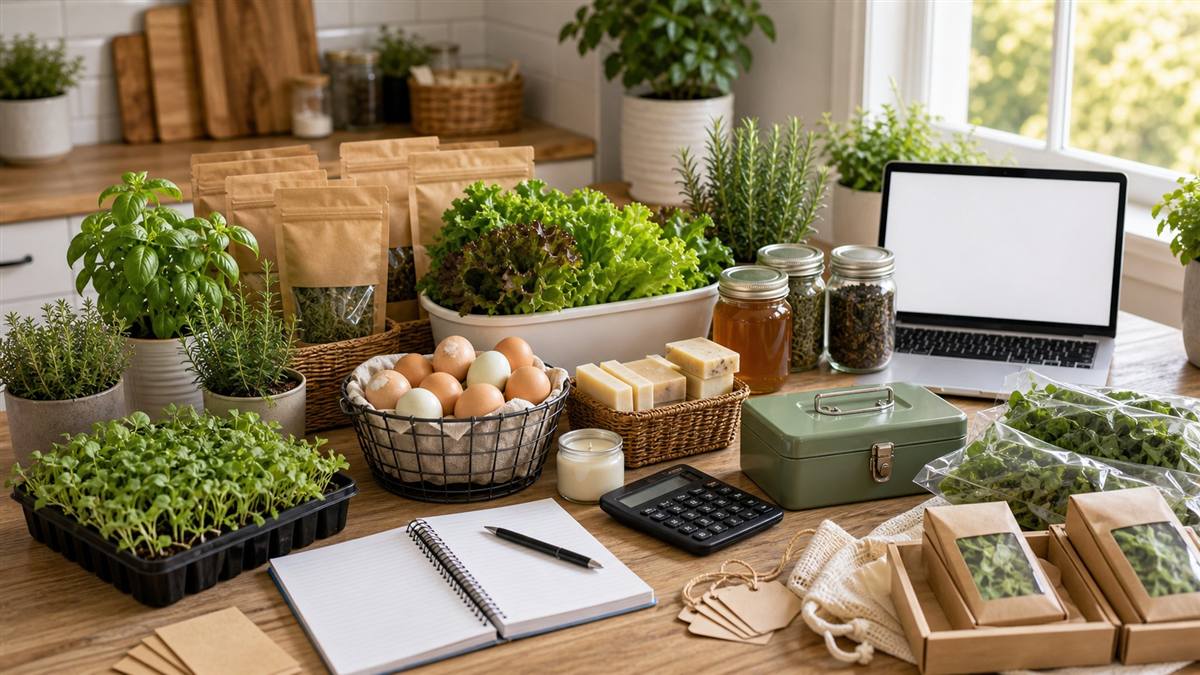
The most financially successful small homesteads run two or three complementary income streams. A natural stack that works well together:
- Indoor living plants + herbs — Year-round base income, minimal time, direct-to-neighbor sales
- Spring seedling sale — One-time seasonal boost from existing seed starting infrastructure
- Summer farmers market — Seasonal supplement using outdoor garden surplus and value-added products
Add eggs and workshops as your confidence and customer base grow. For the full roadmap, the complete guide to making money homesteading covers every stream with honest income projections.
Frequently Asked Questions
What homestead products sell the best?
Fresh herbs, living plants, specialty garlic, pasture-raised eggs, heirloom vegetable transplants, artisan preserves, and cut flowers. The common thread: perishable or specialty items that grocery stores don’t supply well, at premium prices, with repeat customers.
Can a small homestead be profitable?
Yes, with the right income streams. A small homestead with well-chosen products can generate $5,000–$20,000 per year in supplemental income. The key is choosing high-margin, direct-relationship models rather than competing on volume.
How do I start making money from my homestead?
Start with one product you can produce reliably and sell to people you already know. Living plants or fresh herbs sold to neighbors is one of the lower-friction starting points — no market booth, low upfront investment. Build a small customer base, refine the model, then add a second income stream. Before you start selling, check the licensing and regulatory rules for your state and local area — the guide to selling produce from home covers what to look into.
Not sure which income stream fits your setup? 25 Proven Ways to Make Money from Your Homestead covers all 25 income models with honest startup costs, earnings potential, and a printable action checklist so you can pick the right one and start this week.