The phrase “grow all your own food” tends to conjure images of sprawling farms, root cellars, and people who’ve been doing this for generations. It feels big. Complicated. Like something that requires land you probably don’t have and time you definitely don’t.
Here’s what actually happens when you commit to it: you realize most of what your family eats can be grown in a surprisingly small space — and that the crops most worth growing are often the easiest. Fresh greens, herbs, cucumbers, tomatoes, beans. The things you buy every week at the grocery store. The things with the highest markup and the shortest shelf life.
This guide is the complete roadmap for growing as much of your own food as possible on a small homestead — or even a small yard, a balcony, or a spare room. We’ll cover what to grow, how to structure your production across seasons, when to use soil and when hydroponics makes more sense, and how to build toward genuine food self-sufficiency one step at a time.
Table of Contents
- How Much Land Do You Actually Need?
- What to Grow First: The High-Value Crops
- Growing Food Year-Round: The Seasonal System
- Indoor vs. Outdoor: Using Both Strategically
- Where Hydroponics Fits In
- Small Homestead Garden Layout
- Preserving the Harvest: Stretching What You Grow
- The Self-Sufficiency Math
- When You Grow More Than You Can Eat
- Frequently Asked Questions
How Much Land Do You Actually Need?
The honest answer: less than you think, especially if you’re strategic about what you grow and how.
A family of four eating primarily vegetables, herbs, and greens can source a significant portion of their fresh produce from 200–400 square feet of well-managed growing space — especially when that space includes both outdoor beds and an indoor growing system. The key is focusing on high-yield, high-turnover crops rather than trying to grow everything.
The crops that make the most sense to grow yourself are the ones that are:
- Expensive to buy organic — leafy greens, herbs, cherry tomatoes
- Perishable — things that go bad before you use them, like fresh basil and salad greens
- Space-efficient — crops that produce a lot of food in a small footprint
- High-frequency — things your family eats every week, not occasionally
Calorie crops — grains, potatoes, dried beans — require much more space and are cheap to buy. Most small homesteaders are better served buying those and growing the high-value fresh crops themselves.
What to Grow First: The High-Value Crops
If you’re working with limited space, prioritize crops where growing your own makes the biggest financial and quality difference.
| Crop | Grocery Cost (organic) | Yield Per 4 sq ft | Grow Method |
|---|---|---|---|
| Salad greens / lettuce | $4–$7/head | 4–6 heads per cycle | Indoors (hydroponic) or raised bed |
| Fresh basil | $3–$5/bunch | Continuous harvest | Indoors (hydroponic) year-round |
| Cherry tomatoes | $4–$6/pint | 10–20 lbs per season | Outdoor raised bed or container |
| Cucumbers | $1.50–$3 each | 15–25 per plant | Outdoor trellis or container |
| Kale / spinach | $3–$5/bunch | Continuous cut-and-come-again | Indoors year-round or outdoor seasonal |
| Green beans | $3–$5/lb | 1–2 lbs per plant | Outdoor raised bed |
| Zucchini | $2–$4 each | 8–12 per plant | Outdoor (needs space) |
| Fresh herbs (mixed) | $2–$4/bunch | Continuous harvest | Indoors year-round |
Notice the pattern: the best crops to grow yourself are either high-value greens and herbs (where indoor hydroponics excels year-round) or outdoor fruiting vegetables (tomatoes, cucumbers, beans) that produce prolifically during the warm season.
Growing Food Year-Round: The Seasonal System
True food self-sufficiency requires growing in every season — not just summer. The key is understanding which crops suit which seasons, and plugging the gaps with indoor growing.
Spring (March–May)
Start cool-weather crops outdoors as soon as the ground can be worked: lettuce, spinach, kale, peas, radishes, arugula, chard. These crops bolt in summer heat, so planting them early gives you a productive window before temperatures rise. Simultaneously, start tomatoes, peppers, and cucumbers indoors under grow lights to transplant after the last frost.
Your indoor hydroponic system keeps running through spring, bridging the gap between winter and the first outdoor harvests.
Summer (June–August)
Peak outdoor season. Fruiting crops — tomatoes, cucumbers, beans, zucchini, peppers — produce abundantly. Harvest daily to keep plants producing. This is also the season to preserve: can tomatoes, freeze beans, dry herbs. The work you do in summer extends your harvest into fall and winter.
Shift your indoor hydroponic system to heat-tolerant crops during summer: basil loves the warmth and grows explosively. Keep greens going indoors in an air-conditioned space if possible.
Fall (September–November)
A second cool-weather window. Replant spinach, kale, lettuce, and arugula outdoors for a fall harvest. Many fall crops are sweeter than their spring counterparts — frost actually improves the flavor of kale, Brussels sprouts, and carrots. Plant garlic in October for harvest the following summer.
Winter (December–February)
This is where indoor growing becomes essential. Unless you have a greenhouse or live in a mild climate, outdoor production stops. Your indoor hydroponic system is what keeps fresh greens and herbs on the table through winter — the indoor hydroponic garden setup runs completely independent of outdoor conditions and produces just as well in January as in July.
Indoor vs. Outdoor: Using Both Strategically
The most productive small homesteads don’t choose between indoor and outdoor growing — they use both for what each does best.
| Grow Indoors | Grow Outdoors |
|---|---|
| Lettuce and salad greens (year-round) | Tomatoes, peppers, cucumbers (summer) |
| Fresh herbs — basil, cilantro, mint (year-round) | Beans, peas (spring/fall) |
| Kale, spinach, chard (year-round) | Zucchini, squash (summer) |
| Watercress, arugula (year-round) | Root vegetables — carrots, beets (spring/fall) |
| Seedling starts for outdoor transplanting | Garlic, onions (fall planting, summer harvest) |
The indoor system fills the gap that every outdoor garden has: winter. It also means you never run out of salad greens or herbs regardless of what’s happening outside. That continuity is what makes the difference between “we have a garden” and “we actually feed ourselves from it.”
Where Hydroponics Fits In
Soil gardening outdoors is excellent for fruiting crops, root vegetables, and large-volume production. But for leafy greens and herbs grown indoors year-round, hydroponics outperforms soil in almost every measurable way: faster growth, no pests, no mess, minimal water use, and consistent results regardless of season.
A simple Kratky passive hydroponic system — no pump, no electricity beyond a grow light — can produce a continuous supply of lettuce and herbs from a single shelf. Scale up to two or three shelving units and you’re producing more fresh food than most families can eat.
For a full breakdown of how hydroponics works and the best beginner systems, the complete DIY hydroponics guide covers everything from first setup to ongoing harvest.
The crops that benefit most from moving indoors to hydroponics:
- Lettuce — year-round, 30–45 days per cycle, no outdoor space needed
- Basil — continuous harvest, thrives under grow lights
- Spinach and kale — grow faster hydroponically than in soil, even in winter
- Watercress and arugula — premium crops rarely available fresh locally
Small Homestead Garden Layout
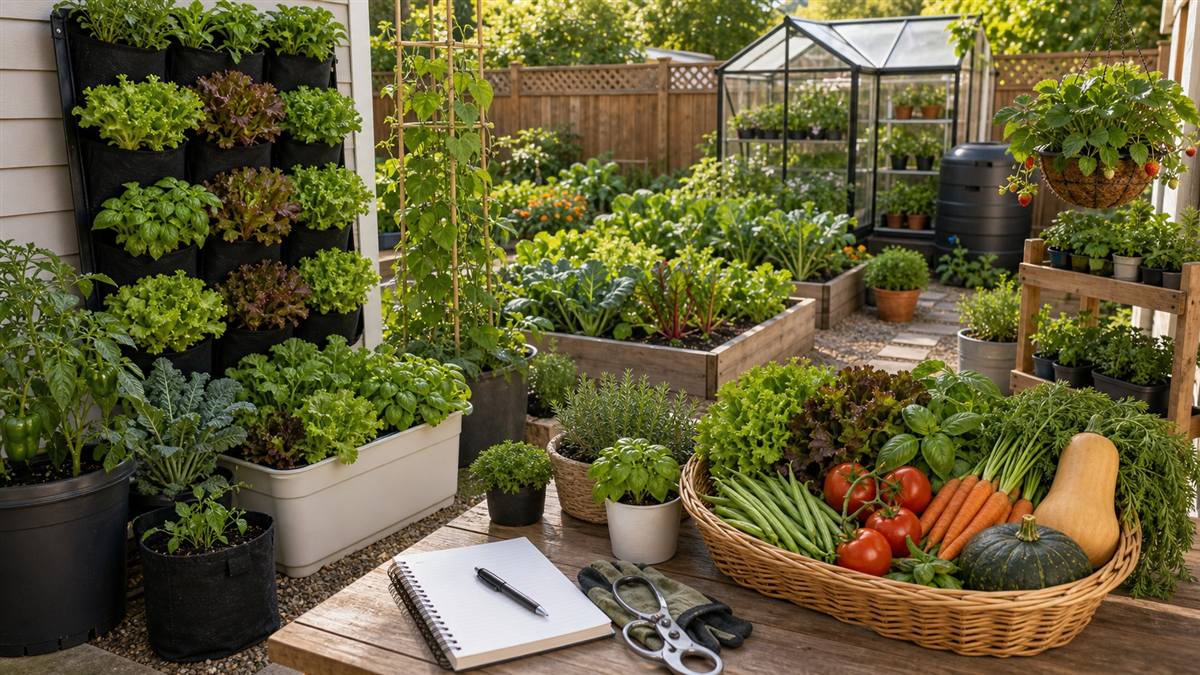
How you arrange your growing space matters as much as what you grow. Here’s a layout that maximizes production from a small footprint — around 200–400 square feet outdoors plus an indoor shelf system.
Raised Bed Zone (Outdoors)
Two to four 4×8 ft raised beds give you 64–128 sq ft of highly productive growing space. Raised beds warm up faster in spring, drain better than in-ground beds, and can be intensively planted — no wasted space for walking rows. Fill with a quality mix of compost, topsoil, and perlite.
Dedicate one bed to perennial crops that come back every year: asparagus, strawberries, perennial herbs like thyme and oregano. Rotate the remaining beds between heavy feeders (tomatoes, squash), light feeders (beans, greens), and root crops to maintain soil health.
Vertical Growing Zone
Any fence, wall, or trellis structure is untapped growing space. Cucumbers, pole beans, and even small squash varieties grow vertically, freeing up ground space for other crops. A 6-ft trellis along a fence line can support 4–6 cucumber plants and produce more than a 4×4 bed of the same crop planted flat.
Container Zone (Patio or Balcony)
Large containers (5-gallon minimum, 15-gallon for tomatoes) expand your growing space onto hard surfaces — patios, driveways, balconies. Cherry tomatoes, peppers, and herbs all do well in containers. Container-friendly crops are a great complement to raised bed production.
Indoor Growing Zone
A wire shelving unit with LED grow lights in a spare room, basement, or garage corner. This is your year-round greens and herb production — running continuously regardless of what’s happening outdoors. Two shelves with one tote per shelf can supply a family’s entire salad and herb needs.
Preserving the Harvest: Stretching What You Grow
Growing food is only half the equation. Preserving the summer surplus extends your harvest through the months when outdoor production is low or nonexistent.
Easiest Preservation Methods for Small Homesteaders
- Freezing — The simplest method. Blanch and freeze beans, kale, spinach, peas, and corn. Freeze tomatoes whole for winter soups and sauces. Freeze herb-infused oils and butters.
- Canning — Best for tomatoes, pickles, jams, and salsa. Requires more equipment and technique but produces shelf-stable food that lasts 1–2 years.
- Drying/dehydrating — Perfect for herbs, hot peppers, tomatoes, and beans. A basic food dehydrator ($30–$60) handles most home production needs.
- Root cellaring — Winter squash, potatoes, carrots, beets, and garlic store well in a cool, dark location. No equipment needed beyond a suitable space.
- Fermentation — Sauerkraut from cabbage, kimchi, fermented pickles. Requires only salt and a jar. Preserves food and adds probiotics.
The Self-Sufficiency Math
Let’s put real numbers to what a small growing operation can actually produce and save.
| Source | What It Produces | Annual Grocery Value |
|---|---|---|
| Indoor hydroponic shelf (2 totes) | Lettuce and herbs year-round | $600–$1,200 |
| Two 4×8 raised beds | Tomatoes, cucumbers, beans, greens | $800–$1,500 |
| Vertical trellis (6 ft) | Cucumbers, pole beans | $200–$400 |
| 4–6 containers | Cherry tomatoes, peppers, herbs | $300–$600 |
| Preserved summer surplus | Frozen vegetables, canned tomatoes | $300–$700 |
| Total | $2,200–$4,400/year |
That’s $2,000–$4,000 a year in grocery savings from a setup that fits in a small backyard and a spare shelf indoors. For a family spending $800–$1,200/month on groceries, that’s a meaningful reduction — and it grows each year as you refine what you grow and how you preserve it.
When You Grow More Than You Can Eat
Most serious home growers hit a point where they produce more than their family can consume. That surplus is an opportunity.
The indoor hydroponic side of a small homestead is particularly well-suited to selling, because the output is consistent and predictable year-round — you’re not at the mercy of a good or bad outdoor season. Neighbors who want fresh, local produce are often happy to pay $30–$50 for a ready-to-harvest living lettuce tote they can keep on their windowsill for weeks.
That model — selling living plants rather than harvested produce — is what makes indoor growing profitable without requiring a farmer’s market booth or restaurant accounts. It’s the system behind the Indoor Mini Farm System, which walks through exactly how to structure a small neighborhood selling operation alongside your regular family growing.
And if the food savings angle resonates more than the income angle, the greens-focused overview breaks down exactly what an indoor growing system saves a family per month in real grocery costs.
Frequently Asked Questions
How much land do you need to grow all your own food?
For a complete caloric diet — all food including grains and protein — estimates range from half an acre to several acres depending on growing methods and diet. But for the high-value fresh produce that makes the biggest dent in a family grocery bill (greens, herbs, tomatoes, cucumbers), 200–400 square feet outdoors plus an indoor growing system is genuinely sufficient for a family of four.
What are the most productive crops for a small homestead?
Lettuce and salad greens, fresh herbs (especially basil), cherry tomatoes, cucumbers, zucchini, kale, and pole beans consistently deliver the highest value per square foot for small homesteaders. These crops are expensive to buy, perishable, and grow prolifically in small spaces — especially when combined with indoor hydroponic production for greens and herbs year-round.
Can you grow food year-round without a greenhouse?
Yes — with an indoor hydroponic growing system. Greens, herbs, and many vegetables grow just as well indoors under LED grow lights as they do in a greenhouse, at a fraction of the cost. An indoor shelf setup running year-round eliminates the seasonal gap that makes “growing your own food” feel incomplete for most people in northern climates.
Is it cheaper to grow your own food?
For high-value crops like organic salad greens, fresh herbs, cherry tomatoes, and cucumbers — yes, significantly cheaper after the first season’s setup costs. The ongoing cost of running a small raised bed and indoor hydroponic system is typically $20–$50 per month, producing food worth $200–$400 at grocery store prices. The savings compound each year as you improve your system and preservation skills.
What’s the easiest way to start growing your own food?
Start with one thing done well rather than trying to do everything at once. Either: (1) build a single indoor hydroponic tote for year-round lettuce and herbs — results in 30–45 days, minimal investment, and teaches the fundamentals — or (2) build one raised bed outdoors and plant the crops your family eats most. Master one before expanding to the other.
Growing your own food doesn’t require a farm or a perfect climate. It requires a system — one that uses both indoor and outdoor space strategically, produces in every season, and focuses on the crops that actually move the needle on your grocery bill. If you’re ready to start with the indoor piece, the Indoor Mini Farm System is the complete guide to getting a productive system running fast.