How to Grow All Your Own Food on a Small Homestead (Even Without Land)

The phrase “grow all your own food” tends to conjure images of sprawling farms, root cellars, and people who’ve been doing this for generations. It feels big. Complicated. Like something that requires land you probably don’t have and time you definitely don’t.

Here’s what actually happens when you commit to it: you realize most of what your family eats can be grown in a surprisingly small space — and that the crops most worth growing are often the easiest. Fresh greens, herbs, cucumbers, tomatoes, beans. The things you buy every week at the grocery store. The things with the highest markup and the shortest shelf life.

This guide is the complete roadmap for growing as much of your own food as possible on a small homestead — or even a small yard, a balcony, or a spare room. We’ll cover what to grow, how to structure your production across seasons, when to use soil and when hydroponics makes more sense, and how to build toward genuine food self-sufficiency one step at a time.

Table of Contents

How Much Land Do You Actually Need?

The honest answer: less than you think, especially if you’re strategic about what you grow and how.

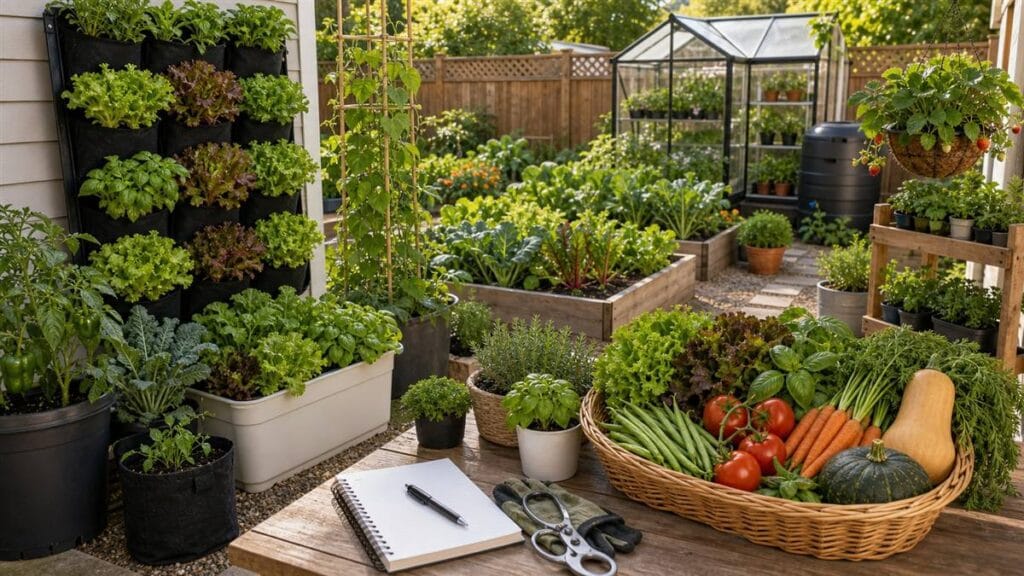
A family of four eating primarily vegetables, herbs, and greens can source a significant portion of their fresh produce from 200–400 square feet of well-managed growing space — especially when that space includes both outdoor beds and an indoor growing system. The key is focusing on high-yield, high-turnover crops rather than trying to grow everything.

The crops that make the most sense to grow yourself are the ones that are:

  • Expensive to buy organic — leafy greens, herbs, cherry tomatoes
  • Perishable — things that go bad before you use them, like fresh basil and salad greens
  • Space-efficient — crops that produce a lot of food in a small footprint
  • High-frequency — things your family eats every week, not occasionally

Calorie crops — grains, potatoes, dried beans — require much more space and are cheap to buy. Most small homesteaders are better served buying those and growing the high-value fresh crops themselves.

What to Grow First: The High-Value Crops

If you’re working with limited space, prioritize crops where growing your own makes the biggest financial and quality difference.

CropGrocery Cost (organic)Yield Per 4 sq ftGrow Method
Salad greens / lettuce$4–$7/head4–6 heads per cycleIndoors (hydroponic) or raised bed
Fresh basil$3–$5/bunchContinuous harvestIndoors (hydroponic) year-round
Cherry tomatoes$4–$6/pint10–20 lbs per seasonOutdoor raised bed or container
Cucumbers$1.50–$3 each15–25 per plantOutdoor trellis or container
Kale / spinach$3–$5/bunchContinuous cut-and-come-againIndoors year-round or outdoor seasonal
Green beans$3–$5/lb1–2 lbs per plantOutdoor raised bed
Zucchini$2–$4 each8–12 per plantOutdoor (needs space)
Fresh herbs (mixed)$2–$4/bunchContinuous harvestIndoors year-round

Notice the pattern: the best crops to grow yourself are either high-value greens and herbs (where indoor hydroponics excels year-round) or outdoor fruiting vegetables (tomatoes, cucumbers, beans) that produce prolifically during the warm season.

Growing Food Year-Round: The Seasonal System

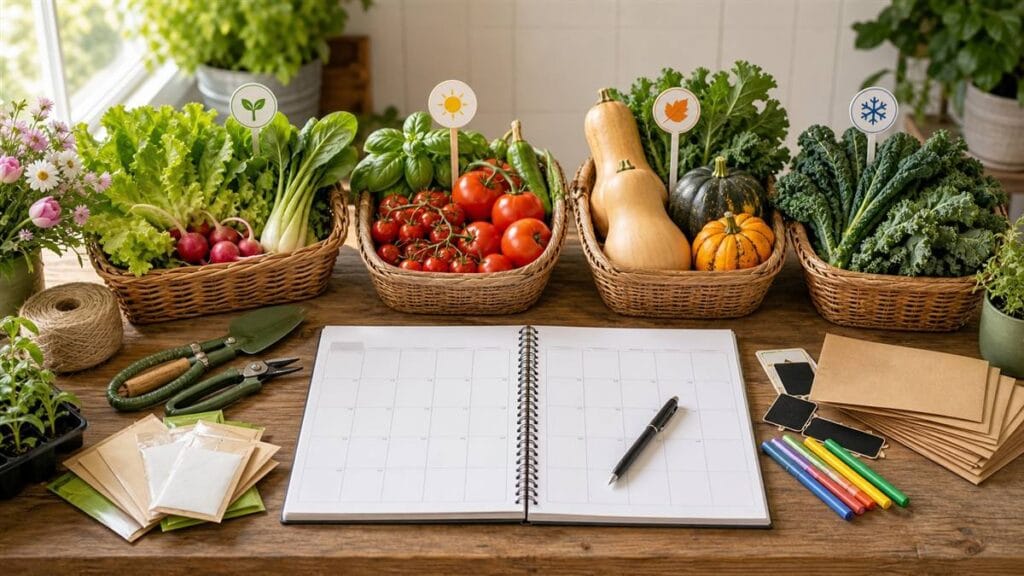
True food self-sufficiency requires growing in every season — not just summer. The key is understanding which crops suit which seasons, and plugging the gaps with indoor growing.

Spring (March–May)

Start cool-weather crops outdoors as soon as the ground can be worked: lettuce, spinach, kale, peas, radishes, arugula, chard. These crops bolt in summer heat, so planting them early gives you a productive window before temperatures rise. Simultaneously, start tomatoes, peppers, and cucumbers indoors under grow lights to transplant after the last frost.

Your indoor hydroponic system keeps running through spring, bridging the gap between winter and the first outdoor harvests.

Summer (June–August)

Peak outdoor season. Fruiting crops — tomatoes, cucumbers, beans, zucchini, peppers — produce abundantly. Harvest daily to keep plants producing. This is also the season to preserve: can tomatoes, freeze beans, dry herbs. The work you do in summer extends your harvest into fall and winter.

Shift your indoor hydroponic system to heat-tolerant crops during summer: basil loves the warmth and grows explosively. Keep greens going indoors in an air-conditioned space if possible.

Fall (September–November)

A second cool-weather window. Replant spinach, kale, lettuce, and arugula outdoors for a fall harvest. Many fall crops are sweeter than their spring counterparts — frost actually improves the flavor of kale, Brussels sprouts, and carrots. Plant garlic in October for harvest the following summer.

Winter (December–February)

This is where indoor growing becomes essential. Unless you have a greenhouse or live in a mild climate, outdoor production stops. Your indoor hydroponic system is what keeps fresh greens and herbs on the table through winter — the indoor hydroponic garden setup runs completely independent of outdoor conditions and produces just as well in January as in July.

Indoor vs. Outdoor: Using Both Strategically

The most productive small homesteads don’t choose between indoor and outdoor growing — they use both for what each does best.

Grow IndoorsGrow Outdoors
Lettuce and salad greens (year-round)Tomatoes, peppers, cucumbers (summer)
Fresh herbs — basil, cilantro, mint (year-round)Beans, peas (spring/fall)
Kale, spinach, chard (year-round)Zucchini, squash (summer)
Watercress, arugula (year-round)Root vegetables — carrots, beets (spring/fall)
Seedling starts for outdoor transplantingGarlic, onions (fall planting, summer harvest)

The indoor system fills the gap that every outdoor garden has: winter. It also means you never run out of salad greens or herbs regardless of what’s happening outside. That continuity is what makes the difference between “we have a garden” and “we actually feed ourselves from it.”

Where Hydroponics Fits In

Soil gardening outdoors is excellent for fruiting crops, root vegetables, and large-volume production. But for leafy greens and herbs grown indoors year-round, hydroponics outperforms soil in almost every measurable way: faster growth, no pests, no mess, minimal water use, and consistent results regardless of season.

A simple Kratky passive hydroponic system — no pump, no electricity beyond a grow light — can produce a continuous supply of lettuce and herbs from a single shelf. Scale up to two or three shelving units and you’re producing more fresh food than most families can eat.

For a full breakdown of how hydroponics works and the best beginner systems, the complete DIY hydroponics guide covers everything from first setup to ongoing harvest.

The crops that benefit most from moving indoors to hydroponics:

  • Lettuce — year-round, 30–45 days per cycle, no outdoor space needed
  • Basil — continuous harvest, thrives under grow lights
  • Spinach and kale — grow faster hydroponically than in soil, even in winter
  • Watercress and arugula — premium crops rarely available fresh locally

Small Homestead Garden Layout

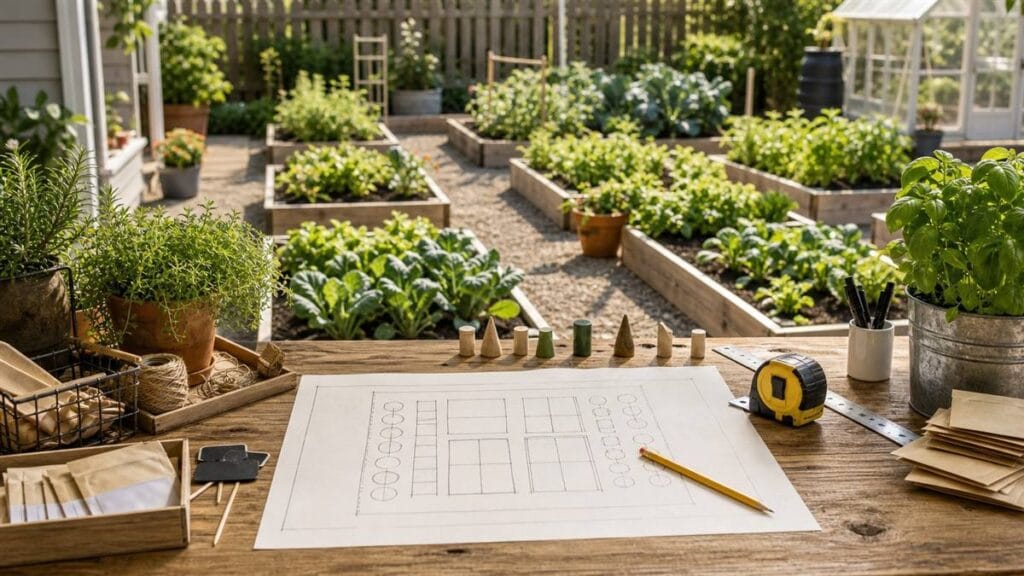
How you arrange your growing space matters as much as what you grow. Here’s a layout that maximizes production from a small footprint — around 200–400 square feet outdoors plus an indoor shelf system.

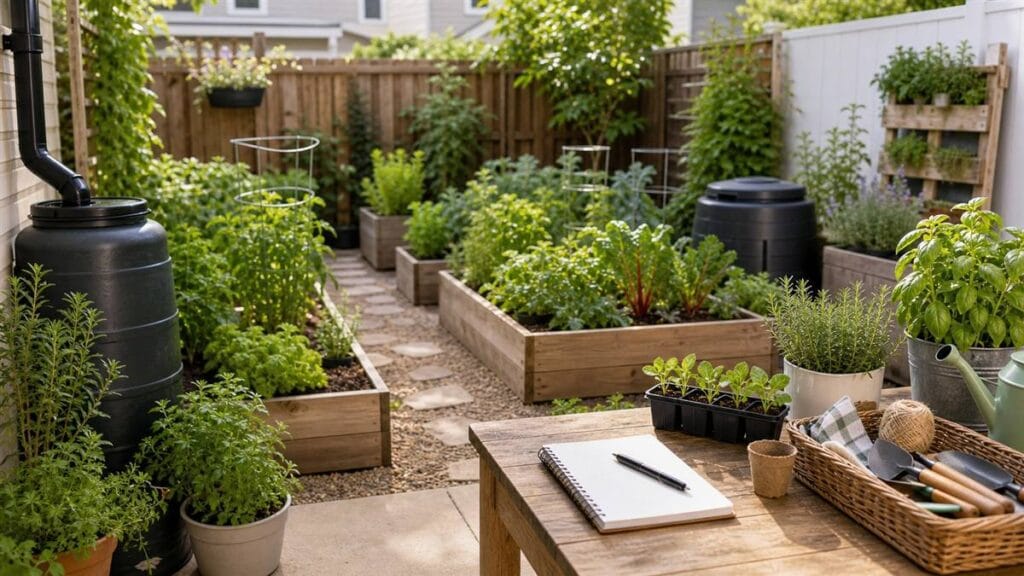
Raised Bed Zone (Outdoors)

Two to four 4×8 ft raised beds give you 64–128 sq ft of highly productive growing space. Raised beds warm up faster in spring, drain better than in-ground beds, and can be intensively planted — no wasted space for walking rows. Fill with a quality mix of compost, topsoil, and perlite.

Dedicate one bed to perennial crops that come back every year: asparagus, strawberries, perennial herbs like thyme and oregano. Rotate the remaining beds between heavy feeders (tomatoes, squash), light feeders (beans, greens), and root crops to maintain soil health.

Vertical Growing Zone

Any fence, wall, or trellis structure is untapped growing space. Cucumbers, pole beans, and even small squash varieties grow vertically, freeing up ground space for other crops. A 6-ft trellis along a fence line can support 4–6 cucumber plants and produce more than a 4×4 bed of the same crop planted flat.

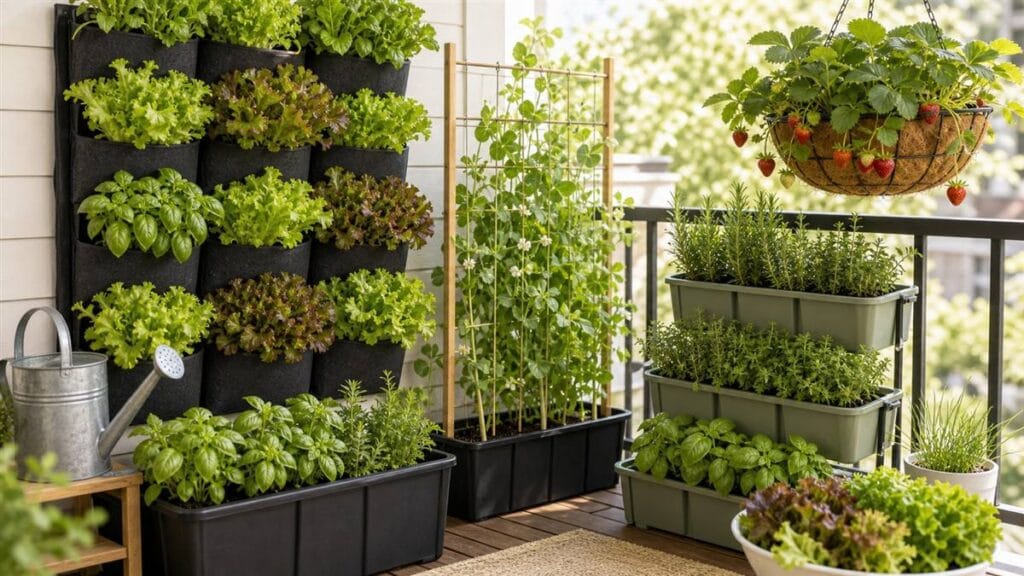
Container Zone (Patio or Balcony)

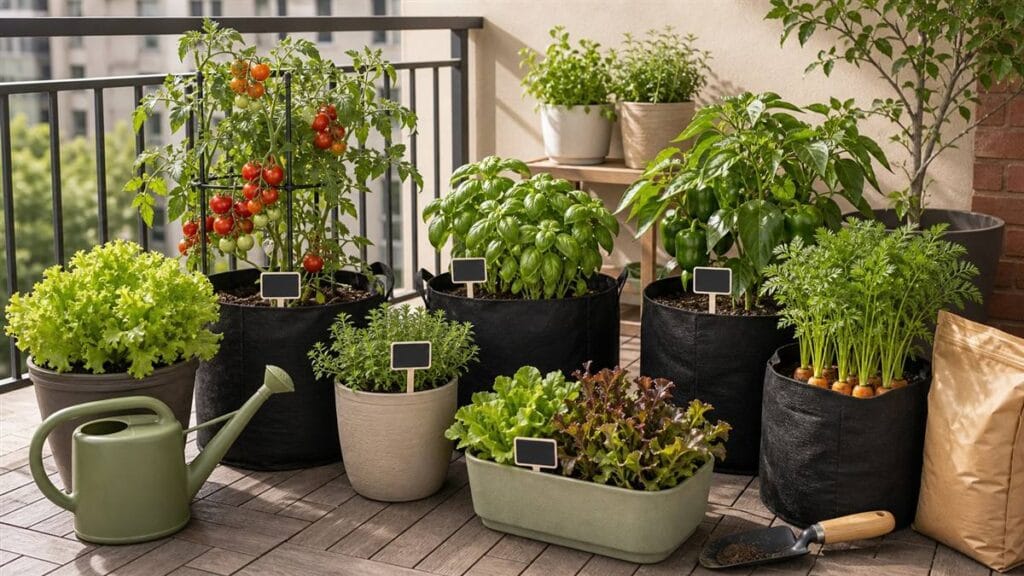
Large containers (5-gallon minimum, 15-gallon for tomatoes) expand your growing space onto hard surfaces — patios, driveways, balconies. Cherry tomatoes, peppers, and herbs all do well in containers. Container-friendly crops are a great complement to raised bed production.

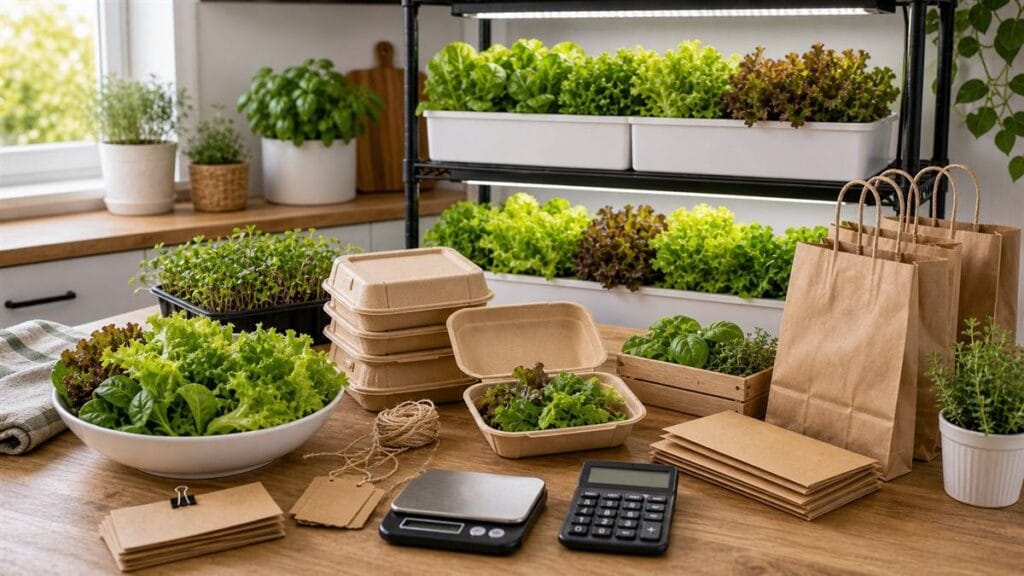
Indoor Growing Zone

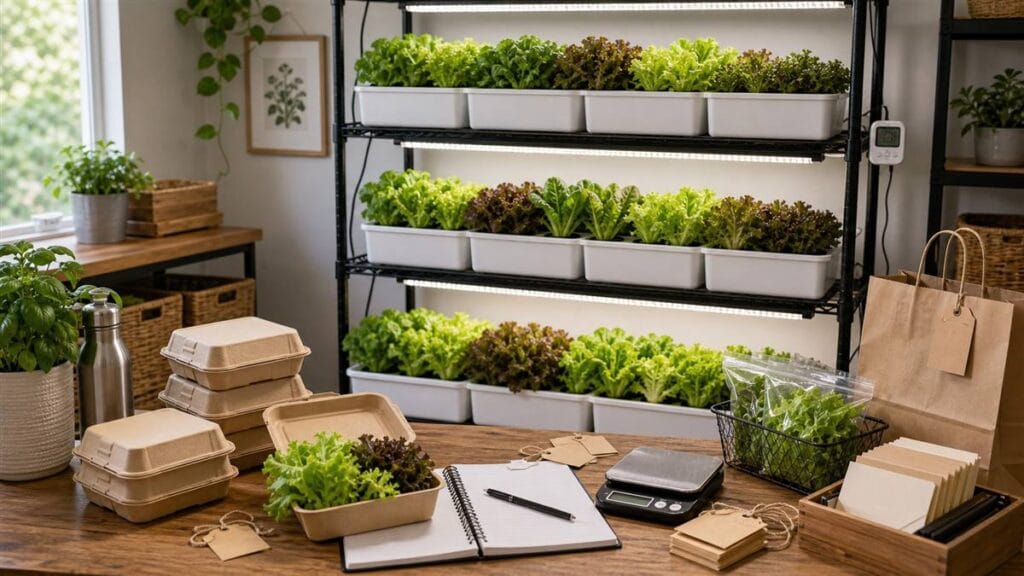
A wire shelving unit with LED grow lights in a spare room, basement, or garage corner. This is your year-round greens and herb production — running continuously regardless of what’s happening outdoors. Two shelves with one tote per shelf can supply a family’s entire salad and herb needs.

Preserving the Harvest: Stretching What You Grow

Growing food is only half the equation. Preserving the summer surplus extends your harvest through the months when outdoor production is low or nonexistent.

Easiest Preservation Methods for Small Homesteaders

  • Freezing — The simplest method. Blanch and freeze beans, kale, spinach, peas, and corn. Freeze tomatoes whole for winter soups and sauces. Freeze herb-infused oils and butters.
  • Canning — Best for tomatoes, pickles, jams, and salsa. Requires more equipment and technique but produces shelf-stable food that lasts 1–2 years.
  • Drying/dehydrating — Perfect for herbs, hot peppers, tomatoes, and beans. A basic food dehydrator ($30–$60) handles most home production needs.
  • Root cellaring — Winter squash, potatoes, carrots, beets, and garlic store well in a cool, dark location. No equipment needed beyond a suitable space.
  • Fermentation — Sauerkraut from cabbage, kimchi, fermented pickles. Requires only salt and a jar. Preserves food and adds probiotics.

The Self-Sufficiency Math

Let’s put real numbers to what a small growing operation can actually produce and save.

SourceWhat It ProducesAnnual Grocery Value
Indoor hydroponic shelf (2 totes)Lettuce and herbs year-round$600–$1,200
Two 4×8 raised bedsTomatoes, cucumbers, beans, greens$800–$1,500
Vertical trellis (6 ft)Cucumbers, pole beans$200–$400
4–6 containersCherry tomatoes, peppers, herbs$300–$600
Preserved summer surplusFrozen vegetables, canned tomatoes$300–$700
Total$2,200–$4,400/year

That’s $2,000–$4,000 a year in grocery savings from a setup that fits in a small backyard and a spare shelf indoors. For a family spending $800–$1,200/month on groceries, that’s a meaningful reduction — and it grows each year as you refine what you grow and how you preserve it.

When You Grow More Than You Can Eat

Most serious home growers hit a point where they produce more than their family can consume. That surplus is an opportunity.

The indoor hydroponic side of a small homestead is particularly well-suited to selling, because the output is consistent and predictable year-round — you’re not at the mercy of a good or bad outdoor season. Neighbors who want fresh, local produce are often happy to pay $30–$50 for a ready-to-harvest living lettuce tote they can keep on their windowsill for weeks.

That model — selling living plants rather than harvested produce — is what makes indoor growing profitable without requiring a farmer’s market booth or restaurant accounts. It’s the system behind the Indoor Mini Farm System, which walks through exactly how to structure a small neighborhood selling operation alongside your regular family growing.

And if the food savings angle resonates more than the income angle, the greens-focused overview breaks down exactly what an indoor growing system saves a family per month in real grocery costs.

Frequently Asked Questions

How much land do you need to grow all your own food?

For a complete caloric diet — all food including grains and protein — estimates range from half an acre to several acres depending on growing methods and diet. But for the high-value fresh produce that makes the biggest dent in a family grocery bill (greens, herbs, tomatoes, cucumbers), 200–400 square feet outdoors plus an indoor growing system is genuinely sufficient for a family of four.

What are the most productive crops for a small homestead?

Lettuce and salad greens, fresh herbs (especially basil), cherry tomatoes, cucumbers, zucchini, kale, and pole beans consistently deliver the highest value per square foot for small homesteaders. These crops are expensive to buy, perishable, and grow prolifically in small spaces — especially when combined with indoor hydroponic production for greens and herbs year-round.

Can you grow food year-round without a greenhouse?

Yes — with an indoor hydroponic growing system. Greens, herbs, and many vegetables grow just as well indoors under LED grow lights as they do in a greenhouse, at a fraction of the cost. An indoor shelf setup running year-round eliminates the seasonal gap that makes “growing your own food” feel incomplete for most people in northern climates.

Is it cheaper to grow your own food?

For high-value crops like organic salad greens, fresh herbs, cherry tomatoes, and cucumbers — yes, significantly cheaper after the first season’s setup costs. The ongoing cost of running a small raised bed and indoor hydroponic system is typically $20–$50 per month, producing food worth $200–$400 at grocery store prices. The savings compound each year as you improve your system and preservation skills.

What’s the easiest way to start growing your own food?

Start with one thing done well rather than trying to do everything at once. Either: (1) build a single indoor hydroponic tote for year-round lettuce and herbs — results in 30–45 days, minimal investment, and teaches the fundamentals — or (2) build one raised bed outdoors and plant the crops your family eats most. Master one before expanding to the other.


Growing your own food doesn’t require a farm or a perfect climate. It requires a system — one that uses both indoor and outdoor space strategically, produces in every season, and focuses on the crops that actually move the needle on your grocery bill. If you’re ready to start with the indoor piece, the Indoor Mini Farm System is the complete guide to getting a productive system running fast.

Container Gardening for Beginners: Grow Real Food Anywhere

Most gardening advice assumes you have a backyard. A patch of earth. Somewhere to put raised beds and drive stakes for tomato cages. But a huge portion of people who want to grow their own food live in apartments, townhouses, or homes with a concrete patio and not much else.

Container gardening is the answer — and it works better than most people expect. I’ve grown enough cherry tomatoes in a 15-gallon pot to supply my family through most of the summer. I’ve had basil in a 5-gallon bucket that outlasted three store-bought plants. And I’ve watched neighbors with nothing but a south-facing balcony grow more cucumbers than they knew what to do with.

This guide covers everything a beginner needs to know to start growing food in containers — what containers to use, what soil to fill them with, which crops work best, and how to keep everything alive without it becoming a second job.

Table of Contents

Why Container Gardening Works

Growing in containers isn’t a consolation prize for people without a yard. It has genuine advantages over in-ground gardening in many situations:

  • Total control over soil quality — You fill the container with exactly what the plant needs. No rocky clay, no compacted subsoil, no drainage problems.
  • Mobility — Move plants to follow the sun, bring them in before a frost, rearrange as needed.
  • Fewer soil-borne pests and diseases — Fresh potting mix in a clean container starts pest-free every season.
  • Works anywhere — Patio, balcony, rooftop, driveway, fire escape. Any surface that can hold weight and receives light.
  • Easy to scale — Start with two pots. Add more as you get comfortable. No commitment to permanent beds.

The limitations are real too — containers dry out faster than in-ground beds, need more frequent fertilizing, and limit root space for large crops. But for most vegetables and all herbs, these are manageable tradeoffs.

Choosing the Right Containers

Size is the most important factor. The single biggest container gardening mistake beginners make is choosing pots that are too small. Roots need room to grow, and small containers dry out in hours during summer heat.

CropMinimum Container SizeNotes
Herbs (basil, cilantro, chives)1–2 gallonCan share a larger pot
Lettuce and salad greens2–5 gallonWide, shallow containers work well
Spinach, kale, chard5 gallonDeeper is better for kale
Cherry tomatoes10–15 gallonBigger = better yield. Don’t undersize.
Full-size tomatoes15–20 gallonNeed strong support too
Cucumbers5–10 gallonTrellis or cage required
Peppers5–10 gallonExcellent container crop
Bush beans5–7 gallonWide container, multiple plants
Zucchini15+ gallonVery large plant — needs space

Container Materials

Plastic pots — Lightweight, inexpensive, retain moisture well. The standard choice for most container gardeners. Look for food-safe plastic if you’re concerned about leaching (most nursery pots are fine).

Fabric grow bags — Excellent drainage and air pruning of roots (prevents root circling). Affordable, collapsible for storage. Dry out faster than plastic, so water more frequently in hot weather.

Terracotta — Beautiful but heavy and dries out very quickly. Better for herbs that prefer drier conditions (rosemary, thyme) than for moisture-loving vegetables.

Food-safe buckets — 5-gallon buckets from hardware stores work perfectly for most vegetables. Drill 4–6 drainage holes in the bottom. Cheap, durable, and stackable.

Whatever you have — Old colanders, wooden crates lined with burlap, galvanized tubs, even grow bags made from burlap feed sacks. Container gardening is forgiving of improvisation as long as there’s adequate drainage and volume.

Drainage Is Non-Negotiable

Every container must have drainage holes. Roots sitting in waterlogged soil rot quickly. If a container doesn’t have holes, drill or punch them before planting. Don’t put gravel at the bottom — it doesn’t improve drainage and actually raises the water table inside the pot.

The Right Soil Mix for Containers

Never use garden soil or topsoil from your yard in containers. It compacts, drains poorly, and often introduces pests and diseases. Container plants need a light, well-draining mix that holds moisture without becoming waterlogged.

A Simple DIY Container Mix

Equal parts of:

  • Quality potting mix (not “potting soil” — the mix, which is lighter and airier)
  • Perlite — improves drainage and aeration
  • Compost — adds nutrients and beneficial biology

This mix drains well, holds enough moisture between waterings, and provides a good nutrient base. It works for vegetables, herbs, and flowers alike.

For a pre-made option, a quality premium potting mix (FoxFarm, Black Gold, or similar) is excellent out of the bag and doesn’t require amendment for most crops.

Best Crops for Container Gardening

Absolute Beginners: Start Here

Cherry tomatoes are the gateway crop for container gardeners. Varieties like ‘Tumbling Tom,’ ‘Sweet 100,’ and ‘Sun Gold’ were practically bred for container growing — compact, prolific, and forgiving. A 15-gallon pot in full sun produces more tomatoes than most families can eat fresh, with plenty for sauce and preserving.

Basil grows so well in a pot that it becomes almost effortless. One large basil plant in a 2-gallon pot, harvested regularly by pinching the tips, provides all the fresh basil most families need through the season.

Lettuce and salad greens are ideal for wide, shallow containers — even window boxes. They don’t need deep root space, grow quickly, and can be harvested leaf by leaf for weeks. In hot climates, move the container to afternoon shade to prevent bolting.

High Reward for a Little More Effort

Cucumbers grow vertically, so a 5–10 gallon pot against a fence or trellis produces an impressive harvest from a small footprint. Water consistently — uneven watering causes bitter fruits.

Peppers — both sweet and hot — are outstanding container crops. They’re compact, heat-loving, and productive over a long season. A single pepper plant in a 7-gallon pot will produce more than most families use fresh.

Kale and chard in a 5-gallon pot can be harvested repeatedly for months as a cut-and-come-again crop. Start them in early spring, harvest outer leaves through fall.

Avoid in Containers (Usually)

Corn, melons, full-size pumpkins, and indeterminate tomato varieties in anything smaller than a 20-gallon container. These crops need significant root space and won’t perform well when constrained. Stick to compact or dwarf varieties if you want to try them.

Watering: The Most Common Mistake

Inconsistent watering is the leading cause of container gardening failures. Containers dry out much faster than in-ground beds — especially in summer heat, especially in fabric grow bags, especially with large thirsty plants like tomatoes.

How to Know When to Water

Stick your finger 2 inches into the soil. If it’s dry at that depth, water thoroughly. If it’s still moist, wait. This simple check beats any schedule because it responds to actual conditions rather than the calendar.

In peak summer heat, large containers with fruiting crops may need watering daily. Smaller herb pots may need it every 2–3 days. Check rather than guess.

How to Water Properly

Water slowly and deeply until it runs freely from the drainage holes. This ensures the entire root zone is moistened and flushes any salt buildup from fertilizers. Shallow watering that only wets the top inch encourages roots to stay near the surface, making the plant more vulnerable to drying out.

Self-Watering Containers

Self-watering containers have a reservoir at the bottom that wicks water up to roots as needed. They dramatically reduce watering frequency and are excellent for tomatoes and peppers, which need consistent moisture. Worth the slightly higher upfront cost if you travel or have a busy schedule.

Fertilizing Container Plants

Nutrients wash out of containers faster than in-ground soil — every time you water, some fertility leaches through the drainage holes. Container plants need regular feeding to maintain productivity through the season.

  • Slow-release granular fertilizer — Mix into the potting medium at planting time. Feeds plants for 3–6 months with no further attention. Good base-level nutrition.
  • Liquid fertilizer — Applied every 2–4 weeks during the growing season. More precise and immediately available to plants. Fish emulsion and liquid kelp are good organic options; balanced synthetic fertilizers work faster.
  • Compost top-dressing — Add an inch of compost to the surface of containers each season. Feeds plants slowly and improves soil structure.

Watch your plants: pale yellow leaves often indicate nitrogen deficiency (needs more fertilizer); purple-tinged leaves often indicate phosphorus deficiency; brown leaf edges can mean over-fertilizing or inconsistent watering.

Sunlight and Placement

Most vegetables need 6–8 hours of direct sunlight per day. This is the constraint that determines what you can grow more than anything else.

Light LevelHours of Direct SunWhat You Can Grow
Full sun6–8+ hoursTomatoes, peppers, cucumbers, beans — everything
Partial sun4–6 hoursLettuce, spinach, kale, chard, herbs (most)
Partial shade2–4 hoursLettuce, mint, chives, parsley — shade-tolerant crops only
Full shade<2 hoursVery limited. Consider an indoor setup with grow lights instead.

If your outdoor space doesn’t get adequate sun, the most practical solution is to move growing indoors with artificial lighting. A simple LED grow light setup produces excellent results for leafy greens and herbs regardless of your home’s orientation — and it works year-round, not just in summer. That’s where an indoor hydroponic garden becomes the better tool for the job.

Container Garden Setups for Small Spaces

Apartment Balcony (50–100 sq ft)

Use railing planters for herbs and trailing plants. Stack containers vertically with a tiered plant stand. One or two large containers (15 gallon) for cherry tomatoes or cucumbers. Stick to compact varieties bred for containers. Check weight limits if you’re stacking heavy pots on a balcony.

Patio or Driveway (100–300 sq ft)

A rolling cart or plant trolley lets you move large containers to chase sun across the day. Group containers close together to reduce evaporation. A simple DIY self-watering container system using 5-gallon buckets nested inside each other creates excellent moisture management for almost no cost.

Small Backyard With Limited Sun

Grow shade-tolerant crops (lettuce, kale, herbs) in the shadier spots. Use containers to move sun-loving crops (tomatoes, peppers) to whatever patches of full sun you do have — even if it’s just the sunniest corner of the yard. Supplement with an indoor growing setup for year-round greens.

When to Upgrade to Hydroponics

Container gardening is excellent for outdoor crops — tomatoes, peppers, cucumbers, and herbs in the warm season. But it has one significant limitation: it doesn’t work well indoors for year-round growing, because soil-based containers are messy, heavy, attract fungus gnats, and don’t perform well under artificial light.

That’s the gap hydroponics fills. For indoor year-round growing of leafy greens and herbs, a simple Kratky hydroponic system outperforms soil containers in every meaningful way — faster growth, no pests, no mess, and consistent results in any season. Many home growers end up with both: containers outdoors for summer vegetables, hydroponics indoors for year-round greens. It’s a natural and very effective combination.

For a full picture of the best crops to grow in each system and how they complement each other, the crop selection guide covers both approaches side by side.

And if you’re curious what it looks like when indoor growing goes beyond feeding your family and starts generating a small income from selling living plants to neighbors — the Indoor Mini Farm System is the complete guide to that model.

Frequently Asked Questions

What is the easiest vegetable to grow in containers?

Cherry tomatoes, lettuce, and herbs (especially basil) are consistently the easiest and most rewarding container vegetables for beginners. Cherry tomato varieties like ‘Tumbling Tom’ and ‘Sweet 100’ are compact, prolific, and forgiving. Lettuce grows quickly in any wide, shallow container and can be harvested leaf by leaf for weeks.

Can you grow tomatoes in containers?

Absolutely — cherry tomatoes especially. Use at least a 15-gallon container, a quality potting mix, consistent watering, and full sun (6–8 hours). Support the plant with a stake or cage. Choose compact varieties labeled “determinate” or “patio” for best results in containers. Full-size indeterminate tomatoes can be grown in containers but need at least 20 gallons and significant support.

How often should I water container vegetables?

Check rather than schedule — stick a finger 2 inches into the soil and water when it’s dry at that depth. In summer heat, large containers may need daily watering. Smaller pots and cooler weather require less frequent watering. The goal is consistent moisture without waterlogging — let the soil guide you rather than the calendar.

What soil should I use for container gardening?

Use a quality potting mix — not garden soil or topsoil, which compacts and drains poorly in containers. A mix of potting mix, perlite, and compost in equal parts is excellent DIY option. Pre-made premium potting mixes (FoxFarm, Black Gold) work well straight from the bag for most vegetables.

Can I do container gardening without a balcony?

Yes — a sunny windowsill handles herbs and lettuce. A grow light opens up almost any indoor space for year-round growing. If you have no outdoor space at all, an indoor hydroponic setup is often more practical than trying to grow in containers indoors with natural light alone. Many people in apartments without outdoor access run productive indoor growing systems year-round using LED grow lights and a simple hydroponic setup.


Container gardening is one of the most accessible ways to start growing your own food — and one of the most flexible. Start with a pot of cherry tomatoes and a pot of basil. Go from there. When you’re ready to add year-round indoor growing to the mix, the Indoor Mini Farm System is the complete guide to getting it running.

Year-Round Vegetable Garden Plan: Grow Food Every Month

Most vegetable gardens produce for about four months a year. You plant in spring, harvest through summer, and by October it’s over until next May. Six months of nothing — while grocery prices keep climbing and the produce section keeps disappointing.

It doesn’t have to work that way. With a little planning and one key addition to your growing setup, you can have fresh vegetables and herbs available every month of the year. Not just salad greens — real, varied, productive growing in every season.

This is the year-round vegetable garden plan I’ve refined over several growing seasons: which crops to plant and when, how to bridge the seasonal gaps, and how to use indoor growing to fill the months that outdoor gardening simply can’t cover.

Table of Contents

Why Most Gardens Only Produce Half the Year

The typical vegetable garden plan goes like this: wait until after the last frost, plant everything in May, harvest through July and August, watch it wind down in September. That’s four months of production in a twelve-month year.

The gaps exist because most gardeners only think about one season at a time. They miss the cool-weather window in early spring when lettuce, spinach, and peas thrive. They don’t replant in fall when temperatures drop back into the ideal range for greens. And they have no system at all for winter.

Closing those gaps doesn’t require a greenhouse or a complicated system. It requires paying attention to what grows in each season — and having a simple indoor solution for the months that outdoor growing genuinely can’t cover.

The Four-Season System

A true year-round garden operates in four distinct modes, each with its own crop focus and timing:

  1. Cool-season outdoor growing (spring and fall) — Leafy greens, brassicas, root vegetables, peas
  2. Warm-season outdoor growing (summer) — Tomatoes, cucumbers, peppers, beans, squash
  3. Indoor growing year-round — Lettuce, herbs, spinach, kale, and other greens running continuously regardless of season
  4. Preservation — Extending the summer harvest into fall and winter through freezing, canning, and drying

The indoor piece is what most gardeners are missing. A simple indoor hydroponic setup produces fresh greens and herbs in January just as readily as in July — and it takes about 30 minutes a week to maintain. It’s the piece that turns a seasonal garden into a year-round food source.

Spring Planting Plan (March–May)

Spring is the most underutilized season in most vegetable gardens. Gardeners wait until it’s warm enough for tomatoes — but a whole class of crops thrives in cool, even frost-tolerant conditions that arrive weeks earlier.

Early Spring (Soil Temperature 40°F+, 6–8 Weeks Before Last Frost)

These crops can go in the ground while nights are still cold — some even tolerate light frost:

  • Peas — Direct sow. One of the earliest crops possible. Sweet, productive, and done before summer heat arrives.
  • Spinach — Direct sow or transplant. Germinates in cold soil (as low as 35°F). Ready in 40–50 days.
  • Lettuce — Transplant starts (or direct sow). Thrives in cool temps. Bolts when summer heat arrives.
  • Kale and chard — Transplant or direct sow. Cold-hardy, productive, and cut-and-come-again.
  • Radishes — Direct sow. Ready in 25–30 days. Quick indicator crop while waiting for slower plants.
  • Carrots and beets — Direct sow. Germinate slowly but handle cold well once up.

Mid-Spring (2–4 Weeks Before Last Frost)

Start warm-season crops indoors under lights — they’ll be ready to transplant after the last frost date:

  • Tomatoes (6–8 weeks before last frost)
  • Peppers (8–10 weeks before last frost — they’re slow)
  • Cucumbers (3–4 weeks before last frost)
  • Squash and zucchini (3–4 weeks before last frost)

Starting transplants indoors extends your warm-season production window by 4–6 weeks compared to direct sowing after the last frost.

Summer Planting Plan (June–August)

Summer is when most gardeners feel confident — and when most of the visible, satisfying harvest happens. The key is keeping production continuous rather than having a glut in July and nothing in August.

What to Grow

  • Tomatoes — The centerpiece of most summer gardens. Plant after last frost, stake or cage, water consistently. Harvest from July through first frost.
  • Cucumbers — Fast producers. Plant near a fence or trellis. Pick frequently to keep plants producing — leaving mature cucumbers on the vine signals the plant to stop flowering.
  • Zucchini and summer squash — Enormously productive. One or two plants is usually enough for a family. Check daily at peak season — they go from small to enormous overnight.
  • Beans (bush and pole) — Direct sow after last frost. Bush beans mature quickly (50–55 days); pole beans produce longer. Succession plant every 3 weeks for continuous harvest.
  • Basil — Loves heat. Plant after last frost, harvest frequently by pinching growing tips.
  • Peppers — Slow to start but productive through summer. Both sweet and hot varieties are excellent.

Midsummer Plantings (July)

July isn’t just for harvesting — it’s also time to plan for fall. Start these crops now for a fall harvest:

  • Broccoli and cabbage transplants (for fall harvest)
  • A second succession of beans (for late summer harvest)
  • Kale starts (for fall and winter harvest)
  • Fall lettuce starts (transplant out in August when temperatures drop)

Fall Planting Plan (September–November)

Fall is the most underrated growing season. Temperatures drop back into the ideal range for cool-weather crops, pest pressure is usually lower than in spring, and many crops taste better after a light frost.

Fall Cool-Season Crops

Plant 6–8 weeks before your first expected frost date for a solid fall harvest:

  • Spinach — Very frost-hardy. Can be harvested well into November in many climates, and will overwinter under a cold frame.
  • Lettuce — Fast fall crop if started from transplants. Harvest before hard freezes.
  • Kale — Improves with frost. One of the most cold-hardy vegetables — many varieties survive well below freezing. A late-fall kale harvest is often the sweetest of the year.
  • Arugula — Cold-tolerant and fast. Excellent under row cover through November and December in mild climates.
  • Garlic — Plant in October, harvest the following July. The lowest-maintenance crop in the garden — put it in and forget it until summer.
  • Overwintering onions — Sets planted in fall produce early spring onions before anything else is growing.

Extending Fall with Row Cover

A simple row cover (floating fabric draped over plants, $10–$20 for a season supply) adds 4–6°F of frost protection and extends your fall harvest by 3–6 weeks. It’s one of the highest-return investments in season extension — cheap, reusable, and requires no special structure.

Winter Growing: The Indoor Solution

Here’s the honest reality: in most of North America, outdoor growing stops somewhere between November and March. No row cover, cold frame, or season extension technique fully replaces that lost production time. To grow food in winter, you need to grow it indoors.

The good news is that indoor growing has become remarkably simple and affordable. A basic hydroponic setup on a shelf — LED grow light, a tote or two of nutrient solution, and some net pots — produces a continuous supply of lettuce, herbs, kale, spinach, and arugula through even the darkest winter months.

The Kratky method is the simplest entry point: no pump, no electricity beyond a grow light, no complexity. Set it up once and it runs with minimal attention — checking pH and water level every few days, harvesting when plants are ready, replanting immediately after. The cycle never stops.

This is the piece that transforms a seasonal vegetable garden into a genuine year-round food source. Everything else in this guide extends your outdoor season — the indoor system is what actually closes the gap.

For a complete walkthrough of setting up an indoor growing system, the DIY hydroponics guide covers system options, costs, and the best crops for indoor production.

Succession Planting: The Key to Continuous Harvest

The most common feast-or-famine problem in vegetable gardens — too much zucchini in July, nothing in August — is solved by succession planting: staggering your plantings so that as one batch finishes, the next is just starting to produce.

Simple succession planting rules:

  • For fast crops (lettuce, radishes, beans): plant a new batch every 2–3 weeks
  • For slow crops (tomatoes, peppers): one planting is usually enough — they produce over a long window
  • For cut-and-come-again crops (kale, chard, basil): harvest regularly to keep plants productive rather than planting new successions
  • Indoors, stagger your hydroponic totes — start a new tote every 2 weeks and you’ll always have plants at different stages of growth, meaning continuous harvests rather than a glut all at once

Quick Reference: Crops by Season

CropSpringSummerFallWinter (Indoor)
Lettuce⚠️ Bolts
Spinach⚠️ Bolts
Kale✅ (best)
Basil⚠️ After frost✅ (best)⚠️ Before frost
Tomatoes🌱 Start indoors✅ (best)✅ Until frost
Cucumbers✅ (best)⚠️ Until frost
Peppers🌱 Start indoors✅ (best)✅ Until frost
Peas✅ (best)❌ Too hot
Beans⚠️ After last frost✅ (best)⚠️ Early fall
Garlic🌱 Growing✅ Harvest July✅ Plant Oct🌱 Dormant
Herbs (mixed)✅ Indoors

Preserving the Surplus for Lean Months

A year-round garden plan isn’t just about what you’re growing in real time — it’s about stretching summer’s abundance into the months when production slows. Preservation is what makes the math work for true food self-sufficiency.

  • Freeze tomatoes whole (no prep needed) for winter soups, sauces, and stews. One productive summer plant can yield enough frozen tomatoes for most of winter’s cooking needs.
  • Freeze herbs in ice cube trays with olive oil — ready-to-use herb cubes for winter cooking.
  • Freeze beans and peas — blanch for 2 minutes, cool in ice water, freeze in portions. Lasts 8–12 months.
  • Dry herbs — bundle and hang basil, oregano, and thyme upside down in a warm, dry space. Ready in 1–2 weeks.
  • Can or ferment cucumbers into pickles — extends a summer glut into a year-round pantry staple.
  • Store winter squash — properly cured butternut and acorn squash keep 3–6 months in a cool, dry location with no processing needed.

Combined with your year-round indoor growing, a well-preserved summer harvest means your dependence on the grocery store’s produce section gets genuinely small — and that’s a good feeling.

For the indoor piece that keeps fresh greens and herbs going through every month, the Indoor Mini Farm System is the complete guide — from setup through to selling the surplus if you end up growing more than your family can eat.

Frequently Asked Questions

Can you grow vegetables year-round without a greenhouse?

Yes — with a combination of outdoor cool-season growing in spring and fall, warm-season growing in summer, and an indoor hydroponic setup for winter. A greenhouse extends outdoor growing and is a great investment if you have space and budget, but it’s not necessary for year-round food production when you have a simple indoor growing system.

What vegetables can I grow in winter?

Outdoors in mild climates (zones 7–10): kale, spinach, arugula, chard, and overwintering onions and garlic survive light frosts and can be harvested through winter with row cover protection. In colder climates, indoor growing is the practical solution — leafy greens and herbs grow extremely well under LED grow lights year-round regardless of outdoor temperatures.

What should I plant first in a new vegetable garden?

Start with crops that give quick feedback and high value: lettuce, radishes, and herbs in spring — they’re ready in 25–45 days and teach you the fundamentals of your space. Add tomatoes and cucumbers for summer. The fastest path to a year-round system is adding an indoor growing setup in parallel with your first outdoor season.

How do I keep a vegetable garden producing all summer?

Succession planting is the key — stagger new plantings of fast crops every 2–3 weeks rather than planting everything at once. Harvest frequently to keep plants productive: pick cucumbers, beans, and zucchini every 1–2 days at peak season. Remove spent plants promptly and replant the space immediately rather than leaving beds empty.

What’s the most productive vegetable garden layout?

Raised beds with intensive planting (no walking rows) maximize production per square foot. Group crops by water and light needs. Use vertical space with trellises for cucumbers, beans, and tomatoes. Add a permanent perennial bed for asparagus, strawberries, and perennial herbs. Complement all of it with an indoor growing setup for year-round greens and herbs.


A year-round vegetable garden is simpler than it sounds — it’s mostly a matter of knowing what to plant when, and having a plan for the months that outdoor growing can’t cover. If you’re ready to set up the indoor piece that makes it genuinely year-round, the Indoor Mini Farm System is the complete guide to getting it running fast.

Vertical Gardening for Small Spaces: Double Your Harvest Without More Ground

The most underused growing space in any small yard, patio, or balcony isn’t on the ground — it’s above it. Fences, walls, railings, and simple trellis structures represent hundreds of square feet of potential growing space that most gardeners never use.

Vertical gardening is the practice of training plants upward instead of letting them sprawl — or mounting growing containers on vertical surfaces to make use of walls and fences. Done well, it can double or triple the productive capacity of a small space without requiring an inch more of ground.

Here’s how to do it effectively, what grows best vertically, and how to structure a vertical garden that actually produces food rather than just looking interesting.

Table of Contents

Why Vertical Gardening Works

The math is compelling. A 4×8 ft raised bed gives you 32 square feet of growing space. Add a 6-foot trellis along the back of that bed and you’ve effectively added another 48 square feet of productive surface — with no additional footprint. That’s a 150% increase in growing capacity from one simple structure.

Beyond the space efficiency, vertical growing has practical benefits:

  • Better air circulation — reduces fungal disease problems common in dense ground-level plantings
  • Easier harvesting — cucumbers and beans at eye level are far easier to pick consistently than those hidden under sprawling foliage
  • More sun exposure — vertical plants don’t shade each other the way sprawling crops do
  • Cleaner produce — fruits growing off the ground have fewer pest and rot issues
  • Better use of rental or shared spaces — a trellis against a fence or wall uses space that’s “free” in a way ground space often isn’t

Best Crops for Trellis Growing

Not every plant grows vertically naturally — but many of the most productive food crops are natural climbers or can be trained upward with simple support.

Cucumbers

Cucumbers are among the best vertical crops available. They climb naturally using tendrils, grow quickly, and produce far more prolifically when grown vertically than when left to sprawl on the ground. A single cucumber plant on a 5-ft trellis produces more fruit than the same plant sprawling over 8 square feet — and the fruits are straighter, cleaner, and easier to spot.

Plant 12–18 inches apart along the base of a trellis. Guide young vines upward for the first few weeks and they’ll take over from there. Pick every 1–2 days at peak season to keep plants producing.

Pole Beans

Pole beans grow 6–8 feet tall and produce over a much longer season than bush beans. They’re one of the most space-efficient food crops you can grow vertically — a row of poles or a simple A-frame trellis supports 6–8 plants in a 2-foot footprint and produces beans for 8–10 weeks.

A traditional Native American “Three Sisters” planting — corn, beans, and squash — uses the corn stalks as the trellis for the beans, an elegant vertical solution that predates modern gardening by centuries.

Tomatoes

Indeterminate tomato varieties (the ones that keep growing all season) are most productive when trained vertically. The standard approach — cage or stake — is vertical gardening in its simplest form. But you can take it further: a Florida weave trellis system using T-posts and twine allows you to plant tomatoes in a dense row and train them upward, packing more plants into a linear bed than any cage system allows.

Peas

Sugar snap peas and snow peas climb naturally and grow quickly in cool weather. A simple netting or wire mesh trellis handles them easily. They’re a perfect spring vertical crop — productive before the season warms up enough for cucumbers and beans.

Winter Squash and Pumpkins (Small Varieties)

Small-fruited varieties like ‘Delicata,’ ‘Acorn,’ and small sugar pumpkins can be trained up a sturdy trellis. Heavier fruits need support — a simple mesh sling made from netting or old pantyhose cradling each fruit works perfectly and prevents the trellis from being pulled over.

Crops That Don’t Work Vertically

Root vegetables, corn, and sprawling crops like watermelon and large pumpkins don’t translate well to vertical growing. For these, ground-level beds or containers are still the right approach.

Wall Planters and Pocket Gardens

Beyond trellising climbing plants, vertical growing includes mounting containers directly on walls, fences, and structures to grow crops that don’t climb naturally.

Felt Pocket Planters

Fabric pocket planters — available in sizes from a dozen pockets to 50+ — mount on any fence or wall with simple hooks. Each pocket holds a small plant: herbs, lettuce, strawberries, or small flowering plants. A single 12-pocket panel on a 4-foot fence section can grow 12 herb plants in a space that would otherwise be completely unused.

They dry out quickly, so pocket planters work best for crops that don’t need deep root space (herbs, lettuce, strawberries) and require attention to watering — daily in hot weather.

Rail Planters

Planters designed to hang from railings are excellent for balcony and deck growing. Both the inner and outer surface of a railing can support planters — a balcony with 20 feet of railing can effectively have 40 feet of linear planting space using both sides. Best for herbs, lettuce, strawberries, and trailing plants.

Pallet Gardens

A wooden pallet stood vertically, lined with landscape fabric, and filled with potting mix becomes an instant vertical garden. Works well for shallow-rooted herbs and lettuce. Use heat-treated (HT) pallets only — avoid pallets marked MB (methyl bromide treated). Free from many hardware stores and construction sites.

Tower Gardens and Vertical Systems

Tower garden systems — vertical columns with planting pockets around the outside — take vertical growing to its logical extreme. They grow 20–30 plants in a 2-foot circular footprint. Most use a pump to circulate nutrient solution from a reservoir at the base up through the column, where it drips down past the roots of each plant.

Commercial tower systems (like Tower Garden’s branded product) are expensive — $500–$800+. But DIY versions using PVC pipe or stacked containers can be built for $50–$150 and work on the same principle. They’re excellent for lettuce, herbs, spinach, and strawberries — crops with compact root systems that grow well in the limited soil volume of a tower pocket.

If you’re interested in a tower system for indoor growing, the NFT (Nutrient Film Technique) tower approach used in indoor hydroponic gardens is a well-proven option that scales easily from a single tower to a full shelf of them.

Trellis Structures: What to Build or Buy

Simple A-Frame Trellis

Two wooden panels (1×2 lumber with twine or wire mesh stapled across) leaned against each other and tied at the top. Plant on both sides — cucumbers on the outside, lettuces in the shaded interior. Folds flat for storage. Cost to build: $15–$25.

T-Post and Wire/Netting

Metal T-posts (from any farm supply or hardware store, $3–$6 each) driven into the ground with livestock wire or netting strung between them. Extremely durable, handles heavy crops. Best for a permanent or semi-permanent installation along a fence line or at the back of raised beds. A 10-foot section costs $20–$40 and lasts many years.

Florida Weave (Tomatoes)

T-posts or wooden stakes placed between tomato plants, with twine woven back and forth between stakes at each successive height as plants grow. No cages needed — efficient, cheap, and allows dense planting. Add a new row of twine every 6–8 inches as the plants grow.

Existing Structures

Fences, deck railings, pergolas, and even downspout brackets are all potential trellis supports. Before buying anything, walk around your space and identify existing vertical structures that could support a climbing plant with nothing more than a few hooks or zip ties.

Vertical Gardening on a Balcony or Patio

A balcony is almost entirely vertical surface — railing on at least two sides, walls on one or two more. Used well, a 60-square-foot balcony can grow a surprising amount of food:

  • Railing planters on both sides of the railing — 20 feet of railing = 40 ft of herb and lettuce growing space
  • One or two large containers (15 gallon) on the floor for cherry tomatoes, cucumbers, or peppers with vertical support
  • A wall-mounted pocket planter on any solid wall surface — 12–20 pockets of herbs
  • An overhead trellis or string system from the balcony ceiling or railing supports for a trailing cucumber or bean plant

The weight consideration is real on balconies — check your building’s load rating before putting multiple large containers in one spot. Distribute weight along the railing edges rather than concentrating it in the center.

Going Vertical Indoors

Vertical growing isn’t just for outdoor spaces. Indoors, a wire shelving unit with LED grow lights mounted on the underside of each shelf is the most common and effective form of vertical indoor growing — each shelf is its own growing level, stacked vertically in a 4-foot footprint.

A standard 5-tier wire shelf unit gives you five growing levels in less than 4 square feet of floor space. With a grow light under each shelf and a Kratky hydroponic tote on each level, you can grow 30–60 plants in a spare corner of a room.

That kind of density — growing vertically indoors with hydroponics — is exactly what makes a small indoor system capable of producing more food than most families can eat. And when you’re growing more than you can eat, that surplus becomes something worth selling. The Indoor Mini Farm System is built around precisely this kind of efficient, vertically-stacked indoor production.

Tips for Success with Vertical Growing

Train early. Guide young vines onto their trellis when they’re small and flexible. Once they’ve sprawled on the ground, they’re harder to redirect without damage. A few minutes per week of tucking and tying at the start of the season pays off through summer.

Water more often. Wall planters and pocket gardens dry out faster than ground-level beds. Check them daily in summer and be prepared to water twice a day during heat waves. A drip irrigation system is worth the investment for any significant wall planting.

Use the shade strategically. Tall trellised plants cast shade — use it. Plant heat-sensitive crops (lettuce, spinach) on the north side of a trellis where they’ll be shaded in summer afternoon heat. This extends their productive season by weeks.

Build your trellis before planting. Trying to install a trellis structure around established plants damages roots and stems. Put the support in place first, then plant at the base.

Harvest frequently. This is doubly important for vertical crops like cucumbers and beans — plants produce more when harvested consistently. A cucumber left to yellow and go to seed on the vine signals the whole plant to stop producing. Pick young and often.

For more on the best crops to grow in small spaces generally — both vertically and in containers — the crop selection guide covers what grows best where. And if you’re thinking about combining outdoor vertical growing with an indoor hydroponic system for year-round production, the small homestead food production guide maps out how the two systems work together.

Frequently Asked Questions

What vegetables grow best vertically?

Cucumbers, pole beans, peas, tomatoes (indeterminate varieties), and small-fruited squash are the most productive vertical food crops. They’re natural climbers or easily trained upward, produce prolifically when given adequate support, and are significantly easier to harvest when grown vertically than when left to sprawl.

How do I build a simple vegetable trellis?

The simplest functional trellis is two 6-foot wooden stakes (or T-posts) driven into the ground 4–6 feet apart, with garden netting or wire mesh stapled or zip-tied between them. Total cost: $10–$20. Sufficient for cucumbers, beans, and peas. For tomatoes, add a third stake in the middle and use the Florida weave method with twine.

Can I do vertical gardening in an apartment?

Yes — railing planters, wall-mounted pocket planters, and tiered plant stands all work on apartment balconies. Indoors, a wire shelving unit with LED grow lights is one of the most effective vertical growing systems available, allowing you to grow 30–60 plants in a small floor footprint year-round.

What is the most space-efficient way to grow vegetables?

Combining vertical outdoor growing (trellised cucumbers, beans, and tomatoes) with an indoor hydroponic shelf system maximizes food production per square foot more than any other approach. The outdoor trellis turns linear fence space into productive growing area; the indoor shelf system stacks multiple growing levels vertically in a small footprint.

Do vertical gardens need special soil?

Wall planters and pocket gardens need a very lightweight, well-draining potting mix — standard potting mix with added perlite works well. Heavy garden soil compacts in vertical containers and can pull the structure off the wall. For climbing crops grown at ground level or in raised beds, normal well-amended garden soil or raised bed mix is fine.


Vertical growing is one of the highest-return changes you can make to a small garden — it costs little, requires no new ground space, and dramatically increases what you can produce. Combine it with an indoor growing system and you’ve got year-round food production in a genuinely small footprint. If you’re ready to set up the indoor piece, the Indoor Mini Farm System is the complete guide to getting it running.

How to Start a Backyard Homestead (Even on a Small Lot)

The word “homestead” used to mean 160 acres and a covered wagon. Today it means something different — and more accessible — for most people who are drawn to it. It means intentional self-reliance. Growing some of your own food. Reducing dependence on a supply chain that seems less reliable every year. Living a little closer to where things actually come from.

You can do all of that on a quarter-acre lot. On a tenth of an acre. Even on a patio with containers and a shelf indoors. The scale is up to you. What matters is the system — starting with the pieces that give you the most return for your effort and building from there.

This is the guide I wish I’d had at the beginning: what to set up first, what to grow, how to structure your time and space, and how to think about backyard homesteading as a progression rather than an all-or-nothing commitment.

Table of Contents

What Backyard Homesteading Actually Means

Backyard homesteading is the practice of using your available space — whatever that is — to produce food, reduce waste, and increase self-reliance. It’s not about being completely off-grid or feeding yourself entirely from your property. It’s about shifting the needle from full dependence on the grocery store toward something more balanced and intentional.

What that looks like in practice varies enormously. For some people it’s a productive vegetable garden and an herb shelf indoors. For others it’s chickens, fruit trees, a large vegetable garden, a root cellar, and a chest freezer full of preserved summer produce. Both are homesteading. Neither is wrong.

The key principle: start with what gives you the most return for the least complexity, build skills and systems gradually, and expand only when what you have is running well.

Start With Food: The Highest-Return First Step

New homesteaders often want to do everything at once — chickens, bees, fruit trees, a large garden, composting, rainwater collection. The result is usually overwhelm, half-finished projects, and abandonment within a year.

The better approach: start with food growing, specifically the crops that give you the fastest feedback and highest grocery savings for the effort involved. That means leafy greens, herbs, and summer vegetables — not grain crops, not large livestock, not complex preservation projects.

Here’s why this order matters: growing food teaches you the fundamentals of working with plants, seasons, and your specific microclimate. That knowledge transfers to everything else you add later. Chickens are easier to manage when you already have composting infrastructure. Fruit trees integrate naturally into a space you’ve already mapped and understood. Start with the garden — everything else builds on it.

Assess Your Space Honestly

Before you build or plant anything, spend a few weeks observing your space. Where does full sun hit, and for how long? Where does water pool after rain? Which areas are shaded by the house or neighboring trees at different times of day?

This observation period is one of the most valuable investments you can make. Gardens planted in the wrong spot fail regardless of how much work you put into them. Knowing your space well before committing to a layout saves enormous time and frustration.

What to Look For

  • Full sun zones (6–8+ hours of direct sun) — your primary vegetable growing areas
  • Partial sun zones (4–6 hours) — good for cool-season greens, herbs, some fruits
  • Shade zones — compost bins, storage, maybe chickens or rabbits eventually
  • Water access — where are your outdoor taps? Long hose runs are friction you’ll resent by August.
  • Wind exposure — exposed areas need windbreaks for tall crops; sheltered spots are warmer and extend your season
  • Existing trees and perennials — these define your space permanently; work with them rather than planning around their removal

First Projects: What to Set Up in Year One

A productive first year on a backyard homestead focuses on three things: soil, growing infrastructure, and a reliable harvest. Here’s what I’d prioritize in order.

1. Compost System

Set this up first, even before you plant anything. Compost is the foundation of productive soil, and it takes time — the pile you start now feeds the garden you’ll expand next year. A simple two-bin system (one actively building, one finishing) handles a household’s kitchen and yard waste and produces rich compost with minimal effort.

If you don’t have space for an outdoor compost system, a small vermicomposting bin (worm composting) works indoors or in a garage — no smell, very little space, and exceptional compost output from kitchen scraps.

2. Raised Beds or In-Ground Beds

Two 4×8 ft raised beds is an excellent starting point — enough to grow a meaningful quantity of food without being overwhelming to manage. Raised beds warm up earlier in spring, drain better than most native soil, and can be intensively planted without wasted walkway space.

Fill with a mix of quality topsoil, compost, and perlite or coarse sand for drainage. Build with untreated cedar (naturally rot-resistant), pine (cheap, shorter-lived), or composite lumber. First-year cost for two beds, filled: $100–$250 depending on materials.

3. Perennial Plantings

Plant perennials in year one so they’re productive by year two and three. Asparagus takes two years to produce but then gives you 20+ years of spring harvests with zero replanting. Strawberries establish their first year and fruit prolifically the second. Perennial herbs — thyme, oregano, sage, chives — spread and fill space with zero maintenance once established.

Dedicate a permanent bed or border to perennials so you’re not disturbing them with annual crop rotation.

4. Vertical Structure

Add a trellis structure along the back of your raised beds or against a fence. Cucumbers, pole beans, and tomatoes grown vertically produce more food in less space than any other garden configuration. A simple T-post and netting trellis costs $20–$40 and doubles the productive capacity of the bed behind it. Full details in the vertical gardening guide.

5. Seed Starting Setup

Starting your own transplants from seed saves significant money over buying starts each spring, and gives you access to far more variety. A basic seed starting setup — a wire shelf, a grow light, seed trays, and a heat mat — runs $60–$100 and pays for itself in the first season. Start tomatoes, peppers, eggplant, and cucumbers indoors 6–8 weeks before your last frost date.

Don’t Overlook Indoor Growing

Most backyard homestead guides focus entirely on outdoor growing — which leaves a critical gap. Outdoor gardens produce roughly half the year in most North American climates. For year-round food production, you need an indoor system running in parallel.

A simple indoor hydroponic setup — a shelf, LED grow lights, and a passive Kratky system — produces fresh lettuce, herbs, kale, and spinach through every month of the year, regardless of what’s happening outside. It runs on about 30 minutes of attention per week and costs $4–$10 per month to operate.

For most families, the indoor growing piece delivers more consistent, year-round value than any single outdoor addition in the first year. It’s the part of a backyard homestead setup that closes the winter gap — and it’s where the DIY hydroponics system fits perfectly alongside an outdoor garden.

Some homesteaders find they grow more food indoors from two shelving units than they do from their outdoor beds — simply because the indoor system runs 12 months a year while the outdoor garden runs 4–6. Factor that into your planning from the start.

Year Two and Beyond: Expanding Intelligently

Once your first year’s food growing system is established and running well, you have the foundation to add more complexity. Here’s how I think about the expansion sequence:

Year Two: Preservation and Fruit

Add fruit trees, berry bushes, or grape vines — perennial plants that take a year or two to establish but then produce for decades. Plant them in year two so they’re productive by year three or four. Invest in a chest freezer and basic canning equipment to start preserving the summer surplus. A well-stocked freezer of home-grown tomatoes, beans, and herbs significantly extends the value of your garden into winter months.

Year Three: Small Livestock (If Desired)

Backyard chickens are the most common livestock addition for small homesteads. Four to six hens provide a family with most of their egg needs, eat garden pests and kitchen scraps, and produce manure for compost. Check local zoning before committing — many suburban areas allow hens but not roosters, and some require minimum lot sizes.

Other small-scale livestock options: rabbits (very space-efficient, excellent meat and manure), ducks (eggs, pest control, more forgiving than chickens on garden plants), and quail (tiny footprint, rapid egg production, quiet enough for dense neighborhoods).

Ongoing: Soil Building

The most productive backyard homesteads have exceptional soil — and building it is a multi-year process. Every year, add compost to your beds. Grow cover crops in the off-season. Mulch heavily to suppress weeds and retain moisture. The soil you have in year five will be dramatically better than what you started with, and your yields will reflect it.

Common Backyard Homestead Mistakes

Doing too much at once. The most common reason people quit homesteading isn’t failure — it’s overwhelm. Three half-finished projects produce less food and less satisfaction than one finished one. Pick one or two things, do them well, then add more.

Starting with difficult crops or livestock. Bees, goats, and corn are not beginner projects. Lettuce, herbs, tomatoes, and chickens are. Match your first projects to your current skill level, not your aspirational one.

Ignoring the indoor growing window. A homestead that only grows outdoors is a seasonal homestead. Add an indoor growing system and you turn it into a year-round food source — which is where the real value and satisfaction comes from.

Underestimating water needs. Vegetable gardens need consistent moisture — typically 1–2 inches per week. Install drip irrigation or a soaker hose system early. Hand watering a large garden through a hot summer is exhausting and leads to inconsistent results.

Not tracking what you grow and eat. Keep a simple garden journal — what you planted, what produced well, what the family actually ate. This data is invaluable for refining your planting plan each year toward the crops that actually move the needle on your grocery bill.

Being Realistic About Time

Backyard homesteading adds to your life, not replaces it. A well-designed system shouldn’t require hours of daily attention — it should integrate into your existing routine.

SystemTime Per Week (Established)
Raised bed garden (2–4 beds)2–4 hours (more in peak planting/harvest season)
Indoor hydroponic system (1–2 shelves)30 minutes
Compost system10–15 minutes
4–6 backyard chickens20–30 minutes daily (mostly feeding and egg collection)
Fruit trees (established)30–60 minutes per month, more at harvest

The indoor growing system is genuinely the lowest time-to-value ratio on that list — 30 minutes a week for continuous year-round produce. It’s often the first piece that makes the biggest dent in a family’s grocery bill, which is why it’s the foundation of the Indoor Mini Farm System — a complete guide to setting up and running a productive indoor growing operation that works alongside whatever you’re doing outdoors.

Frequently Asked Questions

How much land do you need to start homesteading?

None, technically — a productive indoor growing setup on a shelf requires no land at all. For a backyard homestead that combines indoor growing with an outdoor garden, a standard suburban lot (1/8 to 1/4 acre) is genuinely sufficient to produce a significant portion of a family’s fresh vegetables and herbs. Focus on high-value crops per square foot rather than trying to produce calorie crops like grain, which require much more space.

What should I grow first on a backyard homestead?

Start with the crops your family eats most frequently that are most expensive to buy organic: salad greens, fresh herbs, cherry tomatoes, and cucumbers. These deliver the highest grocery savings for the space and effort invested. Add a simple indoor hydroponic setup for year-round greens and herbs, and an outdoor raised bed for summer vegetables. Master those before adding anything more complex.

Is backyard homesteading worth it financially?

For most families who stick with it: yes, significantly. The break-even point on setup costs is typically 1–2 seasons for a vegetable garden, and often within the first month for an indoor hydroponic system growing fresh herbs and salad greens. Beyond grocery savings, many backyard homesteaders generate additional income from selling surplus produce, eggs, or seedlings to neighbors.

Can you have a homestead in a suburb or city?

Yes — urban and suburban homesteading is a well-established movement precisely because most of what makes homesteading valuable doesn’t require rural land. Container gardens, raised beds, vertical growing systems, indoor hydroponic setups, backyard chickens (where zoning permits), and small-scale food preservation all work in urban and suburban settings. Check local zoning laws before adding livestock, but food growing is almost universally permitted.


The best time to start a backyard homestead is now — with whatever space and time you have. Pick one project, do it well, and build from there. If you’re starting with indoor growing, the Indoor Mini Farm System is the complete guide to getting a productive system running fast — and it pairs naturally with everything you’ll add outdoors over time.

Homestead Garden Layout Ideas: Design a More Productive Growing Space

How you arrange your growing space matters almost as much as what you grow in it. A poorly planned layout means wasted sun, awkward access, poor soil management, and plants competing when they should be complementing each other. A well-designed one makes the same square footage significantly more productive — and significantly more enjoyable to work in.

This guide covers the best homestead garden layout ideas for small lots — from simple raised bed arrangements to integrated systems that combine outdoor beds, vertical growing, and indoor production into a coherent whole.

Table of Contents

Layout Principles That Apply to Every Garden

Before getting into specific configurations, a few principles apply regardless of your lot size or growing goals.

Sun First, Everything Else Second

Place your most productive vegetable beds in the location with the most direct sunlight — full sun (6–8+ hours) for fruiting crops, partial sun (4–6 hours) for leafy greens and cool-season crops. This sounds obvious but is frequently violated when people place beds where they look nice rather than where they’ll actually produce. No amount of good soil or careful planting compensates for inadequate light.

Orient Beds North-South

Running your beds north-south (the long side facing east-west) ensures that all plants receive roughly equal light throughout the day. East-west oriented beds tend to have the north side shaded by the south side plants as they grow taller. If you have tall trellises, position them at the north end of the bed so they shade only empty space (or deliberately planted shade-tolerant crops).

Prioritize Access

Every part of a garden bed should be reachable from a path without stepping in the bed. The standard raised bed width of 4 feet is based on this — most people can reach 2 feet comfortably from either side. Wider beds look efficient on paper but create compaction problems when you inevitably have to step in them.

Keep paths at least 18–24 inches wide for comfortable access with a wheelbarrow. Permanent pathways that are mulched or paved save enormous ongoing labor by suppressing weeds without maintenance.

Group by Water Needs

Thirsty crops (tomatoes, cucumbers, squash) are easiest to manage when they’re in the same zone, ideally with drip irrigation on one line. Cool-season crops (lettuce, spinach, kale) need less water and can be in a different zone or on a separate irrigation line. Herbs, once established, prefer drier conditions than most vegetables.

Raised Bed Layout Ideas

The Simple Parallel Layout (Best Starting Point)

Two to four 4×8 ft beds arranged in parallel rows with 24-inch paths between them. This is the standard layout for good reason — it’s simple to build, easy to manage, and highly productive. Total footprint for four beds: approximately 20×12 ft.

Place a trellis structure at the north end of each bed for vertical crops (cucumbers, beans, tomatoes). Plant tall crops at the north end of each bed, medium crops in the middle, and low crops at the south end to minimize shading.

The U-Shape Layout

Three beds arranged in a U configuration with a central workspace. This layout gives you access to all beds from the center without walking around the perimeter. Excellent for small or square spaces where a linear arrangement would be awkward. Good for accommodating a central water source, compost bin, or tool storage in the middle of the working space.

The Keyhole Layout

A circular or curved bed with a narrow path cut into the center like a keyhole. You access the whole bed from the center path without walking around the perimeter. Space-efficient and ergonomic — reduces the total path area required compared to rectangular beds. Particularly useful on uneven terrain where straight beds don’t work well.

The Intensive Square Foot Layout

Beds are divided into 1-foot squares, each planted with a specific number of plants based on their mature size (one tomato per square, four lettuce plants per square, 16 carrots per square, etc.). Maximizes production per square foot by eliminating wasted space between plants. Requires more planning upfront but dramatically increases yield per bed compared to traditional row planting.

Homestead Zoning: Organizing Your Space by Use

Beyond individual bed placement, thinking about your space in zones helps organize activities logically and reduces the friction of daily homestead tasks.

Zone 1: High-Frequency Zone (Closest to House)

The beds, containers, and systems you visit every day — your primary vegetable garden, your herb pots, your indoor growing shelf. Everything you harvest from daily should be as close to your kitchen as possible. A 10-second trip to pick fresh herbs is something you’ll actually do; a 10-minute walk to a back garden bed often isn’t.

This is also where your indoor growing system fits — immediately accessible, integrated into your daily routine, not a separate expedition.

Zone 2: Regular-Tending Zone (Mid-Distance)

Crops you check every 2–3 days: tomatoes, cucumbers, beans, squash. Your main vegetable beds. Compost bins. Irrigation controls. These get visited multiple times per week during peak season but don’t require daily access.

Zone 3: Low-Frequency Zone (Furthest from House)

Crops and systems that need weekly or less frequent attention: fruit trees, berry bushes, garlic and onion beds, cover crops, any small livestock. These don’t need to be close to the house and benefit from being in areas that may not be ideal for intensive vegetable production.

Integrating Vertical Growing

Every homestead layout should include vertical growing infrastructure — it’s the single most effective way to increase production per square foot without expanding your footprint. The key is designing vertical structures into the layout from the beginning rather than adding them as an afterthought.

  • Fence lines — The perimeter fence of any yard is free vertical structure. A row of cucumbers, beans, or even small squash trained up an existing fence adds significant production with zero additional footprint.
  • Trellis at bed ends — A permanent T-post and wire trellis at the north end of each raised bed handles all your vertical crops without requiring a separate structure.
  • Arbors and pergolas — Train grapes, hops, hardy kiwi, or annual climbers (scarlet runner beans, cucumbers) over a patio arbor. Provides shade in summer and food overhead.
  • Wall-mounted pocket planters — On any south-facing wall or fence, vertical pocket planters add herb and strawberry growing space from surfaces that otherwise contribute nothing to production.

For a full breakdown of vertical growing strategies and structures, the vertical gardening guide covers everything from simple trellis builds to tower garden systems.

Where to Put Perennials

Perennial crops — fruit trees, berry bushes, asparagus, artichokes, perennial herbs — need permanent spots in your layout because disturbing established perennials is counterproductive. Plan their placement carefully before committing.

Perennial Placement Rules

  • Plant on the north side of annual beds so they don’t shade them. A row of blueberry bushes or a dwarf apple tree on the north border of your garden creates a productive windbreak without shading your vegetable beds.
  • Create a dedicated perennial bed that won’t be disturbed by annual crop rotation. A 4×8 or 4×12 ft permanent bed for asparagus, strawberries, and perennial herbs gives you a stable, productive zone that improves every year.
  • Account for mature size. A dwarf apple tree looks manageable at planting but shades a significant area at maturity. A semi-dwarf apple tree 15 years later is a substantial structure. Plan for what things will become, not what they are when you plant them.
  • Group fruit trees to aid pollination. Most apple, pear, and cherry varieties need cross-pollination from another variety. Plant compatible varieties within 50 feet of each other.

Connecting Indoor and Outdoor Growing

The most productive homestead layouts treat indoor and outdoor growing as one integrated system rather than two separate activities. This means thinking about how your indoor shelf and your outdoor beds work together to produce food through every season.

In practice, this looks like:

  • Using your indoor grow light setup to start transplants in late winter for the outdoor spring garden — tomatoes, peppers, cucumbers — instead of buying starts
  • Running your indoor hydroponic greens system year-round so there’s never a gap in fresh leafy produce regardless of outdoor season
  • Moving production between indoor and outdoor as seasons shift — more outdoors in summer, more indoors in winter
  • Using your outdoor garden’s compost to improve the growing environment for soil-based indoor starts

For a complete picture of how this seasonal integration works through the year, the year-round vegetable garden plan maps out what’s growing where in each season. And for the best crops to grow on the indoor side of that system, the self-sufficiency crop guide ranks them by practical value.

Layout Ideas for Very Small Lots

If you have less than 500 square feet of outdoor growing space, strategic layout becomes even more important. Here’s how to maximize a very small footprint:

The One-Bed Intensive Layout

One 4×8 ft raised bed planted using square foot method, with a trellis at the north end for vertical crops. That single bed, intensively managed, can produce a meaningful amount of food: 4–6 tomatoes (or cucumbers) vertically, plus 12–16 lettuce plants, herbs along the edges, and beans running up the trellis. It’s not a complete food garden, but it’s a highly productive use of minimal space.

The Container and Wall Layout

No raised beds at all — grow everything in containers on a patio or balcony, using every vertical surface available. Two large containers (15 gallon) for cherry tomatoes, three 5-gallon containers for cucumbers or peppers, wall-mounted pocket planters for herbs, and railing planters for lettuce. Combined with an indoor hydroponic system for year-round greens, this fully patio-based approach produces a surprising amount of food from zero ground space.

For the full container approach, the container gardening guide covers what works and what doesn’t in detail.

Companion Planting Within the Layout

Companion planting — growing mutually beneficial plants together — adds another layer of efficiency to any layout. The best-documented companion combinations for a homestead garden:

PlantGood CompanionsWhy It Works
TomatoesBasil, marigolds, carrotsBasil may repel aphids; marigolds deter nematodes and whiteflies
BeansCorn, squash, carrotsBeans fix nitrogen; corn provides structure; squash suppresses weeds
CucumbersDill, beans, sunflowersDill attracts beneficial insects; sunflowers provide trellis support
LettuceCarrots, radishes, tall cropsGrows in shade of taller plants; radishes deter lettuce aphids
Kale/brassicasDill, celery, onionsDill and onions repel cabbage worms and aphids
GarlicAlmost everythingBroad pest-deterrent effect; especially good near roses and fruit trees

The Three Sisters combination — corn, beans, and squash — is the most famous companion planting system, developed by Native American farmers over centuries. The corn provides a trellis for the beans; the beans fix nitrogen; the squash’s large leaves shade the ground, suppressing weeds and retaining moisture. Plant them together in a 4×4 ft block for a self-supporting, productive combination that improves soil as it grows.

If growing your own food is the goal, the most important companion to your outdoor layout is an indoor growing system that keeps producing through winter. The Indoor Mini Farm System is the complete guide to building that indoor complement — the part of the system that makes year-round food production genuinely possible regardless of your outdoor layout or climate.

Frequently Asked Questions

How should I layout a small vegetable garden?

Start with one or two 4×8 ft raised beds oriented north-south in the sunniest part of your space, with a trellis at the north end for vertical crops. Add a permanent perennial border on the north side if you have room. Keep paths 18–24 inches wide for comfortable access. Place the most-used crops (herbs, salad greens) closest to the house. Add beds or containers as your confidence and space allow.

What is the most productive small garden layout?

The combination of intensive raised bed growing (square foot method) with vertical structures for climbing crops consistently produces the most food per square foot. Adding an indoor growing system for year-round greens significantly increases total annual output from the same footprint. For a very small lot, the container-and-wall approach — maximizing every vertical surface — can rival traditional bed growing in total yield.

How do I design a homestead garden?

Observe your space for a full season before making permanent changes. Map sun, shade, water access, and wind. Organize by zones based on visit frequency — daily-use crops near the house, weekly-tended crops further out. Place annual beds in full sun, perennials where they won’t shade annuals. Integrate vertical growing throughout. Plan for indoor growing as a year-round complement to outdoor production.

Should raised beds run north-south or east-west?

North-south orientation — the long sides of the bed facing east and west — gives all plants roughly equal sun exposure throughout the day and is generally preferred for most vegetables. East-west beds tend to have the northern plants shaded by southern ones as they grow. The exception: if you have a slope, orient beds across the slope (on contour) to prevent erosion and runoff, regardless of compass direction.


A good layout makes every hour in the garden more productive and every harvest more satisfying. Design it thoughtfully once and it pays off for years. If you’re ready to add the indoor piece that makes the whole system work year-round, the Indoor Mini Farm System is the complete guide to getting it running alongside your outdoor garden.

Growing Greens for Profit: The Home Grower’s Income Guide

Of all the crops a home grower can produce for income, leafy greens — lettuce, kale, spinach, arugula, watercress — offer one of the most favorable combinations of fast growth, high value, year-round demand, and minimal production cost.

The challenge with selling greens isn’t demand — it’s the model. Harvesting individual leaves and selling them by the pound is labor-intensive for modest return. But there’s a better way that most growers never consider: selling the living plant rather than the harvested crop.

This guide covers the most practical model for growing greens for profit at home — what to grow, how to grow it efficiently, how to sell it, and what you can realistically earn from a small indoor operation.

Table of Contents

Why Greens Are One of the Best Profit Crops

Fresh leafy greens check every box for a viable small-scale profit crop:

  • High grocery value. Organic lettuce runs $4–$7 per head. Specialty greens like watercress and arugula run $4–$8 per bunch. These are expensive relative to their weight — which means the margin for a grower is significant.
  • Short production cycle. Lettuce is ready to harvest in 30–45 days from transplant. That’s 8–12 crop cycles per year from the same growing space, compounding your annual production.
  • Year-round demand. Unlike summer squash or corn, salad greens are purchased every week by most families, regardless of season. The demand doesn’t stop in November.
  • Excellent indoor growing candidates. Greens grow just as well — often better — under LED grow lights as they do in a summer garden. That means year-round production from an indoor setup regardless of climate or season.
  • Low production cost. Seeds, nutrients, water, and electricity for a Kratky hydroponic setup cost $2–$4 per tote of 6 plants. The margin between production cost and retail value is exceptional.

The Living Plant Model: Why It Works Better Than Selling Cut Greens

The conventional model for selling greens is to harvest them, bag them, and sell them by weight. A bag of mixed salad greens sells for $5–$8. You spend significant time harvesting, washing, drying, and bagging. Your margin per hour of labor is modest.

The living plant model is different — and significantly more profitable per hour of work.

Instead of harvesting your greens, you sell the entire growing tote — plant, growing medium, and remaining nutrient solution — to your customer. They take it home, put it on a sunny windowsill or under a simple grow light, and harvest from it themselves for weeks. When the tote is spent, they come back for another.

Here’s why this model works so much better economically:

  • Higher price point. A living lettuce tote sells for $30–$50. The same plants harvested and bagged would sell for $8–$15. The living plant delivers ongoing value the customer can see — they’re willing to pay for it.
  • Less labor. You do zero harvesting, washing, or packaging. You grow the plants, hand the customer a tote, and immediately plant a new one. The customer does the harvesting work.
  • Longer “shelf life.” A bag of cut greens lasts 5–7 days. A living tote lasts 4–8 weeks on a customer’s windowsill. That longevity justifies the premium price and reduces the urgency pressure on your growing schedule.
  • Natural recurring sales. When the tote is done, the customer needs a new one. This creates an organic repeat purchase cycle without any marketing effort.

This is the exact model the Indoor Mini Farm System is built around — growing living plants efficiently and building a neighborhood customer base that generates consistent recurring income.

Best Greens to Grow for Profit

GreenDays to HarvestSell Price Per ToteNotes
Butterhead lettuce35–45$30–$45Classic, broad appeal. Most popular seller.
Romaine35–45$30–$45Familiar variety. Very productive per tote.
Mixed leaf lettuce30–40$30–$50Visual variety appeals to customers.
Kale50–60 (then ongoing)$35–$50Superfood appeal. Cut-and-come-again longevity.
Spinach40–50$30–$45Very popular. Prefers cooler temperatures.
Arugula30–40$35–$55Premium positioning. Less common, commands higher price.
Watercress20–30$35–$55Fastest growing. Rarely available fresh locally.
Swiss chard (rainbow)50–60$35–$50Visual appeal. Cut-and-come-again longevity.

Start with butterhead or romaine lettuce — they’re fast, reliable, and have the broadest customer appeal. Once you have a steady flow of lettuce customers, add kale or arugula as premium options for health-conscious buyers.

The Growing System: Kratky Hydroponics

The Kratky passive hydroponic method is the ideal production system for a living plant selling operation. Here’s why:

  • No pump required. No pump means no electricity cost beyond the grow light, no equipment maintenance, no noise.
  • Self-contained totes. Each tote is a complete, portable unit. When you sell a tote, you hand the customer the entire self-contained system — the plant, the growing medium, and the remaining nutrient solution. The customer doesn’t need to do anything except put it in a light.
  • Minimal maintenance. Check pH and water level every 3–4 days. That’s genuinely all the active maintenance required during a grow cycle.
  • Scales simply. Add more totes as demand grows. No additional infrastructure beyond shelf space and grow lights.

The full setup — shelving unit, LED grow lights, totes, net pots, nutrients, and pH kit — runs $150–$250 for a system that produces 2–3 totes per week. That’s the complete capital investment for a production system generating $240–$450 per month at market prices.

For a detailed setup guide, the indoor hydroponic garden setup guide covers everything from equipment to first harvest. And if you want to understand nutrient management for a production system, the hydroponic nutrients guide covers what you need.

Production Math: What You Can Actually Earn

Let’s run the numbers honestly.

Single Tote Production Cycle

ItemCost
Seeds (lettuce, 6 plants)$0.30
Nutrients (per tote)$0.50
Electricity (grow light, 35 days)$1.50
WaterNegligible
Growing medium (amortized)$0.50
Total production cost per tote~$2.80
Selling price per tote$35–$45
Gross margin per tote$32–$42

Monthly Production Scenarios

Totes Sold Per WeekMonthly RevenueMonthly Production CostNet Monthly Income
2$280–$360~$22$258–$338
4$560–$720~$45$515–$675
8$1,120–$1,440~$90$1,030–$1,350

The time to produce and sell 4 totes per week — planting, monitoring, and delivery — is approximately 2–3 hours. That’s an effective hourly rate of $170–$225 per hour of work. These are genuinely exceptional economics for a home-based operation.

The limiting factor isn’t usually production capacity — it’s customer demand. Building from 2 totes/week to 8 requires finding and maintaining 8–10 recurring customers. That process takes a few months of consistent effort but compounds: happy customers refer neighbors, and each referral adds to a growing passive income stream.

How to Find Buyers

Start With Your Immediate Network

Your first customers are almost certainly people you already know. Tell your neighbors what you’re doing. Bring a tote to a neighbor’s door and offer it at a discount for their first try. Word of mouth from one enthusiastic customer is worth more than any marketing you’ll do.

Nextdoor and Neighborhood Facebook Groups

A simple post — “I’m a local grower producing organic living lettuce totes ready to harvest from your windowsill — $35, I deliver within [X] miles” — reaches hundreds of nearby households instantly. A photo of a lush, ready-to-harvest tote does the selling. This is the most effective single marketing channel for a neighborhood selling operation.

Local Facebook Marketplace

List your totes as a local pickup or delivery item. Consistent presence in local food groups builds name recognition over time. Respond promptly to inquiries — speed of response is one of the biggest factors in whether a marketplace inquiry converts to a sale.

Farmers Markets

A living lettuce tote display at a farmers market is genuinely unusual — most vendors sell cut produce. The novelty draws attention and creates conversations that lead to sales. More importantly, every market customer who buys a tote is a potential weekly neighbor customer. Follow up with a card that includes your contact info and encourage them to reach out directly for future orders.

Local Restaurants and Cafes

Restaurants that focus on fresh, local ingredients are worth approaching — especially for specialty greens like arugula, watercress, and herb varieties they struggle to source fresh. A consistent weekly supply is more valuable to a restaurant buyer than occasional availability. Pricing for restaurant sales is typically below direct consumer pricing but the volume and reliability offset the lower margin.

Scaling Up

Once your initial customer base is established and you’re consistently selling your current production, scaling is a matter of adding shelf capacity and grow lights — the same infrastructure, more of it.

A second shelving unit doubles production with no additional customer acquisition cost if your existing customers have referred others. The marginal cost of additional capacity is low; the marginal revenue from existing customers at higher production is high.

At larger scale — 20+ totes per week — you’ll want to think about production scheduling more systematically: staggering plantings so you have 3–4 totes ready every week rather than 20 all at once, optimizing your nutrient mixing routine, and possibly adding a subscription model so customers pre-commit to regular deliveries.

The full system for building from first customer to a consistent weekly production and selling operation is exactly what the Indoor Mini Farm System walks through — from growing setup through customer acquisition and the subscription model that makes it genuinely passive income.

Frequently Asked Questions

Is growing greens for profit realistic from a home?

Yes — it’s one of the most realistic small-scale agricultural income models available. The economics are straightforward: low production cost, high retail value, short production cycle, and year-round demand. The living plant model specifically is well-suited to home growing because it eliminates the labor-intensive harvesting and packaging steps that make cut produce sales less efficient at small scale.

How much can you make growing lettuce at home?

A home operation selling 4 living lettuce totes per week at $35–$45 each generates $560–$720 per month in revenue with production costs under $50/month. At 2–3 hours of work per week, that represents an effective hourly rate of $150–$225. Scaling to 8 totes per week at the same pricing generates $1,100–$1,400 per month from a spare bedroom shelf system.

What greens are most profitable to grow?

Butterhead and romaine lettuce sell most consistently due to broad customer appeal and fast production cycles. Arugula and watercress command premium prices ($35–$55 per tote) due to their specialty positioning and limited local availability. Kale totes have strong appeal to health-conscious buyers and last longer than lettuce, justifying their price point. Starting with lettuce and adding specialty greens as your customer base grows is the optimal progression.

Do I need a license to sell home-grown greens?

In most states, selling fresh produce and living plants directly to consumers requires no license at small scale. See the guide to selling produce from home legally for a full breakdown of what’s required in your state and situation.


Growing greens for profit is one of the most accessible home-based income streams available — fast to start, inexpensive to set up, and genuinely excellent economics per hour of work. The Indoor Mini Farm System is the complete guide to building the production and selling system that makes it work consistently.

Hydroponic Lettuce Business From Home: The Complete Setup Guide

A home-based hydroponic lettuce business sounds like something between a hobby and a pipe dream. It’s neither. It’s one of the most straightforward small-scale agricultural income models available — and one that works especially well because it doesn’t require land, a commercial kitchen, or a farmers market permit to get started.

The model is simple: grow full-size lettuce in a passive hydroponic system, sell the living plant rather than the harvested crop, deliver to neighbors, repeat. The economics are genuinely good. The time requirement is minimal. The startup cost is low enough to recoup within the first month of sales.

Here’s exactly how to build it.

Table of Contents

Why Lettuce Is the Right Starting Crop

Lettuce isn’t glamorous. It’s not a high-status crop. But it has a combination of characteristics that make it nearly ideal as a home business crop:

  • Fast. 30–45 days from seed to a ready-to-sell tote. That’s 8–10 complete crop cycles per year from the same growing space.
  • Reliable. Lettuce is one of the most forgiving hydroponic crops. pH variation, minor temperature swings, and beginner mistakes rarely cause complete crop failure. You will produce sellable plants consistently.
  • High perceived value. Organic lettuce at the grocery store costs $4–$7 per head. A living tote of six heads, ready to harvest continuously for weeks, has obvious value well above that.
  • Universal demand. Every household buys salad greens. The market for lettuce is not a niche — it’s everyone around you.
  • Year-round indoors. Unlike outdoor crops, hydroponic lettuce grows the same in December as in June. Your production is constant; your income is constant.

You can add specialty greens — kale, arugula, watercress, spinach — as your business grows. But lettuce is the crop that builds your customer base and proves the model. Start there.

The Business Model Explained

The key insight that separates a profitable home lettuce operation from a labor-intensive one is the selling model: you sell living plants, not harvested greens.

Traditional produce selling requires harvesting, washing, drying, packaging, and selling — significant labor for modest margins. The living plant model eliminates all of that. You grow the plant to full size in a hydroponic tote, hand the entire tote to your customer, and they harvest it themselves over the following weeks from their windowsill.

Your production workflow is simply: seed, transplant, grow, sell, repeat. No harvesting. No packaging. No perishability pressure on your end. When the customer’s tote is done, they contact you for another one. The product sells itself through the experience of using it.

This model works because customers are paying for ongoing value — weeks of fresh food that’s better than anything in the grocery store — not just a single purchase. The price reflects that ongoing value rather than the cost of a single head of lettuce. A tote priced at $35–$45 is a bargain for the customer and a highly profitable product for you.

Startup Costs and Equipment

The complete equipment list for a home hydroponic lettuce operation producing 3–4 totes per week:

ItemCostNotes
Wire shelving unit (5-tier, 18×48″)$60–$90Holds 2 totes per shelf, 5 shelves = 10 totes capacity
LED grow lights (one per shelf)$25–$40 each45W full-spectrum panel; need one per shelf
Outlet timers (one per shelf)$10–$15 eachSet 16 hrs on / 8 hrs off
Storage totes with lids (10–18 gal, opaque)$5–$10 eachStart with 4–6; add as demand grows
2-inch net pots (50-pack)$6–$8Lasts many grows
Hydroton clay pebbles (small bag)$10–$15Reusable indefinitely
Hydroponic nutrients (MaxiGro or similar)$12–$18Lasts 6+ months for small operation
pH test kit and pH Up/Down$15–$20Essential — don’t skip
Seeds (lettuce varieties)$5–$10Start with 2–3 varieties
Total startup investment~$200–$300For 4-tote/week capacity

At $35–$45 per tote and 4 totes per week, you recoup this investment in 2–3 weeks of sales. The ongoing monthly cost — nutrients, seeds, electricity — runs $15–$25 for this scale of operation.

Production: From Seed to Sale

Week 1: Germination

Sow lettuce seeds in small rockwool cubes or directly into net pots with clay pebbles. Keep moist and in a warm location (65–72°F). Germination takes 3–5 days. Once seeds have sprouted and show their first true leaves, they’re ready to move to the Kratky totes.

Weeks 2–5: Main Grow

Transplant seedlings into net pots in your prepared totes. Mix nutrient solution to the correct concentration (EC 0.8–1.4 for lettuce), adjust pH to 5.8–6.2, and fill totes to just below the net pot bottom. Place under grow lights on a 16-hour timer. Check pH every 3–4 days. Monitor water level weekly.

Growth accelerates in weeks 3–5. By week 5–6, you have a full, lush tote ready to sell.

Sale and Replant

When the tote is ready, arrange delivery or pickup with your customer. The tote goes with them — growing medium, plants, and remaining nutrient solution included. They don’t need any equipment or knowledge beyond a windowsill or lamp. Immediately rinse the net pots, prepare a new tote, and plant the next batch. The cycle never stops.

To maintain consistent weekly supply, stagger your plantings. If you want to sell 4 totes per week and each tote takes 5 weeks to grow, you need 20 totes in various stages of growth at any given time. A 5-tier shelving unit with 4 totes per shelf handles this volume comfortably.

Pricing Your Lettuce Totes

Price based on value to the customer, not cost of production. A tote of 6 heads of ready-to-harvest organic lettuce that will produce food for 4–8 weeks is worth $35–$50 to most households. That’s less than a week’s worth of bagged salad from the grocery store, for weeks of fresh food.

Pricing guidelines:

  • Standard lettuce tote (6 plants): $30–$45
  • Premium or mixed variety tote: $40–$55
  • Kale or specialty greens tote: $35–$50
  • Delivery surcharge (optional): $3–$5 for deliveries beyond 1 mile
  • Subscription discount: 10–15% off for customers who commit to monthly orders

Don’t underprice to compete with grocery stores — you’re not competing with grocery stores. You’re offering something fundamentally different: a living food source with no waste, no wilting, and weeks of harvests from a single purchase.

Finding Your First Customers

Your first customer is almost certainly a neighbor. Here’s the progression that works:

  1. Give one away first. Bring a ready-to-harvest tote to a neighbor and say “I’m starting a small growing operation — I’d love your feedback on this.” Most people are delighted. Most become customers.
  2. Post on Nextdoor. A photo of a lush, ready-to-harvest tote with a simple description gets attention. “Local grower — organic living lettuce totes, harvest-ready, $35 delivered to your door” is enough to start.
  3. Ask for referrals. Every happy customer knows 5–10 people who would be interested. Ask explicitly: “Do you know anyone else who’d like one?”
  4. Build a subscription list. Once you have 5–6 regular customers, offer a monthly subscription at a small discount. Predictable recurring revenue makes production planning much easier.

Weekly Operations Routine

TaskFrequencyTime
Check pH on all totesEvery 3–4 days10 minutes
Check water levelsWeekly5 minutes
Plant new totes (to replace sold ones)Weekly15 minutes
Harvest assessment (which totes are ready)Weekly5 minutes
Customer communication and delivery coordinationAs needed15–20 minutes
Total weekly time50–60 minutes

For 4 totes per week sold, the total active work time is under an hour per week. That’s the core appeal of this model — exceptional economics per hour of effort.

Realistic Income Projections

Net Income
StageTotes/WeekMonthly RevenueMonthly Cost
Getting started2$280–$360~$20$260–$340
Established (3 months)5$700–$900~$40$660–$860
Scaled (6–12 months)10$1,400–$1,800~$75$1,325–$1,725

The trajectory from 2 to 10 totes per week is primarily a customer acquisition challenge, not a production challenge. The production infrastructure scales cheaply. Finding and retaining 10–12 regular customers is the real work of building this business — and it’s work that mostly happens in the first 3–6 months.

Selling fresh produce and living plants directly to consumers is permitted in virtually every state with no special license at the scale a home operation operates. You’re selling an agricultural product, not a processed food — the regulatory burden is minimal. For a full breakdown, the guide to selling produce from home legally covers what each state requires and what you need to know about taxes on home-based produce sales.

The complete production-to-customer system for building this business — including the exact growing setup, customer acquisition process, and subscription model — is what the Indoor Mini Farm System walks through in full detail.

Frequently Asked Questions

How much can you make selling hydroponic lettuce from home?

A home operation selling 4–5 living lettuce totes per week at $35–$45 each generates $560–$900 per month in revenue with production costs under $50. Scaling to 10 totes per week generates $1,400–$1,800 monthly. The time requirement is under two hours per week at either scale, making this one of the highest hourly-rate home businesses available.

Is a home hydroponic lettuce business realistic?

Yes — it’s one of the more realistic small-scale agricultural income models precisely because it doesn’t require land, a commercial kitchen, a business license (for fresh produce in most states), or significant startup capital. The main constraint is customer acquisition, not production. Once you have 8–12 regular customers, the operation is self-sustaining with minimal marketing effort.

How long does it take to grow lettuce hydroponically?

30–45 days from transplant to a full, ready-to-sell tote of lettuce. Some faster varieties are ready in 28–30 days. This short production cycle means you can complete 8–10 full crop cycles per year from the same growing space — a major advantage over slower crops.

What hydroponic system is best for a lettuce business?

The Kratky passive method is ideal for a home lettuce business because it requires no pump, no electricity beyond a grow light, and produces self-contained portable totes that the customer takes home with the plant. It’s the simplest setup, the cheapest to run, and the most compatible with the living plant selling model. The Kratky method guide covers the full setup.


A home hydroponic lettuce business is genuinely achievable — straightforward economics, minimal time commitment, and a product that sells itself through the experience of using it. The Indoor Mini Farm System is the complete guide to building it from setup through to a consistent weekly income.

Selling Herbs From Your Garden: The Complete Home Grower’s Guide

Herbs are the sleeper crop of home-based income growing. A bunch of fresh basil at the grocery store costs $3–$5 and wilts in four days. A cilantro plant costs the same and lasts a week if you’re lucky. The grocery store model for fresh herbs is genuinely bad — expensive, wasteful, and rarely what you actually want when you reach for it.

That structural problem in how herbs are sold is your opportunity. You can grow fresh herbs continuously at home — indoors, year-round — and sell them to neighbors who are tired of paying high prices for something that goes bad before they use it. The demand is reliable, the margins are excellent, and the growing is simple.

This guide covers exactly which herbs sell best, how to grow them productively at home, how to price and sell them, and how to build a reliable herb income stream alongside other growing activities.

Table of Contents

Why Herbs Are an Ideal Home Income Crop

Fresh herbs have a combination of characteristics that make them unusually well-suited to home growing for income:

  • High value per ounce. Fresh herbs are among the most expensive produce items by weight in any grocery store. Basil runs $25–$40 per pound retail. That’s a meaningful margin for a home grower producing it for cents per ounce.
  • Perishable — the best kind of product to sell. Herbs wilt and lose flavor quickly. Customers who want fresh herbs need them regularly, which creates reliable recurring sales that don’t need to be resold each time.
  • Continuous harvest. Unlike tomatoes or cucumbers that produce in a defined window, herbs like basil, mint, and chives produce continuously when harvested regularly. One plant can provide months of product.
  • Indoor-friendly. Herbs grow exceptionally well under LED grow lights, making them a year-round crop for indoor growers regardless of season or climate.
  • Broad appeal. Every household uses herbs. The market isn’t niche — it’s everyone who cooks.

Best Herbs to Sell (and What They Earn)

HerbRetail Price (grocery)Living Plant Sale PriceCut Bunch PriceNotes
Basil$3–$5/bunch$8–$15/plant$3–$5/bunchBest seller. Grows explosively under lights. Year-round indoors.
Cilantro$2–$4/bunch$6–$10/plant$2–$4/bunchHigh demand. Bolts in heat — ideal for indoor growing.
Mint$3–$5/bunch$6–$12/plant$3–$5/bunchExtremely vigorous. Multiple varieties (peppermint, spearmint, mojito mint).
Chives$2–$4/bunch$6–$10/plant$2–$3/bunchFast, reliable, cut-and-come-again. Very low maintenance.
Parsley$2–$4/bunch$6–$10/plant$2–$4/bunchBoth flat-leaf and curly sell well. Good fill-in crop.
Dill$2–$4/bunch$6–$10/plant$2–$4/bunchSeasonal in many areas; indoor growing makes it year-round.
Thai basil$4–$6/bunch$10–$16/plant$4–$6/bunchSpecialty positioning. Popular with Asian food lovers and restaurants.
Lemon balm$4–$7/bunch$8–$14/plant$4–$6/bunchLess common, premium price. Herbal tea and cocktail market.
Shiso (perilla)$5–$8/bunch$10–$18/plant$5–$8/bunchSpecialty herb, excellent restaurant market. Hard to find locally.

Start with basil, cilantro, and mint — the three herbs that have the widest customer appeal, grow fastest, and sell most consistently. Add specialty herbs like Thai basil and shiso once you have an established customer base that includes restaurant buyers.

Growing Herbs for Sale: Indoor vs. Outdoor

Indoor Hydroponic Growing (Recommended)

Growing herbs hydroponically indoors under LED grow lights is the most reliable approach for year-round production. The Kratky passive method works extremely well for most herbs — no pump, minimal maintenance, consistent production.

Key advantages of indoor herb growing for selling:

  • Year-round production regardless of season
  • No outdoor pests or disease pressure
  • Controlled environment produces consistent, clean, visually appealing plants
  • Faster growth under optimal conditions than outdoor soil growing
  • Ability to produce herbs like cilantro and dill year-round that bolt quickly outdoors in warm weather

Herbs that grow especially well hydroponically: basil (grows explosively — needs frequent harvesting to stay productive), cilantro, mint, chives, dill, and watercress. The complete crop guide covers the best herbs for hydroponic growing in more detail.

Outdoor Growing (Seasonal Supplement)

Outdoor herb growing is excellent as a seasonal supplement to an indoor operation. Perennial herbs — thyme, oregano, sage, chives, mint — establish themselves outdoors and require almost zero maintenance once planted. They provide consistent product through the outdoor growing season and can be propagated to expand your indoor collection through the winter.

Basil grown outdoors in full sun during summer is faster and more productive than indoor growing, though it’s vulnerable to the first frost. Use outdoor production to supplement your indoor system during peak summer months.

Selling Living Plants vs. Cut Bunches

You have two basic options for how to sell herbs: as cut bunches or as living plants. Both have a place in a well-rounded herb selling operation.

Living Herb Plants

A living basil plant in a pot sells for $8–$15 — significantly more than a cut bunch at $3–$5. The customer gets weeks of fresh basil rather than a bunch that wilts in days. They’re happy to pay more because the value is obvious and ongoing.

For an indoor hydroponic operation, selling living herbs in small net pots or transplanted into soil containers is the most natural model. Customers take the plant home, harvest from it, and come back for another when it’s spent. The repeat purchase cycle is built into the product.

Cut Bunches

Cut herb bundles are the right product for farmers markets, where customers want something to take home and use today. Bundles of 3–5 stems wrapped with a rubber band or twist tie, priced at $3–$5 each, sell quickly at market booths. Mix variety bundles (basil + chives + parsley) are popular because they replicate the fresh herb variety most recipes call for.

The best strategy: sell living plants direct-to-neighbor for recurring income, and sell cut bunches at farmers markets to reach new customers who then become living plant customers over time.

How to Price Your Herbs

Price living plants at 2–3x the retail grocery price for a single bunch — you’re selling something that lasts much longer and delivers much more value. A $4 grocery bunch of basil wilts in 4 days. An $12 living basil plant harvests for 4–6 weeks. The value proposition is clear and the price is justified.

For cut bunches, price at grocery store specialty shop levels — not discount grocery levels. You’re providing something local, fresh, and often organic; price accordingly.

  • Living herb plant (single): $8–$15
  • Living herb trio (3 complementary herbs in one pot or tray): $20–$30
  • Cut bunch (single herb): $3–$5
  • Mixed herb bundle (3 herb varieties): $6–$10
  • Specialty herb (Thai basil, shiso, lemon balm): 25–50% premium over standard pricing

Where to Sell Your Herbs

Neighbors (Best Starting Point)

Direct neighbor sales through Nextdoor and neighborhood Facebook groups build the most valuable customer relationships. A neighbor who buys a basil plant from you every month is low-effort recurring income. Start there, build your base, and add other channels once the neighbor operation is running smoothly.

Farmers Markets

Herb displays are among the most visually compelling at any farmers market — fragrant, colorful, and immediately appealing. A well-arranged herb booth draws customers who wouldn’t have stopped for produce. Cut bunches and living pots both sell well. The farmers market guide covers booth setup and selling strategy in detail.

Restaurants and Cafes

Restaurants are excellent buyers for specialty herbs they struggle to source locally — Thai basil, fresh dill, shiso, lemon balm, and microherb garnishes. Approach restaurants with a sample of what you grow and a simple weekly availability and pricing sheet. Restaurant buyers pay wholesale prices (typically 40–60% of retail) but order consistently and in quantity, making them efficient to supply.

Local Grocery Stores and Co-ops

Smaller independent grocery stores and food co-ops often source from local growers where the large chains won’t. Approach the produce manager with samples. Expect to supply on consignment initially (you’re paid for what sells) or at wholesale pricing. This channel requires consistent, reliable supply and is better suited to an established operation than a startup.

Value-Added Herb Products

Extending fresh herbs into preserved products dramatically increases margin and shelf life. Where cottage food laws permit:

  • Dried herb blends — Herbes de Provence, Italian seasoning, chimichurri blend, za’atar. $8–$14 per small jar. Very long shelf life. Excellent gift market.
  • Herb-infused oils — Garlic-herb olive oil, basil oil, rosemary oil. $10–$16 per bottle. Popular at farmers markets and as gifts. Check your state’s cottage food law — infused oils sometimes have specific requirements.
  • Herb-infused vinegars — Tarragon vinegar, basil vinegar, herb blends. Lower regulatory complexity than oils. $8–$12 per bottle.
  • Herb salts — Blend dried herbs with flaky sea salt. Incredibly easy to make. $8–$14 per jar. One of the highest-margin value-added products available from a herb garden.
  • Fresh herb tea blends — Mint, lemon balm, chamomile, and other herbal tea herbs dried and blended. $6–$12 per tin. Strong market among tea drinkers.

Value-added herb products work best as a complement to fresh herb sales — they extend your seasonal outdoor production into a year-round product line and give you something to sell at holiday markets when fresh produce isn’t available.

For the complete model of building a home-based growing income from scratch — starting with herbs and lettuce and building into a consistent monthly income — the Indoor Mini Farm System covers everything from setup through to a stable customer base.

Frequently Asked Questions

What herbs are most profitable to grow and sell?

Basil consistently tops the profitability list for home herb growers — it grows fast, harvests continuously, sells at a premium as a living plant, and has universal demand. Specialty herbs like Thai basil, shiso, and lemon balm command higher per-unit prices due to their limited local availability. For cut bunches at farmers markets, cilantro and mixed herb bundles are reliable high-volume sellers.

Can you make money selling herbs from a home garden?

Yes — it’s one of the more accessible home-based produce income streams precisely because herbs are expensive to buy, perishable, and used by virtually everyone. A small indoor herb operation selling living plants to neighbors and cut bunches at a farmers market can generate $200–$600 per month from a single shelving unit with minimal time investment.

Do I need a license to sell herbs from my garden?

For fresh herbs and living plants sold directly to consumers, most states require no license at small scale. Processed herb products — dried blends, infused oils, herb salts — fall under cottage food laws that vary by state. See the guide to selling produce from home legally for the full breakdown.

What is the fastest herb to grow for profit?

Basil and cilantro are both ready for first harvest in 28–35 days from transplant under good growing conditions. Chives are even faster — 20–25 days for established plants to regrow after cutting. For a home hydroponic operation, basil is generally the fastest path to sellable product with the highest per-unit return.


Herbs are one of the highest-margin crops a home grower can sell — high value, continuous harvest, year-round demand. Start with basil, cilantro, and mint, build a small neighbor customer base, and expand from there. If you’re building the indoor growing system that makes it year-round, the Indoor Mini Farm System is the complete guide.