One of the most common questions from people considering a home hydroponic setup is simple: how much will it actually produce? Not in theory — in practice, from a real shelf in a spare room or garage.
The honest answer is that hydroponic yields vary significantly depending on what you’re growing, your light setup, and your growing method. But the numbers are consistently better than most people expect — and for a home grower selling living plants, the income per square foot is genuinely exceptional.
This guide covers real yield numbers for the most common home hydroponic crops, what those yields translate to in sellable product, and how to think about maximizing your output from a limited indoor space.
Table of Contents
- How to Measure Hydroponic Yield
- Lettuce Yield Per Square Foot
- Herb Yield Per Square Foot
- Other Greens: Kale, Spinach, Arugula
- Yield by System Type
- Income Per Square Foot: The Real Number
- How to Maximize Your Yield
- Frequently Asked Questions
How to Measure Hydroponic Yield
Yield in hydroponics is typically measured in one of two ways: weight per square foot per year (the commercial standard), or plants per square foot per cycle (more useful for home growers selling living plants).
For a home operation using the Kratky passive method and selling living totes, weight per square foot is less relevant than cycles per year and plants per tote. What matters is: how many sellable units can I produce from my available shelf space, and how often?
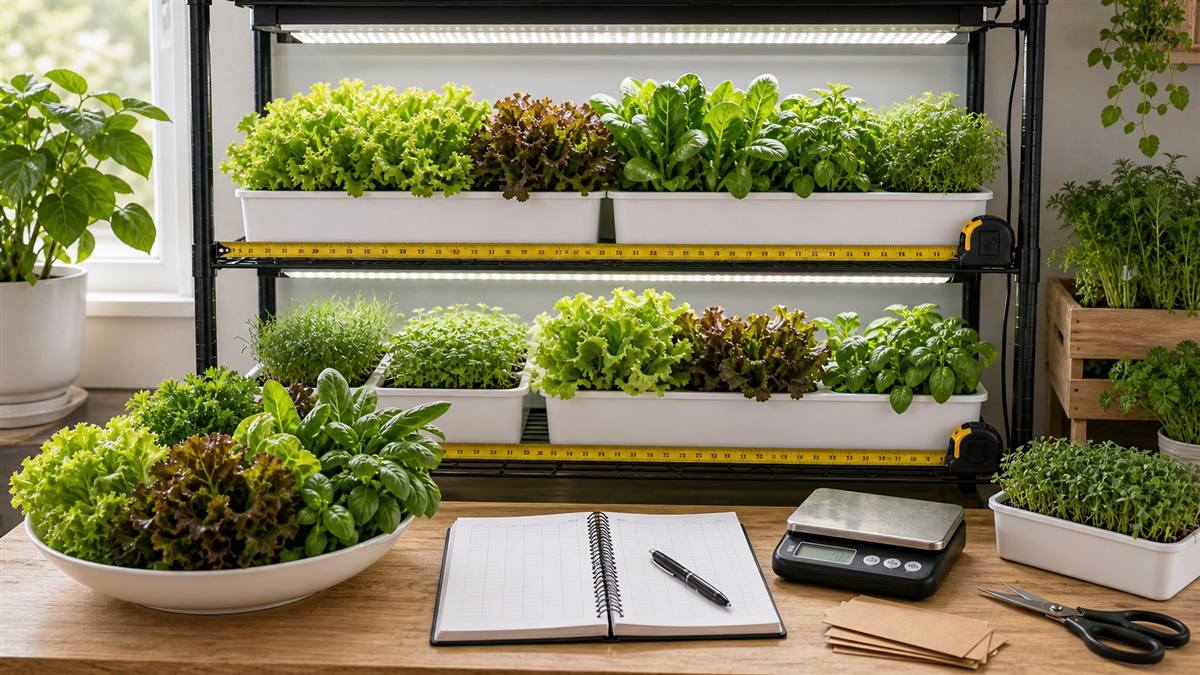
A standard home hydroponic setup uses a wire shelving unit (typically 4 feet wide by 1.5–2 feet deep per shelf) with one LED grow light per shelf. That’s 6–8 square feet of growing space per shelf. Most home growers run 2–4 shelves on a single unit — giving them 12–32 square feet of total growing area in a footprint smaller than a closet.
Lettuce Yield Per Square Foot
Lettuce is the most productive crop for a home hydroponic operation — fast, reliable, and high-value when sold as a living plant. Here’s what you can realistically expect:
| Variety | Days to Harvest | Plants Per Sq Ft | Cycles Per Year | Plants Per Sq Ft Per Year |
|---|---|---|---|---|
| Butterhead | 35–45 | 1–1.5 | 8–10 | 8–15 |
| Romaine | 35–45 | 1–1.5 | 8–10 | 8–15 |
| Loose-leaf mix | 28–35 | 2–3 | 10–12 | 20–36 |
| Watercress | 20–28 | 3–4 | 13–18 | 39–72 |
| Arugula | 28–35 | 2–3 | 10–12 | 20–36 |
For a Kratky tote setup, a standard 66-quart storage tote (approximately 2.5 sq ft of growing surface) holds 6 net pots comfortably — giving you about 2.4 plants per square foot. At 35–45 days per cycle, that’s 8–10 complete cycles per year from the same tote.
In plain terms: one 2.5 sq ft tote produces 6 sellable lettuce plants every 35–45 days, or roughly 48–60 plants per year from a single tote.
Herb Yield Per Square Foot
Herbs are faster than lettuce and pack more plants per square foot, making them exceptionally productive per unit of space. The trade-off is that individual herb plants sell for less than a full lettuce tote — though not by as much as you might expect.
| Herb | Days to Harvest | Plants Per Sq Ft | Cycles Per Year | Plants Per Sq Ft Per Year |
|---|---|---|---|---|
| Basil | 21–28 | 3–4 | 13–17 | 39–68 |
| Cilantro | 21–28 | 4–6 | 13–17 | 52–102 |
| Mint | 28–35 | 2–3 | 10–13 | 20–39 |
| Chives | 28–35 | 4–6 | 10–13 | 40–78 |
| Thai basil | 21–28 | 3–4 | 13–17 | 39–68 |
| Dill | 21–28 | 3–5 | 13–17 | 39–85 |
Basil is the standout performer: fast-cycling, high-density, and selling for $10–$18 per living plant. A single square foot of basil can produce 39–68 sellable plants per year. At $12 average selling price, that’s $468–$816 of revenue per square foot per year — from herbs alone. For a full breakdown of margins by variety, see the herb profit margins guide.
For a full breakdown of which herbs sell best and how to price them, see the herb selling guide.
Other Greens: Kale, Spinach, Arugula
| Green | Days to Harvest | Plants Per Sq Ft | Cycles Per Year | Notes |
|---|---|---|---|---|
| Kale | 50–60 | 1–1.5 | 6–7 | Cut-and-come-again — longer lifespan per tote |
| Spinach | 40–50 | 2–3 | 7–9 | Prefers cooler temps — ideal in winter |
| Arugula | 28–35 | 2–3 | 10–13 | Premium pricing, fast cycle |
| Swiss chard | 50–60 | 1–1.5 | 6–7 | Visual appeal, cut-and-come-again |
| Mustard greens | 28–35 | 2–3 | 10–13 | Spicy, specialty appeal |
Kale and Swiss chard have slower cycles but their cut-and-come-again nature means a single tote keeps producing for 8–12 weeks rather than one harvest cycle. This changes the math: instead of 6 full replacement cycles per year, a kale tote might serve one customer for 10 weeks before they need a new one — reducing your replanting labor significantly.
Yield by System Type
Not all hydroponic systems produce the same yield from the same space. Here’s how the most common home systems compare:
| System | Relative Yield | Best For | Complexity |
|---|---|---|---|
| Kratky passive | Good | Lettuce, herbs, greens | Very low |
| Deep water culture (DWC) | Very good | Lettuce, larger plants | Low-medium |
| NFT (nutrient film) | Excellent | Lettuce at scale | Medium-high |
| Ebb and flow | Very good | Variety of crops | Medium |
| Vertical tower | Good per floor area | Herbs, small greens | Medium |
For a home income operation, the Kratky system wins on the metric that matters most: sellable units per hour of labor. It requires no pumps, no timers, and minimal maintenance — which means more of your time goes into finding customers and growing the business rather than managing equipment.
The DIY hydroponic systems guide covers the full range of options if you want to compare before committing to a setup.
Income Per Square Foot: The Real Number
This is where home hydroponic growing gets genuinely interesting. Let’s calculate real income per square foot per year for the two most common home setups.
Lettuce Totes (Kratky, Living Plant Model)
| Input | Value |
|---|---|
| Shelf size | 4 ft × 1.5 ft = 6 sq ft |
| Totes per shelf | 2–3 totes |
| Plants per tote | 6 plants |
| Cycle time | 40 days |
| Cycles per year | 9 |
| Sellable totes per shelf per year | 18–27 |
| Selling price per tote | $35–$45 |
| Gross revenue per shelf per year | $630–$1,215 |
| Revenue per square foot per year | $105–$202 |
Basil (Living Plant Model)
| Input | Value |
|---|---|
| Shelf size | 4 ft × 1.5 ft = 6 sq ft |
| Plants per shelf | 18–24 plants per cycle |
| Cycle time | 25 days |
| Cycles per year | 14 |
| Sellable plants per shelf per year | 252–336 |
| Selling price per plant | $12–$15 |
| Gross revenue per shelf per year | $3,024–$5,040 |
| Revenue per square foot per year | $504–$840 |
Basil wins by a wide margin on revenue per square foot — but lettuce totes win on revenue per hour of labor, since each tote is sold as a single unit rather than individually potted plants. Most home growers find a mix works best: one or two shelves of lettuce totes for volume and easy repeat customers, one shelf of herbs for high margin and variety.
A two-shelf setup (one lettuce, one basil) running year-round generates approximately $3,600–$6,200 in gross annual revenue from roughly 12–18 square feet of growing space. After production costs (~$300–$500/year), net income is $3,100–$5,700 — from a system that fits in a spare bedroom corner and requires 3–5 hours of work per week.
How to Maximize Your Yield
1. Optimize your light schedule
Leafy greens and herbs grow best with 14–16 hours of light per day. A simple outlet timer set to 6:00 AM–10:00 PM gives you 16 hours without any manual management. Don’t run lights 24 hours — plants need a dark period for optimal growth.
2. Stagger your plantings
The biggest yield mistake home growers make is planting everything at once and harvesting everything at once. Stagger your plantings by 1–2 weeks so you have a steady stream of ready-to-sell totes rather than a glut followed by a gap. With 3 totes per shelf, plant one new tote every 12–15 days.
3. Keep nutrient solution topped up and pH stable
The single biggest yield killer in Kratky systems is letting the reservoir run too low or letting pH drift outside 5.5–6.5. Check every 3–4 days. A $15 pH meter and a bottle of pH up/down solution is all you need. See the hydroponic nutrients guide for exact ratios.
4. Match your crop to your light quality
Full-spectrum LED panels (not blurple lights) produce better yields for leafy greens. A 45W full-spectrum panel covers one 4×2 ft shelf adequately. Don’t try to run two shelves off one light — the lower shelf will underperform significantly.
5. Sell before harvest, not after
The living plant model — selling totes before you harvest them — eliminates post-harvest quality degradation entirely. A living tote sold at peak growth is worth more, lasts longer for the customer, and requires zero harvesting labor from you. It’s the single highest-impact change most home growers can make to their operation. The growing greens for profit guide covers this model in full detail.
Frequently Asked Questions
How much lettuce can you grow hydroponically per square foot?
In a Kratky home setup, expect 1–3 full-size lettuce plants per square foot per cycle, with 8–10 cycles per year. That’s 8–30 plants per square foot per year depending on variety and spacing. Loose-leaf varieties pack in more densely than full heads.
Is hydroponics more productive than soil gardening?
For leafy greens indoors, consistently yes. Hydroponic lettuce grows 30–50% faster than soil-grown lettuce under the same light conditions, because nutrients are delivered directly to roots rather than requiring the plant to seek them out. Year-round indoor growing also eliminates the seasonal limitation of outdoor soil gardens.
What is the most productive crop to grow hydroponically at home?
By revenue per square foot, basil is exceptional — fast-cycling, high-density, and selling for $10–$18 per plant. By revenue per hour of labor, living lettuce totes win — each tote is one unit sold at $35–$45 with minimal processing. Most home growers benefit from growing both.
How many plants can fit in a 4×8 hydroponic setup?
A 4×8 ft (32 sq ft) setup holds approximately 32–64 full-size lettuce plants per cycle, or 96–128 herb plants per cycle depending on variety and spacing. Running 8–10 lettuce cycles per year, that’s 256–640 plants annually from a single 4×8 growing area.
Do I need expensive equipment to get good yields?
No. The Kratky method produces excellent yields with a $30–$50 LED panel, standard storage totes, and a basic nutrient solution. The full setup for one producing shelf costs $80–$120. More expensive equipment improves convenience and aesthetics more than it improves yield for leafy greens.
Once you know your system can produce, the next question is: how do you turn that production into consistent income? The Indoor Mini Farm System covers the complete model — what to grow, how to set it up, how to price your totes, and the local selling strategy that gets you sold out every week.