Of all the crops a home grower can produce for income, leafy greens — lettuce, kale, spinach, arugula, watercress — offer one of the most favorable combinations of fast growth, high value, year-round demand, and minimal production cost.
The challenge with selling greens isn’t demand — it’s the model. Harvesting individual leaves and selling them by the pound is labor-intensive for modest return. But there’s a better way that most growers never consider: selling the living plant rather than the harvested crop.
Table of Contents
- Why Greens Are One of the Best Profit Crops
- The Living Plant Model: Why It Works Better Than Selling Cut Greens
- Best Greens to Grow for Profit
- The Growing System: Kratky Hydroponics
- Production Math: Illustrative Income Estimates
- How to Find Buyers
- Scaling Up
- Frequently Asked Questions
Why Greens Are One of the Best Profit Crops
- High grocery value. Organic lettuce runs $4–$7 per head. Specialty greens like watercress and arugula run $4–$8 per bunch.
- Short production cycle. Lettuce is ready in 30–45 days from transplant — 8–12 crop cycles per year from the same space.
- Year-round demand. Salad greens are purchased every week regardless of season.
- Excellent indoor growing candidates. Greens grow just as well under LED grow lights as in a summer garden.
- Low production cost. A Kratky hydroponic tote of 6 plants costs $2–$4 to produce. The margin is exceptional.
The Living Plant Model: Why It Works Better Than Selling Cut Greens
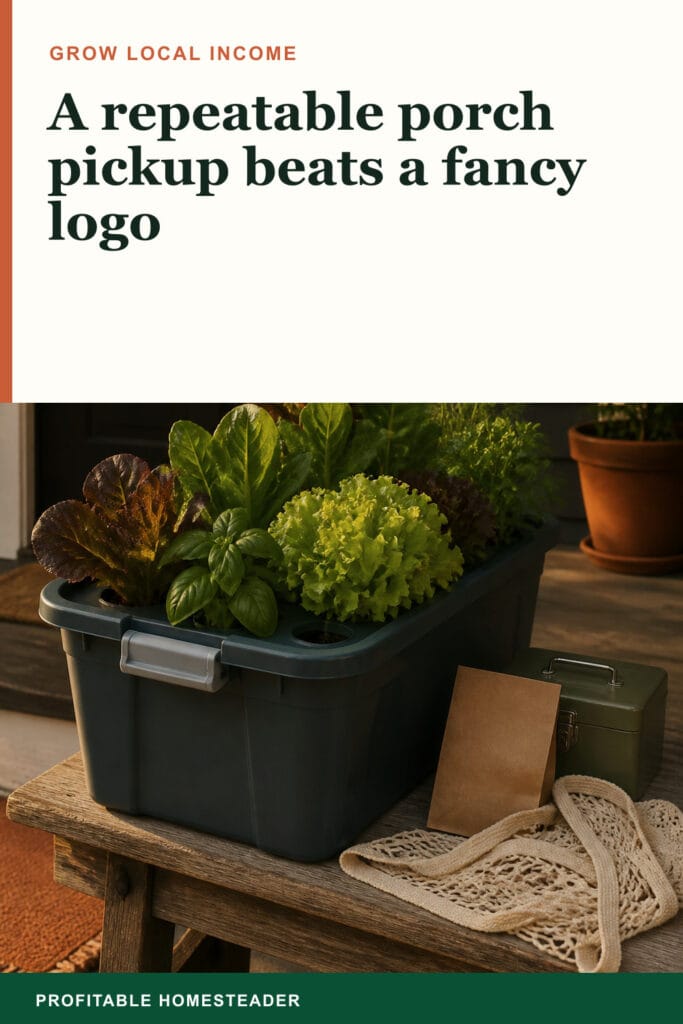
Instead of harvesting your greens, you sell the entire growing tote to your customer. They take it home, harvest from it for 4–8 weeks, and come back for another. You replant immediately.
- Higher price point. A living lettuce tote sells for $30–$50. The same plants harvested and bagged sell for $8–$15.
- Less labor. Zero harvesting, washing, or packaging. You grow, they harvest.
- Natural recurring sales. When the tote is done, the customer needs a new one.
Best Greens to Grow for Profit
| Green | Days to Harvest | Sell Price Per Tote | Notes |
|---|---|---|---|
| Butterhead lettuce | 35–45 | $30–$45 | Most popular seller. |
| Romaine | 35–45 | $30–$45 | Very productive per tote. |
| Mixed leaf lettuce | 30–40 | $30–$50 | Visual variety appeals to customers. |
| Kale | 50–60 | $35–$50 | Superfood appeal. Cut-and-come-again. |
| Arugula | 30–40 | $35–$55 | Premium positioning, commands higher price. |
| Watercress | 20–30 | $35–$55 | Fastest growing. Rarely available fresh locally. |
The Growing System: Kratky Hydroponics
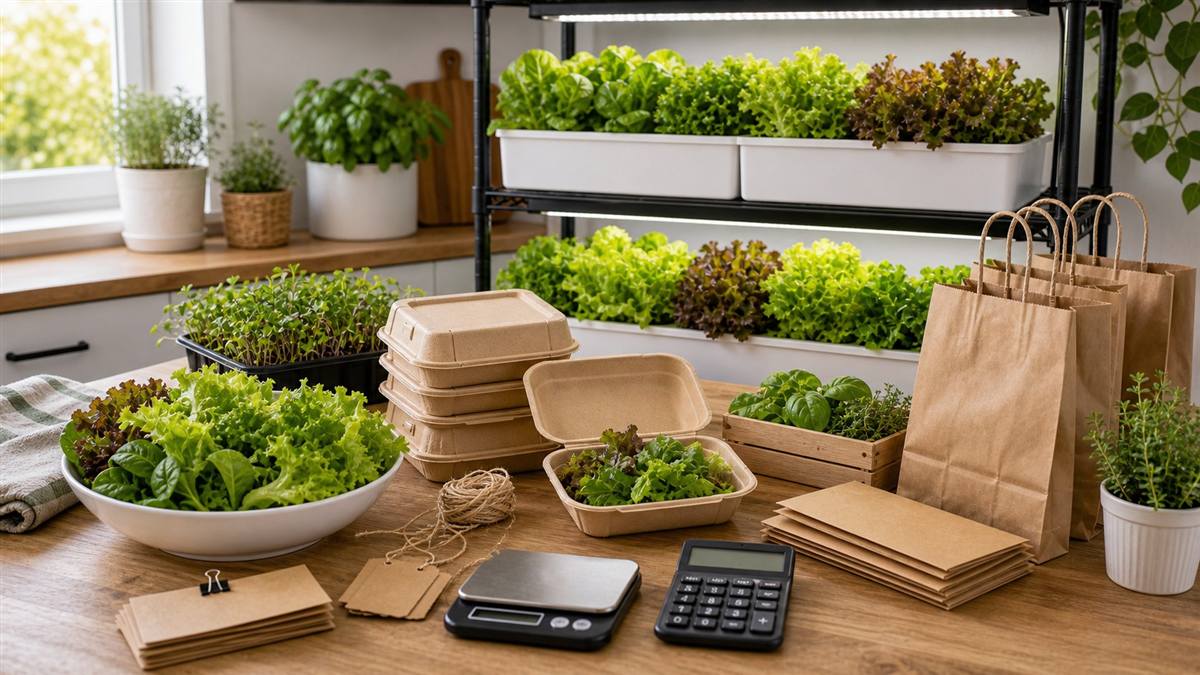
The Kratky passive hydroponic method is the ideal production system. No pump, self-contained totes, minimal maintenance, and it scales simply by adding more totes.
The full setup — shelving, LED grow lights, totes, net pots, nutrients, and pH kit — runs $150–$250 and produces 2–3 totes per week. For a detailed setup guide, see the indoor hydroponic garden setup guide.
Production Math: Illustrative Income Estimates
The numbers below are illustrative estimates based on the living plant model at the price ranges shown. Actual results depend on your local market, pricing, customer base, and operating costs. Use these as a starting framework, not a guarantee.
| Totes Sold Per Week | Monthly Revenue (est.) | Production Cost (est.) | Net Monthly Income (est.) |
|---|---|---|---|
| 2 | $280–$360 | ~$22 | $258–$338 |
| 4 | $560–$720 | ~$45 | $515–$675 |
| 8 | $1,120–$1,440 | ~$90 | $1,030–$1,350 |
At 4 totes per week — roughly 2–3 hours of work at this scale — the effective hourly rate is favorable compared to most part-time income options. Your actual numbers will vary based on what you can sell totes for in your market and how efficiently your system runs.
How to Find Buyers
- Nextdoor and neighborhood Facebook groups — One post with a photo of a lush, ready-to-harvest tote reaches hundreds of nearby households.
- Word of mouth from your first buyer — One enthusiastic neighbor who tells their friends is worth more than any ongoing marketing.
- Facebook Marketplace — List as a local delivery item. Respond fast.
- Local restaurants — Specialty greens are often hard for small restaurants to source fresh locally.
Scaling Up
Once you have 5–8 recurring customers, scaling is a matter of adding shelf capacity and grow lights. At 10–15 regular customers, a subscription model makes sense — customers pre-commit to monthly deliveries, you know exactly how much to grow. See the CSA business plan guide for how to structure it.
Frequently Asked Questions
How much can you make growing lettuce at home?
Selling 4 living totes per week at $35–$45 each generates an estimated $560–$720/month with production costs under $50/month. Results vary based on your local market, what buyers are willing to pay, and your actual cost structure.
Do I need a license to sell home-grown greens?
It depends on your state and local rules — requirements vary more than most people expect. Check with your state’s Department of Agriculture before you start selling. The guide to selling produce from home covers the general landscape and where to find the authoritative answers for your location.
Ready to build this from the ground up — the growing system, the pricing, the local selling strategy, and the subscription model that makes it recurring income? The Indoor Mini Farm System is the complete guide: setup, crops, packaging, pricing, and how to sell out every week.