Can a small herb-growing setup earn money? It depends on what you grow, what buyers in your area will pay, how many plants survive and sell, and whether you count your time. This guide shows you how to estimate costs and margins for living herbs and cut bunches. The figures below are planning examples, not results from a documented grow or a promise of income.
How to calculate herb profit margins
Revenue is selling price multiplied by units sold. Gross margin before labor and overhead is revenue minus direct costs such as seeds, nutrients, containers, packaging and electricity. Profit also accounts for labor, equipment, fees, losses and other overhead. A high gross margin does not guarantee a worthwhile business.
Start with one herb and one selling format. Keep receipts and a grow log for a full cycle, including plants that fail or do not sell. Compare your actual cost per sellable plant with prices people pay locally.
Build a per-plant cost estimate
For a small Kratky setup, record these costs rather than assuming a universal cost per plant:
| Cost | How to measure it |
|---|---|
| Seeds and growing medium | Cost used in the batch divided by sellable plants. |
| Nutrients and water | Amount used in the batch at your purchase price and local rate. |
| Electricity | Light wattage ÷ 1,000 × hours per day × growing days × your electricity rate; divide shared lighting cost by sellable plants. |
| Containers and packaging | Include items the buyer keeps. Spread reusable equipment costs across the cycles you expect to use it. |
| Losses, fees and transport | Include failed plants, payment fees, market fees and delivery costs when relevant. |
| Labor | Track minutes spent planting, tending, harvesting or preparing, listing, messaging and handing over each order. Multiply by the hourly value you assign to your time. |
Illustrative electricity calculation: A 45 W light running 14 hours a day for 28 days uses 17.64 kWh. At an assumed $0.18/kWh, that is about $3.18 for the light during the cycle. If 12 plants are sellable, the shared light cost is about $0.26 per plant. Your wattage, schedule, utility rate and saleable count may differ.
A worked example, with assumptions
Suppose you sell ten living herb plants at an assumed $15 each. If direct inputs average an assumed $2 per sellable plant and you spend 20 minutes per plant valued at $15 per hour, the example looks like this:
| Measure | Calculation | Example result |
|---|---|---|
| Revenue | 10 × $15 | $150 |
| Direct inputs | 10 × $2 | $20 |
| Gross margin before labor and overhead | $150 − $20 | $130 |
| Labor value | 10 × (20 ÷ 60) hours × $15 | $50 |
| Amount remaining before equipment, fees, taxes and other overhead | $130 − $50 | $80 |
This is a calculator example, not a recorded sale. It assumes all ten plants sell at the stated price. If plants fail, buyers pay less, or selling takes longer, the amount remaining falls. Check local demand before building a business around any assumed price.
Cut herbs versus living plants
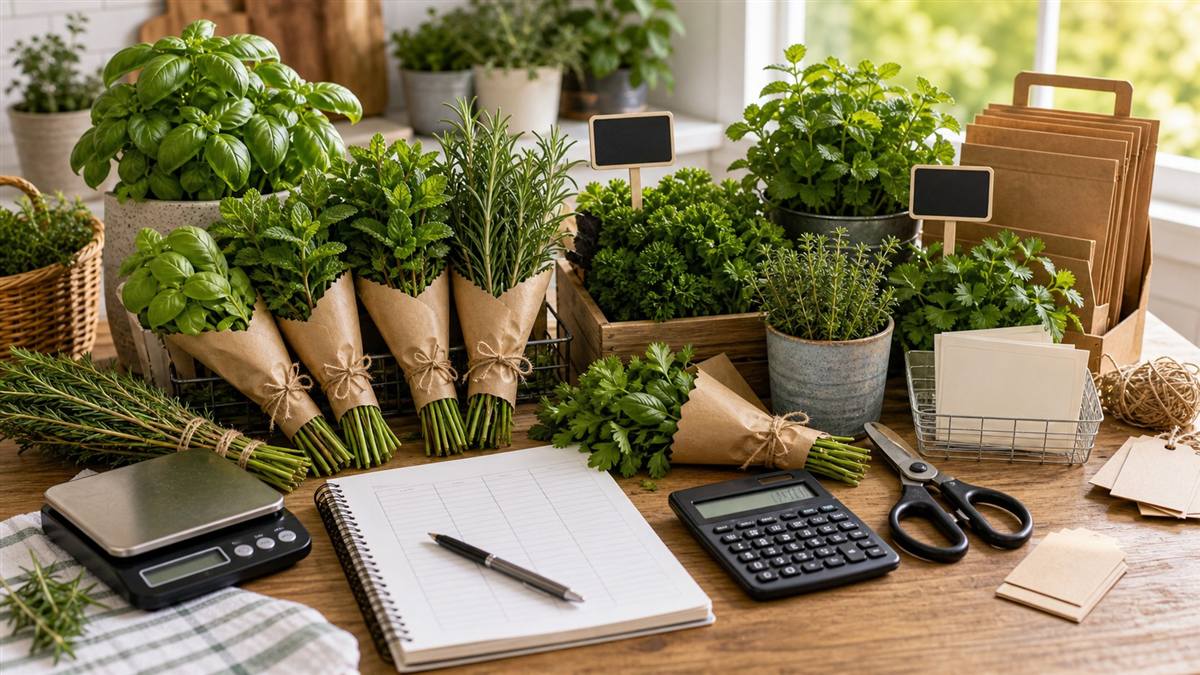
A cut bunch and a living plant can have different prices, handling time and packaging needs. A living plant may save harvest and bunching time, but the buyer may take home a container you must replace. A cut bunch may cost less to package yet require washing, quick delivery and a plan for unsold harvest. Compare the two using your own local prices and full labor time; neither format has a guaranteed margin.
For selling and pricing ideas, see the herb selling guide and the produce pricing guide.
Estimate revenue per shelf without calling it profit
To estimate potential revenue, multiply saleable plants per cycle × cycles per year × the price actually received. Then subtract direct inputs, time, unsold plants and overhead to estimate profit. A shelf can produce more plants than your local market will buy, so include a realistic sell-through rate.
For example, if a shelf yields 12 saleable plants per cycle, you complete 10 cycles in a year, and you sell 75% at an assumed $15 each, estimated annual revenue is 12 × 10 × 0.75 × $15 = $1,350 before costs. This is a scenario, not observed income. The hydroponic yield guide can help you plan plant spacing, but record your own yields before projecting a year.
Which herb should you test first?
Choose a herb you can grow reliably and that buyers near you already use. Basil, cilantro, chives and mint are candidates for a small test; growing time, quality and buyer demand will vary by setup and season. Start with one batch, photograph the plants, check comparable local listings, and record the price and time involved in any actual sale. Expand only after you have repeatable growing and demand.
Frequently asked questions
What herbs have the highest profit margins?
There is no reliable universal winner. Compare the price you can actually collect, saleable yield, full costs and labor for each herb in your market. A high price per plant does not help if it is slow to grow or does not sell.
Is growing herbs for profit worth it?
It can be, but test a small batch first. Use the worked example above as a template and replace every assumption with your own receipts, measured time and actual sales.
How much can you make selling herbs from home?
There is no dependable monthly amount for a new grower. Monthly revenue depends on plants sold and price; profit also depends on inputs, labor and overhead. Do not treat an unsold plant or a projected sale as income.
Do I need a license to sell herbs from home?
Requirements depend on your location and whether you sell cut herbs, living plants or processed products. Check with the relevant state and local agriculture offices before selling. Rules for produce and live plants may differ. See the guide to selling produce from home for questions to ask.
How do I find customers for my herbs?
Start by checking comparable local offers and asking potential buyers what they would use. If you have healthy plants ready, make a specific listing with a photo, price and pickup details. Track responses and actual orders before increasing production. The herb selling guide covers practical options.
Want to test a small indoor setup before estimating income? Get the free three-crop starter guide. Once you can grow consistently, the Indoor Mini Farm System provides a more detailed beginner path.