The easiest thing for a new grower to sell is probably not a bag of lettuce.
It may be the garden itself.
A bag of greens competes with the grocery store. A living salad garden is different. It sits on a porch, counter, or bright shelf. The buyer cuts what they need and watches the rest keep growing. It feels useful, fresh, and a little surprising.
You also avoid one of the most exhausting parts of selling produce: harvesting, washing, packing, and racing the clock before everything wilts.
This does not mean you should drill ten totes and announce a subscription service tonight. Start with one healthy garden and one real customer.
Here is how.
What a “living salad garden” is
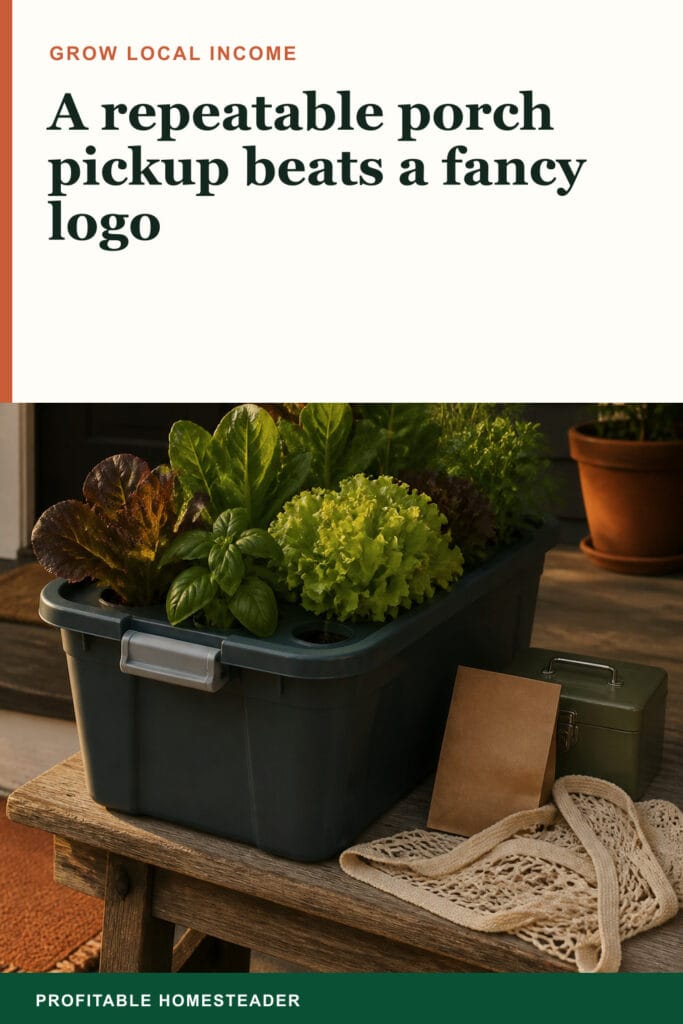
For this model, the product is a compact hydroponic tote with several mature, harvest-ready greens or herbs growing in the lid.
The customer takes home the complete system and harvests leaves over time. Depending on your setup, you might:
- Sell the tote outright
- Charge a refundable tote deposit
- Swap the finished tote for a fresh one
- Offer a monthly pickup or delivery after the first sale
The exact arrangement matters less than making it easy to understand.
Avoid jargon. “A living salad garden with six plants” is clearer than “a six-site passive deep-water culture unit.”
Start with the buyer, not the crop
The first customer is usually not looking for hydroponics. They are looking for something hydroponics can give them.
Good early buyers might include:
- A neighbor who buys salad greens every week
- A parent whose child is fascinated by growing food
- An apartment dweller without garden space
- An older adult who wants a garden at a comfortable height
- A food-loving friend who already buys fresh basil
Pick one person you can picture. Build the garden for that person.
A family may want mild lettuce and basil. A cook may get more excited about basil, arugula, and tatsoi. Someone with limited mobility needs a tote that is light enough to place safely and easy to reach.
Build one demo garden first
Do not take orders for a system you have never completed.
Grow one tote all the way from seed to a healthy, attractive garden. Track:
- Supply cost
- Seed-starting date
- Time to a useful harvest
- Nutrient use
- Minutes spent checking and cleaning
- How the plants look at the point of sale
Take photos each week in the same location. The finished garden is your product photo, proof, and practice run.
If the tote grows unevenly, roots smell wrong, or lettuce flops under weak light, fix the system before finding a buyer. Your first sale should not become a live troubleshooting appointment.
Choose plants that travel well
The garden must survive the move from your home to theirs.
Compact lettuces, baby bok choy, tatsoi, and basil are easier to present than tall, fragile plants. Avoid overpacking the lid. Leaves need airflow, and a tote jammed with plants is harder to carry without damage.
Use varieties you have already grown. Your first buyer is not the right place to test a mysterious seed packet.
Before pickup:
- Remove damaged or tired leaves.
- Wipe the lid and outside of the tote.
- Confirm the reservoir is secure enough for transport.
- Photograph the water level and roots for your records.
- Give the buyer a short care card.
Price the complete outcome
Do not price a living garden like a plastic tote plus six seedlings.
The buyer is paying for:
- A prepared growing system
- Established, healthy plants
- Weeks of growing time already completed
- The convenience of harvesting at home
- Your instructions and support
Your price still has to make sense locally. Check what comparable herb planters, living lettuce, starter gardens, and hydroponic kits cost in your area. Then calculate your actual supply and labor costs.
A simple floor-price calculation is:
materials + plants + payment fees + delivery cost + paid labor = minimum sustainable price
Add a profit margin after that. Do not begin with a number from somebody else’s city and force your costs to fit it.
For more pricing context, see how to price produce for profit.
Use a deposit if you want the tote back
If your model depends on refilling the same tote, say so clearly before the sale.
For example:
- Garden price includes a tote deposit
- Customer returns the clean tote when the plants are finished
- Deposit is credited toward the next garden or refunded
Write the arrangement in plain language on the receipt or care card. A casual “bring it back sometime” is how your tote becomes somebody else’s garage storage.
Write a one-minute care card
Your buyer does not want a hydroponics course. They want the plants to stay alive.
The card should answer:
- Where should I put it?
- When can I harvest?
- How much can I cut?
- Should I add water?
- Who do I contact if something looks wrong?
Keep it specific to the garden you sold. If it is a passive Kratky tote, explain that the water level is designed to drop and the buyer should not automatically fill it to the lid.
Include the sale date and plant varieties. That tiny detail makes support much easier.
Find the first buyer without “launching a business”
Start with a direct, low-pressure message to someone who has already shown interest.
Try:
I’ve been testing a small living salad garden that grows six lettuce and herb plants in one tote. I’m finishing the first one next week and looking for one local person who wants to try it at home. You harvest from it as it grows, and I’ll include a simple care card. Want me to send you a photo and the details?
That is enough.
You are not asking them to join a movement. You are checking whether the product is interesting.
If nobody responds, ask why before growing ten more. The photo, plant mix, price, pickup location, or explanation may need work.
Make pickup boring—in the best way
The most scalable part of a tiny local business is not a clever logo. It is a pickup process that does not interrupt your whole day.
Choose:
- One pickup window
- One protected location
- One payment method
- One short handoff message
Send the address only after the sale is confirmed. Keep customer safety and your own privacy in mind. If porch pickup is not appropriate where you live, use a public meeting location or delivery plan that fits your area.
If the conversation is the part you keep putting off, try this quieter approach to selling what you grow: a clear listing, a written price and pickup details prepared ahead of time.
Check the rules before you sell
Rules for selling plants, produce, and food products vary by location.
Before accepting payment, check your state and local requirements. Living plants may be treated differently from harvested produce. Home-business, nursery, tax, zoning, and food-sales rules can all apply depending on what you sell and where.
The overview on selling produce from home legally can help you build a question list, but your local authority is the source that matters.
Do not tell buyers that no license is required unless you have verified that for your location and product.
Turn the first sale into useful evidence
After the buyer has had the garden for a week, ask three questions:
- What have you harvested so far?
- Was any part of the care confusing?
- Would you want a replacement garden when this one finishes?
Their answers shape the next version.
If they are happy, ask permission to use a specific, honest comment and a photo they approve. Never turn a casual compliment into a dramatic earnings testimonial.
The best proof is often simple: “We used the lettuce for four dinners, and my daughter checked the roots every morning.” That sounds like a real person because it is one.
The first goal is repeatability
One sale proves that someone will pay. A second garden delivered on time proves that you can do it again.
Only then should you think about subscriptions, multiple varieties, or a bigger shelf.
Start one tote. Make it healthy. Sell it to one person who understands what they are buying. Learn what happens after it leaves your house.
That is not a tiny version of the business. It is the foundation of the business.
If you want the complete grow-and-sell system, including the tote setup and local sales model, see the Indoor Mini Farm System.