The Kratky Method: Easiest No-Pump Hydroponics for Beginners (Step by Step)

The first time someone told me I could grow lettuce in a jar with zero pumps, zero timers, and zero electricity, I was pretty skeptical. That sounds like something that works great in a YouTube video and fails the moment you try it at home.

But the Kratky method is genuinely that simple — and it works. I’ve grown full heads of romaine, basil that outpaces anything from the grocery store, and enough spinach to keep smoothies running all winter. All from a container on a shelf with no moving parts whatsoever.

If you’ve been curious about hydroponics but felt put off by the equipment, the wiring, or the learning curve — start here. The Kratky method is your on-ramp.

Table of Contents

What Is the Kratky Method?

The Kratky method is a passive, non-circulating hydroponic technique developed by Dr. B.A. Kratky at the University of Hawaii. Plants grow in net pots suspended above a reservoir of nutrient solution. Roots grow down into the water — and as the plant drinks the solution, an air gap forms naturally between the water surface and the bottom of the net pot. That air gap provides the oxygen roots need without any pump or airstone.

The system essentially manages itself. You mix your nutrients once, set your plants, and come back in 30–45 days to harvest. No electricity required beyond lighting. No maintenance beyond the occasional pH and water level check.

It’s the foundation of what I now grow year-round indoors — and it’s a big part of why the DIY hydroponics approach works so well even for total beginners.

How It Works (The Clever Science Behind It)

Plant roots need two things to thrive: water and oxygen. In soil, the spaces between soil particles hold both. In most hydroponic systems, a pump aerates the water to deliver oxygen to submerged roots. The Kratky method solves this problem differently — and more elegantly.

When you first set up a Kratky system, the nutrient solution level sits just high enough to touch the bottom of the net pot and wet the growing medium. As the plant drinks the solution down over days and weeks, the water level drops. This creates a growing air gap between the water surface and the net pot.

The lower portion of the roots stays submerged in nutrients. The upper portion — in the air gap — absorbs oxygen directly. The plant has everything it needs, delivered passively, with no intervention from you.

It’s one of those ideas that’s almost too simple to believe until you see it working.

What You Need to Get Started

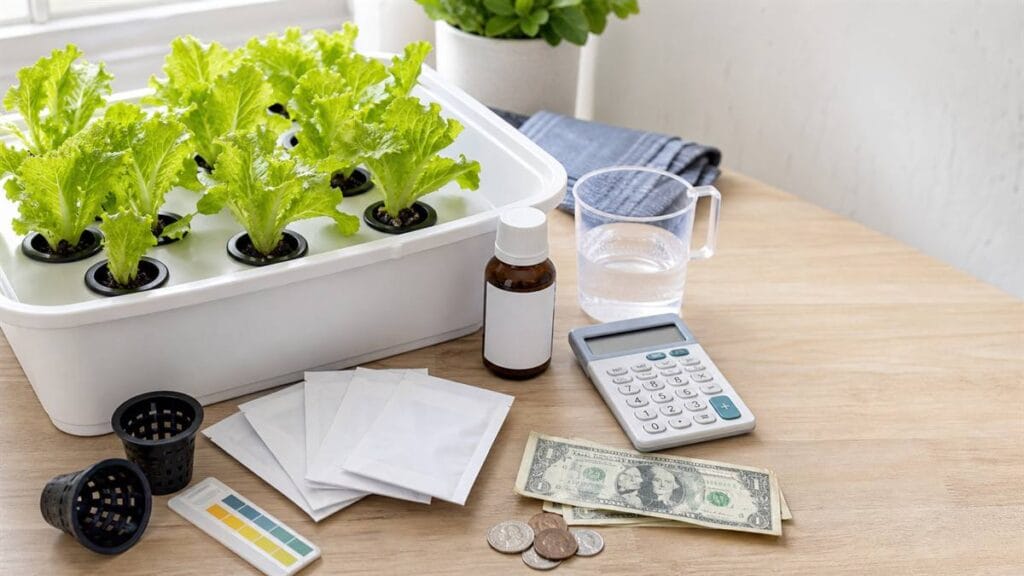
This is where Kratky really shines. You don’t need a specialized kit or a trip to a hydroponics store. Most of this you can find at a hardware store, a garden center, or online for under $30 total.

The Container

Any opaque container works — the key word being opaque. Light reaching your nutrient solution causes algae growth, which competes with your plants and clouds the water. Good options:

  • Mason jars wrapped in tape or painted — perfect for a single plant or herb
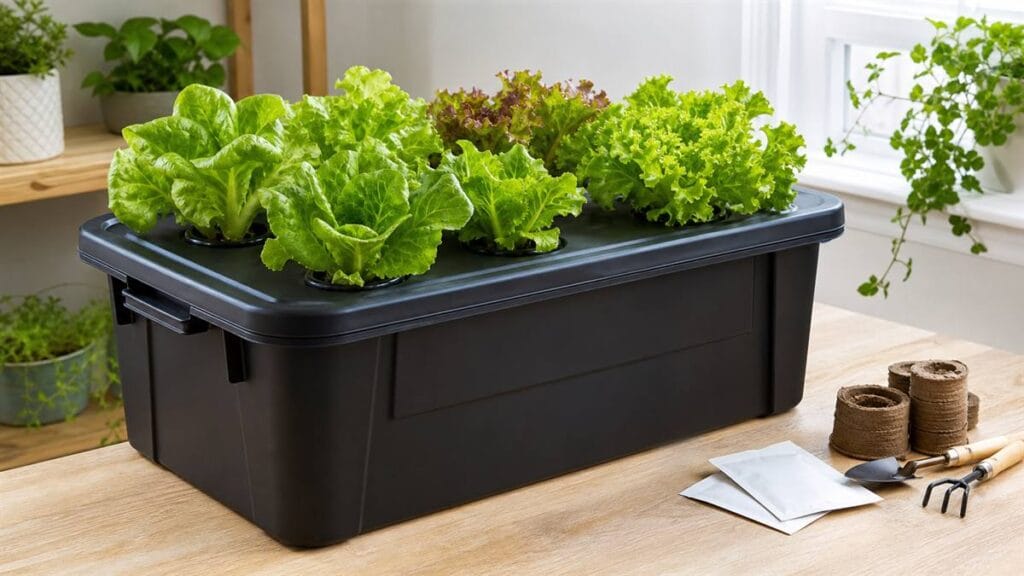
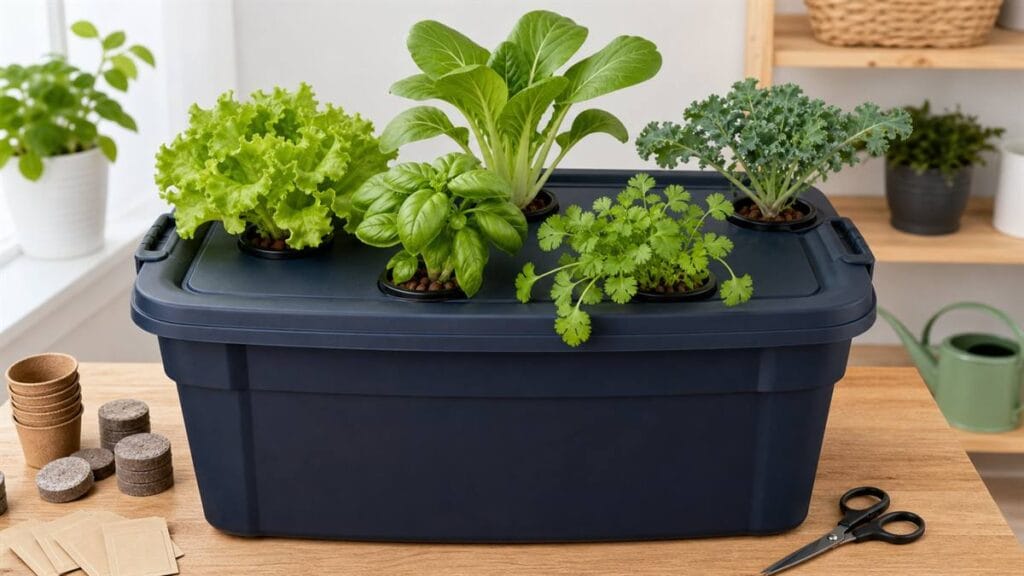
  • Opaque storage totes (10–20 gallon) with lids — grow 6–12 plants at once
  • 5-gallon buckets with lids — great for a single larger plant or 3–4 small ones
  • Purpose-built Kratky reservoirs — available online if you want something cleaner-looking

For a first grow, a $5 storage tote from a dollar store or hardware store is genuinely all you need.

Net Pots

Net pots are the small mesh cups that hold your plant and growing medium above the reservoir. Two-inch net pots are standard for lettuce and herbs. You’ll cut corresponding holes in your container lid using a hole saw or a sharp knife.

A pack of 50 net pots costs $5–$8 online. You’ll use them over and over.

Growing Medium

The growing medium anchors your plant in the net pot and wicks moisture up to the roots while they’re still developing. The most common options:

  • Hydroton clay pebbles — reusable, pH-neutral, good drainage. Most popular choice.
  • Rockwool cubes — excellent for seed starting; drop the whole cube into the net pot
  • Coco coir — works well, retains moisture, sustainable
  • Perlite — cheap and effective, though it floats until it gets wet

Nutrients

You’ll need a hydroponic-specific nutrient solution — regular garden fertilizer won’t cut it because it’s designed for soil microbes to break down, not direct root absorption. A simple 2-part or 3-part liquid formula works perfectly for Kratky. General Hydroponics Flora Series and MaxiGro are both reliable beginner choices.

Mix per the manufacturer’s instructions for the “grow” or “seedling” phase when targeting leafy greens.

pH Testing

This is non-negotiable. Hydroponic plants need a solution pH of 5.5–6.5 to absorb nutrients. A basic pH test kit costs $5–$8 and lasts for dozens of grows. A digital pH meter ($15–$25) is more convenient if you’re growing regularly. You’ll also need pH Up and pH Down solutions to adjust — small bottles last a long time.

Light

For leafy greens and herbs, a bright south-facing window (6+ hours of direct sun) is workable. For more reliable year-round results, a basic LED grow light positioned 6–12 inches above your plants on a 14–16 hour timer is the way to go. A decent 45W LED panel runs $20–$35 and handles one or two trays of greens easily.

Step-by-Step: Your First Kratky Setup

Let’s walk through a complete first setup — a storage tote Kratky system growing 6 heads of lettuce. Budget: around $25–$35 if you’re starting from scratch.

Step 1: Prepare Your Container

Take your opaque storage tote and lid. Using a 2-inch hole saw (or a sharp utility knife), cut evenly spaced holes across the lid — one per plant. For standard lettuce, space holes about 6 inches apart. Six holes fit comfortably on most 10-gallon totes.

If your tote is translucent rather than fully opaque, wrap the outside in black electrical tape or spray paint it black before filling. No light should reach the inside.

Step 2: Mix Your Nutrient Solution

Fill the tote with water. If you’re on city water, let it sit uncovered for 24 hours first to off-gas chlorine, or use filtered water. Add your nutrients per the mixing instructions — follow the “seedling” or “vegetative” rate for leafy greens.

Test pH with your kit or meter. Adjust to 5.8–6.2 using pH Up or pH Down, adding a few drops at a time and stirring. Retest until you’re in range.

Step 3: Prepare Net Pots and Seedlings

Add a layer of rinsed clay pebbles to the bottom of each net pot. Place your seedling (or a small rockwool cube with a germinated seed) in the center. Fill around it with more pebbles, pressing gently to hold the plant upright. The pebbles should sit flush with or just below the rim of the net pot.

If you’re starting from seed rather than a seedling, germinate in a rockwool cube first — just moisten the cube, tuck the seed in, and keep it in a warm dark place for 3–5 days until it sprouts. Then transfer to the net pot.

Step 4: Set the Water Level

Place the net pots into the holes in the lid. The initial water level should just barely touch the bottom of the net pot — about ¼ inch of contact. You want the growing medium to wick moisture up to the roots, but you don’t want the plant drowning.

As the plant grows, it will drink the solution down. The water level will drop on its own, creating the air gap that oxygenates the upper roots. Do not top up the reservoir constantly — let that gap form. For a full grow cycle, you may only need to top up once or twice if the reservoir gets very low before harvest.

Step 5: Position Under Light

Place your system where it will receive adequate light — either a strong window or under your grow light. If using a timer, set it for 14–16 hours of light per day for leafy greens.

Step 6: Monitor and Harvest

Check pH every 3–4 days for the first couple of weeks. Peek at the water level weekly. Watch for any yellowing or stunted growth — usually a sign of pH drift or insufficient light.

In 30–45 days, your lettuce will be full and ready to harvest. Cut outer leaves for a continuous harvest, or pull the whole plant and replant immediately for a continuous cycle.

Best Plants for the Kratky Method

Kratky works best with plants that have moderate nutrient and oxygen needs. Fast-growing leafy greens are the sweet spot — they’re forgiving of beginner mistakes and ready to harvest before the static reservoir causes any issues.

PlantDays to HarvestNotes
Lettuce (all types)30–45The classic Kratky crop. Fast, easy, reliable.
Basil28–35Grows explosively. Great seller at markets.
Spinach40–50Prefers cooler temps. Excellent winter crop.
Kale50–60Cut-and-come-again. Very high yield per plant.
Swiss chard50–60Colorful and hardy. Handles pH variation well.
Cilantro30–40Bolts fast in heat — ideal in cooler seasons.
Mint30–40Extremely vigorous. Keep it in its own container.
Watercress20–30Loves water. One of the most nutrient-dense options.

Stick to this list for your first few grows. Once you’ve got the basics dialed in, you can experiment with fruiting crops — though tomatoes and peppers will need a pump-based system for best results, as their higher oxygen demands push beyond what passive Kratky can reliably provide.

Tips for a Successful Kratky Grow

Don’t obsess over topping up. The most common beginner mistake is refilling the reservoir too frequently, which prevents the air gap from forming. Trust the process. Let the water level drop.

Keep the lid on. Light in the reservoir = algae. Always keep the lid fully on and seal any gaps around the net pots with a bit of tape or a piece of foil if needed.

Start with fewer plants than you think you need. Six lettuce plants in a tote will produce more food than most families can eat in a week. Start small, build confidence, then scale.

Label your containers. If you’re running multiple varieties or staggered grows, label each tote with the plant variety and start date. It takes 10 seconds and saves a lot of guessing.

Stagger your plantings. Start a new tote every two weeks and you’ll have a continuous harvest instead of a glut all at once. This is the key to running a consistent supply — especially if you’re selling what you grow.

Kratky vs. Other Hydroponic Systems

SystemPump Required?Electricity?ComplexityBest For
KratkyNoNo (beyond light)⭐ LowestLeafy greens, herbs, beginners
Deep Water CultureYes (air pump)Yes⭐⭐ LowFast-growing greens, some fruiting
NFTYes (water pump)Yes⭐⭐⭐ MediumHerbs, lettuce at scale
Ebb & FlowYesYes + timer⭐⭐⭐ MediumVariety of crops
Drip SystemYesYes + timer⭐⭐⭐⭐ HigherTomatoes, peppers, cucumbers

Kratky wins on simplicity, cost, and silence — it’s ideal for apartments where noise is a concern, or for anyone who wants to start growing without investing in a full system. For a deeper look at how all the system types compare, the complete DIY hydroponics guide walks through each one in detail.

If you’ve already tried the Kratky method and want to see what a pump-free beginner system looks like at the next level, that’s worth a read too.

Kratky Troubleshooting

ProblemLikely CauseFix
Yellow leavespH out of rangeTest and adjust pH to 5.8–6.2
Slow growthLow light or low nutrientsMove closer to light source; check EC/nutrient levels
Algae in reservoirLight reaching solutionCover all gaps; ensure container is fully opaque
Wilting despite full reservoirNo air gap formed; roots drowningLet water level drop naturally — don’t top up
Brown slimy rootsRoot rot from light exposure or overwateringBlock all light from reservoir; ensure air gap exists
Tip burn on lettuceCalcium deficiency or low airflowAdd a small fan nearby; check calcium in nutrient mix
Leggy, stretched seedlingsInsufficient lightLower grow light or move to brighter window

Ready to Scale Up?

Once you’ve harvested your first Kratky tote, something shifts. You start doing math. If six plants fit in one tote, and each head of lettuce takes 35 days to grow, and a fresh living lettuce plant sells for $8–$12 at a farmers market or to a neighbor — what happens when you run three totes?

That’s when the hobby starts to look like something more interesting. The Kratky method is the perfect proof of concept before you invest in anything larger. And the good news is, the skills transfer directly — understanding pH, nutrient mixing, and plant cycles is the same whether you’re running one jar or twenty totes.

If you’re ready to turn your Kratky setup into a system that feeds your family and earns extra income, the Indoor Mini Farm System walks through exactly how to do that — from setting up multiple totes to building a simple neighborhood selling operation that runs on about 30 minutes a week.

See how the Indoor Mini Farm System works →

Frequently Asked Questions

Does the Kratky method really work without a pump?

Yes — that’s the whole point. The Kratky method relies on a passive air gap that forms naturally as the plant drinks down the reservoir. The upper roots absorb oxygen from this gap while the lower roots stay in the nutrient solution. No pump, no airstone, no electricity required beyond your grow light.

How often do I need to check a Kratky system?

Once it’s set up and running, a quick check every 3–4 days is plenty — mainly to glance at the water level and look for any signs of yellowing. It’s genuinely low-maintenance, which is a big part of why it works well for busy people.

Can I grow tomatoes with the Kratky method?

Technically yes, but it’s not ideal. Tomatoes are heavy feeders with high oxygen demands at the roots — they do much better in an active system with an air pump (Deep Water Culture) or a drip system. For Kratky, stick to leafy greens and herbs where it really shines.

How much does a Kratky setup cost?

A single-tote system that grows 6 plants can be built for $25–$35 including nutrients, net pots, growing medium, and the container. A basic LED grow light adds another $20–$35 if you need it. That’s a complete, functional system for under $60.

Do I need to change the water in a Kratky system?

For most leafy green grow cycles (30–50 days), you typically won’t need to do a full water change. You may top up the reservoir once or twice if it gets very low. Mix fresh nutrient solution at the same concentration when you top up — don’t add plain water, as this dilutes your nutrients.

What’s the difference between Kratky and Deep Water Culture?

The main difference is aeration. Deep Water Culture uses an air pump and airstone to continuously oxygenate the nutrient solution, keeping roots submerged at all times. Kratky relies on the passive air gap instead. DWC is slightly more forgiving for a wider range of crops, but requires electricity and more equipment. For leafy greens and herbs, Kratky produces comparable results with far less setup.


The Kratky method is the proof of concept. Once you’ve seen how well plants grow in water — faster, cleaner, and with less work than soil — it’s hard to go back. If you want to take the next step and build a system that grows enough to feed your family and earn a little income on the side, the Indoor Mini Farm System shows you exactly how.

The Complete Guide to DIY Hydroponics at Home (2026)

complete guide to diy hydroponics at home to grow food indoors

I killed my first three attempts at a vegetable garden. Too much shade. Too little water. Then a late frost that wiped out everything I’d managed to nurse along for six weeks. Sound familiar?

That’s exactly why I went down the hydroponics rabbit hole — and I haven’t looked back since. No soil, no weather dependency, no guessing. Just plants, water, and nutrients growing faster than I ever thought possible right in my garage.

In this guide, I’m going to walk you through everything I’ve learned about building a DIY hydroponic system at home — from the basics of how it works to which setup is right for your space and budget. Whether you have $30 or $300 to spend, there’s a system here for you.

Table of Contents

What Is Hydroponics (and Why Should Homesteaders Care)?

Hydroponics is simply the practice of growing plants in nutrient-rich water instead of soil. The roots sit in (or are periodically flooded by) a solution that delivers everything the plant needs to thrive — nitrogen, phosphorus, potassium, and a handful of micronutrients.

No soil means no weeding. No soil also means no soil-borne diseases, no pests lurking underground, and no waiting for spring. You control the environment completely.

For homesteaders, that’s a game changer. Here’s why:

  • Year-round growing — No seasons. Grow lettuce in January, tomatoes in December.
  • Up to 50% less water — Recirculating systems use a fraction of what traditional gardens require.
  • Faster growth — Plants in a hydroponic system typically grow 30–50% faster than in soil because nutrients go straight to the roots.
  • More food, less space — A 4×4 ft setup can produce more greens than a 200 sq ft garden bed.
  • Real income potential — Hydroponic lettuce and herbs sell easily at farmers markets and to local restaurants.

How Hydroponic Systems Work

All hydroponic systems share the same basic logic: deliver water and nutrients directly to plant roots, provide enough oxygen so roots don’t rot, and give plants adequate light.

The main variables are how the water is delivered and whether the system is active (uses a pump) or passive (no moving parts). Here’s a quick overview of the main system types:

System TypeHow It WorksBest ForDifficulty
Kratky (passive)Plants sit above a static reservoir; roots dangle in nutrient waterLettuce, herbs, spinach⭐ Beginner
Deep Water Culture (DWC)Roots submerged in aerated nutrient solutionFast-growing leafy greens⭐⭐ Easy
NFT (Nutrient Film Technique)Thin film of water flows continuously over roots in channelsHerbs, lettuce at scale⭐⭐⭐ Intermediate
Ebb & FlowTray floods with nutrient solution, then drains on a timerVariety of crops⭐⭐⭐ Intermediate
Wick SystemWick draws nutrient solution up to roots passivelySmall herbs, microgreens⭐ Beginner
Drip SystemDrip lines deliver solution to each plant on a timerTomatoes, peppers, larger plants⭐⭐⭐ Intermediate

For a first system, I always recommend starting with either Kratky or DWC. Both are cheap to build, forgiving, and will teach you everything you need to know before you scale up.

The Best DIY Hydroponic Systems for Beginners

1. The 5-Gallon Bucket System (DWC)

This is the system I built first, and it’s still one I recommend to everyone. You need exactly one 5-gallon bucket, a small air pump, an air stone, some net pots, and growing medium. Total cost: around $20–$30.

Each bucket grows one large plant (tomatoes, peppers, cucumber) or can be fitted with a lid that holds multiple net pots for greens. Link multiple buckets together and you’ve got a scalable system for under $100.

2. PVC Pipe NFT System

A PVC pipe hydroponic system is the backbone of most small commercial operations — and it’s surprisingly cheap to build yourself. You’ll use 2-inch or 3-inch PVC pipes with holes cut for net pots, a small reservoir, and a submersible pump to circulate the nutrient solution.

A 6-pipe system (about 5 feet long each) can hold 30–48 plants and fits in a spare bedroom or garage. Materials run $60–$120 depending on what you already have. This is what I use for my lettuce and herb production.

3. Indoor Hydroponic Garden with Grow Lights

Once you add LED grow lights, you’re fully untethered from the sun. A basic setup — a wire shelving unit, two 45W LED grow lights, and a Kratky or DWC reservoir on each shelf — can produce a continuous harvest of leafy greens and herbs in any room of your house.

Budget: $80–$150 to start. This is ideal if you’re in an apartment or have limited outdoor space.

The Kratky Method: The Easiest Starting Point

If you want to grow your first hydroponic plants this weekend with zero pumps, zero timers, and zero electricity, the Kratky method is your answer.

Here’s the basic principle: you suspend a plant in a net pot above a reservoir of nutrient water. The roots grow down into the water. As the plant drinks the solution down, an air gap forms — and that air gap is what keeps the upper roots oxygenated. The plant essentially manages itself.

What you need:

  • Any opaque container (mason jar, storage tote, 5-gallon bucket)
  • Net pots (2-inch is standard)
  • Hydroton clay pebbles or rockwool as growing medium
  • Hydroponic nutrients (a basic 2-part liquid fertilizer works fine)
  • Seeds or seedlings
  • pH test kit or drops (aim for 5.5–6.5)

That’s it. No pump. No electricity required (though you’ll still need light). I’ve grown full heads of romaine lettuce in Kratky jars on a south-facing windowsill. It’s genuinely that simple.

Kratky works best for: lettuce, spinach, kale, basil, cilantro, and other fast-growing leafy greens. It’s less suited to fruiting plants like tomatoes, which need more nutrients and oxygen at the roots than a static system provides.

Hydroponic Nutrients 101

This is where a lot of beginners overthink things. You don’t need a shelf full of supplements. You need a good base nutrient solution and a basic understanding of what’s in it.

The Big Three

Every hydroponic nutrient formula delivers nitrogen (N), phosphorus (P), and potassium (K) — the same NPK you see on any bag of garden fertilizer. In hydroponics, plants also need calcium, magnesium, and a suite of micronutrients (iron, manganese, zinc, etc.) that soil would normally provide.

For beginners, I recommend a simple 2-part or 3-part liquid nutrient system like General Hydroponics Flora Series or MaxiGro/MaxiBloom. Follow the manufacturer’s mixing instructions, check your pH, and you’re done.

pH: The One Thing You Can’t Ignore

If there’s one mistake that kills more beginner hydroponic grows than anything else, it’s ignoring pH. Hydroponic plants need a solution pH between 5.5 and 6.5 to absorb nutrients properly. Outside that range, you’ll see yellowing leaves, stunted growth, and nutrient deficiencies — even if your nutrient mix is perfect.

Get a basic pH test kit ($5–$8) or a digital pH meter ($15–$25). Check your reservoir every few days, especially when plants are young. Adjust with pH Up (potassium hydroxide) or pH Down (phosphoric acid) — small bottles last a long time.

EC/PPM: Measuring Nutrient Strength

EC (electrical conductivity) tells you how strong your nutrient solution is. For leafy greens, you want a lower EC (0.8–1.6). For fruiting crops, go higher (2.0–3.5). A basic EC/TDS meter runs $10–$15 and is worth every penny once you’re growing more seriously.

Best Plants to Grow in a DIY Hydroponic System

Not all plants are created equal when it comes to hydroponics. Start with crops that are fast-growing, high-yielding, and forgiving of beginner mistakes.

PlantSystemDays to HarvestNotes
LettuceKratky, DWC, NFT30–45Best beginner crop. Fast, easy, high value.
BasilKratky, DWC28–35Sells well. Grows explosively in hydroponics.
SpinachKratky, NFT40–50Prefers cooler temps. Great winter crop.
KaleDWC, NFT50–60Cut-and-come-again. Very high yield.
TomatoesDWC, Drip60–80Higher maintenance but very rewarding.
CucumbersDWC, Drip55–65Fast producers. Need vertical support.
StrawberriesNFT, Kratky90+ (from runners)Excellent for NFT towers. Premium market value.
MicrogreensTray/mat system7–14Quickest ROI. Very popular with restaurants.

My advice: start with lettuce and basil. They’ll give you quick wins, teach you the fundamentals, and — if you want to sell your produce — have reliable local demand.

How to Build Your First System: Step-by-Step

Let’s build the simplest possible working system — a Kratky lettuce setup — from scratch. You can have plants in water by the end of the day.

What You’ll Need

  • 1 opaque storage tote (10–20 gallon) with lid — or a 5-gallon bucket
  • 2-inch net pots (one per plant)
  • Hydroton clay pebbles (rinsed well)
  • Hydroponic nutrients (any 2-part liquid formula)
  • Lettuce seeds or seedlings
  • pH test kit
  • Drill with a 2-inch hole saw bit

Step 1: Drill Your Net Pot Holes

Mark evenly-spaced holes on the lid of your container — spacing depends on what you’re growing. For lettuce, 6–8 inches apart is fine. Drill out each hole with the 2-inch hole saw. Clean up any rough edges.

Step 2: Mix Your Nutrient Solution

Fill your container with water (ideally filtered or let tap water sit 24 hours to off-gas chlorine). Mix in your nutrients per the manufacturer’s instructions for seedlings/leafy greens. Test pH and adjust to 5.8–6.2. Pour the solution into the container.

Step 3: Fill Net Pots and Place Seedlings

Add a layer of rinsed clay pebbles to each net pot. Place your seedling (or seed) in the center and fill around it with more pebbles to support it. Gently press the net pot into each hole in the lid.

Step 4: Set the Water Level

For Kratky, the initial water level should just barely touch the bottom of the net pot — maybe ¼ inch of contact. As the plant grows and drinks the water down, the air gap forms naturally. Don’t top up the reservoir unless it gets very low.

Step 5: Provide Light

Place your system in a south-facing window (at least 6 hours of direct light), or set up a simple LED grow light 6–12 inches above the plants on a 16-hour timer. That’s all you need for leafy greens.

Step 6: Monitor and Harvest

Check pH every 3–4 days. Watch for yellowing leaves (usually a pH or nutrient issue). In 30–45 days, you’ll be harvesting full heads of lettuce. It really is that satisfying.

Hydroponic System Troubleshooting Guide

Things go wrong. Here are the most common issues and what to do about them.

ProblemLikely CauseFix
Yellow leavespH out of range OR nutrient deficiencyTest and adjust pH first; check EC/nutrient levels
Slimy rootsRoot rot (Pythium) from too much light on reservoir or low oxygenCover reservoir to block light; add air stone for DWC
Algae growthLight reaching nutrient solutionUse opaque containers; cover any gaps in the lid
Slow growthLow temperatures, low nutrients, or inadequate lightKeep temps 65–75°F; check EC; upgrade lighting
Wilting despite waterRoot rot or very low oxygenCheck roots for brown slime; aerate solution
Tip burn on lettuceCalcium deficiency or poor air circulationAdd small fan; ensure calcium in nutrient mix

The good news: most problems in hydroponics come back to pH or light contamination of the reservoir. Fix those two things and you’ll solve 80% of issues beginners face.

What Does It Really Cost?

One of the biggest myths about hydroponics is that it’s expensive. Here’s what a real beginner setup actually costs:

SetupApproximate CostPlants
Kratky jar setup (single jar)$5–$101–3 plants
Storage tote Kratky (6–12 plants)$25–$406–12 plants
5-gallon bucket DWC$20–$351–4 plants
PVC pipe NFT system$60–$12024–48 plants
Full indoor setup with lights$100–$20020–40 plants

That last column is why so many homesteaders get hooked. Forty plants of lettuce and basil, growing year-round indoors, can easily produce $100–$200/month worth of food or product to sell — from a $150 one-time investment.

If you want a fully detailed walkthrough — including exact material lists, where to source supplies cheaply, and a step-by-step plan for getting your first system productive within 30 days — that’s exactly what I cover in the DIY Hydroponics Setup Guide. It’s the shortcut I wish I’d had when I was starting out.

Next Steps: From Hobby to Harvest

Once your first system is up and running, the natural next question is: what can I do with all this food?

A lot of homesteaders start growing hydroponically to feed their family, then realize pretty quickly they have more lettuce than they can eat. That surplus is the beginning of something interesting — especially if you start growing high-value crops like superfoods, specialty herbs, or hydroponic strawberries.

If that appeals to you, check out how to make money homesteading — specifically the section on growing superfoods for profit and running a small hydroponic lettuce operation from home. The numbers are more accessible than most people think.

Frequently Asked Questions

Is hydroponics hard for beginners?

Not at all — especially if you start with the Kratky method. It requires no pumps, no electricity, and minimal monitoring. Most beginners are surprised by how simple their first system is to build and maintain. The learning curve comes later when you scale up or try more complex systems.

How much does it cost to start a hydroponic garden?

You can start for as little as $5–$10 with a single mason jar Kratky setup. A more practical beginner system that grows 6–12 plants costs $25–$50. A full indoor setup with grow lights runs $100–$200. Ongoing costs are mainly nutrients and electricity — both quite low for a small system.

Do hydroponic plants taste as good as soil-grown plants?

In most cases, yes — and sometimes better. Hydroponic lettuce and herbs grown with a well-balanced nutrient solution are consistently crisp and flavorful. Tomatoes and fruiting crops are more variable, but with the right nutrient program and adequate light, the results are excellent.

Can I grow hydroponics without a grow light?

Yes, if you have a bright south-facing window that gets 6+ hours of direct light. Leafy greens and herbs can do well in good natural light. For fruiting crops or if your windows are limited, a basic LED grow light ($25–$50) makes a significant difference and pays for itself quickly in year-round production.

What is the cheapest hydroponic setup?

The Kratky method in a mason jar is the cheapest possible setup — under $10 if you already have a jar. A storage tote with multiple net pot holes cut into the lid is the next step up and can be built for $20–$30. Neither requires a pump or electricity beyond lighting.

How often do I need to change the water in a hydroponic system?

For Kratky, you typically don’t change the water at all during a grow cycle — you just top it off as needed with fresh nutrient solution. For recirculating systems (DWC, NFT), aim to do a full reservoir change every 1–2 weeks to prevent nutrient imbalances and salt buildup.


Ready to stop planning and start growing? The DIY Hydroponics Setup Guide walks you through building your first productive system from scratch — with exact materials lists, budget options for every price point, and a 30-day getting-started plan. It’s everything I wished I’d had when I started.

How to Start Seeds for Hydroponics the Easy Way

How to Start Seeds for Hydroponics the Easy Way

If you’ve ever wanted to start seeds indoors and thought, why does this feel like I’m babysitting a swamp—you’re not imagining it.

When you start seeds in soil, it’s messy. The dirt stays wet in the wrong places, dries out in the wrong places, grows fuzz, attracts tiny flies, and turns “I’m going to feed my family” into “I’m scrubbing a tray at midnight.”

Hydroponic seed starting is the clean version.

No dirt, no mystery smell, no fungus gnat circus.

Just a seed, a little cube, and a simple rhythm that makes strong seedlings you can move straight into a mini farm system that grows real food indoors.

Emily is the kind of person this is made for.

She wasn’t trying to become a gardener. She just wanted the fridge to have something green in it—something she grew—without needing perfect weather, perfect timing, or a backyard.

Her first run was practical: lettuce, basil, a couple easy greens.

And because she’s a little bit stubborn (in the best way), she also started Pixie cabbage—a compact baby cabbage that feels like a real “I grew this” victory without needing a farm to pull it off.

Here’s exactly how to start seeds the clean hydroponic way.

What you need (keep it simple)

  • Rockwool cubes or seed-starting plugs (the clean little cubes made for hydroponics)
  • A shallow tray
  • A clear lid / humidity dome (anything clear that covers the tray)
  • A small cup or spray bottle
  • A grow light (highly recommended)
  • Seeds

That’s enough.

You don’t need a heat mat or fancy inserts. And you don’t need a complicated seed-starting station that takes over your house.

The one thing that makes or breaks hydroponic seedlings

Most people drown them.

Not on purpose—because it looks “responsible” to keep things wet.

But cubes don’t behave like soil. They hold water really well. If they’re soaked all the time, seedlings can’t breathe. The stem stays wet. The roots sit in a swamp. Stuff gets ugly fast.

Your target is simple:

Damp like a wrung-out sponge. Not dripping. Not sitting in a puddle.

If you get that right, you’re already ahead of most people.

Step-by-step: how to start seeds in rockwool (or plugs)

1) Wet the cubes, then let them stop dripping

Drop your cubes in water until they’re fully saturated.

Then take them out and let the extra water drain off.

A cube should feel cool and damp, but not heavy with standing water. If you set it on the counter, it shouldn’t leave a puddle.

2) Plant the seed

Put 1–2 seeds in the hole.

For leafy greens and herbs, 2 per cube is fine.

For “one plant becomes one harvest” crops (like cabbage), I still plant 2—because germination isn’t a moral issue. It’s math. Later you keep the strongest seedling and remove the other.

Close the hole lightly with your finger. You’re not burying it deep. You’re just making contact.

3) Cover it and walk away (germination phase)

Put cubes in the tray. Cover with the clear lid/dome.

Now the job is humidity + warmth, not constant watering.

If you see condensation on the lid, that’s normal. That’s the little microclimate doing what you want.

If you see a bunch of water pooling in the tray, drain the excess water.

4) The second you see your seedlings sprout, change what you’re doing

This is the moment that separates strong seedlings from the floppy ones.

As soon as sprouts show up:

  • Give them light. Not “near a window.” Real light. A grow light directly above the tray keeps stems short and sturdy.
  • Give them air. Crack the dome or open vents that same day. Full-time high humidity after sprouting is how you invite mold and stem rot.
  • Keep cubes damp, not soaked. You’re still aiming for that wrung-sponge feel.

Emily’s tray looked boring in the best way: clean cubes, small green sprouts, no drama.

When to add nutrients when you start seeds for your garden

Seeds don’t need nutrients to germinate. They sprout on what they already have stored.

Nutrients come later—when the plant has “graduated” from seed mode to growth mode.

The easy checkpoint is true leaves.

  • The first two leaves are the baby leaves. They look smooth and simple.
  • The next set is the true leaves. They look like the real plant.

Once you see true leaves, you can start feeding your sprouts lightly.

Start weak. Quarter strength of the nutrient system you’ll mix up in the Indoor Mini Farm System is plenty at the beginning. You can increase later.

This is how you avoid burning seedlings and turning a good start into a stall.

When seedlings are ready to move into your hydroponic system

Don’t transplant because the calendar says so. Transplant because the seedling looks ready.

Move them when you see:

  • true leaves
  • roots starting to show (or clearly filling the cube)
  • a sturdy little stem that doesn’t flop over

Emily’s lettuce and greens moved first. The Pixie cabbage took longer—and that’s normal. It’s a slower, heavier plant.

But because it started clean and strong, it didn’t melt the second it got moved.

The watering rhythm that keeps your seeds growing

You’re not “watering.” You’re maintaining moisture.

Pick up a cube.

  • If it feels cool and heavy, leave it alone.
  • If it feels lighter, add a little water to the tray (not over the top of the cubes—just enough for them to wick up moisture).

Your cubes should not be sitting in deep water.

A thin layer in the tray is fine. A puddle that reaches up the cube is how you create problems.

Why you want to start seeds to feed your family

Seed starting isn’t the goal.

Seed starting is the front door.

The goal is the part that comes next: a simple indoor setup that keeps producing food when the grocery store price jumps again, when the weather is trash, when you’re tired, when life is loud.

Emily didn’t want a hobby. She wanted reliability.

Strong seedlings are how you get there—because once you can start seeds cleanly, you can keep a steady rotation going. You stop being dependent on buying plants or waiting for the “right season.” You build a system that quietly feeds people.

If you want the exact indoor setup that turns these seedlings into real harvests in a small space, check out the Indoor Mini Farm System.

DIY hydroponic indoor mini farm system to grow food at home.

The Easiest Apartment Hydroponics Setup (Pump-Free, Beginner-Friendly)

easy apartment hydroponics: the diy hydroponic system to grow greens indoors

If you’ve been Googling apartment hydroponics for beginners, you’ve probably noticed two things pretty quickly: first, a lot of setups look way more complicated than they need to be, and second, the “beginner” options still somehow assume you have unlimited counter space, unlimited patience, and an interest in babysitting plants like it’s a new hobby.

Most people don’t actually want “hydroponics.” What they want is an indoor garden that produces real food without needing a yard, without making noise, and without becoming one more thing to manage. They want something simple enough that it keeps running even when life gets busy, and they want the kind of setup that still works when you’re tired, distracted, or not in the mood to troubleshoot anything.

That’s exactly what pump-free apartment hydroponics is good for.

A pump-free setup removes the parts that tend to create drama (the noise, the moving pieces, the constant adjusting), and replaces them with something calmer and more consistent. You trade “cool gadget” energy for a repeatable indoor routine that produces greens in a small space, without requiring daily attention.

If you want the bigger apartment overview first (small footprint, low friction, beginner-friendly), start here.

And if you want the full step-by-step mini farm system with the shopping list and a perpetual calendar so you don’t have to think about what to do next, you can grab it here.

Beginner-Friendly Hydroponics


What “pump-free hydroponics” actually means

Learn the easiest pump-free apartment hydroponics setup for beginners. What pump-free hydroponics actually means.

When people hear “hydroponics,” they often picture a loud pump, tubes everywhere, a bright grow light, and a complicated system that looks like it belongs in a lab. That exists, but it’s not the only way to grow food indoors, and it’s definitely not the easiest starting point for most apartment beginners.

Pump-free hydroponics is exactly what it sounds like: it’s an indoor growing approach that doesn’t rely on a circulating pump. Instead of pushing water around continuously, you use a simple container setup where plants have access to water and nutrients in a stable way, and the system doesn’t require machinery to function.

It’s popular with beginners because it removes most of the failure points that cause people to quit. It’s quieter, cheaper, and easier to maintain, which matters a lot when your “garden space” is also your living space. You don’t need to commit to the kind of upkeep that turns indoor growing into a full-time personality.

Some people call this style “Kratky,” and you may see that term online. You don’t need to memorize the word to make the system work. The important part is the design philosophy: fewer moving pieces, fewer things to break, fewer decisions to make, and fewer reasons for your setup to fall apart.

Why pump-free is the easiest apartment setup

Why pump free hydroponics are the best apartment setup. Grow food indoors.

Apartment hydroponics fails for boring reasons. The system is too big, too messy, too loud, too bright, too complicated, or too demanding. It’s rarely a “skill issue.” It’s almost always a friction issue.

Pump-free systems are easiest in apartments because they reduce friction in every direction.

They’re quieter because there’s no pump humming in the background. They’re simpler because there are fewer components to assemble, fewer moving parts to break, and fewer “you must do this exactly right” steps. They’re also much less dramatic if you miss a day, which is important because apartment growers tend to be busy people who are trying to add fresh greens to life, not reorganize life around fresh greens.

The other reason pump-free setups work well in apartments is that they stay contained. That might sound like a small thing, but it isn’t. A contained setup is the difference between something that feels normal and something that feels like a constant mess you have to clean around. If your indoor garden spreads out, requires tools every time you touch it, or creates frequent drips and splashes, you’re eventually going to resent it. That resentment is what kills most setups.

A good apartment system feels like one tidy unit. You check it, refill it, harvest, and move on.

What you can grow with a beginner pump-free setup

What you can grow with a beginner hydroponic pump-free setup: Learn to grow fresh greens indoors with a simple, quiet, no-pump hydroponics system

The smartest way to start pump-free hydroponics in an apartment is to grow plants that reward you quickly. Fast wins build momentum, and momentum is how indoor growing turns into a habit instead of a short burst of motivation followed by a dusty abandoned setup.

For beginners, that usually means greens.

Greens are forgiving, they grow fast, and they don’t require huge containers or complicated supports. They’re also the category that tends to be most expensive at the grocery store for how little you actually get, which makes them feel like a satisfying “win” to grow at home.

If you want the broad list of what to grow indoors (with the easiest beginner options), I’m building that as a supporting guide here.

For this post, here’s the simple truth: you want to start with plants that don’t require you to become an expert.

The best beginner choices are the ones you can harvest gradually, because gradual harvesting keeps the system productive while keeping your expectations realistic. You’re not trying to grow a single perfect giant plant. You’re trying to create a steady supply of fresh greens that you can grab as needed.

You can absolutely grow other things later. But if your goal is “the easiest apartment hydroponics setup,” greens are where you start.

What you need (simple shopping list)

What you need for a beginner diy hydroponic setup: the supplies and shopping list

Let’s not do the thing where you end up with a cart full of expensive gear you don’t need.

A pump-free beginner setup only needs a few categories of supplies. You can run it cheaply, you can run it quietly, and you can run it without your apartment looking like a project zone.

Here’s what you need in plain language.

1) A stable container setup

You want something that won’t leak, won’t wobble, and won’t make you nervous about where it sits. In an apartment, stability matters because everything is close to furniture, floors, and surfaces you don’t want to damage.

2) A way to hold plants in place

Plants need support so they aren’t flopping around. This is where a lot of systems get overcomplicated with accessories. You just need a simple, repeatable way to keep plants secure.

3) A simple way to start seeds

The goal here is consistency. You want a method you can repeat without guessing. Starting seeds doesn’t have to be an emotional journey. It should be boring and predictable.

4) Light (usually)

In most apartments, natural light alone isn’t enough for strong growth year-round. You do not need to turn your home into a bright warehouse. You just need enough light to keep growth steady, especially if you’re growing in a corner or a room without full sun.

5) The right seeds

Early wins matter. Choose plants that are easy and forgiving so you build confidence before you build complexity.

6) A simple routine

This is the real “secret ingredient,” and it’s why most people fail. If you don’t have a routine you can stick with, your supplies won’t save you.

If you want my exact beginner shopping list (so you don’t overbuy and regret it), it’s included inside the Indoor Mini Farm System.

How to set it up in an apartment

How to set up a diy hydroponic system in an apartment

The easiest pump-free apartment setup is the one that stays contained, easy to refill, and easy to harvest from. The goal is not to build the most advanced system. The goal is to build a system that becomes normal.

Step 1: Pick a location you won’t constantly disturb

If your indoor garden lives in a spot that you constantly use for other things, it will eventually feel annoying. You’ll keep moving it, bumping it, shifting it, and resenting it. Then you’ll stop.

Pick a spot that can stay stable. A shelf is perfect. A corner is fine. A rolling cart can work. The only rule is that it should not be in your way.

Step 2: Keep it clean and contained from day one

If the system is messy, you’ll treat it like a project instead of a routine. The easiest apartment hydroponics setups are the ones that stay tidy without requiring constant attention.

Contained means the system feels like one unit. You can wipe around it easily. You can refill without spilling. You can harvest without dragging supplies across the kitchen.

Step 3: Start small enough to succeed quickly

A lot of beginners start too big because they get excited. That excitement is normal, but it creates a setup that demands more time than you want to give.

Start with a small batch of plants. Get your routine stable. Then scale up.

Step 4: Keep your first run simple on purpose

Your first run is about building confidence and getting consistent growth. It is not the moment to test fifteen variables and troubleshoot twelve different issues.

A simple first run is how you win quickly.

If you want the apartment overview page, start here.

And if you want the full step-by-step build, it’s here.

The 10-minute weekly routine

The ten minute weekly routine for a diy hydroponic system for beginners

This is the part that makes apartment hydroponics actually work long-term.

If your routine feels big, you will quit. If it feels small, you will keep going.

First: a quick look

You’re not inspecting like a scientist. You’re just checking whether things look normal. Upright growth, decent color, no obvious weirdness.

Second: refill

Pump-free systems usually need occasional refills. If your setup is designed well, refilling is easy and contained, and it doesn’t create a whole production.

Third: harvest

Harvesting is what makes the setup feel worth it. You get to turn “a thing you set up” into “food you actually eat.”

Fourth: reset

A reset should not mean disassembling your whole system. It should mean a simple cleanup and getting the system ready for the next week. When a system is designed for apartments, “reset” stays small.

This is why I include a perpetual calendar inside the Indoor Mini Farm System. Most people don’t need more information. They need a simple next step, so they keep the routine going without thinking about it.

Common mistakes beginners make in diy hydroponic systems (and how to avoid them)

Common mistakes beginners make in diy hydroponic systems

Mistake #1: Starting too big

The fastest way to kill an apartment hydroponics setup is to start too big. Start smaller than your ambition. You can scale after you win.

Mistake #2: Trying to “perfect” it immediately

Beginners get stuck because they want to optimize everything at once. Momentum comes from running a simple system successfully, then making improvements based on real experience.

Mistake #3: Choosing plants that are too fussy

Fussy plants create fussy routines. Fussy routines create resentment. Resentment creates quitting. Start with easy wins. Build confidence. Then expand.

Mistake #4: Letting the setup become clutter

Apartment hydroponics has to be tidy. If supplies end up scattered everywhere, the system will eventually feel like it’s taking over your home. Contain the setup from day one.

Mistake #5: Relying on motivation

Motivation is not a strategy. A routine you can do even when you’re tired is the real strategy.

Troubleshooting: yellow leaves, slow growth, algae

troubleshooting your beginner diy hydroponic system

Most beginner problems are normal, fixable, and not a sign that you “can’t do this.”

If growth is slow

Apartments vary wildly in light. Even a window that feels “bright” can be unreliable depending on season and angle. A simple light setup often makes growth much more predictable.

It also matters what you’re trying to grow. Some plants reward you quickly. Some take longer. If you want fast wins, choose fast plants.

If leaves look pale or yellow

Pale leaves usually mean the plant isn’t getting what it needs consistently. That can happen if your routine is too irregular. The fix is to simplify, stabilize, and make the routine easier to repeat.

If you see algae or things look “slimy”

Anything slimy is your signal to clean and reset. A clean setup stays clean. In an apartment, you want the system to feel hygienic and contained.

If you’re getting frustrated

If you’re getting frustrated, your system is too complex for the season of life you’re in. Simplify the setup. Reduce moving parts. Reduce variables. Go back to easy wins.

How to scale it without making it complicated

Once your pump-free apartment hydroponics setup is running consistently, you may want more output. Scaling works when you scale the routine, not just the number of plants.

You want to add capacity in a way that doesn’t create more decisions, more cleanup, and more steps. The Indoor Mini Farm System is designed for exactly this: start simple, then expand without turning your apartment into a chaotic grow room.

FAQ: pump-free hydroponics for beginners

Is pump-free hydroponics good for beginners?

Yes. Pump-free setups tend to have fewer failure points, fewer moving parts, and fewer reasons to quit.

Do pump-free systems work in small spaces?

Yes. They’re quiet, contained, and easier to keep clean, which matters a lot in apartments.

Do I need a lot of equipment?

No. Simple supplies plus a simple routine can produce consistent greens indoors.

How much time does apartment hydroponics take?

If your system is designed well, the routine stays small. You want “minutes a week,” not “a daily responsibility.”

What should I grow first?

Start with easy greens that give quick wins. Quick wins create momentum.

Next steps

If you want the easiest apartment hydroponics setup, the biggest focus is not “perfect technique.” The biggest focus is designing a system you’ll actually keep running. That means keeping it quiet, contained, stable, and simple, and building a routine that still works when life is busy.

Apartment overview page

Full step-by-step Indoor Mini Farm System

The Indoor Garden That Actually Works in Apartments (No yard, no noise, no drama)

Apartment indoor garden mini farm on a small shelf

If you’ve ever tried to start an apartment indoor garden and felt like it was weirdly harder than it should be, you are not imagining it. Most “beginner” indoor growing guides are secretly built for people who love hobbies and tinkering, not for people who want fresh greens indoors without turning their kitchen into a small science experiment.

Apartment life adds friction in ways people don’t talk about. You have less space to spread out supplies, less tolerance for clutter, and usually zero interest in noisy equipment, bright lights, or daily maintenance rituals that slowly take over your home. You’re not trying to become an indoor gardening influencer. You’re trying to make dinner easier, grocery runs less frequent, and your food a little more reliable.

That’s why this page exists.

Because the best indoor garden for apartments isn’t the one that looks impressive online. It’s the one you’ll actually keep running when you’re busy, tired, and not in the mood to troubleshoot anything.

In other words, the best system is the one that feels simple enough to become normal.

If you want the full step-by-step setup (plus the shopping list and the perpetual calendar so you don’t have to remember anything), you can grab it here:

👉 Check out the Indoor Mini Farm System

What you’ll learn about indoor apartment gardens

Why apartment indoor gardens fail (even when you’re motivated)

Most people don’t fail at indoor growing because they’re lazy, careless, or “bad with plants.” They fail because the setup they chose demands too much attention, too many decisions, and too many steps that are easy to skip when life gets busy.

The usual pattern looks like this: you get excited, you buy the supplies, you set everything up, and for a few days it feels fun and promising. Then the system starts asking things of you. It needs checking, adjusting, cleaning, topping off, moving, troubleshooting, tweaking. You miss one step, the plants stall, something starts looking strange, you feel like you did it “wrong,” and the whole project becomes one more source of guilt in your home. That’s when most people quietly stop.

Apartments add even more friction because everything is right there in your living space. If your system is messy, annoying, loud, or demanding, there’s nowhere to hide it. You can’t just move it outside. You can’t easily “deal with it later.” It’s just… there, taking up precious space and asking for attention you don’t want to give.

The real problem isn’t effort. It’s friction.

If a system feels complicated, it won’t last. Even a motivated person won’t stick with something that constantly creates tiny problems. So instead of building an indoor garden like a hobby, we build it like a system that stays running in real life.

The indoor garden setup that actually works in apartments

Hydroponics makes indoor gardens easy in apartments

An indoor garden that works in an apartment has a completely different personality than most beginner setups. It has to be quiet, contained, stable, and repeatable, and it needs to be something you can maintain without rearranging your entire day. That’s why the simplest indoor hydroponic garden for beginners is usually the one with the fewest moving parts and the least “specialness.”

The indoor mini farm approach is built around a very practical idea: if a step feels annoying, you won’t do it forever, and if you won’t do it forever, it shouldn’t be required for the system to work. That’s not pessimism; it’s just honest design.

So the best apartment setup makes the common tasks feel easy:

  • refilling doesn’t feel like a chore
  • checking progress takes seconds, not minutes
  • cleaning doesn’t require disassembly and frustration
  • harvesting feels rewarding instead of stressful

You also want a setup that doesn’t punish you for being human. If you’re exhausted, it should still work. If you forget something once, it should still recover. If you go out of town, it shouldn’t become a disaster scene.

That’s what we’re building.

And if you want my exact “do this next” process, that’s the point of the Indoor Mini Farm System — it’s the build, the shopping list, and the routine all in one place.

What you can grow indoors in a tiny space

The easiest indoor apartment garden for beginners to grow food

The easiest way to succeed quickly with an apartment indoor garden is to start with fast-growing greens, because greens are forgiving, they reward you quickly, and they don’t require a complicated setup. When you can harvest something early, you build momentum, and momentum is what turns this into a real habit instead of a short-term burst of motivation.

In a small indoor mini farm, you can do extremely well with leafy greens and herbs, especially the kinds that grow quickly and tolerate imperfect conditions. The goal isn’t to “maximize yield” on day one. The goal is to create a reliable source of fresh greens that you can keep producing without thinking about it.

What I don’t recommend for beginners is starting with big, slow, complicated plants that take forever to pay you back. Fruiting crops can be amazing later, but early on they tend to create a longer delay between effort and reward, and that delay makes it easier to quit. In an apartment, you want the results to show up fast so the setup feels worth keeping.

If you want a simple “easy-mode” list for what to grow first, you can add the freebie on my top three favorite seeds to start with:

How much space you really need

One of the biggest misconceptions about indoor growing is that you need an entire room. You don’t. You need a footprint that can stay stable, clean, and undisturbed, and for most people, that’s a shelf, a corner, a rolling cart, or one dedicated surface that doesn’t constantly get repurposed for something else.

A good beginner target is about five square feet, because it’s enough space to get consistent output without creating apartment chaos. Five square feet gives you room to learn, room to harvest, and room to keep things contained, which matters more than people realize. When a setup spills into other areas of your life, it becomes annoying. When it stays contained, it becomes normal.

Start small, get it running, and then scale up only when you’re already winning.

The 10-minute weekly routine (what you actually do)

Grow greens indoors in an apartment for urban homesteading

This is where most people get surprised, because a properly designed system doesn’t require constant attention. If you’ve been reading guides that make indoor growing sound like a daily responsibility, I want you to hear this clearly: the goal is a system that can survive on a simple, repeatable routine.

Your routine should feel like this:

You glance at the plants, mostly to confirm they look fine and upright and normal. You refill whatever needs refilling. You harvest a handful. Then you reset the system so it stays easy next week. That’s it.

The biggest difference between an apartment indoor garden that lasts and one that fails is whether the routine feels small enough to keep doing. That’s why I include a perpetual calendar inside the Indoor Mini Farm System — not because you can’t remember things, but because you shouldn’t have to. You should be able to follow a simple “do this next” process and move on with your life.

If you want that calendar and the full routine, it’s here:

What to buy (simple, beginner-friendly list)

I’m not going to dump an overwhelming shopping list on you in this post, because that’s exactly how beginner guides create confusion. Most people don’t need more supplies. They need less.

For an easy indoor hydroponic setup in an apartment, you really just need a stable place to grow, containers that don’t leak, a simple way to start plants, and a routine you can stick to. You also need the right seeds for early wins, because “the right plant” matters less than “the right first experience.”

The best beginner strategy is almost always: buy fewer things, start smaller than you think, and get it running. Once you’re harvesting consistently, you’ll know exactly what upgrades are worth it, because you’ll be upgrading from experience instead of anxiety.

If you want my exact shopping list that helps you avoid overbuying, it’s included inside the system:

A quick note about “hydroponics” in apartments

Some people love the word “hydroponics,” and some people hate it, but what most people mean when they search “hydroponics” is much simpler than the internet makes it sound. They want a clean indoor growing system that doesn’t require a ton of equipment, doesn’t demand daily maintenance, and doesn’t create a mess in their home.

If your goal is a simple indoor garden that’s quiet, contained, and beginner-friendly, you’re in the right place.

And if you specifically want the simplest “no-drama” approach, I also wrote a supporting guide focused on pump-free beginner setups:

👉 https://profitablehomesteader.com/pump-free-hydroponics-apartment/

Common problems (and quick fixes)

Indoor mini farms fail for predictable reasons, and that’s actually good news because predictable problems are easy to fix once you know what they are.

If your plants look sad or stalled, most of the time it isn’t a mystery. It’s usually inconsistency, too many variables at once, or starting with a plant that’s fussier than it needs to be for a beginner. The fastest fix is to simplify the system and aim for easy wins again, because success builds momentum, and momentum makes everything easier.

If anything smells “off,” that’s your sign to clean and reset, because this shouldn’t smell bad. A tidy apartment setup stays tidy, and a clean setup is much easier to keep running.

If the system feels messy, the fix is containment. In an apartment, containment is everything. Your system should feel like one contained unit that you can wipe down and maintain without turning your living space into a project zone. If you have to keep cleaning around it, you’re going to quit, and it won’t be because you lack discipline — it will be because you built a system that demanded more than your home could comfortably hold.

If you keep forgetting what to do, the fix isn’t “try harder.” The fix is a repeatable next-step process that tells you what matters and when. That’s exactly what the perpetual calendar is for.

“But I don’t want to spend a fortune”

You don’t need to.

A lot of indoor garden products are expensive because they’re packaged and priced like gadgets, and that creates this illusion that successful indoor growing requires a big shiny purchase. What you actually want is a repeatable system that stays running without constant replacements, constant upgrades, or constant troubleshooting.

That’s why this is designed as a practical indoor mini farm system, not a “cool toy” that only works when you’re in the mood to babysit it.

FAQ: apartment hydroponics + indoor growing

Is indoor gardening worth it in an apartment?
Yes, as long as the setup is small, clean, and consistent. The goal isn’t perfection — it’s reliable greens that are easy to maintain.

What is the easiest indoor garden for beginners?
A system with fewer moving parts, fewer steps, and faster plants. Beginners do best when they get quick wins and build momentum.

Do I need a pump?
Not always. Many beginners prefer pump-free approaches because they’re quieter and simpler, which matters a lot in apartments.

How much time does an indoor mini farm take?
If it’s designed properly, the routine should take minutes. The system should fit your life, not demand you reorganize your life around it.

What should I grow first?
Start with easy greens so you build confidence quickly, then expand once the system is running smoothly.

Next steps (build yours)

If you want an apartment indoor garden that actually works, here’s the simplest path: pick a small footprint that can stay stable in your home, start with easy greens, and build a routine that feels so small you can do it even when you’re tired. Then, instead of guessing your way through a dozen different tutorials, follow a step-by-step build that keeps the system contained and repeatable.

That’s what the Indoor Mini Farm System is for. It gives you the build, the shopping list, and the perpetual calendar so you don’t have to overthink any of it.

👉 Get The Indoor Mini Farm System here:

Best DIY Hydroponic System for Beginners (Pump-Free, Under $100)

Revealed: A DIY indoor hydroponic system for beginners you can build in about 5 square feet.

A DIY hydroponic system used to sound like a science fair project.

Tubes. Loud pumps. Timers. Leaks.

The kind of “fun hobby” that turns into an expensive, abandoned mess in your spare room.

But if what you really want is this:

  • fresh greens you grew yourself
  • a setup that fits on a shelf
  • no pump noise, no plumbing
  • something you can build on a weekend
  • a setup cost that’s often under $100

…then you don’t need a complicated rig.

You need a simple indoor food system that quietly works in the corner of your home.

That’s what I’m going to teach you how to build.

Hi! I’m Tyler Brown and since 2019, I’ve been growing food in small spaces and teaching others how to do the same. I build what I call “mini farms” that grow nutrient-rich greens vertically so they’ll fit into a corner in your home. This system is cheap, effective, and easy to fit into your life.

If you want the “one shelf salad” version of this, read this next:
Grow Food Indoors: The 1-Shelf Salad Plan

The easiest DIY hydroponic system for beginners (1 shelf, 5 square feet)

Here’s the core idea:

If a plant has water, nutrients, and light, it doesn’t care how fancy the container is.

So instead of pipes and pumps, I use shallow storage totes as mini farm beds.

Each tote becomes a tiny indoor food garden:

  • the lid has holes for net cups
  • the cups hold a starter plug (growing medium)
  • the tote holds nutrient water
  • roots grow down, leaves grow up
  • a light sits above it on a shelf

No pump.
No plumbing.
No loud humming in your house.

This is beginner-friendly because it has fewer parts.
And fewer parts means fewer failures.

Why most “beginner hydroponics” guides feel overwhelming (2 extremes)

When you search “DIY hydroponic system for beginners,” you usually see two extremes:

Extreme #1: High-tech countertop kits (pretty, pricey, small)

  • sleek design
  • apps and reminders
  • pods and refills
  • high cost
  • not much food output

Extreme #2: Complex DIY builds (PVC, pumps, tools)

  • pipes and fittings
  • pumps and timers
  • air stones and tubing
  • lots of parts
  • lots of ways to leak

If your goal is real food in a small space, both extremes miss the point.

Most people don’t need “smart.” They need simple.

Cheap DIY hydroponic system cost breakdown (real numbers under $100)

Prices vary, but this is the real starter math for a pump-free shelf setup.

1) Totes (2–4 mini farm beds)

  • 2–4 shallow opaque totes (shoebox size works great)
    Approx cost: $1–$5 each
    Starter total: $5–$20

2) Net cups + starter plugs (for seeds)

  • net cups sized for your holes
  • starter plugs or an inert seed-starting medium
    Approx cost: $10–$20

3) Nutrients (leafy greens mix)

  • one basic nutrient set for greens
    Approx cost: $15–$25

4) Light (simple, not fancy)

  • an LED bar or shop-style grow light
    Approx cost: $25–$40

Starter total (typical)

If you start small, many people land around: $50–$90 to get going.

After that, your recurring cost is mostly seeds. And seeds are cheap.

If you want a complete walk through, you’ll find one in my comprehensive guide the Indoor Mini Farm System.

DIY indoor hydroponic system starter parts list

If you want the shortest shopping list to launch your indoor hydroponics journey, start here:

  1. Shelf (any sturdy shelf works)
  2. 2–4 shallow opaque totes
  3. Net cups + starter plugs
  4. Nutrients for leafy greens
  5. LED grow light + timer
  6. Seeds for fast greens

That’s enough to start growing food indoors.

How to build a pump-free hydroponic system

Step 1: Pick the shelf spot (near an outlet)

I recommend putting it somewhere you can keep an eye on it, especially when you’re just getting started.

Step 2: Set your totes on the shelf (2–4 bins)

Start small. You can always add more.

Step 3: Cut holes in the lids

You want space for leaves to spread, so don’t pack holes too close. I usually make 5-9 holes in a plastic shoebox.

Step 4: Add net cups + starter plugs + seeds

Step 5: Fill the tote with nutrient water

Step 6: Hang the light above the shelf

Planting everything once is a project.
Staggering plantings is a system.

If you want the “done-for-you schedule” so you you’re running your mini farms on a system, grab a copy of the Indoor Mini Farm System.

What to grow in a beginner indoor hydroponic system (fast greens + herbs)

Beginners often try to grow everything they like to eat. They’ll start tomatoes, peppers, strawberries and more. Then they get frustrated. The reality is anything that bears fruit is going to take more nutrient focus that’ll take some trial and error in most setups.

Start with what wins fast:

Leafy greens (easy, quick, forgiving)

  • cut-and-come-again heirloom lettuce
  • bok choy
  • tatsoi
  • chard
  • kale (baby leaves)

Herbs (high value, great for “wow” factor)

  • basil
  • cilantro
  • parsley

These crops are great because:

  • they’re productive even in small spaces
  • they don’t need pollinators
  • you can harvest leaves and keep going
  • they replace the stuff that wilts fastest in the fridge

What living with a DIY hydroponic system in your kitchen is like

This is the part people don’t believe until they try it, but this diy hydroponic setup is so easy! A pump-free tote system is quiet, and you’ll have no clogged filters or hose drama.

Without soil, you’re unlikely to have bugs or other pests. Growing food indoors means you’re not batting rabbits to keep your greens safe.

A simple weekly rhythm for steady harvests from your DIY hydroponics system

Pick the two days that work best for you.

Day 1 (5 minutes):

  • check the water level and top it off if needed
  • quick leaf check (if plants are stretching, lower your light)

Day 2 (10 minutes):

  • harvest greens
  • start seeds for the next tote (if it’s time)

That’s it.

When it’s this simple, you don’t “fall off.”
You just keep going.

DIY hydroponic system vs countertop kit (food output vs cost)

Countertop kits are fun, but they’re often:

  • expensive for the space you get
  • locked into pods or refills
  • too small to cover much of your grocery bill

A tote shelf system is different:

  • you control the size
  • you control the crops
  • you can expand one tote at a time
  • you’re not locked into subscriptions

If your goal is real food, DIY hydroponic systems win.

How to scale an indoor hydroponic system into mini farms

You don’t have to sell anything, but once you have steady harvests, you may notice:

  • “We can’t eat all this.”
  • “My friend keeps asking for one.”
  • “Could this cover a bill if I scaled it?”

That’s where “Profitable Homesteader” comes in.

A shelf system to grow food indoors offers:

  • food security
  • grocery savings
  • and yes, optional side income

It’s why I walk people through the system I call “mini farms”:

  • build identical totes
  • plant them on a schedule
  • offer extras as ready-to-harvest mini farms to your neighbors

I cover the basics (how to size, schedule, and keep it simple) inside the Indoor Mini Farm System.

Real Readers. Real Mini Farms.

These are everyday readers who started with one tote on a bookshelf and turned it into fresher food and extra cash.

Paid for itself in 3 weeks
“I was skeptical, but my first harvest more than covered the cost. Now my kids snack on greens instead of chips.”

I started with one tote next to our kitchen table. Once I saw how fast everything grew, I added two more and now I’m selling salad plants to three of my neighbors.

Sara C., Columbus, OH

Grocery bill down, side income up
“This gave me a simple plan I could follow after the kids went to bed.”

I don’t have space for a ‘real’ garden, but the mini farm system fits on a cheap bookshelf in our hallway. We eat off it every week, and I sell six totes a month to cover our internet bill.

Jen S., Houston, TX

“Finally something that actually works”
“I’ve tried so many ‘systems’ that overpromised and fizzled out. This one quietly does what it says.”

I work full time and needed something low-maintenance. I spend maybe 10 minutes twice a week checking water levels and harvesting. The rest just… grows.

Sam L., Raleigh, NC

Tiny space, real harvests
“We live in an apartment and I honestly didn’t think this would work.”

We’re on the third floor with no balcony. The totes fits next to our dining table and now my 7-year-old helps me harvest ‘our’ salad every night. It feels like cheating the grocery store.

Pam D., Boise, ID

Your next step to DIY hydroponic success

If you’re tired of:

  • buying sad greens in plastic boxes
  • telling yourself “someday I’ll grow food”
  • feeling like hydroponics is always too expensive or too complicated

Start here:

One shelf.
A few totes.
A light on a timer.
Some seeds.

The Indoor Mini Farm System: Urban Hydroponics Setup to Feed Your Family and Sell Crops

Here’s What You Get

Indoor Mini Farm System (PDF)

Every step you need to create your indoor mini farm in just a few hours. From which totes to buy to how high to hang your lights to which seeds to plant first.
(Value $97)

Linked Supply List (PDF)

Instead of opening twenty tabs and guessing, you get a simple list with direct links to exactly what you need. You can be done shopping in minutes.
(Value $22)

Perpetual Planner (PDF)

This is the piece that keeps black thumbs alive. A simple perpetual planner that tells you, week by week, what to do so you never miss a refill or harvest.
(Value $29)

Just $47 for everything

FAQs about DIY hydroponic systems for beginners

Can beginners really build a DIY hydroponic system?

Yes. Beginners do best with a pump-free setup because there are fewer parts to break. If you can follow a simple checklist, you can build a small indoor system on a shelf and start growing greens without plumbing or loud equipment.

What is the cheapest DIY hydroponic system to start with?

A pump-free tote system is often one of the cheapest ways to start. You can begin with 2–3 totes, net cups, nutrients, a basic light, and seeds. Many people can start around the $70–$95 range depending on what they already have.

Do I need a pump for an indoor hydroponic system?

No. Many indoor greens grow well without pumps. A pump-free system is quieter and simpler. That’s why it’s beginner-friendly. You still need light and nutrients, but you don’t need plumbing or moving parts.

What’s the easiest food to grow in hydroponics for beginners?

Leafy greens and herbs. Lettuce, bok choy, tatsoi, basil, and cilantro are popular because they grow well in small containers and don’t need pollination. They also give fast wins, which helps beginners stick with the system.

How much space do I need for a DIY indoor hydroponic system?

You can start in about 5 square feet with a small shelf. The goal is to grow up, not out. A compact setup is easier to maintain, easier to light, and easier to keep consistent.


About the Author

Tyler Brown runs ProfitableHomesteader.com, a site dedicated to sharing side hustle ideas at home – including how he builds tiny indoor mini farms, growing heirloom greens in plastic totes and selling them to local families.

After years of testing containers, crops, and pricing, he built the Indoor Mini Farm System so regular people could skip the trial-and-error and start growing real food (and side income) on a single shelf.

If you’re ready to set up your own pump-free mini farm and start growing food indoors without wasting money on gadgets, you can get the step-by-step guide here:

Grow Food Indoors: The 1-Shelf Salad Plan (No Garden Needed)

Revealed: How even people in apartments can grow food indoors, all year round.

One night I opened the fridge and did the same depressing math.

A bag of greens. Again.
Wilted by day three. Again.
And somehow… more expensive every time.

That’s when it hit me.

Most people are trying to “grow food” the hard way.
Outside. In dirt. With weeds, bugs, weather, and a calendar that never cooperates.

But what if you could grow food indoors… on one shelf… like it’s just part of your house?

Not a hobby.
Not a farm.
A system.

Real Readers. Real Mini Farms.

These are everyday readers who started with one tote on a bookshelf and turned it into fresher food and extra cash.

Paid for itself in 3 weeks
“I was skeptical, but my first harvest more than covered the cost. Now my kids snack on greens instead of chips.”

I started with one tote next to our kitchen table. Once I saw how fast everything grew, I added two more and now I’m selling salad plants to three of my neighbors.

Sara C., Columbus, OH

Grocery bill down, side income up
“This gave me a simple plan I could follow after the kids went to bed.”

I don’t have space for a ‘real’ garden, but the mini farm system fits on a cheap bookshelf in our hallway. We eat off it every week, and I sell six totes a month to cover our internet bill.

Jen S., Houston, TX

“Finally something that actually works”
“I’ve tried so many ‘systems’ that overpromised and fizzled out. This one quietly does what it says.”

I work full time and needed something low-maintenance. I spend maybe 10 minutes twice a week checking water levels and harvesting. The rest just… grows.

Sam L., Raleigh, NC

Tiny space, real harvests
“We live in an apartment and I honestly didn’t think this would work.”

We’re on the third floor with no balcony. The totes fits next to our dining table and now my 7-year-old helps me harvest ‘our’ salad every night. It feels like cheating the grocery store.

Pam D., Boise, ID

Download your copy and start your mini farms today

The real problem with “just start a garden”

To grow vegetables at home, just start a garden can be bad advice

Outdoor gardening is great if you:

  • have land
  • have time
  • have decent weather
  • like weeding and watering
  • can protect plants from pests

Most people do not have that.

And even if you do, winter shows up like a bill collector.

So the promise has to change.

Not “grow everything.”
Just grow the one thing you always buy.

Greens.

How to grow food indoors without a garden

How to grow food indoors without a garden.

Here’s the simple truth:

If you want to grow food indoors without a garden, greens are the easiest choice to start with. That’s why I suggest starting with something that thrives hydroponically like bok choy or tatsoi or chard. Greens are a great food to grow indoors because they:

  • grow fast
  • don’t need deep roots
  • don’t need a backyard
  • can thrive in small containers

The trick is making it repeatable.

Not “try this once.”
But “this is how my vegetable garden works now.”

The 1-Shelf Salad Plan (what it is)

Picture this:

A basic shelf in a spare corner.
A couple of simple grow bins.
A clean routine you can do in minutes.

That’s it.

No dramatic greenhouse.
No mud.
No “I guess I’ll water tomorrow.”

And yes, this works in winter.

People have been growing indoor salad greens year-round for a long time and you’ll be able to do it to. Just focus on stable systems.

The part nobody tells you

Most beginners fail for one reason:

They build a “project.”
Not a system.

A project depends on motivation.
A system depends on defaults.

So instead of giving you 47 random tips, I built a setup that has:

  • a clear start and reset
  • a simple way to keep plants fed
  • a predictable harvest rhythm
  • minimal mess

That’s why it keeps working when life gets loud.

Here’s What You Get

Indoor Mini Farm System (PDF)

Every step you need to create your indoor mini farm in just a few hours. From which totes to buy to how high to hang your lights to which seeds to plant first.
(Value $97)

Linked Supply List (PDF)

Instead of opening twenty tabs and guessing, you get a simple list with direct links to exactly what you need. You can be done shopping in minutes.
(Value $22)

Perpetual Planner (PDF)

This is the piece that keeps black thumbs alive. A simple perpetual planner that tells you, week by week, what to do so you never miss a refill or harvest.
(Value $29)

Just $47 for everything

“Do I need pumps or complicated equipment?”

No.

You do not need a loud, high-maintenance machine to grow indoors.

Plenty of successful indoor setups run without pumps, with less to break and less to manage.

My approach is built around that same idea: fewer moving parts, more consistency.

What you can grow with a tiny indoor salad setup

This is not where I promise you indoor watermelons.

This is about the staples that make grocery trips hurt less:

  • salad greens
  • herbs
  • baby greens you can cut and regrow
  • “add-to-everything” greens

The kind of food that makes dinner feel fresh even when you’re exhausted.

The biggest objection: “I don’t have a green thumb”

Good. You don’t need one.

You need:

  • a beginner-proof setup
  • a short checklist
  • a rhythm that’s hard to mess up

That’s what the Indoor Mini Farm System is.

It’s the exact layout + routine I wish someone handed me at the start.

Get the Indoor Mini Farm System

If you want the complete build (the parts, the layout, the routine, the “don’t mess this up” checklist), here it is:

You’ll stop guessing.
You’ll stop starting over.
And your house will start producing food.


FAQs about growing food indoors in small spaces

Can you really grow lettuce indoors?
Yes. Salad greens are one of the easiest indoor crops when your setup supports consistency.

How do you grow food indoors in winter?
When you grow indoors, you can row all year round instead of being at the mercy of the weather (or sun patterns). Creating a stable indoor environment and a building a repeatable routine means your plants will thrive. Most locations will require artificial light in the winter, but almost all plants will benefit from artificial light all year round.

Do I need a backyard to grow food?
No. People grow food without a yard using small-space methods, including indoor approaches. It’s easier than you might think to set up a DIY indoor hydroponic vegetable garden and I’ll show you exactly how I do it in the Indoor Mini Farm System.

Do I need a pump?
No. I designed my system to be pump-free because I wanted to be able to get my plants up and running as quickly and cheaply as possible. The great thing about not needing pumps is that it makes it easier to install your system anywhere. You’ll still likely need an outlet for your lights, but when you add pumps, you’re increasing both the amount of electricity you need and the amount of maintenance your DIY hydroponic system will take.

What’s the easiest food to grow indoors?
When you’re looking for high nutrient vegetables to grow indoors in hydroponics, I highly recommend starting with dwarf greens and herbs. What makes dwarf varieties so great is they tend to grow fast and grow compactly. Herbs thrive in easy hydroponic systems so you’ll have immediate wins that way.

How much space do I need?
Most families can grow food security in a 5 square foot footprint. The secret is to grow up not out. A vertical vegetable garden packs the maximum efficiency into a small space. What’s great about this small space vegetable garden is that it’s also a lot easier to maintain because the footprint is so compact. That’s what makes the Indoor Mini Farm System ideal for urban homesteaders and apartment dwellers who want a vegetable garden.

Grab your copy of the Indoor Mini Farm System today


About the Author

Tyler Brown runs ProfitableHomesteader.com, a site dedicated to sharing side hustle ideas at home – including how he builds tiny indoor mini farms, growing heirloom greens in plastic totes and selling them to local families.

After years of testing containers, crops, and pricing, he built the Indoor Mini Farm System so regular people could skip the trial-and-error and start growing real food (and side income) on a single shelf.

If you’re ready to set up your own pump-free mini farm and start growing food indoors without wasting money on gadgets, you can get the step-by-step guide here:

Grow Food Indoors (No Green Thumb Required)

Revealed: How anyone can turn 5 square feet into a productive indoor food garden.

Grow food indoors, no green thumb required.

Lucy stared at the sad basil plant on her windowsill like it was personally mocking her.

She had tried. Really tried.
Watered it. Forgot to water it. Overwatered it. Moved it to the “good window.”
It still died like clockwork.

Which would have been fine… except grocery prices kept climbing, and every week she felt the same thought creep in:

“I should be able to grow something.”

Not a big garden. Not a homestead fantasy.
Just a small, sane backup.

Something that quietly feeds her family.

But she didn’t have time for weeding, watering, bugs, and weather roulette.

So she did what tired people do.

She scrolled.

And that’s when she saw a photo that stopped her thumb:

A shelf.
Not filled with books.

Filled with food.

The indoor garden that works for people who kill plants

The caption said: “No green thumb required.”

And underneath it, someone wrote:

“This basically waters itself. I only touch it once a week.”

That was exactly what she needed.

Because if you’ve ever tried to grow anything while juggling real life, you already know the truth:

You don’t forget to feed your kids.
You do forget to water your plants.

Every time.

What Lucy was looking at wasn’t a cute hobby.

It was a system.

A tiny indoor mini farm designed to keep producing food even when you’re busy, tired, or inconsistent.

Why most indoor gardening fails (and why this doesn’t)

Most “indoor gardening” dies for three boring reasons:

  1. Water isn’t consistent
  2. Light isn’t consistent
  3. Nutrients aren’t consistent

That’s it.

So instead of asking you to become a plant whisperer, the Indoor Mini Farm method does something smarter:

It builds a setup where water and light and nutrients stop depending on your mood and memory.

That’s why it works even when you don’t have a green thumb.

Real Readers. Real Mini Farms.

These are everyday readers who started with one tote on a bookshelf and turned it into fresher food and extra cash.

Paid for itself in 3 weeks
“I was skeptical, but my first harvest more than covered the cost. Now my kids snack on greens instead of chips.”

I started with one tote next to our kitchen table. Once I saw how fast everything grew, I added two more and now I’m selling salad plants to three of my neighbors.

Sara C., Columbus, OH

Grocery bill down, side income up
“This gave me a simple plan I could follow after the kids went to bed.”

I don’t have space for a ‘real’ garden, but the mini farm system fits on a cheap bookshelf in our hallway. We eat off it every week, and I sell six totes a month to cover our internet bill.

Jen S., Houston, TX

“Finally something that actually works”
“I’ve tried so many ‘systems’ that overpromised and fizzled out. This one quietly does what it says.”

I work full time and needed something low-maintenance. I spend maybe 10 minutes twice a week checking water levels and harvesting. The rest just… grows.

Sam L., Raleigh, NC

Tiny space, real harvests
“We live in an apartment and I honestly didn’t think this would work.”

We’re on the third floor with no balcony. The totes fits next to our dining table and now my 7-year-old helps me harvest ‘our’ salad every night. It feels like cheating the grocery store.

Pam D., Boise, ID

The method in plain English

Here’s the concept:

  • A clean indoor grow zone that doesn’t turn your house into a dirt project
  • A consistent light setup so plants stop stretching and stalling
  • A simple routine that keeps water + nutrients on track without daily babysitting

No land required.
No outdoor weather required.
No daily babysitting required.

Inside the Indoor Mini Farm System, I show you the exact setup I use (including the linked supply list and the simple routine that keeps it idiot-proof).

Because the difference between “I tried indoor plants” and “I grow food indoors” is not motivation.

It’s having a repeatable system.

What you can grow first

If you want quick confidence, start with easy greens that forgive mistakes:

  • loose-leaf lettuce
  • baby greens
  • spinach
  • a few herbs

The System includes the exact “start here” plan so you don’t waste weeks on crops that are harder than they look.

“But I kill every plant I touch.”

Perfect. That was the exact problem I was dealing with too. I wanted to grow food to feed my family. Be able to avoid pesticides, maximize nutrients… but the reality was I’d neglect the raised beds and before I knew it, rabbits had stolen what little I’d managed to grow.

So I started testing hydroponic approaches because they’re lower maintenance and can be kept indoors where it’s easier to keep an eye on the plants. I didn’t expect such a learning curve, though! And after investing in one pre-built system that grows just a few tiny plants, I knew I couldn’t buy enough hydroponics systems to make it worthwhile.

Month by month, experiment by experiment I built the mini farm system, learning from other hydroponic approaches like Kratky and deep water culture (DWC) and more, I made tweaks and adjustments along the way to determine how to best keep my plants growing, healthy, and thriving. And ultimately, I developed the Indoor Mini Farm System.

This is built for people who:

  • forget things
  • get busy
  • do not want a second job called “plant care”
  • still want real food that doesn’t come from a truck

It’s quiet preparedness without the bunker energy. (And yes, I mean that literally.)

The side benefit nobody expects

Once you can grow food indoors reliably, something interesting happens:

You stop thinking like a consumer.
You start thinking like someone who can produce.

And if you ever decide to sell, the model is simple and local.

Not funnels. Not webinars. Not being a guru.
Just food, for people who live down the street.

(If you want the “sell it” path, my hydroponic side hustle write-up breaks down why subscriptions work so well.)

Here’s What You Get

Indoor Mini Farm System (PDF)

Every step you need to create your indoor mini farm in just a few hours. From which totes to buy to how high to hang your lights to which seeds to plant first.
(Value $97)

Linked Supply List (PDF)

Instead of opening twenty tabs and guessing, you get a simple list with direct links to exactly what you need. You can be done shopping in minutes.
(Value $22)

Perpetual Planner (PDF)

This is the piece that keeps black thumbs alive. A simple perpetual planner that tells you, week by week, what to do so you never miss a refill or harvest.
(Value $29)

Just $47 for everything


About the Author

Tyler Brown runs ProfitableHomesteader.com, a site dedicated to sharing side hustle ideas at home – including how he builds tiny indoor mini farms, growing heirloom greens in plastic totes and selling them to local families.

After years of testing containers, crops, and pricing, he built the Indoor Mini Farm System so regular people could skip the trial-and-error and start growing real food (and side income) on a single shelf.

If you’re ready to set up your own pump-free mini farm and start growing food indoors without wasting money on gadgets, you can get the step-by-step guide here:

Best DIY Hydroponic System for Beginners, Easy Indoor Food Garden

Revealed: The top secrets on setting up an easy DIY hydroponic system for beginners that you can create in just 5 square feet.

A DIY hydroponic system used to sound like something only science teachers and YouTube engineers could pull off.

Tangled tubing.
Loud pumps.
Timers.
Leaks.

The kind of project that slowly takes over your spare room and your sanity.

But if all you really want is this:

  • Fresh, real greens you grew yourself
  • A system that fits on a shelf
  • No pump noise, no plumbing
  • Something you can build on a weekend without blowing your budget

…you don’t need any of that.

You can build a DIY hydroponic system for beginners that lives on a shelf, feeds your family, and costs under $100 to get started.

That’s the kind of system I run in my own home.

In this article I’m going to show you:

  • The simple, pump-free indoor hydroponic system I use
  • What it actually costs to set up (with real numbers)
  • How it compares to the expensive “smart gardens” and complicated rigs
  • The basic framework I follow to turn that DIY build into a mini farm system

If you’ve been waiting for “the beginner-friendly version,” this is it.

Why most “beginner” hydroponic setups feel overwhelming

When I first started looking up DIY hydroponic systems, I kept running into two extremes:

  1. High-tech countertop kits
    • Gorgeous designs
    • Subscription pods
    • Apps and lights and notifications
    • Big price tag
    • Very little actual food output
  2. Complex DIY builds
    • PVC pipes
    • Pumps and reservoirs
    • Timers and air stones
    • Enough parts and tools to build a small spaceship

Neither one matched what I wanted:

  • Real food
  • Simple hardware
  • Quiet
  • Small space friendly
  • Affordable to start

So I went looking for a third path:
pump-free, beginner-friendly hydroponics that didn’t demand a degree or a loan.

That’s what I use now, and what I teach in my Indoor Mini Farm System.


The heart of my DIY hydroponic system: mini farms in storage totes

At the center of my setup is a very low-tech idea:

“If a plant has water and light, it doesn’t care how fancy the container is.”

Instead of tubes and pumps, I use shallow plastic storage totes as mini farm beds.

Each tote becomes a self-contained indoor hydroponic garden:

  • The lid has holes for net cups
  • The cups hold a simple growing medium
  • The tote holds water and nutrients
  • Roots grow down, leaves grow up
  • A basic grow light or shop light sits above it on a shelf

No pumps.
No timers.
Just gravity, light, and a smart layout.

It’s technically a form of passive hydroponics, but you don’t need to know the terminology to benefit from it. You just need to know how to put the parts together.


What you actually need to get started (for under $100)

Let’s break down what a beginner hydroponic system like this really costs.

Prices will vary depending on where you live and what you already have, but here’s a realistic ballpark.

1. Totes (your mini farm beds)

  • 2–4 opaque shallow storage totes
  • Think “shoebox” size, not giant bins

Approximate cost: $3–$8 each
Even with 4 totes, you’re usually under $30.

2. Net cups + growing medium

  • Net cups that fit the holes you’ll cut in the lids
  • Rockwool or similar inert growing medium for starting seeds

Approximate cost: $10–$20 total
You won’t use all of it at once, so some of this is “future you” inventory.

3. Nutrient solution

  • A basic hydroponic nutrient mix formulated for leafy greens

Approximate cost: $15–$25
One bottle goes a long way, especially in a small system.

4. Light
If you don’t have a very bright south-facing window, you’ll want a basic light. For beginners, this might be:

  • A full-spectrum LED shop light
  • Or a simple grow light bar

Approximate cost: $25–$40

5. A shelf
If you already have a wire shelf, you’re set. If not, a basic multi-tier shelf is often in the $30–$60 range, but that’s a one-time expense you can use for storage too.

If we stay conservative:

  • 3 totes
  • Net cups + medium
  • Nutrients
  • One budget-friendly light

You’re realistically in the neighborhood of $70–$90 for your first DIY hydroponic system.

After that, your main recurring cost is seeds—often under $4 for a packet of 200+ seeds.

You don’t have to buy it all at once, either. In my guide, I show you how to start with a tiny setup and expand as you get comfortable.


What you can grow in a beginner indoor hydroponic system

People get excited and try to grow everything at once: tomatoes, peppers, strawberries, cucumbers, the works.

For a beginner hydroponic garden, I recommend a different approach:

I like to start by growing herbs indoors, along with a few leafy greens:

  • Lettuce (cut-and-come-again varieties)
  • Bok choy
  • Chijimisai
  • Kale and chard
  • Red-veined sorrel
  • Basil, cilantro, parsley

These crops:

  • Germinate quickly
  • Grow happily in shallow nutrient solution
  • Don’t need pollinators
  • Bounce back after you harvest leaves

They’re also the exact foods people complain are expensive and short-lived when bought at the store.

Once your system is dialed in and you feel confident, you can experiment with other plants. But if you want to start an indoor food garden and actually eat it, growing herbs indoors alongside your leafy is where you start.


What living with this system is actually like

Here’s what a typical week looks like with a pump-free DIY hydroponic system on a shelf:

  • Check water levels
  • Top off nutrient solution as needed
  • Clip greens for salads, sandwiches, smoothies, or stir-fries
  • Start a new batch of seeds before you run out of the current one

No hauling soil.
No dragging hoses.
No meditating next to the sound of a water pump all night.

The whole thing quietly does its job in the corner of your kitchen, dining room, or hallway.

If you’ve ever felt like an indoor food garden was this huge, messy project that needed land and big tools, an indoor hydroponic system like this rewrites that story.


Why a DIY hydroponic system is better than a single expensive gadget

Let’s talk about those sleek countertop hydroponic kits for a second.

They’re beautiful.
They’re fun.
They’re also often:

  • Locked into proprietary pods or shapes
  • Too small to replace much grocery store volume
  • Priced like furniture, not like kitchen tools

As an indoor food garden goes, it’s not that they’re not bad. They’re just not designed to feed a household or support a side hustle.

A DIY hydroponic system for beginners using totes works differently:

  • You control the size
  • You control the crops
  • You can expand as you go
  • You’re not locked into a subscription model

And if you ever decide to grow more than your family needs, this same setup can become a mini farm system that feeds neighbors or supports a small side income for kitchen table income.

That’s exactly what I built my Indoor Mini Farm System guide around.


From “just growing” to “this could be extra income”

Not everyone wants to sell what they grow, and you don’t have to.

But once you see how much food you can grow on a shelf, it’s natural to start thinking:

  • “We can’t eat all this.”
  • “My friend keeps asking for some.”
  • “Could this cover a bill if I scaled it a little?”

The answer is yes.

The same DIY hydroponic system that feeds your family can be nudged into a hydroponic side hustle by: By selling fresh produce directly to local markets or customers, you can turn your hobby into a profitable venture. With the right marketing strategies, your hydroponic side hustle could thrive in a growing market for fresh, locally sourced food.

  • Planting mini farms intentionally as products
  • Offering them as “salad bars in a box” or “smoothie mini farms”
  • Putting a few families on simple monthly subscriptions

In my home, that’s what I do: I run mini farms in these totes and sell extras as ready-to-harvest mini farms and subscription greens.

That’s also why, when I wrote the Indoor Mini Farm System, I didn’t stop at “how to build the totes.” I included:

  • How many totes you need to hit specific goals
  • How to time your plantings so you don’t run out
  • Basic pricing and simple scripts for offering mini farms or subscriptions

You don’t have to turn your system into a business. But it feels good knowing you could.


Why I created the Indoor Mini Farm System (and who it’s for)

You can piece together a basic DIY hydroponic system from twenty different videos and blog posts.

It will probably eventually work—kind of.

Or you can follow a single, tested system that’s been designed specifically for:

  • Beginners who want to grow food indoors
  • People without yards or big budgets
  • Families who want to replace part of their grocery bill
  • Anyone curious about turning a small indoor hydroponic garden into a side hustle

That’s what the Indoor Mini Farm System is.

Inside, I give you:

  • Exact tote sizes and layouts I use for indoor mini farms
  • How to drill and space the holes for healthy roots
  • Seed lists and crop combinations that play nicely together in one tote
  • Light placement and timing recommendations
  • A simple schedule for planting, topping up, and harvesting
  • Optional sections on selling mini farms and subscriptions to neighbors

If you want to build an indoor hydroponic garden for under $100 and know it’s the right system from the start, this is the guide I made for you. In this guide, I will walk you through the essential components you’ll need to get started, ensuring you make informed choices that suit your budget. Additionally, I’ll highlight the best hydroponic plants for beginners, so you can quickly enjoy the rewards of your indoor garden. With the right setup and plant selection, you’ll be on your way to growing fresh produce in no time!

👉 Get the Indoor Mini Farm System and build your own beginner-friendly DIY hydroponic system this month. With the Indoor Mini Farm System, you can enjoy fresh produce right from the comfort of your home. As you explore the mini indoor farming benefits, you’ll discover how easy it is to grow herbs, vegetables, and fruits year-round. This innovative system is perfect for anyone looking to enhance their living space while promoting a sustainable lifestyle.


Your next step to start your DIY hydroponic system

If you’re tired of:

  • Buying sad greens in plastic boxes
  • Letting “someday I’ll grow food” float around in your head
  • Feeling like hydroponics is always “too expensive” or “too complicated”

…a simple, pump-free DIY hydroponic system on a shelf is the most realistic place to start.

One weekend.
A few totes.
A basic light.
Some seeds.

That’s it.

From there, you can decide:

  • Do you just want better salads?
  • Do you want your family’s greens mostly covered?
  • Do you want to explore a small mini farm side hustle?

Whatever you choose, you’ll know you have a system that can grow with you.

And that’s the real power of a DIY hydroponic system for beginners that doesn’t depend on gadgets, trends, or guesswork—just a clear plan and a shelf in your home.


About the Author

Tyler Brown runs ProfitableHomesteader.com, a site dedicated to sharing side hustle ideas at home – including how he builds tiny indoor mini farms, growing heirloom greens in plastic totes and selling them to local families.

After years of testing containers, crops, and pricing, he built the Indoor Mini Farm System so regular people could skip the trial-and-error and start growing real food (and side income) on a single shelf.

If you’re ready to set up your own pump-free mini farm and start growing food indoors without wasting money on gadgets, you can get the step-by-step guide here:

How to Grow Food Indoors (Without a Pricey Indoor Hydroponic Garden Kit)

Easy diy indoor hydroponic garden setup for small indoor vegetable garden.

Revealed: How an everyday family built an indoor hydroponic garden right in their kitchen.

When people hear I grow most of our greens indoors, they assume I’ve got one of those $600 smart gardens with an app and a subscription. In reality, I use simple shelves, grow lights, and affordable containers that allow me to grow food indoors easily without breaking the bank. It’s all about finding the right setup that works for your space and needs. With a little creativity, anyone can enjoy fresh produce year-round.

I don’t.

My “indoor hydroponic garden” lives on a simple wire shelf, in plastic shoeboxes I bought at the dollar store.

No pumps.
No timers.
No fancy pods.

Just water, nutrients, light, and a layout that lets the plants do what they’re wired to do: grow.

In this article, I’m going to show you:

  • How I grow food indoors using a simple DIY hydroponic system
  • Why I chose this setup over soil or expensive countertop kits
  • What I actually grow (and how much it replaces on our grocery bill)
  • The exact framework I use to turn a single shelf into a mini farm system

And if you want my step-by-step plans, I’ll show you where to get them at the end.


Why I Stopped Relying on the Grocery Store for Greens

A few years ago, I was standing in the lettuce aisle doing the same mental math you probably do:

  • $4–$5 for a plastic box of greens
  • That lasts… what… 2–3 decent salads if you’re lucky?
  • Half the time it goes slimy by the next day

Meanwhile, prices kept creeping up, and quality kept sliding down.

I didn’t want to build a huge outdoor garden. I just wanted:

  • Real food
  • In a small space
  • That didn’t depend on the grocery store staying reasonable

So I started looking into ways to grow food indoors.

Most advice fell into two camps:

  1. Complicated hydroponic systems with pumps, plumbing, and timers
  2. Cute countertop gadgets that looked nice but didn’t grow enough to provide food for a family

There had to be a middle ground.

That’s where I found the pump-free, no-noise style of hydroponics my family uses now.


The Indoor Hydroponic Garden That Lives on a Shelf

My whole system is built around one idea:

“If it can fit on a shelf, it can feed a family.”

Instead of individual pots or proprietary pods, I use shallow storage totes as mini hydroponic farms. Each tote is a self-contained indoor hydroponic garden that can grow a full “salad bar” of greens. These shallow storage totes allow for efficient space utilization and make it easy to manage multiple varieties of plants simultaneously. Additionally, they serve as accessible and affordable mini indoor farming solutions for anyone looking to grow their own fresh produce at home. With the right lighting and nutrient solutions, these mini hydroponic farms can thrive year-round, providing a sustainable source of greens.

At a high level, here’s what each mini farm looks like:

  • A shallow, opaque plastic tote (shoebox size)
  • Holes in the lid for net cups
  • A simple nutrient solution inside
  • Leafy greens and herbs planted in the cups
  • A basic shop light or grow light above the shelf

The roots grow down into the water, the leaves grow up toward the light, and the tote itself acts as the “bed.”

It’s a DIY hydroponic system, but it’s not the kind that takes over your life. Once it’s planted and topped up, it mostly requires no maintenance. You can easily set it up in a small space, making it perfect for urban dwellers. Many enthusiasts consider it one of the best hydroponic systems for beginners, as it allows for fresh produce with minimal fuss. Plus, the satisfaction of growing your own herbs and vegetables adds a rewarding touch to your home.


Why This Pump-Free Setup Works So Well Indoors

There are a lot of ways to do hydroponics. I chose the low-tech, no-pump style for a few reasons:

1. No moving parts to fail
No pumps means no humming noise, no timers to reset, no clogged filters and nothing to break at 2 a.m. It’s silent and simple.

2. Perfect for small spaces
Everything lives on a wire shelf against a wall. You could put it in a dining room, hallway, spare bedroom, or even a wide hallway—anywhere you can hang a light.

3. Shockingly low maintenance
Once the totes are planted, I’m mostly just:

  • Checking water levels
  • Topping off nutrients
  • Harvesting greens

It’s closer to “harvest management” than gardening-as-a-full-time-job.

4. Real grocery savings
Each mini farm can replace multiple clamshells of store greens. When they’re in full production, it feels like stealing from the grocery budget—in the best way.


What I Grow in My Indoor Hydroponic Garden

You can get wild with varieties, but if you’re new to growing food indoors, start with leafy greens that love hydroponics:

  • Chijimisai
  • Red-veined sorrel
  • Bok choy
  • Kale and chard
  • Cut-and-come-again lettuces
  • Tender herbs (basil, cilantro, etc.)

These plants:

  • Grow fast
  • Don’t need pollinators
  • Thrive in an indoor hydroponic system
  • Give you repeated harvests from a single planting

On a single 4-tier shelf, you can have:

  • Baby greens on one level
  • Full salad mixes on another
  • Stir-fry or smoothie greens on the next

Once everything fills in, it looks less like “a science project” and more like a tiny vertical vegetable garden in your hallway.


How Much Food Can You Actually Grow in an Indoor Hydroponic Garden?

Let’s talk about real numbers.

A single mini farm can produce:

  • Enough greens for several hearty salads each week
  • Or a steady supply of smoothie greens
  • For about two months before it needs re-seeding

Set up 4–6 mini farms, and you’re looking at:

  • Replacing multiple clamshells of “spring mix” each week
  • A constant rotation of fresh leaves
  • The option to let some totes go longer for full-size bok choy or chijimisai

It’s not magic. It’s math:

  • One packet of high-quality heirloom seeds: under $4
  • Roughly 100+ plants from that packet in a hydroponic system
  • Totes, net cups, rockwool, and nutrients: just a few dollars per mini farm

For pennies on the dollar, you’re growing an endless supply of greens and produce, right in your kitchen. The grocery savings add up fast. Not only are you enjoying fresh ingredients at your fingertips, but you’re also contributing to a more sustainable lifestyle. With just a few basic supplies and some sunlight, you can create a thriving garden without stepping outside. So why wait? Start your mini farm today and transform your cooking experience!


Why I Prefer Hydroponics to Indoor Soil Pots

Could you grow food indoors in pots of soil with a grow light? Sure.

I tried that.

Here’s why I still reach for my indoor hydroponic system instead:

  • No bags of soil to drag inside
  • No fungus gnats hiding in the potting mix
  • No over- or under-watering drama
  • Much faster growth and cleaner harvests

With hydroponics, everything is contained:

  • Water stays in the tote
  • Roots stay submerged
  • Nutrients are predictable
  • Cleanup is as simple as rinsing a container in the tub or outside

For a busy family, that matters.


The Part Most People Get Wrong About Growing Food Indoors

Most people either:

  1. Go all-in on an expensive, high-tech system, or
  2. Piecemeal a DIY hydroponic setup from six different tutorials and end up frustrated

What’s missing is a tested, beginner-friendly plan that:

  • Uses affordable, easy-to-find parts
  • Is sized for real families, not labs
  • Works in apartments and small homes
  • Can scale from “just our greens” to “small side hustle” if you want it to

That’s exactly why I put together my Indoor Mini Farm System.

It’s the complete blueprint I wish I had when I started:

  • Exact tote sizes, light heights, and spacing
  • Crop combos that play nicely together in the same mini farm
  • Optional side-hustle paths if you ever want to sell mini farms or subscriptions to neighbors

You can absolutely experiment your way into a working system.
I did.

But if you’d rather skip the false starts and get straight to the part where you’re clipping fresh greens off a shelf, the guide will save you a lot of trial and error.

👉 Indoor Mini Farm System – click here to get the step-by-step guide


Where to Go Next

If all you want right now is to grow food indoors and stop depending on the lettuce aisle, start with one shelf and a couple of mini farms.

Once you see how much you can grow in a few plastic shoebox totes, you’ll have options:

  • Add more mini farms to cut your grocery bill further
  • Turn one shelf into a small hydroponic side hustle
  • Or keep it simple and just enjoy delicious greens all winter

However you use it, this kind of indoor hydroponic garden gives you something the store never will:

Control.

You know where your food came from.
You know what went into it.
And you can harvest it minutes before dinner.

That’s the power of a tiny, pump-free mini farm system living quietly on a shelf in your home.


About the Author

Tyler Brown runs ProfitableHomesteader.com, a site dedicated to sharing side hustle ideas at home – including how he builds tiny indoor mini farms, growing heirloom greens in plastic totes and selling them to local families.

After years of testing containers, crops, and pricing, he built the Indoor Mini Farm System so regular people could skip the trial-and-error and start growing real food (and side income) on a single shelf.

If you’re ready to set up your own pump-free mini farm and start growing food indoors without wasting money on gadgets, you can get the step-by-step guide here: