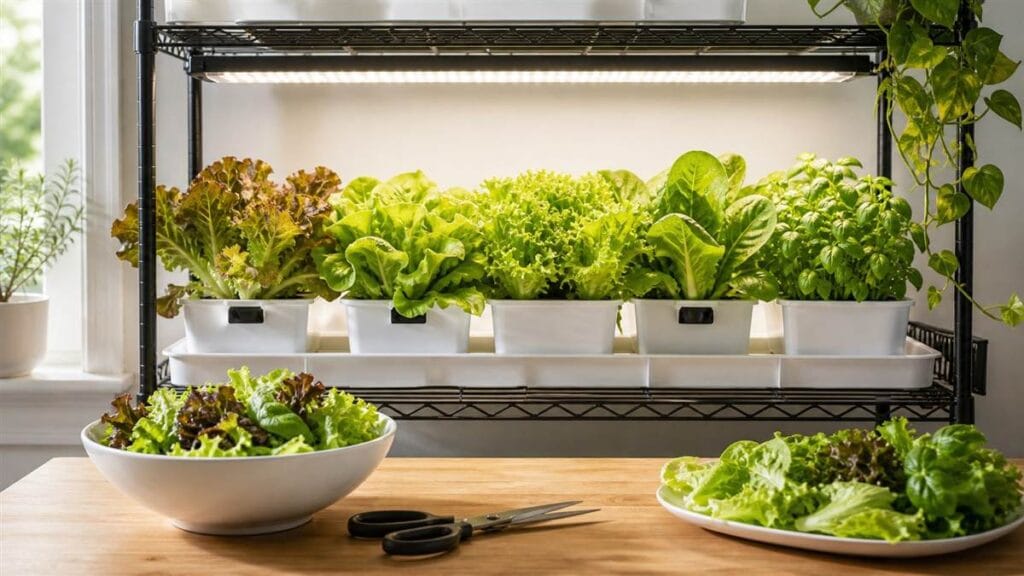
2026’s Best Stay At Home Mom Job For Introverts (Hydroponic Mini Farms)

Revealed: how moms are earning money at home during nap time.

Every year, the internet crowns a “Top Stay At Home Mom Job” list.

Customer service. Virtual assistant. Sell custom Stanley tumblers. Start a YouTube channel.
Rinse, repeat, new year… same list.

Meanwhile, you’re just trying to keep your kiddos alive, not scream at the grocery store receipt, and maybe—just maybe—have one side hustle from home that doesn’t drain the last 3% of your nervous system.

This is the story of the other option.
The nap time side hustle for introverts almost nobody talks about:

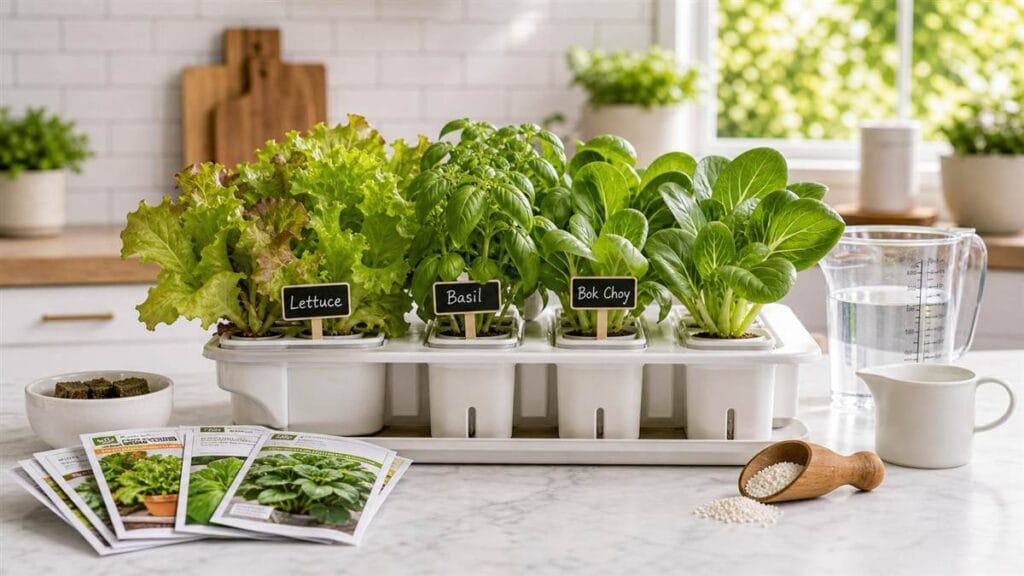
Turning cheap storage totes into indoor mini farms and selling them as living salad bars to your neighbors.

The night everything snapped

It was 9:42 pm at the grocery store.

Her cart had:

  • Milk
  • Bread
  • Some fruit for the kids
  • One bag of salad, because she was trying to be “good”

She watched the numbers climb on the screen and felt that familiar burn behind her eyes.

How is lettuce this expensive?
How am I supposed to do this every week?

She got home, put everyone to bed, and did what so many stay at home moms do when the house finally goes quiet:

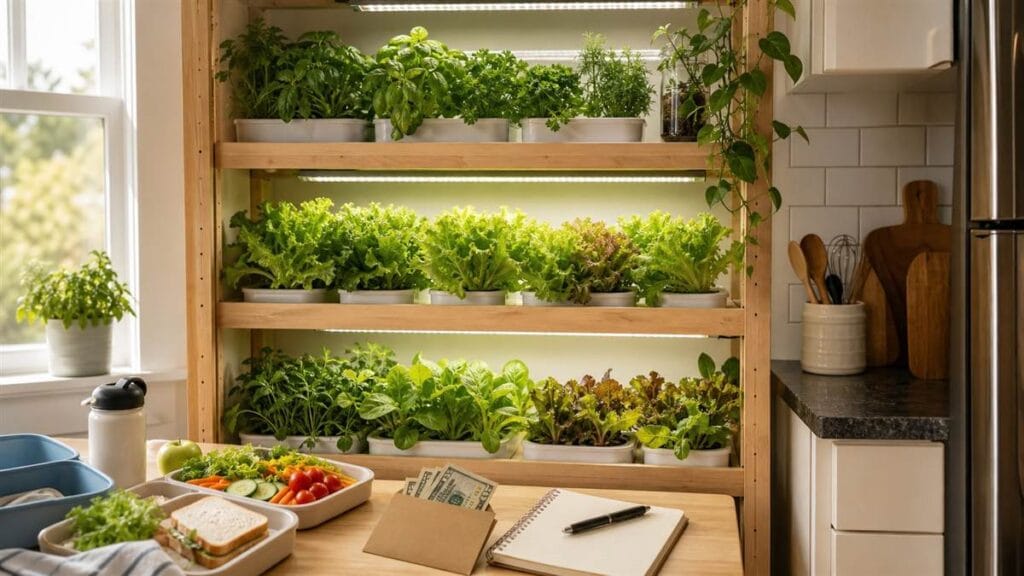
2026's best stay at home mom job (perfect for introverts too)

She opened her phone and typed:

“stay at home mom jobs”

Then:

“work from home jobs for moms”

Then:

“side hustles from home introvert”

Every blog post slapped her with the same list:

  • Answer calls in a headset.
  • Do customer support chat.
  • Become a VA and “hop on Zoom with clients.”
  • Sell clothes or makeup to your friends.
  • Start a blog and “just post consistently for a few years.”

She imagined trying to take calls with a toddler screaming and a preschooler asking for snacks every six minutes.

Hard pass.

She didn’t need twenty more things to juggle.
She needed something quiet, at home, that could actually make money from home without turning her into the family call center.

The problem with most “stay at home mom jobs” lists

Most “stay at home mom jobs” and “side jobs from home” fall into three flavors of misery:

1. Your house becomes a call center

Customer service, virtual assistant, chat support.

  • Fixed shift times.
  • Constant pings.
  • Supervisors watching your “available” status.

You might be at home, but you’re still chained to someone else’s clock. You’re praying the kids don’t cough during a call.

2. You’re selling plastic junk to your friends

MLMs and party-based “opportunities” look like side hustles for introverts on paper… but then you’re:

  • DM’ing everyone you went to high school with.
  • Hosting “just a casual get-together” that’s actually a sales pitch.
  • Feeling sick every time you post on Facebook.

Your social life turns into a sales funnel. The money is… okay-ish, if you’re relentless. The emotional cost is brutal.

3. You’re fighting for pennies online

Take surveys. Click ads. Do microwork. Start a blog and hope it pays off in three to five years.

You’re up at midnight doing tasks that pay less than minimum wage while an algorithm decides if you get rent money this month.

Those might technically be online jobs for introverts, but they are not built for exhausted humans with kids and a real life.

You don’t need another hustle that eats nap time and gives you pocket change.
You need one simple, high-value side hustle from home that works with your life.

The weird little idea in the corner of the kitchen

The next week, our mom (let’s call her Lauren) took her kids to a friend’s house.

In the corner of the friend’s small kitchen, by the window, was a shallow plastic storage tote bursting with ridiculous, lush green leaves.

“What is that?” Lauren asked.

“Oh,” her friend said, “that’s my mini farm. The kids cut leaves for their sandwiches.”

It wasn’t a full garden. It wasn’t fancy.
Just a cheap tote, some kind of growing medium, and a jungle of salad greens.

Then the friend said the sentence that changed everything:

“Three other moms have asked me to make one for their house already.”

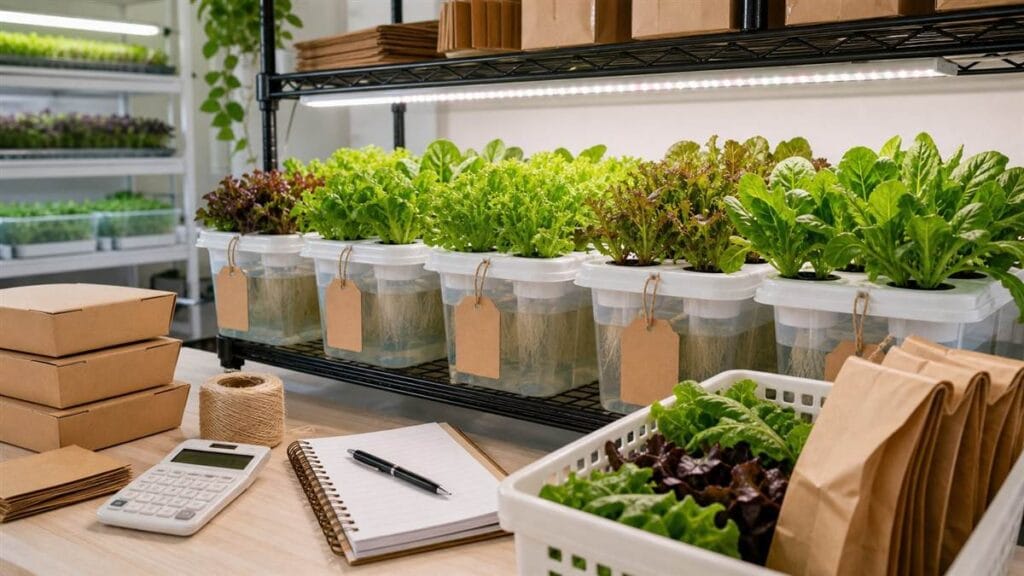
Nap time side hustle for tired moms: mini farms are recession-proof income

Lightbulb.

Not another “work from home job.”
Not another affiliate link.

A product. A real, living, useful thing.

A high-value side hustle built on food.

The nap time mini farm side hustle, in plain English

Here’s what this actually is:

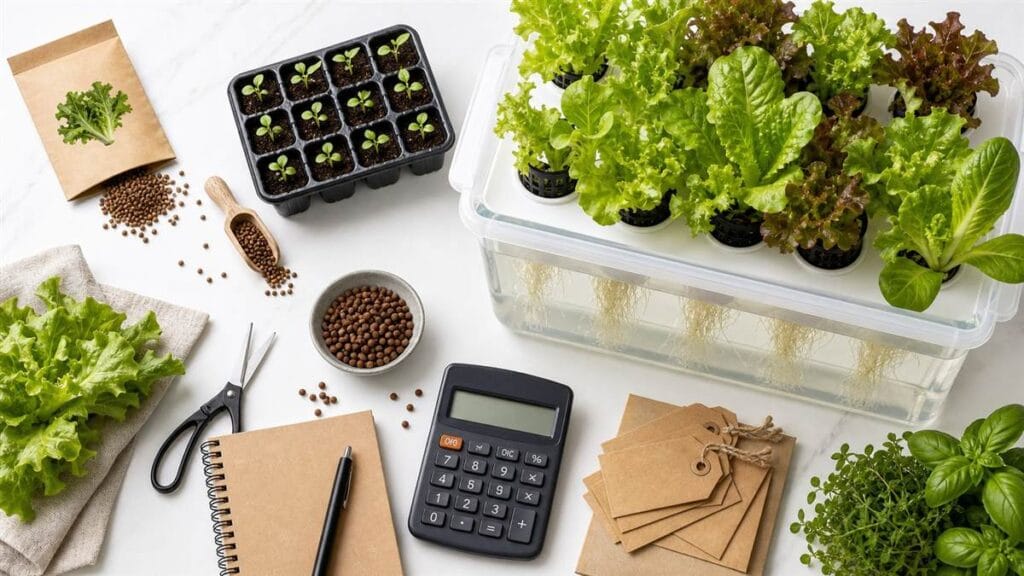
  • You take a shallow storage tote (the kind that costs a couple of dollars).
  • You set it up as a low tech indoor mini farm—no loud pumps, no giant racks, no sci-fi equipment.
  • You sow cut-and-come-again salad greens or herbs.
  • You let the tote quietly turn into a dense, living salad bar on a table, shelf, or windowsill.

You use it to feed your family.

And then you realize you can sell the entire planted tote as a ready-to-harvest indoor mini farm to other families on your street.

Instead of:

  • “Here’s another plastic thing you don’t need.”

You’re saying:

  • “Here’s fresh food growing in your kitchen.”

You are not hustling for clicks.
You’re growing something tangible.

Why this hits different when the economy is weird

Every time the economy hiccups, three things happen:

  1. Search traffic for “stay at home mom jobs,” “make money from home,” and “side hustles from home” explodes.
  2. Grocery prices quietly climb.
  3. Everyone’s stress hits the ceiling.

People want two things at the same time:

  • Food that doesn’t feel like a luxury item.
  • A way to earn that doesn’t require begging, scamming, or burning out.

Your hydroponic mini farms give them both.

They are:

  • High value – a tote brimming with living greens on a windowsill is worth more than another trinket.
  • Locally scarce – they can’t grab this at Walmart.
  • Emotionally calming – it’s food security in a box.

This is not another “join my downline” pitch.
It’s a small, recession-aware side job from home built around something that actually matters.

Why this is a real side hustle for introverts

work from home business for moms who like healthy food

Most “side hustles for introverts” still involve people… just over WiFi.

Client calls. Slack messages. Zoom “quick chats” that never end.

Your mini farm side hustle is different:

  • You can take orders by text, DM, or a simple form.
  • You can arrange porch pickups or drop-offs.
  • You don’t have to be “on” all day. You answer messages when the house is quiet.

The plants do the loudest talking.

Someone sees your tote and says:

“Oh my God, that’s gorgeous. Can you make one for me?”

You don’t pitch. You just say:
“Sure, they’re $45. I’ll have one ready next week.”

No scripts. No pressure. Just “yes” or “no.”

This is make money from home on introvert settings: low stimulation, minimal small talk, maximum control.

How this fits into nap time (for real)

Here’s how a week looks when you run this as a stay at home mom job instead of a “someday” hobby.

Nap time block: 15–20 minutes

Kids finally sleep.

You:

  • Rinse a tote.
  • Add your growing medium.
  • Sprinkle seeds in your pattern.
  • Water. Label. Done.

Take a photo.

Back to dishes, emails, sitting in the hallway scrolling TikTok. Whatever.

After bedtime: 10–15 minutes

You:

  • Post your photo in a small local group or text thread.
  • “I’ve got two salad mini farms ready for next week. Living salad bars for your kitchen. They’re $45 each. First come first served.”
  • Answer a couple of DMs.
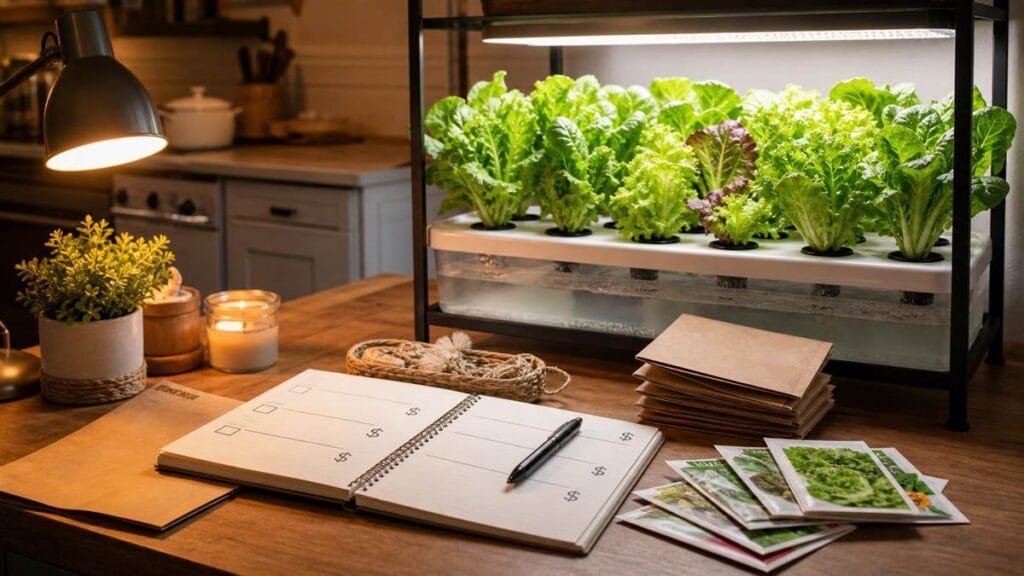
  • Mark down names in a notebook or notes app.

Total “work” time: maybe half an hour on a busy day.
The plants handle the rest while you deal with snacks, math homework, and the third episode of the same cartoon.

On chaotic weeks (sickness, teething, school disasters), you simply plant fewer totes. This is flexible by design.

The money math (no hype, just numbers)

Let’s keep it stupid simple.

  • Tote: grab on sale for a couple of bucks.
  • Growing medium + seeds: a few dollars per tote once you buy in slightly larger quantities.
  • Water & basic nutrients: very low ongoing cost.

Your total cost per tote is low.
Your perceived value per tote is high:

  • A full, thriving salad bar or herb garden that lives in someone’s kitchen and keeps producing.
Real, flexible side hustle from home

How much do they sell for?

  • A recent reader survey of people who’ve downloaded the Indoor Mini Farm System showed people are happy to pay $30–$60 per tote for a ready-to-harvest mini farm. Some areas are willing to pay even more, depending on the greens you’re growing.

Even small scale:

  • 2 totes per week at $45 = $360/month.
  • 3 totes per week = $540/month.
  • Turn up production when you have more energy or demand.

This isn’t the “quit your partner’s job in 30 days” pitch.
It’s a real, flexible side hustle from home that pays actual bills.

Real Readers. Real Mini Farms.

These are everyday readers who started with one tote on a bookshelf and turned it into fresher food and extra cash.

Paid for itself in 3 weeks
“I was skeptical, but my first harvest more than covered the cost. Now my kids snack on greens instead of chips.”

I started with one tote next to our kitchen table. Once I saw how fast everything grew, I added two more and now I’m selling salad plants to three of my neighbors.

Sara C., Columbus, OH

Grocery bill down, side income up
“This gave me a simple plan I could follow after the kids went to bed.”

I don’t have space for a ‘real’ garden, but the mini farm system fits on a cheap bookshelf in our hallway. We eat off it every week, and I sell six totes a month to cover our internet bill.

Jen S., Houston, TX

“Finally something that actually works”
“I’ve tried so many ‘systems’ that overpromised and fizzled out. This one quietly does what it says.”

I work full time and needed something low-maintenance. I spend maybe 10 minutes twice a week checking water levels and harvesting. The rest just… grows.

Sam L., Raleigh, NC

Tiny space, real harvests
“We live in an apartment and I honestly didn’t think this would work.”

We’re on the third floor with no balcony. The totes fits next to our dining table and now my 7-year-old helps me harvest ‘our’ salad every night. It feels like cheating the grocery store.

Pam D., Boise, ID

“Is this really better than a normal work from home job for moms?”

Here’s the honest comparison.

Most work from home jobs for moms are:

  • Time-boxed: someone else controls your hours.
  • Noise-boxed: your house has to be quiet on command.
  • Stress-boxed: your income depends on being constantly reachable.

Your hydoponic mini farm side hustle:

  • Lets you pick when you work (nap time, bedtime, weekends).
  • Lets you control how many orders you take each week.
  • Builds a customer base, not just a resume line.

It’s not for every mom.
It’s for the one who reads “online jobs for introverts” lists and still feels a pit in her stomach because even those feel too people-heavy.

It’s for the mom who wants her work to produce something real.

“Hydroponic” sounds complicated… is it?

Fair question.

When people hear “hydroponic,” they picture:

  • Loud pumps
  • Bright, glaring lights
  • Tangled tubes and timers
  • Hundreds of dollars in equipment

The way we do it?

Think “low tech, indoor-friendly farmer’s bed in a tote.”

  • Passive water systems instead of loud machinery.
  • Simple growing medium.
  • Totes designed for small spaces and rentals.
  • Options for both window light and modest supplemental lighting if needed.

You don’t need to become a scientist.
You need a clear, copy-and-paste setup that someone has already tested in a normal, messy home.

The plug-and-play blueprint: Indoor Mini Farm System

You could piece this together yourself:

  • 17 YouTube videos.
  • 3 Reddit threads.
  • 6 trial-and-error totes.
  • A few sad crop failures.

Or you can follow a system that was built specifically as:

“A side hustle for introvert moms who want to grow food indoors and sell extra mini farms to neighbors.”

That’s what the Indoor Mini Farm System is.

Here’s What You Get

Indoor Mini Farm System (PDF)

Every step you need to create your indoor mini farm in just a few hours. From which totes to buy to how high to hang your lights to which seeds to plant first.
(Value $97)

Linked Supply List (PDF)

Instead of opening twenty tabs and guessing, you get a simple list with direct links to exactly what you need. You can be done shopping in minutes.
(Value $22)

Perpetual Planner (PDF)

This is the piece that keeps black thumbs alive. A simple perpetual planner that tells you, week by week, what to do so you never miss a refill or harvest.
(Value $29)

Just $47 for everything

You’re not signing up for a big brand’s work from home job.
You’re building a tiny, quiet business that lives on your table and your neighbors’ windowsills.

Quick FAQ (because your brain is already firing questions)

“Is this really a good stay at home mom job, or just a cute idea?”
It’s a real stay at home mom job if you treat it like one. You’re producing a high-value product people can’t grab at the store, with flexible capacity and honest pricing. You decide how many totes you plant and sell each week.

“I’m extremely introverted. Do I have to talk to people all day?”
Nope. Most of your communication can happen via text, DM, or short posts in local groups. Your “sales pitch” is basically: photo of lush mini farm + “I have two available this week, DM if you want one.”

“How much space do I need?”
Not much. One tote is roughly the footprint of a baking tray. You can start with a single mini farm on a table or shelf near a window. The Indoor Mini Farm System is designed for renters and small homes, not farmhouse kitchens. With a compact setup, you can enjoy fresh herbs and vegetables right at home. The mini indoor farm benefits include easy access to fresh produce and the satisfaction of growing your own food, all while enhancing your living space. Plus, it’s a fun way to introduce kids to gardening and healthy eating habits. By utilizing the best hydroponic systems for beginners, you can easily cultivate a variety of plants regardless of your experience level. These systems allow for optimal growth conditions, making your indoor gardening journey both successful and enjoyable. As you expand your mini farm, you’ll find endless possibilities for incorporating new plants into your home.

“What if I just want to feed my family and never sell anything?”
Then this becomes an extremely efficient indoor food system for you. The same setups that make money as a side hustle from home also keep you in greens in the dead of winter. With a little creativity and dedication, you can cultivate a variety of vegetables and herbs year-round, ensuring your family enjoys fresh, nutritious produce. If you find yourself with surplus greens, it can easily turn into a way to start a hydroponic side hustle, allowing you to share your bounty with friends and neighbors. This not only enhances your family’s meals but can also provide a fun and rewarding hobby that benefits your community.

“What if everything changes next year?”
Grocery prices may wobble, remote work trends may flip, algorithms may shift… but people will still need food. A living salad bar on their windowsill will always feel better than another box of stuff.

The quiet revolution in your kitchen

You will still have chaotic mornings.
You will still reheat your coffee three times.
You will still step on LEGO in the dark.

But in the corner of your kitchen, a shallow plastic tote will be quietly doing something powerful:

  • Turning cheap supplies into real food.
  • Turning your nap time into something that pays back.
  • Turning “I wish I had a way to make money from home” into “I run a mini farm business out of my kitchen.”

If the usual lists of stay at home mom jobs make you want to throw your phone across the room…

If every “online job for introverts” still feels like too much noise…

If you want a nap time side hustle that grows something real and lets the plants do most of the talking…

Then it’s time to build your first hydroponic mini farm.

👉 Tap here to get the Indoor Mini Farm System and start your own nap time mini farm side hustle.


About the Author

Tyler Brown runs ProfitableHomesteader.com, a site dedicated to sharing side hustle ideas at home – including how he builds tiny indoor mini farms, growing heirloom greens in plastic totes and selling them to local families.

After years of testing containers, crops, and pricing, he built the Indoor Mini Farm System so regular people could skip the trial-and-error and start growing real food (and side income) on a single shelf.

If you’re ready to set up your own pump-free mini farm and start growing food indoors without wasting money on gadgets, you can get the step-by-step guide here:

How A “Bookshelf Farm” Helped One Mom Feed Her Kids And Earn An Extra $200/Month

Hydroponic Side Hustle Grow Food for Profit, feed your kids, nap time work from home

Gwen stared at the grocery receipt like it was a warning label.

The total felt wrong. Higher again. Always higher.

She had done everything “right.” Generic brands. Fewer treats. More “healthy stuff” for the kids because every other article she saw was about ultra processed food and what it does to growing brains.

But the number at the bottom of the receipt didn’t care how hard she tried.

Once home, she did what most of us do when we are stressed and tired. She scrolled.

Another headline about layoffs in her industry.

Another story about contaminated food.

Another think piece about those new weight loss drugs, and how they might not be as safe as she had hoped.

By the time she fell asleep, Gwen had convinced herself of two things:

  1. Things are getting shakier than anyone wants to admit.
  2. Her kids still need real food, every single day, no matter what the government or grocery chains do.

She wanted a backup.
Not a bunker. Not a TikTok side hustle where she was shipping plastic trinkets around the world.

How to start a hydroponic side hustle for reliable monthly income to profit at home

Something small, sane, and real.

Something that quietly fed her kids and gave her a little extra money, without turning her life upside down.

The problem was time.

She didn’t have hours to weed a garden or learn a whole new trade. She had two kids, a job that felt like it was on thin ice, and evenings that disappeared into homework, dishes, and “Mom, where are my shoes.”

So she did what most people do.

She worried. Then she tried to forget about it.

Until she saw a photo that stopped her thumb.

A bookshelf.
Not filled with books.

Filled with food.

The “Bookshelf Farm” That Shouldn’t Work… But Does

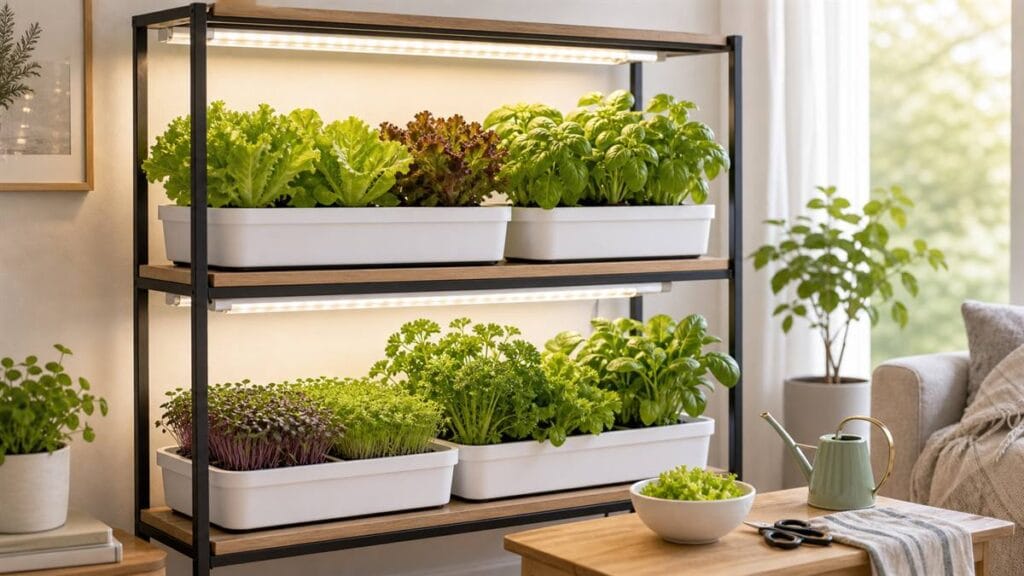
Hydroponic vertical indoor vegetable garden on a bookshelf in the living room.

The photo looked almost fake.

Instead of dusty paperbacks, there were rows of shallow storage totes on a sturdy shelf. Each lid had neat little holes, and out of those holes were explosions of green.

Kale. Chard. A few herbs she could not name.

Under each shelf, simple grow lights. Nothing fancy. No complicated control panels or spaghetti of wires.

“Indoor Mini Farm,” the caption said.

Underneath, someone had commented:

“This thing basically waters itself. I only touch it once a week.”

That was the sentence that hooked Gwen.

Want the exact setup Gwen used?

  • 5 sq ft bookshelf system
  • No pump, no daily watering
  • Beginner-friendly, weekend build
  • Step-by-step PDF + supply list

$47 • Instant download • 30-day guarantee

Because if you have ever tried to grow things while raising kids, you already know the truth:

You don’t forget to feed your kids.
You do forget to water your plants.

Every time.

What she was looking at was not a pretty Pinterest project. It was a system.

A way to grow real food in five square feet of space, with no daily watering, no soil, no weeding, and no praying that the weather cooperates.

Not a backyard dream. A bookshelf reality.

How A Mini Farm Actually Works (In Plain English)

Let me pull back the curtain for a second.

My name is Tyler Brown. I grew up in North Carolina, married my high school sweetheart, and yes, we have land.

But most of the food that really matters to my family right now isn’t coming from a big picturesque garden.

It comes from a few plastic totes on a shelf.

Here’s the simple version of what Gwen saw.

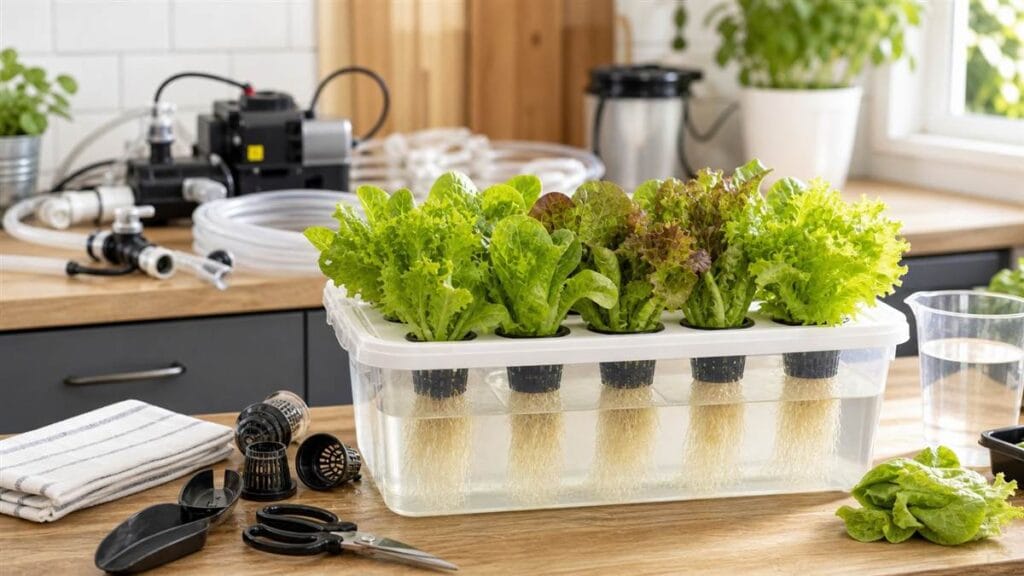
  • You take opaque, shallow storage totes.
  • You drill holes in the lids for small plant cups.
  • You fill the tote with water and nutrients.
  • You put the planted cups in the holes.
  • You set the tote on a shelf with a basic grow light above it.

That’s it.

There’s no pump buzzing in the background. No hoses. No timers.

The roots sit in the water and drink what they need. As they grow, they pull the water level down and grow air roots. Every few weeks, you rinse the roots and refill the tote.

You can ignore the whole thing for days at a time and nothing dies.

The plants don’t care that you had a rough week at work. They don’t care that your kid had the stomach flu and you forgot what day it was.

They just grow.

For Gwen, that meant one mini farm could give her enough greens for smoothies for about a week.

Ten mini farms could feed her kids more real food than she ever thought possible from a rental kitchen, and give her something else that mattered just as much.

Options.

“I Don’t Want To Sell Junk”

Here’s where a lot of parents get stuck.

It’s not just about food. It’s about money.

Gwen knew she should have some kind of backup income. Everyone should. But every time she thought about it, she felt gross.

The world doesn’t need more cheap plastic thingamajigs.

She didn’t want to pester her friends with yet another “hey girl, I have an opportunity for you” DM.

She wanted a way to bring in extra money that actually helped people.

When you grow food on a bookshelf, something interesting happens.

You realize that:

  • Baby plants are worth more than seeds.
  • Ready to harvest greens are worth more than baby plants.
  • Most people want the food, not a learning curve.

So instead of trying to “get rich online,” Gwen could do something simple and honest.

She could sell:

  • Weekly smoothie greens bundles.
  • Salad mixes for busy neighbors.
  • Subscription plant boxes for other parents who wanted to dip a toe into growing.

No funnels. No webinars. No pretending to be a guru.

Just good food, for people who live down the street.

Lisa from Burlington did exactly that:

Earned $200 in my first 30 days…
The confidence I got from building a mini farm is priceless. My kids love seeing the plants grow, and the extra income is changing our budget.”

Ten mini farms, sold out each month, is roughly $300 in profit.

Not lottery money. But the kind of money that makes the grocery bill hurt less. The kind of money that turns “I hope my job lasts” into “I have at least one thing I control.”

And if you never sold a single leaf, you would still have something most people do not.

Food that starts in your own living room.

“But I Kill Every Plant I Touch”

Grow food hydroponically indoors in vertical vegetable garden setup.

This is the other voice in the back of Gwen’s head.

Maybe yours too.

You’ve tried to grow a vegetable garden before. Everything fizzled. Dramatically.

So why would this be any different?

Because the system was built for people who forget to water things.

Daniel from Asheville put it better than I ever could:

“I have a black thumb, but really wanted to grow fresh food at home. I was skeptical, but the Mini Farm System made it foolproof. Thanks to the bonus planner, I haven’t missed a harvest cycle yet. And the marketing plan is genius. I never would have thought of selling plants as a subscription, but my neighbors are thrilled.”

When I put the Indoor Mini Farm System together, I did it with people like Gwen and Daniel in mind.

Parents who are not trying to become full time farmers. They just want something that:

  • Fits in a corner of their kitchen or living room.
  • Takes under 30 minutes a week to maintain.
  • Does not die when life gets busy.

So the system walks you through:

  • Exactly which totes, lights, and supplies to buy, with direct links.
  • How to set them up in a few hours, even if you have never used a drill.
  • What to plant first so you see fast results and don’t get discouraged.
  • How to use a simple perpetual planner so you always know “this week, I do this.”

You’re never staring at a tray of half dead plants wondering what went wrong.

You are simply following a checklist that has already been tested in real homes.

Quiet Preparedness, Without The Bunker

There’s something else Gwen liked, even though she might not say it out loud.

She wanted to be ready if things get worse.
But she didn’t want to be the “crazy prepper friend” who’s always talking about it.

The indoor mini farm is the perfect middle path.

To the outside world, it looks like an interesting hobby. A cool talking point when someone visits.

In reality, it’s:

  • A steady stream of real, nutrient dense food.
  • A way to stretch every grocery dollar further.
  • A soft landing if prices spike or shelves run low.
  • A small, ethical side income if she decides to sell.

No bunker. No fifteen year supply of powdered soup.

Just living plants, under lights, that keep doing their thing while you are at work or helping with homework.

This is the belief I will happily put a line in the sand around:

You don’t need land to feed your family.
You can grow and sell high value plants that actually help people, on a tiny footprint, in a way that feels admirable.

You can be the calm parent who quietly took responsibility, without trying to drag anyone else into your anxiety.

What Gwen Used To Get Started

Here’s the part where most plans pieces turn into a circus.

So let’s keep it simple.

If you’re reading this and thinking, “I want that, but I have no idea where to start,” that’s exactly why I created:

The Indoor Mini Farm System

It’s a step by step PDF guide that shows you how to build and run your own bookshelf farm in a weekend.

Indoor Mini Farm System: Grow superfood greens in hydroponics right in your kitchen

Here’s What You Get

Indoor Mini Farm System (PDF)

Every step you need to create your indoor mini farm in just a few hours. From which totes to buy to how high to hang your lights to which seeds to plant first.
(Value $97)

Linked Supply List (PDF)

Instead of opening twenty tabs and guessing, you get a simple list with direct links to exactly what you need. You can be done shopping in minutes.
(Value $22)

Perpetual Planner (PDF)

This is the piece that keeps black thumbs alive. A simple perpetual planner that tells you, week by week, what to do so you never miss a refill or harvest.
(Value $29)

Just $47 for everything

If the only thing this did was give your kids smoothies made from greens you grew yourself for a few months, it would be worth that.

If it helps you earn even 100 dollars in extra income, it pays for itself more than once.

A lot of people do more than that.

Real Readers. Real Mini Farms.

These are everyday readers who started with one tote on a bookshelf and turned it into fresher food and extra cash.

Paid for itself in 3 weeks
“I was skeptical, but my first harvest more than covered the cost. Now my kids snack on greens instead of chips.”

I started with one tote next to our kitchen table. Once I saw how fast everything grew, I added two more and now I’m selling salad plants to three of my neighbors.

Sara C., Columbus, OH

Grocery bill down, side income up
“This gave me a simple plan I could follow after the kids went to bed.”

I don’t have space for a ‘real’ garden, but the mini farm system fits on a cheap bookshelf in our hallway. We eat off it every week, and I sell six totes a month to cover our internet bill.

Jen S., Houston, TX

“Finally something that actually works”
“I’ve tried so many ‘systems’ that overpromised and fizzled out. This one quietly does what it says.”

I work full time and needed something low-maintenance. I spend maybe 10 minutes twice a week checking water levels and harvesting. The rest just… grows.

Sam L., Raleigh, NC

Tiny space, real harvests
“We live in an apartment and I honestly didn’t think this would work.”

We’re on the third floor with no balcony. The totes fits next to our dining table and now my 7-year-old helps me harvest ‘our’ salad every night. It feels like cheating the grocery store.

Pam D., Boise, ID

And if you decide you want help selling out every harvest, there’s also a short companion guide called Sold Out Every Time you can pick up later.

In that guide, I walk you through exactly how to:

  • Price your plants and greens so they move fast and still feel fair.
  • Offer simple subscriptions your neighbors are excited to renew.
  • Sell without feeling like a pushy salesperson.

As a thank you, I’ll send you an infographic about my three favorite plants to grow hydroponically.

Everything is covered by a 30 day guarantee.

If you get the guide and think, “Nope, this is not for me,” just email me and let me know. I’ll refund you out of my own pocket. No quiz. No guilt.

If You Feel That Little Nudge

If you’ve read this far, something in you already knows what I am about to say.

You don’t control the government.
You don’t control your company’s decisions.
You can’t make grocery chains suddenly care more.

You can control what is growing five feet from your kitchen table.

You can control whether your kids see food as “something that shows up in a bag” or “something that grows because we took care of it.”

You can give yourself a small, quiet income stream that doesn’t depend on someone else’s algorithm or agenda.

That starts with one simple decision:

Set up your first mini farm.

Whether you end up with ten mini farms and a waiting list of neighbors, or just a steady supply of greens for your own blender, you’ll be glad you started now instead of waiting for the next scary headline.

Click through, grab the Indoor Mini Farm System, and I’ll walk you through the rest.

One shelf.
A few plastic totes.
Thirty minutes a week.

And a future where your kids never have to wonder where the real food in the house came from.


About the Author

Tyler Brown runs ProfitableHomesteader.com, a site dedicated to sharing side hustle ideas at home – including how he builds tiny indoor mini farms, growing heirloom greens in plastic totes and selling them to local families.

After years of testing containers, crops, and pricing, he built the Indoor Mini Farm System so regular people could skip the trial-and-error and start growing real food (and side income) on a single shelf.

If you’re ready to set up your own pump-free mini farm and start growing food indoors without wasting money on gadgets, you can get the step-by-step guide here:

Best DIY Hydroponic System for Beginners, Easy Indoor Food Garden

Revealed: The top secrets on setting up an easy DIY hydroponic system for beginners that you can create in just 5 square feet.

A DIY hydroponic system used to sound like something only science teachers and YouTube engineers could pull off.

Tangled tubing.
Loud pumps.
Timers.
Leaks.

The kind of project that slowly takes over your spare room and your sanity.

But if all you really want is this:

  • Fresh, real greens you grew yourself
  • A system that fits on a shelf
  • No pump noise, no plumbing
  • Something you can build on a weekend without blowing your budget

…you don’t need any of that.

You can build a DIY hydroponic system for beginners that lives on a shelf, feeds your family, and costs under $100 to get started.

That’s the kind of system I run in my own home.

In this article I’m going to show you:

  • The simple, pump-free indoor hydroponic system I use
  • What it actually costs to set up (with real numbers)
  • How it compares to the expensive “smart gardens” and complicated rigs
  • The basic framework I follow to turn that DIY build into a mini farm system

If you’ve been waiting for “the beginner-friendly version,” this is it.

Why most “beginner” hydroponic setups feel overwhelming

When I first started looking up DIY hydroponic systems, I kept running into two extremes:

  1. High-tech countertop kits
    • Gorgeous designs
    • Subscription pods
    • Apps and lights and notifications
    • Big price tag
    • Very little actual food output
  2. Complex DIY builds
    • PVC pipes
    • Pumps and reservoirs
    • Timers and air stones
    • Enough parts and tools to build a small spaceship

Neither one matched what I wanted:

  • Real food
  • Simple hardware
  • Quiet
  • Small space friendly
  • Affordable to start

So I went looking for a third path:
pump-free, beginner-friendly hydroponics that didn’t demand a degree or a loan.

That’s what I use now, and what I teach in my Indoor Mini Farm System.


The heart of my DIY hydroponic system: mini farms in storage totes

At the center of my setup is a very low-tech idea:

“If a plant has water and light, it doesn’t care how fancy the container is.”

Instead of tubes and pumps, I use shallow plastic storage totes as mini farm beds.

Each tote becomes a self-contained indoor hydroponic garden:

  • The lid has holes for net cups
  • The cups hold a simple growing medium
  • The tote holds water and nutrients
  • Roots grow down, leaves grow up
  • A basic grow light or shop light sits above it on a shelf

No pumps.
No timers.
Just gravity, light, and a smart layout.

It’s technically a form of passive hydroponics, but you don’t need to know the terminology to benefit from it. You just need to know how to put the parts together.


What you actually need to get started (for under $100)

Let’s break down what a beginner hydroponic system like this really costs.

Prices will vary depending on where you live and what you already have, but here’s a realistic ballpark.

1. Totes (your mini farm beds)

  • 2–4 opaque shallow storage totes
  • Think “shoebox” size, not giant bins

Approximate cost: $3–$8 each
Even with 4 totes, you’re usually under $30.

2. Net cups + growing medium

  • Net cups that fit the holes you’ll cut in the lids
  • Rockwool or similar inert growing medium for starting seeds

Approximate cost: $10–$20 total
You won’t use all of it at once, so some of this is “future you” inventory.

3. Nutrient solution

  • A basic hydroponic nutrient mix formulated for leafy greens

Approximate cost: $15–$25
One bottle goes a long way, especially in a small system.

4. Light
If you don’t have a very bright south-facing window, you’ll want a basic light. For beginners, this might be:

  • A full-spectrum LED shop light
  • Or a simple grow light bar

Approximate cost: $25–$40

5. A shelf
If you already have a wire shelf, you’re set. If not, a basic multi-tier shelf is often in the $30–$60 range, but that’s a one-time expense you can use for storage too.

If we stay conservative:

  • 3 totes
  • Net cups + medium
  • Nutrients
  • One budget-friendly light

You’re realistically in the neighborhood of $70–$90 for your first DIY hydroponic system.

After that, your main recurring cost is seeds—often under $4 for a packet of 200+ seeds.

You don’t have to buy it all at once, either. In my guide, I show you how to start with a tiny setup and expand as you get comfortable.


What you can grow in a beginner indoor hydroponic system

People get excited and try to grow everything at once: tomatoes, peppers, strawberries, cucumbers, the works.

For a beginner hydroponic garden, I recommend a different approach:

I like to start by growing herbs indoors, along with a few leafy greens:

  • Lettuce (cut-and-come-again varieties)
  • Bok choy
  • Chijimisai
  • Kale and chard
  • Red-veined sorrel
  • Basil, cilantro, parsley

These crops:

  • Germinate quickly
  • Grow happily in shallow nutrient solution
  • Don’t need pollinators
  • Bounce back after you harvest leaves

They’re also the exact foods people complain are expensive and short-lived when bought at the store.

Once your system is dialed in and you feel confident, you can experiment with other plants. But if you want to start an indoor food garden and actually eat it, growing herbs indoors alongside your leafy is where you start.


What living with this system is actually like

Here’s what a typical week looks like with a pump-free DIY hydroponic system on a shelf:

  • Check water levels
  • Top off nutrient solution as needed
  • Clip greens for salads, sandwiches, smoothies, or stir-fries
  • Start a new batch of seeds before you run out of the current one

No hauling soil.
No dragging hoses.
No meditating next to the sound of a water pump all night.

The whole thing quietly does its job in the corner of your kitchen, dining room, or hallway.

If you’ve ever felt like an indoor food garden was this huge, messy project that needed land and big tools, an indoor hydroponic system like this rewrites that story.


Why a DIY hydroponic system is better than a single expensive gadget

Let’s talk about those sleek countertop hydroponic kits for a second.

They’re beautiful.
They’re fun.
They’re also often:

  • Locked into proprietary pods or shapes
  • Too small to replace much grocery store volume
  • Priced like furniture, not like kitchen tools

As an indoor food garden goes, it’s not that they’re not bad. They’re just not designed to feed a household or support a side hustle.

A DIY hydroponic system for beginners using totes works differently:

  • You control the size
  • You control the crops
  • You can expand as you go
  • You’re not locked into a subscription model

And if you ever decide to grow more than your family needs, this same setup can become a mini farm system that feeds neighbors or supports a small side income for kitchen table income.

That’s exactly what I built my Indoor Mini Farm System guide around.


From “just growing” to “this could be extra income”

Not everyone wants to sell what they grow, and you don’t have to.

But once you see how much food you can grow on a shelf, it’s natural to start thinking:

  • “We can’t eat all this.”
  • “My friend keeps asking for some.”
  • “Could this cover a bill if I scaled it a little?”

The answer is yes.

The same DIY hydroponic system that feeds your family can be nudged into a hydroponic side hustle by: By selling fresh produce directly to local markets or customers, you can turn your hobby into a profitable venture. With the right marketing strategies, your hydroponic side hustle could thrive in a growing market for fresh, locally sourced food.

  • Planting mini farms intentionally as products
  • Offering them as “salad bars in a box” or “smoothie mini farms”
  • Putting a few families on simple monthly subscriptions

In my home, that’s what I do: I run mini farms in these totes and sell extras as ready-to-harvest mini farms and subscription greens.

That’s also why, when I wrote the Indoor Mini Farm System, I didn’t stop at “how to build the totes.” I included:

  • How many totes you need to hit specific goals
  • How to time your plantings so you don’t run out
  • Basic pricing and simple scripts for offering mini farms or subscriptions

You don’t have to turn your system into a business. But it feels good knowing you could.


Why I created the Indoor Mini Farm System (and who it’s for)

You can piece together a basic DIY hydroponic system from twenty different videos and blog posts.

It will probably eventually work—kind of.

Or you can follow a single, tested system that’s been designed specifically for:

  • Beginners who want to grow food indoors
  • People without yards or big budgets
  • Families who want to replace part of their grocery bill
  • Anyone curious about turning a small indoor hydroponic garden into a side hustle

That’s what the Indoor Mini Farm System is.

Inside, I give you:

  • Exact tote sizes and layouts I use for indoor mini farms
  • How to drill and space the holes for healthy roots
  • Seed lists and crop combinations that play nicely together in one tote
  • Light placement and timing recommendations
  • A simple schedule for planting, topping up, and harvesting
  • Optional sections on selling mini farms and subscriptions to neighbors

If you want to build an indoor hydroponic garden for under $100 and know it’s the right system from the start, this is the guide I made for you. In this guide, I will walk you through the essential components you’ll need to get started, ensuring you make informed choices that suit your budget. Additionally, I’ll highlight the best hydroponic plants for beginners, so you can quickly enjoy the rewards of your indoor garden. With the right setup and plant selection, you’ll be on your way to growing fresh produce in no time!

👉 Get the Indoor Mini Farm System and build your own beginner-friendly DIY hydroponic system this month. With the Indoor Mini Farm System, you can enjoy fresh produce right from the comfort of your home. As you explore the mini indoor farming benefits, you’ll discover how easy it is to grow herbs, vegetables, and fruits year-round. This innovative system is perfect for anyone looking to enhance their living space while promoting a sustainable lifestyle.


Your next step to start your DIY hydroponic system

If you’re tired of:

  • Buying sad greens in plastic boxes
  • Letting “someday I’ll grow food” float around in your head
  • Feeling like hydroponics is always “too expensive” or “too complicated”

…a simple, pump-free DIY hydroponic system on a shelf is the most realistic place to start.

One weekend.
A few totes.
A basic light.
Some seeds.

That’s it.

From there, you can decide:

  • Do you just want better salads?
  • Do you want your family’s greens mostly covered?
  • Do you want to explore a small mini farm side hustle?

Whatever you choose, you’ll know you have a system that can grow with you.

And that’s the real power of a DIY hydroponic system for beginners that doesn’t depend on gadgets, trends, or guesswork—just a clear plan and a shelf in your home.


About the Author

Tyler Brown runs ProfitableHomesteader.com, a site dedicated to sharing side hustle ideas at home – including how he builds tiny indoor mini farms, growing heirloom greens in plastic totes and selling them to local families.

After years of testing containers, crops, and pricing, he built the Indoor Mini Farm System so regular people could skip the trial-and-error and start growing real food (and side income) on a single shelf.

If you’re ready to set up your own pump-free mini farm and start growing food indoors without wasting money on gadgets, you can get the step-by-step guide here:

How to Grow Food Indoors (Without a Pricey Indoor Hydroponic Garden Kit)

Easy diy indoor hydroponic garden setup for small indoor vegetable garden.

Revealed: How an everyday family built an indoor hydroponic garden right in their kitchen.

When people hear I grow most of our greens indoors, they assume I’ve got one of those $600 smart gardens with an app and a subscription. In reality, I use simple shelves, grow lights, and affordable containers that allow me to grow food indoors easily without breaking the bank. It’s all about finding the right setup that works for your space and needs. With a little creativity, anyone can enjoy fresh produce year-round.

I don’t.

My “indoor hydroponic garden” lives on a simple wire shelf, in plastic shoeboxes I bought at the dollar store.

No pumps.
No timers.
No fancy pods.

Just water, nutrients, light, and a layout that lets the plants do what they’re wired to do: grow.

In this article, I’m going to show you:

  • How I grow food indoors using a simple DIY hydroponic system
  • Why I chose this setup over soil or expensive countertop kits
  • What I actually grow (and how much it replaces on our grocery bill)
  • The exact framework I use to turn a single shelf into a mini farm system

And if you want my step-by-step plans, I’ll show you where to get them at the end.


Why I Stopped Relying on the Grocery Store for Greens

A few years ago, I was standing in the lettuce aisle doing the same mental math you probably do:

  • $4–$5 for a plastic box of greens
  • That lasts… what… 2–3 decent salads if you’re lucky?
  • Half the time it goes slimy by the next day

Meanwhile, prices kept creeping up, and quality kept sliding down.

I didn’t want to build a huge outdoor garden. I just wanted:

  • Real food
  • In a small space
  • That didn’t depend on the grocery store staying reasonable

So I started looking into ways to grow food indoors.

Most advice fell into two camps:

  1. Complicated hydroponic systems with pumps, plumbing, and timers
  2. Cute countertop gadgets that looked nice but didn’t grow enough to provide food for a family

There had to be a middle ground.

That’s where I found the pump-free, no-noise style of hydroponics my family uses now.


The Indoor Hydroponic Garden That Lives on a Shelf

My whole system is built around one idea:

“If it can fit on a shelf, it can feed a family.”

Instead of individual pots or proprietary pods, I use shallow storage totes as mini hydroponic farms. Each tote is a self-contained indoor hydroponic garden that can grow a full “salad bar” of greens. These shallow storage totes allow for efficient space utilization and make it easy to manage multiple varieties of plants simultaneously. Additionally, they serve as accessible and affordable mini indoor farming solutions for anyone looking to grow their own fresh produce at home. With the right lighting and nutrient solutions, these mini hydroponic farms can thrive year-round, providing a sustainable source of greens.

At a high level, here’s what each mini farm looks like:

  • A shallow, opaque plastic tote (shoebox size)
  • Holes in the lid for net cups
  • A simple nutrient solution inside
  • Leafy greens and herbs planted in the cups
  • A basic shop light or grow light above the shelf

The roots grow down into the water, the leaves grow up toward the light, and the tote itself acts as the “bed.”

It’s a DIY hydroponic system, but it’s not the kind that takes over your life. Once it’s planted and topped up, it mostly requires no maintenance. You can easily set it up in a small space, making it perfect for urban dwellers. Many enthusiasts consider it one of the best hydroponic systems for beginners, as it allows for fresh produce with minimal fuss. Plus, the satisfaction of growing your own herbs and vegetables adds a rewarding touch to your home.


Why This Pump-Free Setup Works So Well Indoors

There are a lot of ways to do hydroponics. I chose the low-tech, no-pump style for a few reasons:

1. No moving parts to fail
No pumps means no humming noise, no timers to reset, no clogged filters and nothing to break at 2 a.m. It’s silent and simple.

2. Perfect for small spaces
Everything lives on a wire shelf against a wall. You could put it in a dining room, hallway, spare bedroom, or even a wide hallway—anywhere you can hang a light.

3. Shockingly low maintenance
Once the totes are planted, I’m mostly just:

  • Checking water levels
  • Topping off nutrients
  • Harvesting greens

It’s closer to “harvest management” than gardening-as-a-full-time-job.

4. Real grocery savings
Each mini farm can replace multiple clamshells of store greens. When they’re in full production, it feels like stealing from the grocery budget—in the best way.


What I Grow in My Indoor Hydroponic Garden

You can get wild with varieties, but if you’re new to growing food indoors, start with leafy greens that love hydroponics:

  • Chijimisai
  • Red-veined sorrel
  • Bok choy
  • Kale and chard
  • Cut-and-come-again lettuces
  • Tender herbs (basil, cilantro, etc.)

These plants:

  • Grow fast
  • Don’t need pollinators
  • Thrive in an indoor hydroponic system
  • Give you repeated harvests from a single planting

On a single 4-tier shelf, you can have:

  • Baby greens on one level
  • Full salad mixes on another
  • Stir-fry or smoothie greens on the next

Once everything fills in, it looks less like “a science project” and more like a tiny vertical vegetable garden in your hallway.


How Much Food Can You Actually Grow in an Indoor Hydroponic Garden?

Let’s talk about real numbers.

A single mini farm can produce:

  • Enough greens for several hearty salads each week
  • Or a steady supply of smoothie greens
  • For about two months before it needs re-seeding

Set up 4–6 mini farms, and you’re looking at:

  • Replacing multiple clamshells of “spring mix” each week
  • A constant rotation of fresh leaves
  • The option to let some totes go longer for full-size bok choy or chijimisai

It’s not magic. It’s math:

  • One packet of high-quality heirloom seeds: under $4
  • Roughly 100+ plants from that packet in a hydroponic system
  • Totes, net cups, rockwool, and nutrients: just a few dollars per mini farm

For pennies on the dollar, you’re growing an endless supply of greens and produce, right in your kitchen. The grocery savings add up fast. Not only are you enjoying fresh ingredients at your fingertips, but you’re also contributing to a more sustainable lifestyle. With just a few basic supplies and some sunlight, you can create a thriving garden without stepping outside. So why wait? Start your mini farm today and transform your cooking experience!


Why I Prefer Hydroponics to Indoor Soil Pots

Could you grow food indoors in pots of soil with a grow light? Sure.

I tried that.

Here’s why I still reach for my indoor hydroponic system instead:

  • No bags of soil to drag inside
  • No fungus gnats hiding in the potting mix
  • No over- or under-watering drama
  • Much faster growth and cleaner harvests

With hydroponics, everything is contained:

  • Water stays in the tote
  • Roots stay submerged
  • Nutrients are predictable
  • Cleanup is as simple as rinsing a container in the tub or outside

For a busy family, that matters.


The Part Most People Get Wrong About Growing Food Indoors

Most people either:

  1. Go all-in on an expensive, high-tech system, or
  2. Piecemeal a DIY hydroponic setup from six different tutorials and end up frustrated

What’s missing is a tested, beginner-friendly plan that:

  • Uses affordable, easy-to-find parts
  • Is sized for real families, not labs
  • Works in apartments and small homes
  • Can scale from “just our greens” to “small side hustle” if you want it to

That’s exactly why I put together my Indoor Mini Farm System.

It’s the complete blueprint I wish I had when I started:

  • Exact tote sizes, light heights, and spacing
  • Crop combos that play nicely together in the same mini farm
  • Optional side-hustle paths if you ever want to sell mini farms or subscriptions to neighbors

You can absolutely experiment your way into a working system.
I did.

But if you’d rather skip the false starts and get straight to the part where you’re clipping fresh greens off a shelf, the guide will save you a lot of trial and error.

👉 Indoor Mini Farm System – click here to get the step-by-step guide


Where to Go Next

If all you want right now is to grow food indoors and stop depending on the lettuce aisle, start with one shelf and a couple of mini farms.

Once you see how much you can grow in a few plastic shoebox totes, you’ll have options:

  • Add more mini farms to cut your grocery bill further
  • Turn one shelf into a small hydroponic side hustle
  • Or keep it simple and just enjoy delicious greens all winter

However you use it, this kind of indoor hydroponic garden gives you something the store never will:

Control.

You know where your food came from.
You know what went into it.
And you can harvest it minutes before dinner.

That’s the power of a tiny, pump-free mini farm system living quietly on a shelf in your home.


About the Author

Tyler Brown runs ProfitableHomesteader.com, a site dedicated to sharing side hustle ideas at home – including how he builds tiny indoor mini farms, growing heirloom greens in plastic totes and selling them to local families.

After years of testing containers, crops, and pricing, he built the Indoor Mini Farm System so regular people could skip the trial-and-error and start growing real food (and side income) on a single shelf.

If you’re ready to set up your own pump-free mini farm and start growing food indoors without wasting money on gadgets, you can get the step-by-step guide here:

How to Start a Hydroponic Side Hustle for Reliable Monthly Income from Home in 2026

How to start a hydroponic side hustle for reliable monthly income to profit at home

Revealed: the key to a high profit hydroponic side hustle for recession-proof income you can earn from home.

When the economy falters, most advice boils down to one thing:

“Cut back and pray you don’t need a second job.”

Personally, I don’t like that plan. It puts way too much faith in systems that are tenuous, especially when the economy heads into recession.

A few years ago, I took a completely different path. I started a hydroponic side hustle building hydroponic mini farms that can live on a bookshelf, keep my family fed, and turn a healthy profit. The best part? This gardening hack works even in small spaces and when you don’t have much time.

We’re talking:

  • A wire shelf
  • Shallow storage totes
  • Heirloom and specialty greens
  • Local families on simple subscriptions

In this article I’m going to show you why selling heirloom greens as a subscription is such a strong model, what the margins actually look like, and how my Indoor Mini Farm System walks you through the growing and selling piece step by step. If you just want to grow food indoors for your own family first, start with my guide on How to Grow Food Indoors on a Shelf.

If you’ve ever wanted to find a work from home side hustle to earn money at home in your PJs, this is for you.

Grow Real Food Indoors For Profit

DIY hydroponic indoor mini farm system to grow food at home.

✅ Beginner-friendly mini farm you can build in a weekend

✅ Grow fresh greens weekly in just 5 sq ft

What is a hydroponic mini farm side hustle?

Most people hear hydroponics and think expensive gear, complicated pumps, and a room full of tubes and lights.

That’s not what I do.

A hydroponic side hustle mini farm, the way I teach it in the Indoor Mini Farm System, is:

  • A shallow plastic storage tote
  • Net cups with growing medium
  • A simple nutrient solution
  • Heirloom and specialty greens and herbs that customers love
  • The whole thing sitting on a shelf where you can reach it

Each tote becomes a ready-to-harvest mini farm—basically a living salad bar or smoothie box your customers can cut from again and again. Better still, it’s nearly passive income you can make from home.

Now pair that with a subscription model:

  • Local families sign up for a set number of mini farms per month
  • You grow, deliver, and swap out totes on a schedule
  • That means predictable income, month after month

That combination—indoor mini farms + subscriptions—is what turns this from “fun experiment” into an actual high-profit hydroponic side hustle from home. This unique blend not only allows for a rewarding venture but also fits seamlessly into a busy lifestyle, making it one of the best jobs for introverted moms. By cultivating fresh produce in a controlled environment, they can enjoy the therapeutic aspects of gardening while generating a supplemental income. As these mini farms thrive, so do the opportunities for growth, leading to a fulfilling and sustainable business.

Why heirloom greens still sell when the economy is shaky

In a recession or downturn, people don’t stop eating. They change how they spend.

They:

  • Skip restaurant meals
  • Pay close attention to grocery prices
  • Side-eye limp lettuce that goes bad in two days
  • Get tired of the same three boring greens
  • Focus more on getting the most nutrition for their dollar

Heirloom and specialty greens answer all of that at once:

  • They look incredible
  • They taste better than standard varieties
  • They make basic meals feel special again
  • They often deliver more nutrition per bite

Think purple lady bok choy, amaranth leaves, chijimisai, red-veined sorrel, and deep green lettuces that never touched a truck or a warehouse.

Most stores don’t carry them fresh and local. If they do, it’s expensive and inconsistent.

So when a neighbor says, “Hey, I grow fresh heirloom greens and deliver them on a subscription—do you want in?” people sign up.

You’re not fighting recession behavior; you’re aligning with it:

  • Better food
  • Less waste
  • Predictable cost

That’s a strong base for a recession-resistant side hustle.

The living mini farm model: stop selling single heads of bok choy

When I first tried making money from greens, I did it the hard way:

  • Soil
  • Raised beds
  • Endless watering
  • Saturdays spent weeding
  • Harvesting individual heads and bagging leaves
  • Trying to sell them one by one at the local farmer’s market

I burned time and energy for very little money.

Then I switched to the living mini farm model, and everything changed.

Instead of selling a single head of bok choy, I sell an entire ready-to-harvest mini farm tote:

  • It’s planted with heirloom and specialty greens
  • It keeps producing for weeks
  • The customer cuts what they want, when they want it
  • They get months of meals from one purchase

You’re no longer pricing a single vegetable. You’re pricing a compact, living food system.

That lets you:

  • Charge more per sale
  • Do less harvest labor
  • Spend most of your “work time” on setup and delivery, not micro-tasks

Rule #1 in my playbook:

Sell the mini farm, not the loose leaves.

The margins: real numbers from a realistic hydroponic side hustle

Let’s talk about profit, because that’s where most side hustles fall apart.

With indoor mini farms, the numbers are on your side.

Seed cost

A packet of unusual, hydroponic-friendly seeds is often priced under $4 for around 200 seeds.

Even if you only use 100 of those seeds, that’s 100 plants from a four dollar investment.

Hardware cost per mini farm

For each mini farm you’re looking at:

  • Shallow storage tote
  • Net cups
  • Growing medium
  • Nutrient solution

Even if you’re not chasing the absolute cheapest supplies, you’re typically around $5 in hardware and inputs per mini farm.

Worst-case pricing

Let’s run worst-case numbers so you can see how much room you have when pricing hydroponic greens.

Say you underprice on purpose just to get people hooked:

  • Mini farm tote price: $15
  • Your cost in materials: ~$3
  • Hands-on setup time: about 10 minutes per mini farm for planting and mixing nutrients

That’s roughly:

  • 5× return on materials, and
  • About $70/hour for your time, even at that low price

Most people charge more once they see the demand for high-value hydroponic greens (I talk about specific pricing strategies inside the Indoor Mini Farm System guide), but even at $15, the math beats a lot of second jobs.

Why subscriptions turn this hydroponic side hustle into reliable income

One-off sales feel good in the moment, but they don’t calm your brain about bills.

Selling hydroponic greens subscriptions, though, means passive monthly income you can trust.

Here’s a simple, realistic subscription model for selling the greens you grow that comes straight out of my system:

  • You offer a Heirloom Greens Mini Farm Subscription
  • Each family subscribes to two mini farms per month (salad boxes, smoothie boxes, herb boxes, or a mix)
  • Each mini farm runs about two months before you need to replant

With just 10 families, that looks like:

  • 20 totes delivered per month
  • ~40 totes in rotation in their homes at any moment

Now layer in reasonable pricing.

Say you charge $30 per mini farm tote (which is completely justified given the amount of food and the convenience): By investing in a mini farm tote, customers not only gain access to fresh, organic produce but also become part of a sustainable food system. This innovative approach empowers individuals to cultivate their own gardens, effectively turning seeds into profits while minimizing environmental impact. The combination of quality products and the convenience of home gardening makes this investment worthwhile for both seasoned gardeners and newcomers alike.

  • 20 totes × $30 = $600/month

That’s almost completely passive side hustle income from ten families.

If you later:

  • Raise prices to $45 as your reputation grows
  • Add a “family plan” with more totes
  • Bring on more families

…you can very realistically push this toward five figures per month even if you only have a small space for hydroponic systems.

Is $600 going to wipe out a huge mortgage on its own? Maybe not. But it can:

  • Cover a serious chunk of the payment
  • Handle property taxes when averaged out monthly
  • Cover your grocery bill with plenty of profit left over

That’s the scale we’re talking about with only ten families.

Why this hydroponic side hustle actually works in small spaces

Traditional “farming for money” advice assumes you have:

  • A lot of land
  • A garage for a complicated hydroponics system
  • A truck to do all those deliveries
  • A farmers’ market nearby

The Indoor Mini Farm System makes farming for money as close to passive income as you can get.

You’re building:

  • Shallow hydroponic totes
  • On simple wire shelves
  • In a spare corner, hallway, laundry room, basement, or sunny wall
  • And if you want it to be really easy, have customers pick up their food from your porch.

No soil.
No tilling.
No weeds.
No bugs.

You can run your hydroponic mini farms from:

  • An apartment
  • A townhouse
  • A rental where you’re not allowed to touch the yard

If you move, your system packs into the car and comes with you.

That’s what makes this a great portable side hustle instead of something that ties you to a specific property.

Why neighbors actually love subscribing to mini farms

Let’s flip perspectives and look at this through your customers’ eyes.

The heirloom greens subscription solves multiple problems at once:

  1. They always have fresh, interesting greens.
    Not the same sad lettuce, not mystery greens in a plastic box. Real flavor. Real nutrients.
  2. They waste less.
    Because they’re cutting from a living mini farm, greens last longer and get used more.
  3. They know exactly who grew their food.
    “We get our greens from a neighbor down the street” feels better than “whatever was on sale.”
  4. The math makes sense.
    A $30 tote that produces multiple large salads or smoothies feels like a solid deal—especially when store prices keep creeping up.

Once families get used to this, they often tell me, “We don’t want to go back to store greens.” That’s the kind of loyalty you want in a subscription food business.

Common mistakes people make when starting a hydroponic side hustle

I’ve tested a lot of variations on this idea—enough to see the same pitfalls over and over.

Here are a few:

  1. Trying to grow everything.
    They plant 15 different crops and end up with chaos. In the Indoor Mini Farm System I have you start with a short list of proven heirloom greens that perform well in shallow hydroponics and sell easily.
  2. Selling harvested greens instead of mini farms.
    This is the fastest way to turn a promising idea into a job you resent. We already talked about why: too much labor per sale.
  3. No subscription offer.
    If you don’t ask people to subscribe, you become “that person who sells greens sometimes.” The guide gives you exact wording to turn one-off buyers into subscribers without feeling pushy.
  4. Over complicating the setup.
    Fancy gear doesn’t make this more profitable. A simple, dialed-in system does. My guide tells you exactly which totes, net cups, and nutrient setup I use so you don’t waste money on gimmicks.

Avoiding those four mistakes alone will save you months of trial and error.

The missing piece: a complete Indoor Mini Farm System that covers growing and selling

On paper, the plan looks straightforward:

  • Build indoor hydroponic mini farms in plastic shoeboxes
  • Grow heirloom greens
  • Sell them on subscription
  • Use the income to help pay the mortgage

In real life, the questions pile up fast:

  • What size and depth of totes actually work best indoors?
  • Exactly how do you lay out the net cups and spacing?
  • Which greens perform well in a passive hydroponic setup and which ones flop?
  • How do you time your planting so subscriptions don’t leave gaps?
  • What do you say when you approach neighbors about subscribing?
  • How do you price mini farms and subscriptions for your area?

That’s exactly why I created the Indoor Mini Farm System.

It’s not a loose collection of tips. It’s a step-by-step system that shows you:

  • The exact containers, net cups, growing medium, and nutrients to buy
  • How to assemble and run your indoor mini farm so it stays low-maintenance
  • Which heirloom and specialty greens I recommend starting with and why
  • How to do the planting and replanting math for steady subscription deliveries
  • How to structure and price your offers (including simple “smoothie box” and “salad bar” subscriptions)
  • Scripts and examples for talking to neighbors in a way that feels friendly, not salesy

It’s the only hydroponics guide on the market that covers both the growing and the selling side in this high-profit way, all the way through subscriptions.

If you want a hydroponic side hustle that can help pay real bills, that combination matters.

How to start your own mini farm side hustle this month

You don’t have to overhaul your life to get started. Here’s a simple path:

  1. Read the Indoor Mini Farm System once through.
    Get the overall picture so the details make sense.
  2. Set up your first shelf and a handful of totes.
    Follow the hardware and layout instructions. This is usually an afternoon project.
  3. Plant your first batch of heirloom greens.
    Use the starter crop list from the guide. No need to freestyle yet.
  4. While your first batch grows, line up your first 3–5 customers.
    Use the scripts and pricing guidance. Aim for families who already care about food quality.
  5. Deliver your first mini farms and invite subscribers to stay on.
    This is where the subscription model kicks in.
  6. Scale to your first ten families and beyond.
    Once the system feels easy at a small scale, add more families until you hit your first income target.

From there, you can decide whether you want this to cover:

  • Groceries
  • All your expenses and then some.

Here’s What You Get

Indoor Mini Farm System (PDF)

Every step you need to create your indoor mini farm in just a few hours. From which totes to buy to how high to hang your lights to which seeds to plant first.
(Value $97)

Linked Supply List (PDF)

Instead of opening twenty tabs and guessing, you get a simple list with direct links to exactly what you need. You can be done shopping in minutes.
(Value $22)

Perpetual Planner (PDF)

This is the piece that keeps black thumbs alive. A simple perpetual planner that tells you, week by week, what to do so you never miss a refill or harvest.
(Value $29)

Just $47 for everything

FAQ: Hydroponic side hustle questions I get all the time

Is a hydroponic side hustle like this actually legal?
Every area is different, but many neighborhoods already have people selling eggs, baked goods, or produce informally.

Do I need expensive grow lights?
Not always. Plenty of people start near south- or east-facing windows. In lower-light homes, a basic, affordable LED setup is enough. I recommend specific options in the guide so you don’t overspend.

Will this work if I’ve killed plants before?
Yes. Mini farms are forgiving because water and nutrients are consistent. The system is written for regular people, not expert gardeners.

How many totes do I need to get to $600/month in my hydroponic side hustle?
Using the model in this article (ten families × two totes per month at $30 each), you’re looking at roughly 40 totes in rotation.

Ready to build a hydroponic mini farm side hustle that actually moves the needle?

You can’t control the economy. You can’t control grocery prices or interest rates.

You can control:

  • What grows on your shelves
  • Who you sell it to
  • How predictable that income becomes

Selling heirloom greens as a subscription using an indoor hydroponic mini farm system is one of the most practical, high-margin, from-home side hustles I’ve ever found.

It turns plastic shoeboxes, seeds, and a bit of shelf space into something that can help pay your mortgage—even when everything else feels expensive and uncertain.

If you’re ready to stop daydreaming and start building, your next step is simple:

Get the Indoor Mini Farm System, set up your first mini farms, and start your own hydroponic side hustle this month.


About the Author

Tyler Brown runs ProfitableHomesteader.com, a site dedicated to sharing side hustle ideas at home – including how he builds tiny indoor mini farms, growing heirloom greens in plastic totes and selling them to local families.

After years of testing containers, crops, and pricing, he built the Indoor Mini Farm System so regular people could skip the trial-and-error and start growing real food (and side income) on a single shelf.

If you’re ready to set up your own pump-free mini farm and start growing food indoors without wasting money on gadgets, you can get the step-by-step guide here: