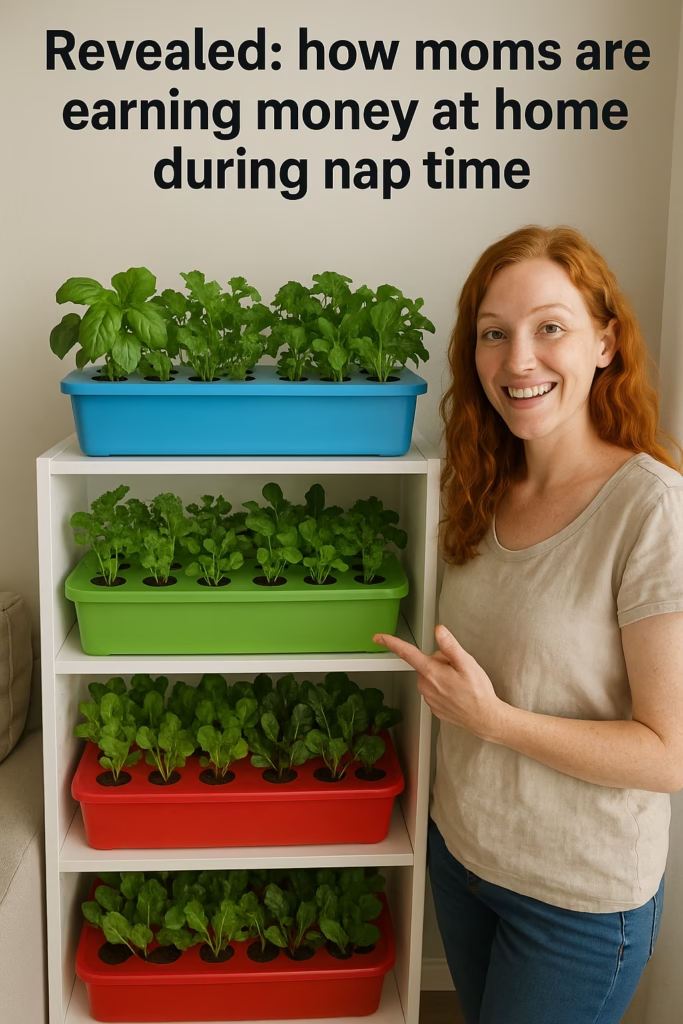
Revealed: how moms are earning money at home during nap time.
Every year, the internet crowns a “Top Stay At Home Mom Job” list.
Customer service. Virtual assistant. Sell custom Stanley tumblers. Start a YouTube channel.
Rinse, repeat, new year… same list.
Meanwhile, you’re just trying to keep your kiddos alive, not scream at the grocery store receipt, and maybe—just maybe—have one side hustle from home that doesn’t drain the last 3% of your nervous system.
This is the story of the other option.
The nap time side hustle for introverts almost nobody talks about:
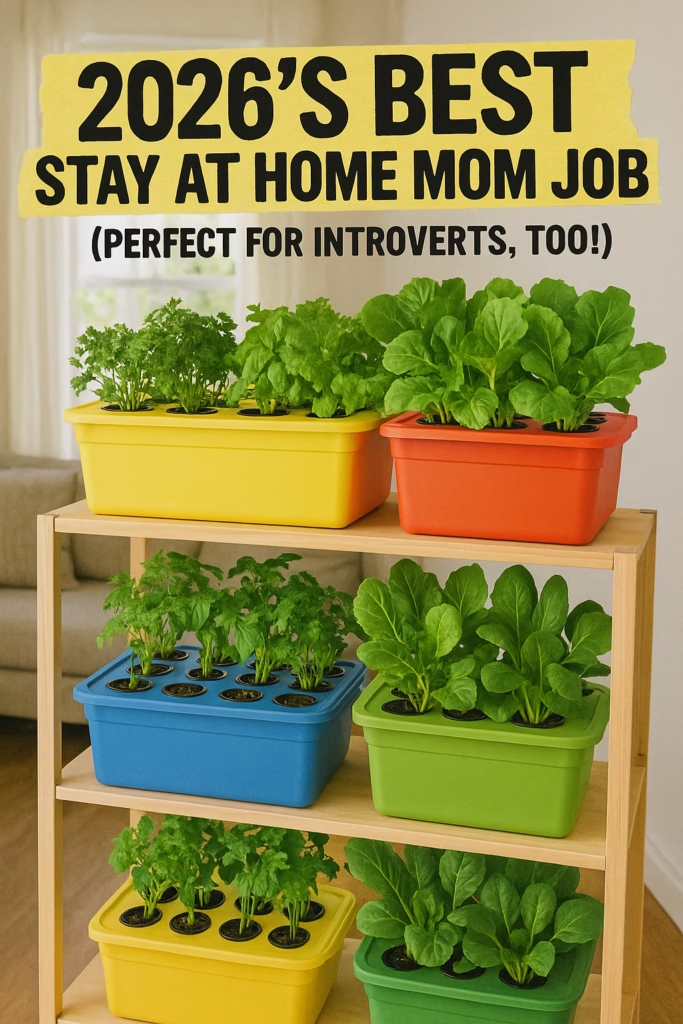
Turning cheap storage totes into indoor mini farms and selling them as living salad bars to your neighbors.
The night everything snapped
It was 9:42 pm at the grocery store.
Her cart had:
- Milk
- Bread
- Some fruit for the kids
- One bag of salad, because she was trying to be “good”
She watched the numbers climb on the screen and felt that familiar burn behind her eyes.
How is lettuce this expensive?
How am I supposed to do this every week?
She got home, put everyone to bed, and did what so many stay at home moms do when the house finally goes quiet:
She opened her phone and typed:
“stay at home mom jobs”
Then:
“work from home jobs for moms”
Then:
“side hustles from home introvert”
Every blog post slapped her with the same list:
- Answer calls in a headset.
- Do customer support chat.
- Become a VA and “hop on Zoom with clients.”
- Sell clothes or makeup to your friends.
- Start a blog and “just post consistently for a few years.”
She imagined trying to take calls with a toddler screaming and a preschooler asking for snacks every six minutes.
Hard pass.
She didn’t need twenty more things to juggle.
She needed something quiet, at home, that could actually make money from home without turning her into the family call center.
The problem with most “stay at home mom jobs” lists
Most “stay at home mom jobs” and “side jobs from home” fall into three flavors of misery:
1. Your house becomes a call center
Customer service, virtual assistant, chat support.
- Fixed shift times.
- Constant pings.
- Supervisors watching your “available” status.
You might be at home, but you’re still chained to someone else’s clock. You’re praying the kids don’t cough during a call.
2. You’re selling plastic junk to your friends
MLMs and party-based “opportunities” look like side hustles for introverts on paper… but then you’re:
- DM’ing everyone you went to high school with.
- Hosting “just a casual get-together” that’s actually a sales pitch.
- Feeling sick every time you post on Facebook.
Your social life turns into a sales funnel. The money is… okay-ish, if you’re relentless. The emotional cost is brutal.
3. You’re fighting for pennies online
Take surveys. Click ads. Do microwork. Start a blog and hope it pays off in three to five years.
You’re up at midnight doing tasks that pay less than minimum wage while an algorithm decides if you get rent money this month.
Those might technically be online jobs for introverts, but they are not built for exhausted humans with kids and a real life.
You don’t need another hustle that eats nap time and gives you pocket change.
You need one simple, high-value side hustle from home that works with your life.
The weird little idea in the corner of the kitchen
The next week, our mom (let’s call her Lauren) took her kids to a friend’s house.
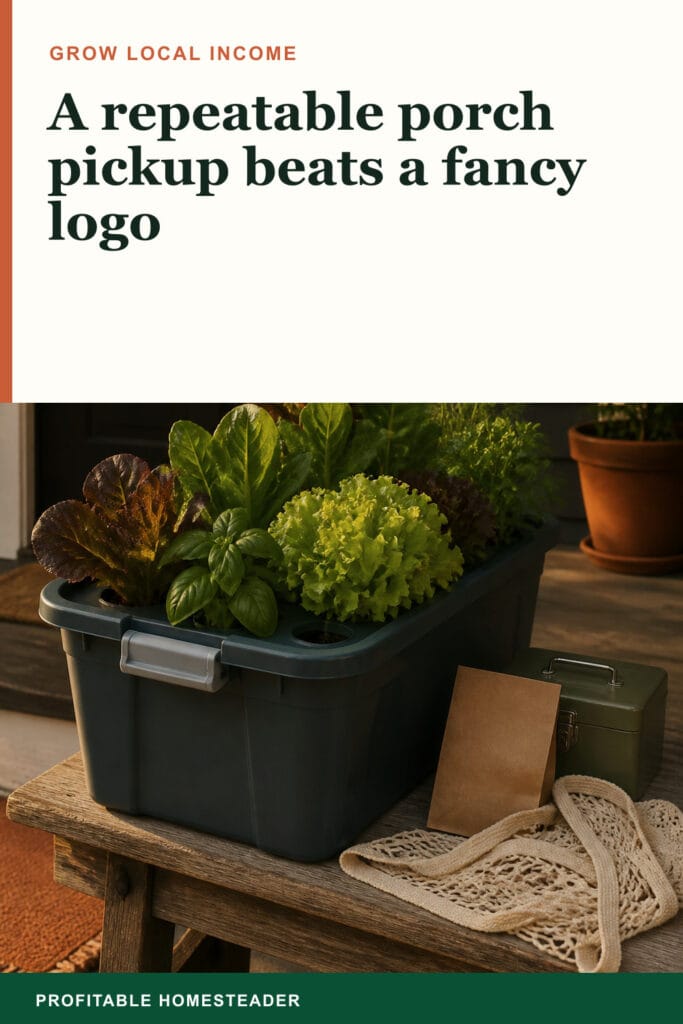
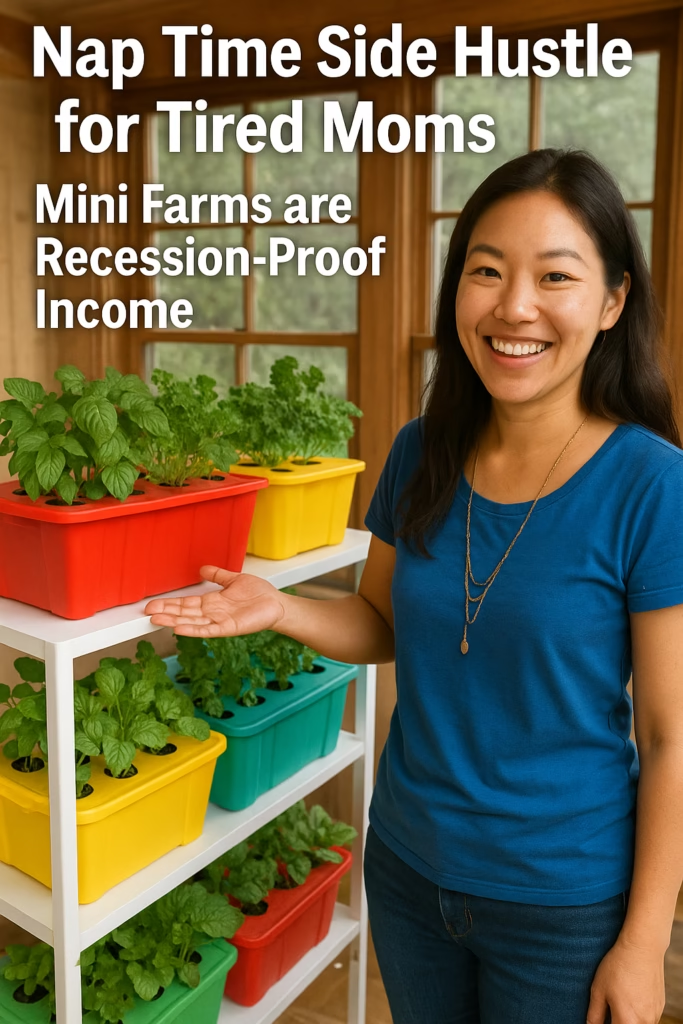
In the corner of the friend’s small kitchen, by the window, was a shallow plastic storage tote bursting with ridiculous, lush green leaves.
“What is that?” Lauren asked.
“Oh,” her friend said, “that’s my mini farm. The kids cut leaves for their sandwiches.”
It wasn’t a full garden. It wasn’t fancy.
Just a cheap tote, some kind of growing medium, and a jungle of salad greens.
Then the friend said the sentence that changed everything:
“Three other moms have asked me to make one for their house already.”
Lightbulb.
Not another “work from home job.”
Not another affiliate link.
A product. A real, living, useful thing.
A high-value side hustle built on food.
The nap time mini farm side hustle, in plain English
Here’s what this actually is:
- You take a shallow storage tote (the kind that costs a couple of dollars).
- You set it up as a low tech indoor mini farm—no loud pumps, no giant racks, no sci-fi equipment.
- You sow cut-and-come-again salad greens or herbs.
- You let the tote quietly turn into a dense, living salad bar on a table, shelf, or windowsill.
You use it to feed your family.
And then you realize you can sell the entire planted tote as a ready-to-harvest indoor mini farm to other families on your street.
Instead of:
- “Here’s another plastic thing you don’t need.”
You’re saying:
- “Here’s fresh food growing in your kitchen.”
You are not hustling for clicks.
You’re growing something tangible.
Why this hits different when the economy is weird
Every time the economy hiccups, three things happen:
- Search traffic for “stay at home mom jobs,” “make money from home,” and “side hustles from home” explodes.
- Grocery prices quietly climb.
- Everyone’s stress hits the ceiling.
People want two things at the same time:
- Food that doesn’t feel like a luxury item.
- A way to earn that doesn’t require begging, scamming, or burning out.
Your hydroponic mini farms give them both.
They are:
- High value – a tote brimming with living greens on a windowsill is worth more than another trinket.
- Locally scarce – they can’t grab this at Walmart.
- Emotionally calming – it’s food security in a box.
This is not another “join my downline” pitch.
It’s a small, recession-aware side job from home built around something that actually matters.
Why this is a real side hustle for introverts
Most “side hustles for introverts” still involve people… just over WiFi.
Client calls. Slack messages. Zoom “quick chats” that never end.
Your mini farm side hustle is different:
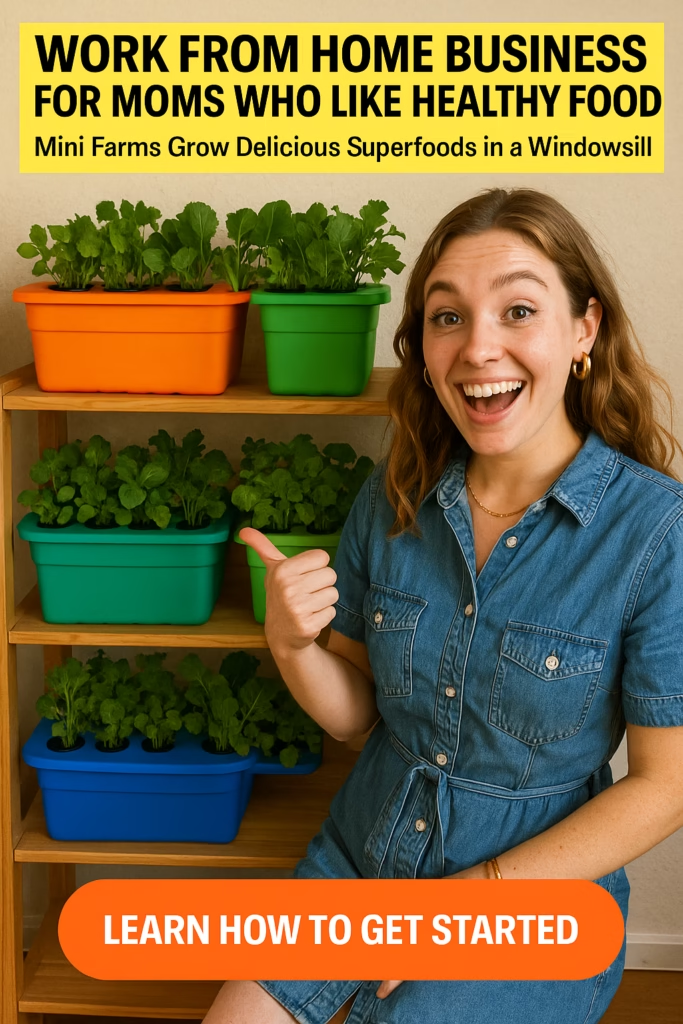
- You can take orders by text, DM, or a simple form.
- You can arrange porch pickups or drop-offs.
- You don’t have to be “on” all day. You answer messages when the house is quiet.
The plants do the loudest talking.
Someone sees your tote and says:
“Oh my God, that’s gorgeous. Can you make one for me?”
You don’t pitch. You just say:
“Sure, they’re $45. I’ll have one ready next week.”
No scripts. No pressure. Just “yes” or “no.”
This is make money from home on introvert settings: low stimulation, minimal small talk, maximum control.
How this fits into nap time (for real)
Here’s how a week looks when you run this as a stay at home mom job instead of a “someday” hobby.
Nap time block: 15–20 minutes
Kids finally sleep.
You:
- Rinse a tote.
- Add your growing medium.
- Sprinkle seeds in your pattern.
- Water. Label. Done.
Take a photo.
Back to dishes, emails, sitting in the hallway scrolling TikTok. Whatever.
After bedtime: 10–15 minutes
You:
- Post your photo in a small local group or text thread.
- “I’ve got two salad mini farms ready for next week. Living salad bars for your kitchen. They’re $45 each. First come first served.”
- Answer a couple of DMs.
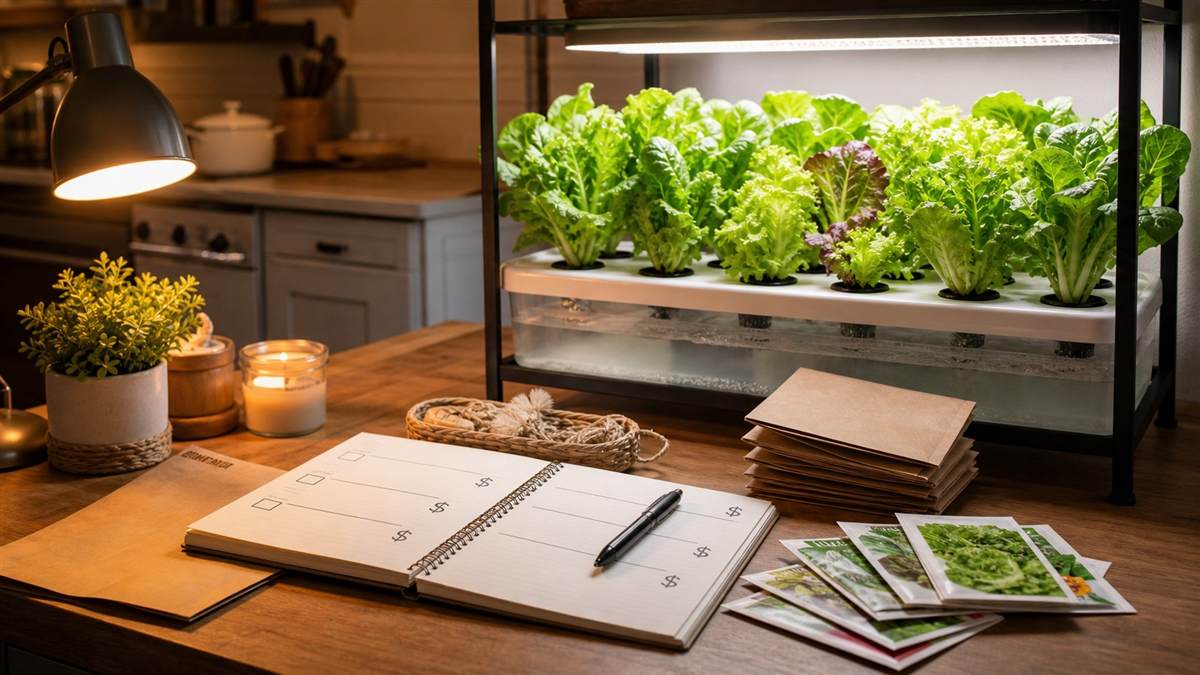
- Mark down names in a notebook or notes app.
Total “work” time: maybe half an hour on a busy day.
The plants handle the rest while you deal with snacks, math homework, and the third episode of the same cartoon.
On chaotic weeks (sickness, teething, school disasters), you simply plant fewer totes. This is flexible by design.
The money math (illustrative numbers)
Let’s keep it simple. These figures are illustrative — actual results depend on your local market, what buyers are willing to pay, and how consistently you run the system.
- Tote: grab on sale for a couple of bucks.
- Growing medium + seeds: a few dollars per tote once you buy in slightly larger quantities.
- Water & basic nutrients: very low ongoing cost.
Your total cost per tote is low.
Your perceived value per tote is high:
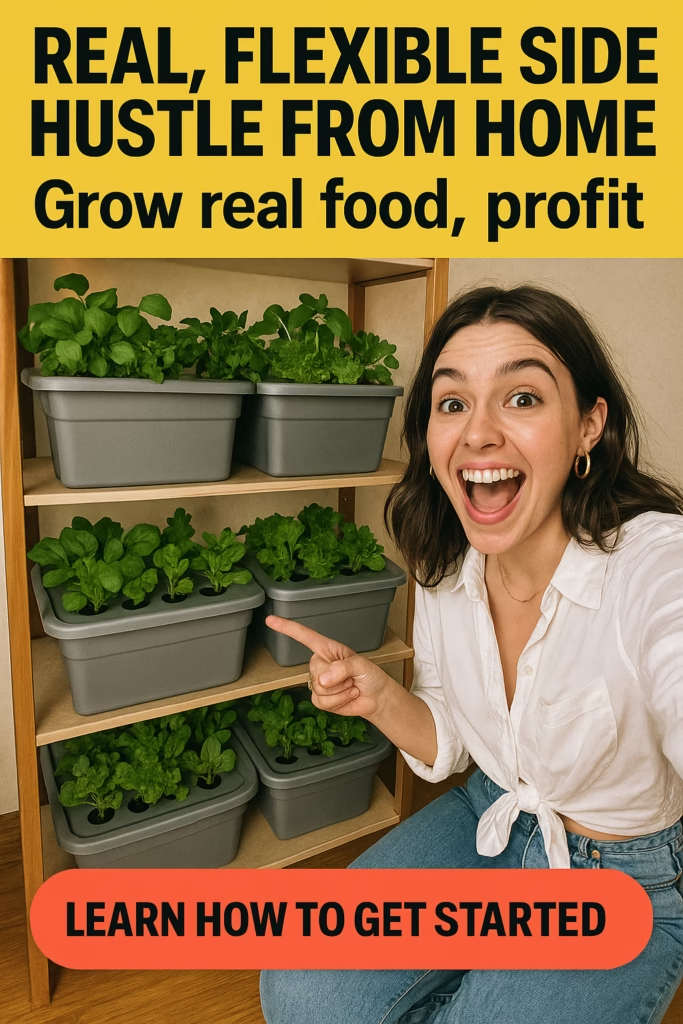
- A full, thriving salad bar or herb garden that lives in someone’s kitchen and keeps producing.
How much do they sell for?
- A recent reader survey of people who’ve downloaded the Indoor Mini Farm System showed people are happy to pay $30–$60 per tote for a ready-to-harvest mini farm. Some areas are willing to pay even more, depending on the greens you’re growing.
Even at modest scale, the math can work in your favor:
- 2 totes per week at $45 = roughly $360/month in estimated revenue.
- 3 totes per week = roughly $540/month in estimated revenue.
- Turn up production when you have more energy or demand.
This isn’t the “quit your partner’s job in 30 days” pitch.
It’s a real, flexible side hustle from home that pays actual bills.
Real Readers. Real Mini Farms.
These are everyday readers who started with one tote on a bookshelf and turned it into fresher food and extra cash.
“I was skeptical, but my first harvest more than covered the cost. Now my kids snack on greens instead of chips.”
I started with one tote next to our kitchen table. Once I saw how fast everything grew, I added two more and now I’m selling salad plants to three of my neighbors.
Sara C., Columbus, OH
“This gave me a simple plan I could follow after the kids went to bed.”
I don’t have space for a ‘real’ garden, but the mini farm system fits on a cheap bookshelf in our hallway. We eat off it every week, and I sell six totes a month to cover our internet bill.
Jen S., Houston, TX
“I’ve tried so many ‘systems’ that overpromised and fizzled out. This one quietly does what it says.”
I work full time and needed something low-maintenance. I spend maybe 10 minutes twice a week checking water levels and harvesting. The rest just… grows.
Sam L., Raleigh, NC
“We live in an apartment and I honestly didn’t think this would work.”
We’re on the third floor with no balcony. The totes fits next to our dining table and now my 7-year-old helps me harvest ‘our’ salad every night. It feels like cheating the grocery store.
Pam D., Boise, ID
🌿 Free: 3 Hydroponic Superfoods That Grow Faster Than Your Rent
The three greens I grow first in every new mini farm — and why neighbors will pay $30–60 for a tote full of them. Free when you join the community.
🔒 No spam. Unsubscribe anytime.
“Is this really better than a normal work from home job for moms?”
Here’s the honest comparison.
Most work from home jobs for moms are:
- Time-boxed: someone else controls your hours.
- Noise-boxed: your house has to be quiet on command.
- Stress-boxed: your income depends on being constantly reachable.
Your hydoponic mini farm side hustle:
- Lets you pick when you work (nap time, bedtime, weekends).
- Lets you control how many orders you take each week.
- Builds a customer base, not just a resume line.
It’s not for every mom.
It’s for the one who reads “online jobs for introverts” lists and still feels a pit in her stomach because even those feel too people-heavy.
It’s for the mom who wants her work to produce something real.
“Hydroponic” sounds complicated… is it?
Fair question.
When people hear “hydroponic,” they picture:
- Loud pumps
- Bright, glaring lights
- Tangled tubes and timers
- Hundreds of dollars in equipment
The way we do it?
Think “low tech, indoor-friendly farmer’s bed in a tote.”
- Passive water systems instead of loud machinery.
- Simple growing medium.
- Totes designed for small spaces and rentals.
- Options for both window light and modest supplemental lighting if needed.
You don’t need to become a scientist.
You need a clear, copy-and-paste setup that someone has already tested in a normal, messy home.
The plug-and-play blueprint: Indoor Mini Farm System
You could piece this together yourself:
- 17 YouTube videos.
- 3 Reddit threads.
- 6 trial-and-error totes.
- A few sad crop failures.
Or you can follow a system that was built specifically as:
“A side hustle for introvert moms who want to grow food indoors and sell extra mini farms to neighbors.”
That’s what the Indoor Mini Farm System is.
Here’s What You Get
Indoor Mini Farm System (PDF)
Every step you need to create your indoor mini farm in just a few hours. From which totes to buy to how high to hang your lights to which seeds to plant first.
(Value $97)
Linked Supply List (PDF)
Instead of opening twenty tabs and guessing, you get a simple list with direct links to exactly what you need. You can be done shopping in minutes.
(Value $22)
Perpetual Planner (PDF)
This is the piece that keeps black thumbs alive. A simple perpetual planner that tells you, week by week, what to do so you never miss a refill or harvest.
(Value $29)
Just $47 for everything
You’re not signing up for a big brand’s work from home job.
You’re building a tiny, quiet business that lives on your table and your neighbors’ windowsills.