Revealed: How an everyday family built an indoor hydroponic garden right in their kitchen.
When people hear I grow most of our greens indoors, they assume I’ve got one of those $600 smart gardens with an app and a subscription. In reality, I use simple shelves, grow lights, and affordable containers that allow me to grow food indoors easily without breaking the bank.
I don’t.
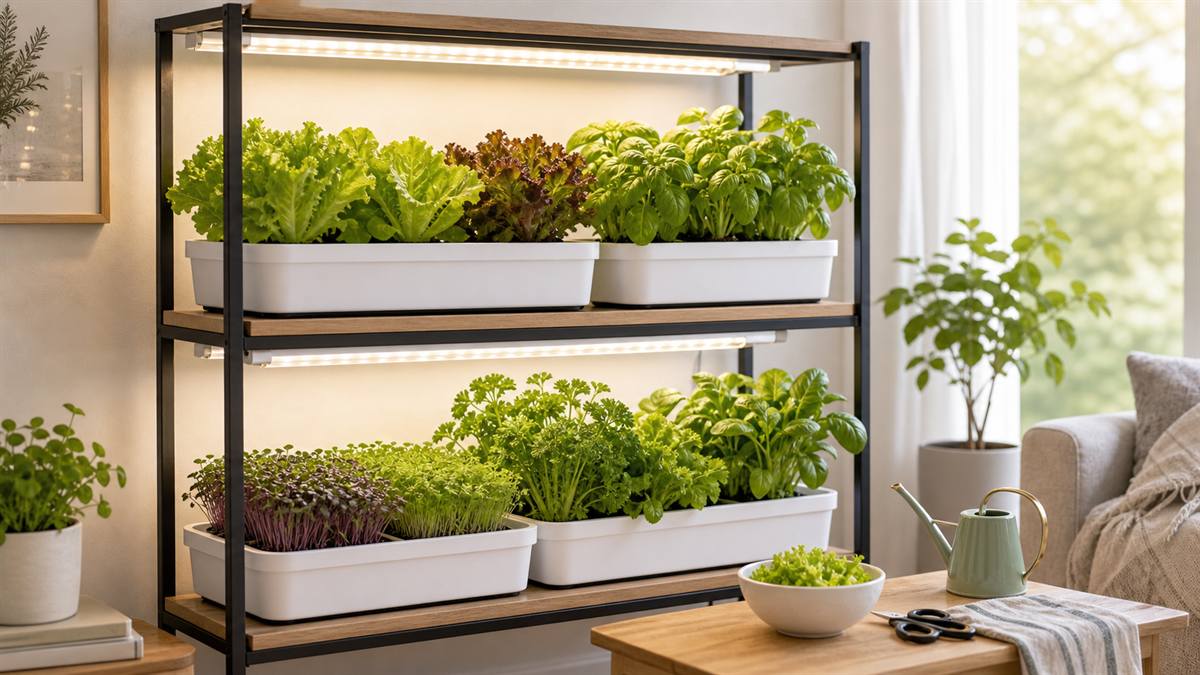
My “indoor hydroponic garden” lives on a simple wire shelf, in plastic shoeboxes I bought at the dollar store.
No pumps.
No timers.
No fancy pods.
Just water, nutrients, light, and a layout that lets the plants do what they’re wired to do: grow.
In this article, I’m going to show you:
- How I grow food indoors using a simple DIY hydroponic system
- Why I chose this setup over soil or expensive countertop kits
- What I actually grow (and how much it replaces on our grocery bill)
- The exact framework I use to turn a single shelf into a mini farm system
And if you want my step-by-step plans, I’ll show you where to get them at the end.
Why I Stopped Relying on the Grocery Store for Greens
A few years ago, I was standing in the lettuce aisle doing the same mental math you probably do:
- $4–$5 for a plastic box of greens
- That lasts… what… 2–3 decent salads if you’re lucky?
- Half the time it goes slimy by the next day
Meanwhile, prices kept creeping up, and quality kept sliding down.
I didn’t want to build a huge outdoor garden. I just wanted:
- Real food
- In a small space
- That didn’t depend on the grocery store staying reasonable
So I started looking into ways to grow food indoors.
Most advice fell into two camps:
- Complicated hydroponic systems with pumps, plumbing, and timers
- Cute countertop gadgets that looked nice but didn’t grow enough food for a family
There had to be a middle ground.
That’s where I found the pump-free, no-noise style of hydroponics my family uses now. The system that makes it all work is called the Kratky method — it’s the simplest way to grow food in water with no pump, no electricity, and no experience required.
The Indoor Hydroponic Garden That Lives on a Shelf
My whole system is built around one idea:
“If it can fit on a shelf, it can feed a family.”
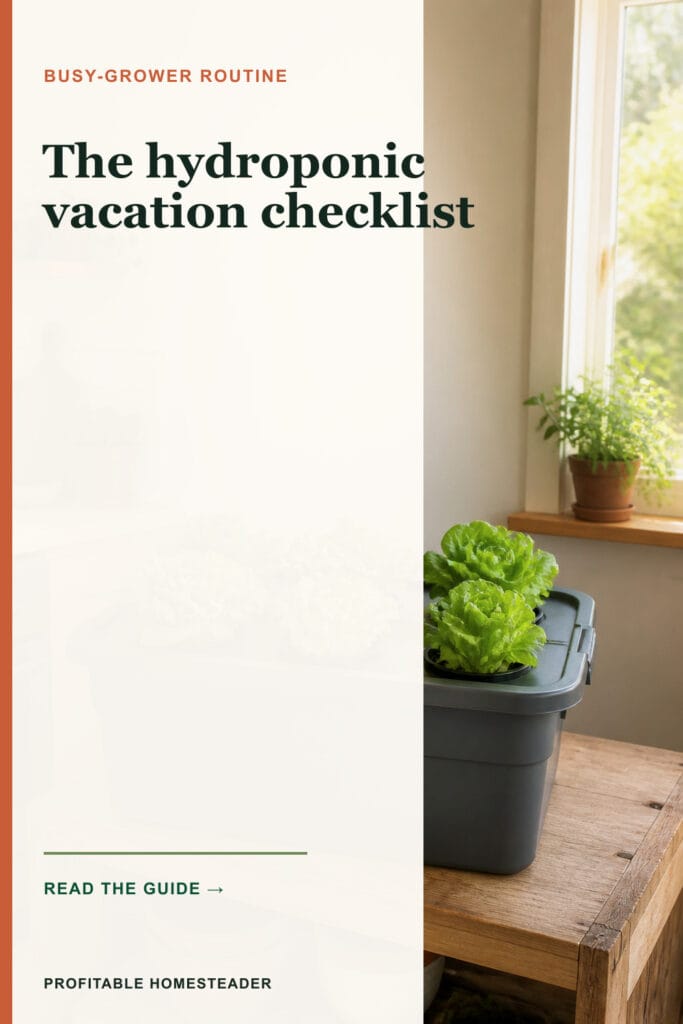
Instead of individual pots or proprietary pods, I use shallow storage totes as mini hydroponic farms. Each tote is a self-contained indoor hydroponic garden that can grow a full “salad bar” of greens. These shallow storage totes allow for efficient space utilization and make it easy to manage multiple varieties of plants simultaneously. Additionally, they serve as accessible and affordable mini indoor farming solutions for anyone looking to grow their own fresh produce at home.
At a high level, here’s what each mini farm looks like:
- A shallow, opaque plastic tote (shoebox size)
- Holes in the lid for net cups
- A simple nutrient solution inside
- Leafy greens and herbs planted in the cups
- A basic shop light or grow light above the shelf
The roots grow down into the water, the leaves grow up toward the light, and the tote itself acts as the “bed.”
It’s a DIY hydroponic system, but it’s not the kind that takes over your life. Once it’s planted and topped up, it mostly requires no maintenance. Many enthusiasts consider it one of the best hydroponic systems for beginners, as it allows for fresh produce with minimal fuss.
Why This Pump-Free Setup Works So Well Indoors
There are a lot of ways to do hydroponics. I chose the low-tech, no-pump style for a few reasons:
1. No moving parts to fail
No pumps means no humming noise, no timers to reset, no clogged filters and nothing to break at 2 a.m. It’s silent and simple.
2. Perfect for small spaces
Everything lives on a wire shelf against a wall. You could put it in a dining room, hallway, spare bedroom, or even a wide hallway—anywhere you can hang a light.
3. Shockingly low maintenance
Once the totes are planted, I’m mostly just:
- Checking water levels
- Topping off nutrients
- Harvesting greens
It’s closer to “harvest management” than gardening-as-a-full-time-job.
4. Real grocery savings
Each mini farm can replace multiple clamshells of store greens. When they’re in full production, it feels like stealing from the grocery budget—in the best way.
What I Grow in My Indoor Hydroponic Garden
You can get wild with varieties, but if you’re new to growing food indoors, start with leafy greens that love hydroponics:
- Chijimisai
- Red-veined sorrel
- Bok choy
- Kale and chard
- Cut-and-come-again lettuces
- Tender herbs (basil, cilantro, etc.)
On a single 4-tier shelf, you can have:
- Baby greens on one level
- Full salad mixes on another
- Stir-fry or smoothie greens on the next
Once everything fills in, it looks less like “a science project” and more like a tiny vertical vegetable garden in your hallway.
How Much Food Can You Actually Grow in an Indoor Hydroponic Garden?
Let’s talk about real numbers.
A single mini farm can produce:
- Enough greens for several hearty salads each week
- Or a steady supply of smoothie greens
- For about two months before it needs re-seeding
Set up 4–6 mini farms, and you’re looking at:
- Replacing multiple clamshells of “spring mix” each week
- A constant rotation of fresh leaves
- The option to let some totes go longer for full-size bok choy or chijimisai
For pennies on the dollar, you’re growing an endless supply of greens and produce, right in your kitchen. Start your mini farm today and transform your cooking experience!
Why I Prefer Hydroponics to Indoor Soil Pots
Could you grow food indoors in pots of soil with a grow light? Sure. I tried that.
Here’s why I still reach for my indoor hydroponic system instead:
- No bags of soil to drag inside
- No fungus gnats hiding in the potting mix
- No over- or under-watering drama
- Much faster growth and cleaner harvests
With hydroponics, everything is contained:
- Water stays in the tote
- Roots stay submerged
- Nutrients are predictable
- Cleanup is as simple as rinsing a container in the tub or outside
For a busy family, that matters.
The Part Most People Get Wrong About Growing Food Indoors
Most people either:
- Go all-in on an expensive, high-tech system, or
- Piecemeal a DIY hydroponic setup from six different tutorials and end up frustrated
What’s missing is a tested, beginner-friendly plan that:
- Uses affordable, easy-to-find parts
- Is sized for real families, not labs
- Works in apartments and small homes
- Can scale from “just our greens” to “small side hustle” if you want it to
That’s exactly why I put together my Indoor Mini Farm System.
Where to Go Next
If all you want right now is to grow food indoors and stop depending on the lettuce aisle, start with one shelf and a couple of mini farms.
Once you see how much you can grow in a few plastic shoebox totes, you’ll have options:
- Add more mini farms to cut your grocery bill further
- Turn one shelf into a small hydroponic side hustle
- Or keep it simple and just enjoy delicious greens all winter
However you use it, this kind of indoor hydroponic garden gives you something the store never will: control.
You know where your food came from. You know what went into it. And you can harvest it minutes before dinner.
That’s the power of a tiny, pump-free mini farm system living quietly on a shelf in your home.
About the Author
Tyler Brown runs ProfitableHomesteader.com, a site dedicated to sharing side hustle ideas at home – including how he builds tiny indoor mini farms, growing heirloom greens in plastic totes and selling them to local families.
After years of testing containers, crops, and pricing, he built the Indoor Mini Farm System so regular people could skip the trial-and-error and start growing real food (and side income) on a single shelf.
If you’re ready to set up your own pump-free mini farm and start growing food indoors without wasting money on gadgets, you can get the step-by-step guide here: