Hydroponic Lettuce Business From Home: The Complete Setup Guide

A home-based hydroponic lettuce business sounds like something between a hobby and a pipe dream. It’s neither. It’s one of the most straightforward small-scale agricultural income models available — and one that works especially well because it doesn’t require land, a commercial kitchen, or a farmers market permit to get started.

The model is simple: grow full-size lettuce in a passive hydroponic system, sell the living plant rather than the harvested crop, deliver to neighbors, repeat. The economics are genuinely good. The time requirement is minimal. The startup cost is low enough to recoup within the first month of sales.

Here’s exactly how to build it.

Table of Contents

Why Lettuce Is the Right Starting Crop

Lettuce isn’t glamorous. It’s not a high-status crop. But it has a combination of characteristics that make it nearly ideal as a home business crop:

  • Fast. 30–45 days from seed to a ready-to-sell tote. That’s 8–10 complete crop cycles per year from the same growing space.
  • Reliable. Lettuce is one of the most forgiving hydroponic crops. pH variation, minor temperature swings, and beginner mistakes rarely cause complete crop failure. You will produce sellable plants consistently.
  • High perceived value. Organic lettuce at the grocery store costs $4–$7 per head. A living tote of six heads, ready to harvest continuously for weeks, has obvious value well above that.
  • Universal demand. Every household buys salad greens. The market for lettuce is not a niche — it’s everyone around you.
  • Year-round indoors. Unlike outdoor crops, hydroponic lettuce grows the same in December as in June. Your production is constant; your income is constant.

You can add specialty greens — kale, arugula, watercress, spinach — as your business grows. But lettuce is the crop that builds your customer base and proves the model. Start there.

The Business Model Explained

The key insight that separates a profitable home lettuce operation from a labor-intensive one is the selling model: you sell living plants, not harvested greens.

Traditional produce selling requires harvesting, washing, drying, packaging, and selling — significant labor for modest margins. The living plant model eliminates all of that. You grow the plant to full size in a hydroponic tote, hand the entire tote to your customer, and they harvest it themselves over the following weeks from their windowsill.

Your production workflow is simply: seed, transplant, grow, sell, repeat. No harvesting. No packaging. No perishability pressure on your end. When the customer’s tote is done, they contact you for another one. The product sells itself through the experience of using it.

This model works because customers are paying for ongoing value — weeks of fresh food that’s better than anything in the grocery store — not just a single purchase. The price reflects that ongoing value rather than the cost of a single head of lettuce. A tote priced at $35–$45 is a bargain for the customer and a highly profitable product for you.

Startup Costs and Equipment

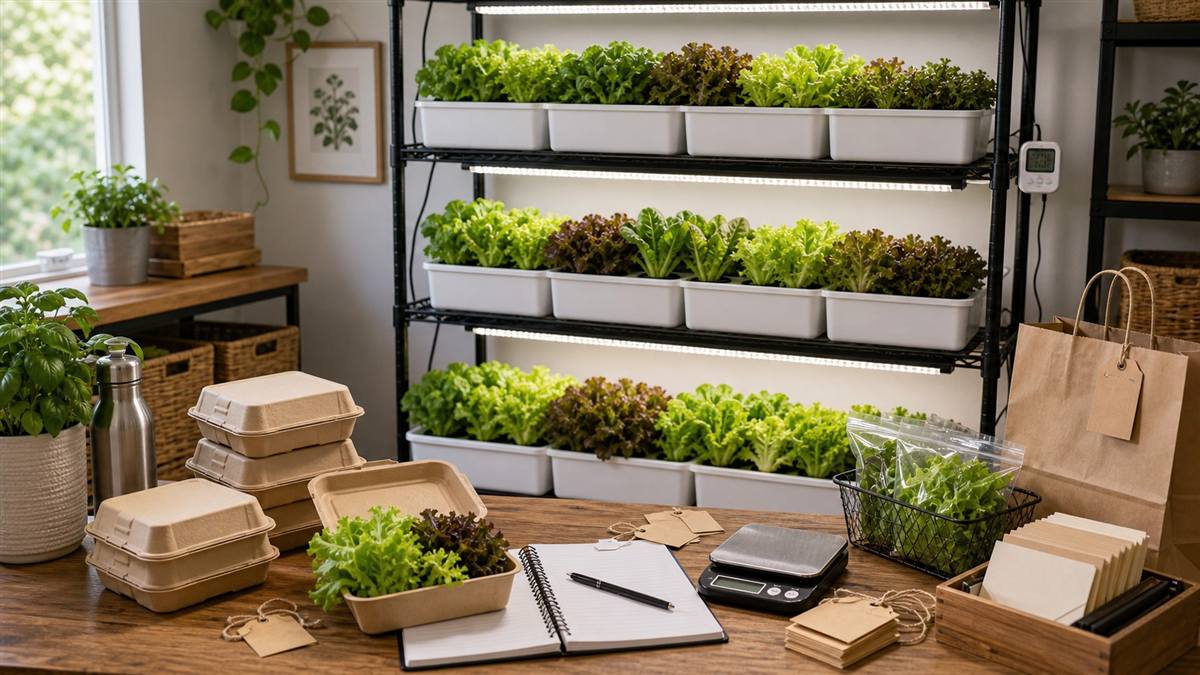
The complete equipment list for a home hydroponic lettuce operation producing 3–4 totes per week:

ItemCostNotes
Wire shelving unit (5-tier, 18×48″)$60–$90Holds 2 totes per shelf, 5 shelves = 10 totes capacity
LED grow lights (one per shelf)$25–$40 each45W full-spectrum panel; need one per shelf
Outlet timers (one per shelf)$10–$15 eachSet 16 hrs on / 8 hrs off
Storage totes with lids (10–18 gal, opaque)$5–$10 eachStart with 4–6; add as demand grows
2-inch net pots (50-pack)$6–$8Lasts many grows
Hydroton clay pebbles (small bag)$10–$15Reusable indefinitely
Hydroponic nutrients (MaxiGro or similar)$12–$18Lasts 6+ months for small operation
pH test kit and pH Up/Down$15–$20Essential — don’t skip
Seeds (lettuce varieties)$5–$10Start with 2–3 varieties
Total startup investment~$200–$300For 4-tote/week capacity

At $35–$45 per tote and 4 totes per week, you recoup this investment in 2–3 weeks of sales. The ongoing monthly cost — nutrients, seeds, electricity — runs $15–$25 for this scale of operation.

Production: From Seed to Sale

Week 1: Germination

Sow lettuce seeds in small rockwool cubes or directly into net pots with clay pebbles. Keep moist and in a warm location (65–72°F). Germination takes 3–5 days. Once seeds have sprouted and show their first true leaves, they’re ready to move to the Kratky totes.

Weeks 2–5: Main Grow

Transplant seedlings into net pots in your prepared totes. Mix nutrient solution to the correct concentration (EC 0.8–1.4 for lettuce), adjust pH to 5.8–6.2, and fill totes to just below the net pot bottom. Place under grow lights on a 16-hour timer. Check pH every 3–4 days. Monitor water level weekly.

Growth accelerates in weeks 3–5. By week 5–6, you have a full, lush tote ready to sell.

Sale and Replant

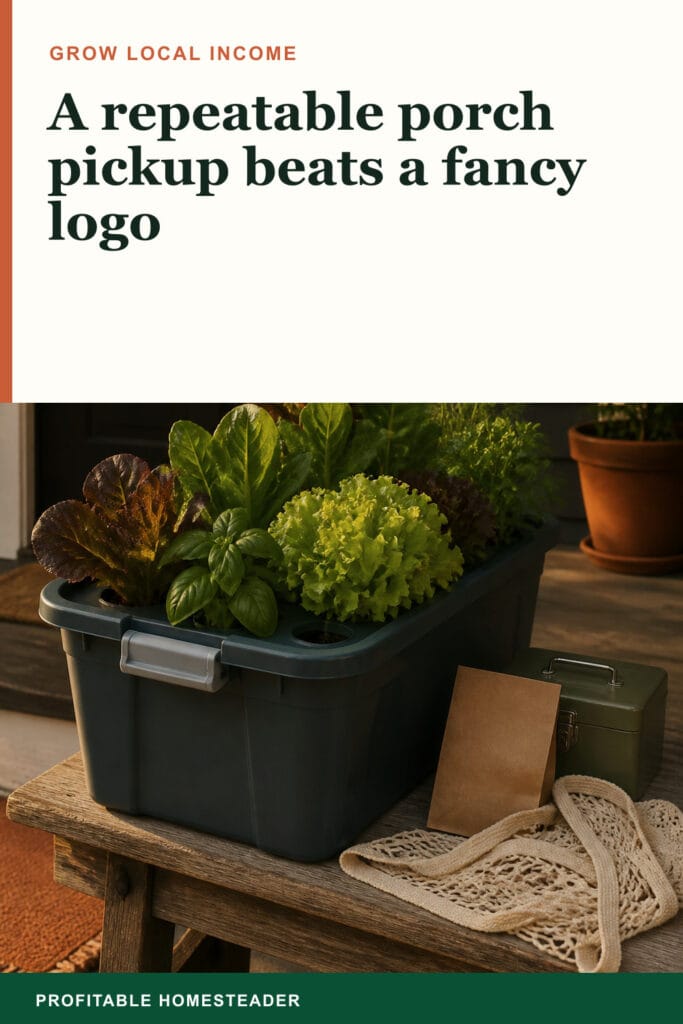
When the tote is ready, arrange delivery or pickup with your customer. The tote goes with them — growing medium, plants, and remaining nutrient solution included. They don’t need any equipment or knowledge beyond a windowsill or lamp. Immediately rinse the net pots, prepare a new tote, and plant the next batch. The cycle never stops.

To maintain consistent weekly supply, stagger your plantings. If you want to sell 4 totes per week and each tote takes 5 weeks to grow, you need 20 totes in various stages of growth at any given time. A 5-tier shelving unit with 4 totes per shelf handles this volume comfortably.

Pricing Your Lettuce Totes

Price based on value to the customer, not cost of production. A tote of 6 heads of ready-to-harvest organic lettuce that will produce food for 4–8 weeks is worth $35–$50 to most households. That’s less than a week’s worth of bagged salad from the grocery store, for weeks of fresh food.

Pricing guidelines:

  • Standard lettuce tote (6 plants): $30–$45
  • Premium or mixed variety tote: $40–$55
  • Kale or specialty greens tote: $35–$50
  • Delivery surcharge (optional): $3–$5 for deliveries beyond 1 mile
  • Subscription discount: 10–15% off for customers who commit to monthly orders

Don’t underprice to compete with grocery stores — you’re not competing with grocery stores. You’re offering something fundamentally different: a living food source with no waste, no wilting, and weeks of harvests from a single purchase.

Finding Your First Customers

Your first customer is almost certainly a neighbor. Here’s the progression that works:

  1. Give one away first. Bring a ready-to-harvest tote to a neighbor and say “I’m starting a small growing operation — I’d love your feedback on this.” Most people are delighted. Most become customers.
  2. Post on Nextdoor. A photo of a lush, ready-to-harvest tote with a simple description gets attention. “Local grower — organic living lettuce totes, harvest-ready, $35 delivered to your door” is enough to start.
  3. Ask for referrals. Every happy customer knows 5–10 people who would be interested. Ask explicitly: “Do you know anyone else who’d like one?”
  4. Build a subscription list. Once you have 5–6 regular customers, offer a monthly subscription at a small discount. Predictable recurring revenue makes production planning much easier.

Weekly Operations Routine

TaskFrequencyTime
Check pH on all totesEvery 3–4 days10 minutes
Check water levelsWeekly5 minutes
Plant new totes (to replace sold ones)Weekly15 minutes
Harvest assessment (which totes are ready)Weekly5 minutes
Customer communication and delivery coordinationAs needed15–20 minutes
Total weekly time50–60 minutes

For 4 totes per week sold, the total active work time is under an hour per week. That’s the core appeal of this model — exceptional economics per hour of effort.

Realistic Income Projections

Net Income
StageTotes/WeekMonthly RevenueMonthly Cost
Getting started2$280–$360~$20$260–$340
Established (3 months)5$700–$900~$40$660–$860
Scaled (6–12 months)10$1,400–$1,800~$75$1,325–$1,725

The trajectory from 2 to 10 totes per week is primarily a customer acquisition challenge, not a production challenge. The production infrastructure scales cheaply. Finding and retaining 10–12 regular customers is the real work of building this business — and it’s work that mostly happens in the first 3–6 months.

Selling fresh produce and living plants directly to consumers is permitted in virtually every state with no special license at the scale a home operation operates. You’re selling an agricultural product, not a processed food — the regulatory burden is minimal. For a full breakdown, the guide to selling produce from home legally covers what each state requires and what you need to know about taxes on home-based produce sales.

The complete production-to-customer system for building this business — including the exact growing setup, customer acquisition process, and subscription model — is what the Indoor Mini Farm System walks through in full detail.

Frequently Asked Questions

How much can you make selling hydroponic lettuce from home?

A home operation selling 4–5 living lettuce totes per week at $35–$45 each generates $560–$900 per month in revenue with production costs under $50. Scaling to 10 totes per week generates $1,400–$1,800 monthly. The time requirement is under two hours per week at either scale, making this one of the highest hourly-rate home businesses available.

Is a home hydroponic lettuce business realistic?

Yes — it’s one of the more realistic small-scale agricultural income models precisely because it doesn’t require land, a commercial kitchen, a business license (for fresh produce in most states), or significant startup capital. The main constraint is customer acquisition, not production. Once you have 8–12 regular customers, the operation is self-sustaining with minimal marketing effort.

How long does it take to grow lettuce hydroponically?

30–45 days from transplant to a full, ready-to-sell tote of lettuce. Some faster varieties are ready in 28–30 days. This short production cycle means you can complete 8–10 full crop cycles per year from the same growing space — a major advantage over slower crops.

What hydroponic system is best for a lettuce business?

The Kratky passive method is ideal for a home lettuce business because it requires no pump, no electricity beyond a grow light, and produces self-contained portable totes that the customer takes home with the plant. It’s the simplest setup, the cheapest to run, and the most compatible with the living plant selling model. The Kratky method guide covers the full setup.


A home hydroponic lettuce business is genuinely achievable — straightforward economics, minimal time commitment, and a product that sells itself through the experience of using it. The Indoor Mini Farm System is the complete guide to building it from setup through to a consistent weekly income.