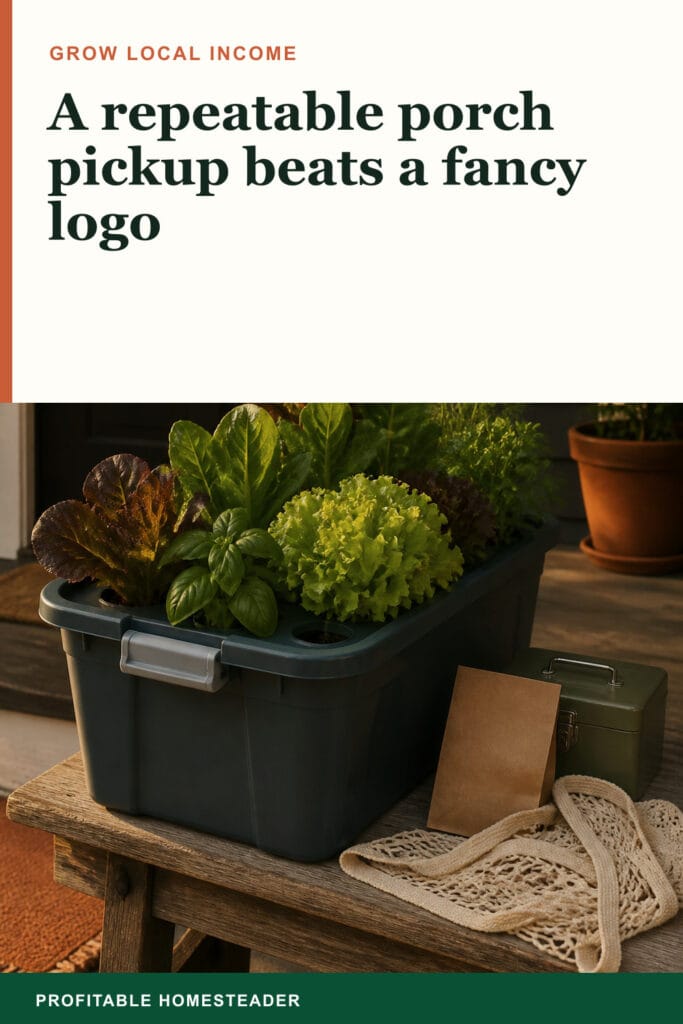
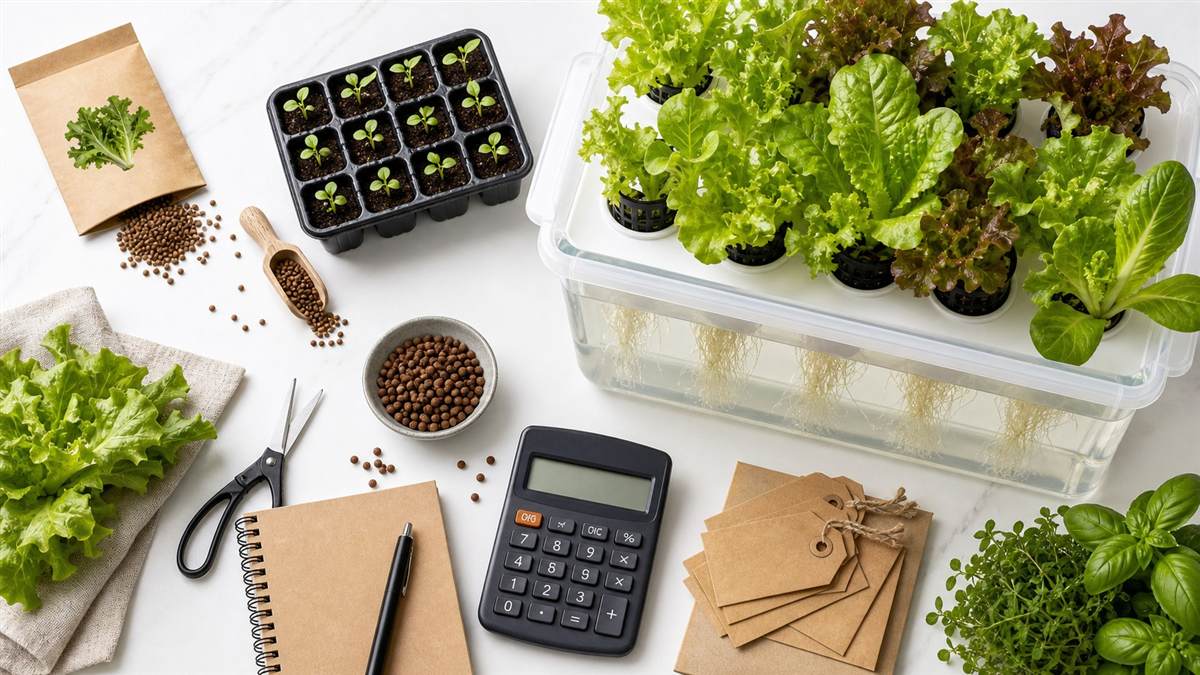
Revealed: How to grow real food in a tiny space, without pumps, grow lights, or complicated gear.
Just set up a tote, follow a simple system, and let it quietly produce for you.
If grocery prices and “what now?” headlines have you on edge, you’re not crazy.
Most people feel stuck between:
- Paying whatever the store decides to charge
- Trying a huge garden they don’t have time or space for
- Or pretending everything’s fine while the bill keeps climbing
You don’t need land.
You don’t need a grow tent.
You don’t need a science lab in your living room.
You need a dead-simple system that turns cheap plastic totes and a few dollars of seeds into a steady stream of fresh greens… right on your kitchen table.
That’s what I call the Indoor Mini Farm System.
It’s how I turn about $5 of seeds into $200+ a month in food value and side income.
Get Indoor Mini Farm Tips
Every few weeks you’ll get simple indoor growing tips (apartment-friendly), reader success stories, and easy tips to level up.
You can unsubscribe at anytime.
The moment I stopped letting the grocery store push me around
There was a week where every price in the produce aisle seemed to jump.
Same tired bag of greens.
Higher price.
Shorter date.
Worse quality.
I remember standing there thinking,
“Why am I paying more and trusting this less?”
The “solutions” everyone talks about didn’t fit:
- At the time, I didn’t own land for a big garden
- I didn’t want to spend thousands on fancy hydroponic rigs
- I wasn’t interested in a noisy, high-maintenance setup I’d end up resenting
So I started asking a different question:
“What’s the simplest way to grow a lot of greens indoors, in a small space, with almost no moving parts?” One effective method is to utilize indoor gardening techniques for beginners, such as using containers or vertical gardening systems. These approaches maximize space and allow for easy access to sunlight or grow lights. Additionally, choosing fast-growing greens like lettuce or herbs can yield a bountiful harvest with minimal effort. For those interested in expanding their indoor gardening efforts, learning how to start a hydroponic business can be a lucrative step. Hydroponics allows for even more efficient space utilization and faster growth rates, as plants can thrive in nutrient-rich water without soil. With the right setup and some basic knowledge, you can turn your small indoor garden into a profitable venture.
After a lot of ugly experiments, failures, and “well, that didn’t work,” I landed on something that shouldn’t have worked this well:
A low, cheap shoebox tote.
Water.
A few smart tweaks.
Seeds.
When it clicked, it clicked hard.
The tote filled with thick, bright greens.
The roots stayed clean.
The water didn’t stink.
The whole thing lived quietly on my table.
No buzzing pump.
No timers.
No constant fiddling.
That’s the system I still use.
And it’s exactly what you learn inside The Indoor Mini Farm System.
What a “kitchen table mini farm” actually is
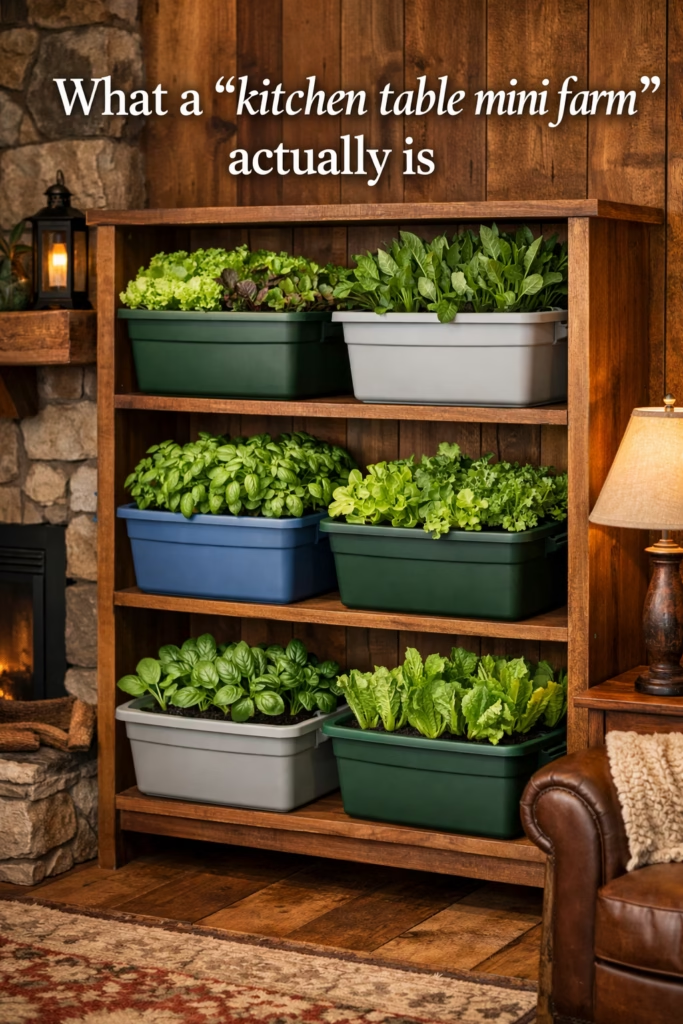
Forget the influencer setups with 20 shelves and 15 power strips.
Here’s what we’re doing instead:
- You grab a low, wide storage tote
- You turn it into a pump-free hydroponic bed
- You add water + basic nutrients
- You plant a tight mix of greens that love this exact setup
- The roots drink what they need while the system just sits there and does its job
There’s:
- No pump to burn out
- No air stones to scrub
- No timers to fight with
- No bubbling keeping you up at night
From across the room, it looks like a normal bin on your table or windowsill.
Up close, it’s a dense, living “field” of food.
You can:
- Cut salads several times a week for your own kitchen
- Sell “living salad totes” to neighbors and friends
- Or do both, depending on what you need that month
All from a system that costs less than a typical grocery run to get started.
Why most indoor garden attempts fail (and this doesn’t)
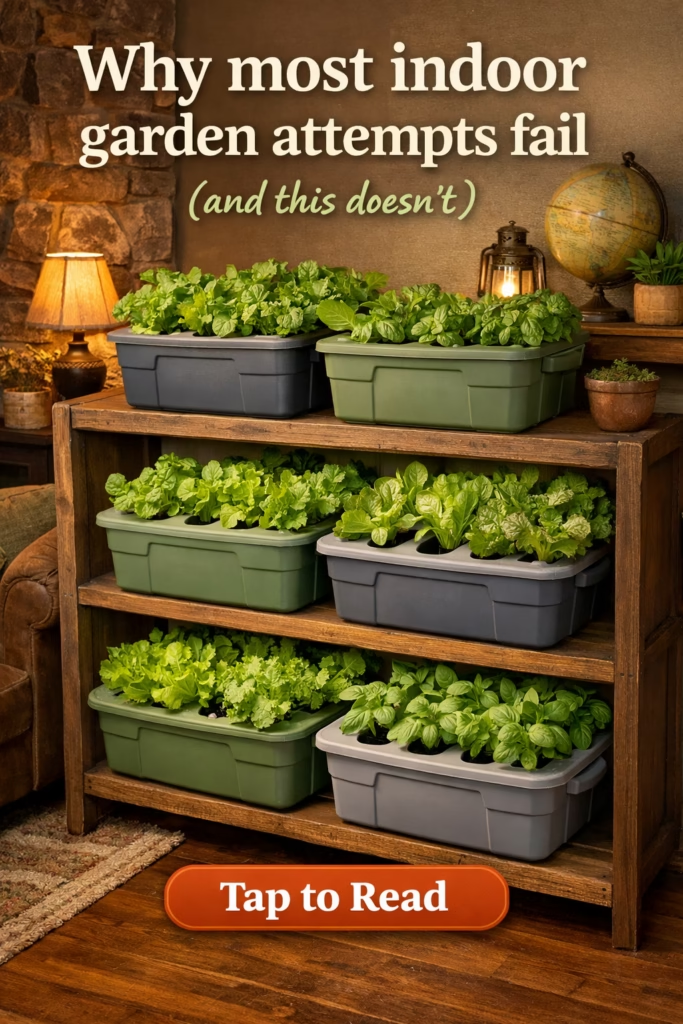
Most people who try growing food indoors end up quitting for the same three reasons:
- It’s too complicated
They buy the full kit: pumps, hoses, apps, proprietary pods. Fun for a week. Then one piece cracks, clogs, or disconnects and the whole thing dies. - It’s too fragile
The setup needs perfect light, perfect timing, perfect water levels. Life gets busy. Something slips. Plants melt. - It’s too expensive
The gear costs more than the food it can grow. Even when it “works,” it never feels like a win.
The Indoor Mini Farm System was built to kill those problems:
- It uses cheap, common supplies you can find at any big-box store
- It works without pumps, timers, or electronics
- It forgives missed check-ins and small mistakes
- It produces enough food to actually matter
I’m not asking you to become a full-time grower.
I’m handing you a setup that fits into a normal, busy life.
DIY hydroponics to go from empty tote to first sprouts in about 10 days
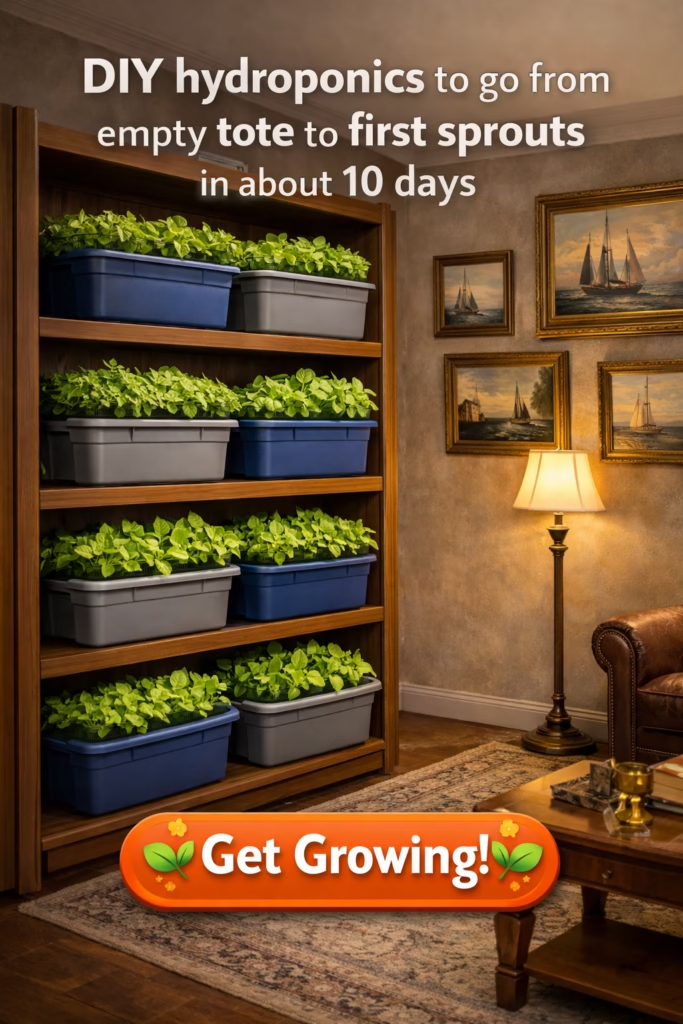
Here’s the big picture of how the system runs, without drowning you in details.
Step 1: Set up your tote the smart way
You’ll:
- Pick the size and shape that gives you the best yield for the space you have
- Prep it so light stays out of the water (this matters more than most people think)
- Put it in a spot in your home that works with your actual life
Step 2: Mix the water and nutrients
You’ll:
- Use a simple, proven mix
- Skip the chemistry-class nonsense
- Avoid the most common “gross water” mistakes before they ever start
Step 3: Plant the right seeds, at the right density
You’ll:
- Use specific greens that thrive in this setup
- Seed them thick so the tote fills in fast
- Avoid the sad, patchy “few leaves here and there” result that makes people quit
Step 4: Let the system work
You’ll:
- Check one or two simple things a few times a week (takes about 30 minutes a week)
- Spot early warnings before they turn into problems
Step 5: Harvest and repeat
You’ll:
- Cut so the greens keep coming back
- Stagger a few totes so something’s always ready
- Package “living salad totes” if you want to sell them
That’s the engine.
Inside the guide, I walk you through every piece with photos, diagrams, and plain instructions you can follow even when you’re tired and done for the day.
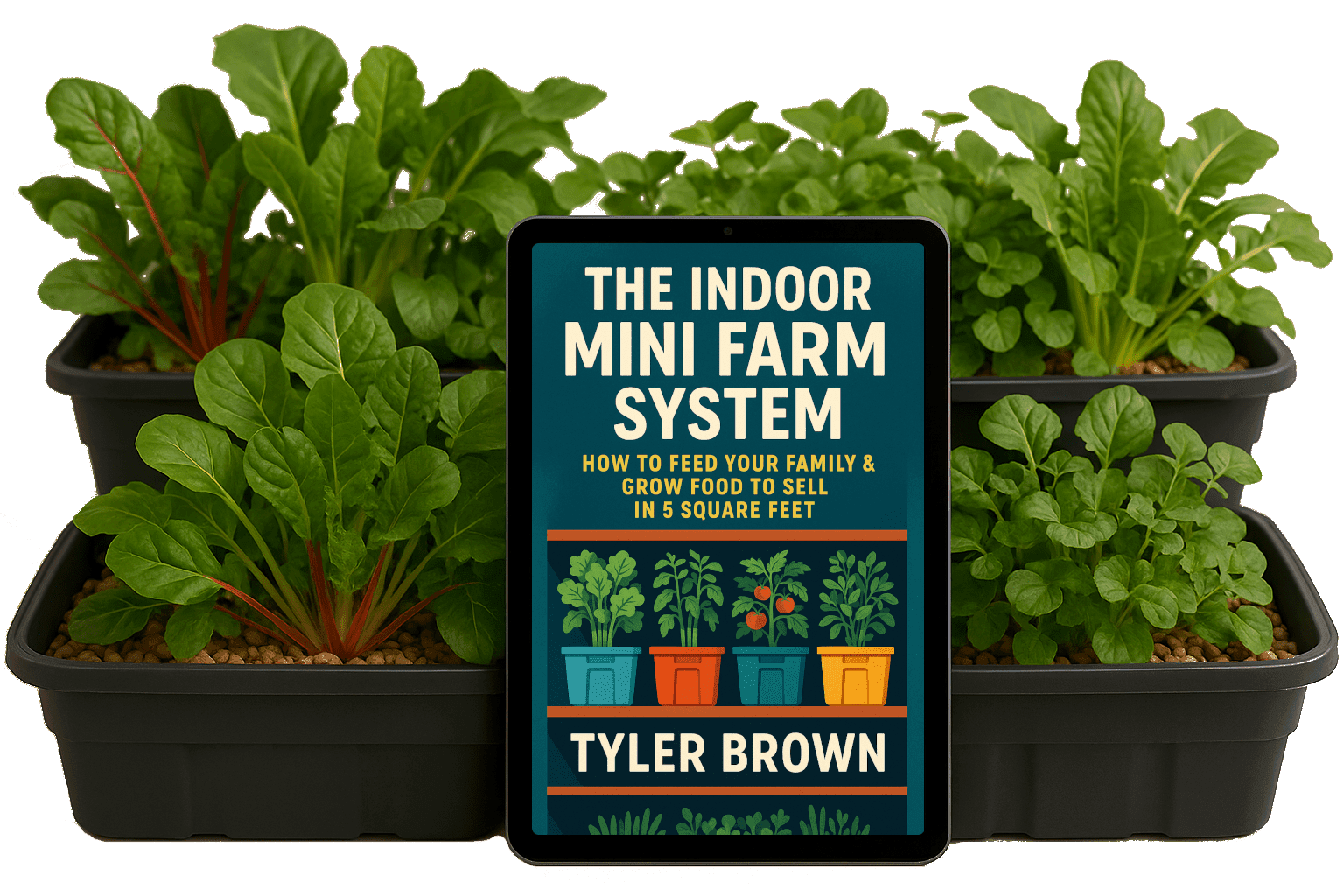
Here’s What You Get
Indoor Mini Farm System (PDF)
Every step you need to create your indoor mini farm in just a few hours. From which totes to buy to how high to hang your lights to which seeds to plant first.
Linked Supply List (PDF)
Instead of opening twenty tabs and guessing, you get a simple list with direct links to exactly what you need. You can be done shopping in minutes.
Perpetual Planner (PDF)
This is the piece that keeps black thumbs alive. A simple perpetual planner that tells you, week by week, what to do so you never miss a refill or harvest.
Just $47 for everything
Who this is for (and who it isn’t for)
This is for you if:
- You want real food you can see, touch, and harvest yourself
- You’ve got more stress than free time, and you need something simple
- You appreciate direct, step-by-step instructions without fluff
- You care about feeding your household better and feeling less exposed to grocery chaos
- You like the idea of an easy side income that doesn’t require you to become An Entrepreneur™
This is not for you if:
- You want a giant, high-tech grow operation with apps and flashing lights
- You need everything perfect before you’ll start anything
- You’re hunting for a “get rich quick” loophole
I’m not here to shame you for not doing enough.
I’m here to give you a system that works when you give it a fair shot.
Questions people ask before they start
“Does the water get gross without a pump?”
Not if you set it up right.
Inside the system I show you:
- How to keep light off the water
- A simple way to keep enough oxygen in the system without any electronics
- How often to refresh things so it stays clean
Do I ever rinse roots and swap water? Sure.
But it’s quick, and it’s nowhere near a daily chore.
“How much space do I need?”
If you’ve got room for a baking sheet, you’ve got room for a mini farm.
One tote fits on:
- A kitchen table
- A wide windowsill
- A shelf or simple stand
If you can spare that footprint, you can run this.
“What if I kill every plant I touch?”
Then you’re exactly who I had in mind.
This system was built assuming you’ve had plants die on you.
The seeds and setup I give you are forgiving.
The instructions are clear and direct.
The troubleshooting section covers the “uhhh what is that” moments.
You don’t have to be naturally “good with plants.”
You just have to follow the steps.
“How much food can I really grow?”
With one tote, once it’s rolling, you can pull several generous salads a week.
With a few totes on a simple rotation, you can:
- Cover salad greens for your household
- Have extra to share or sell
This isn’t about replacing an entire supermarket.
It’s about taking one important category of food mostly into your own hands.
“Can I actually make money with this?”
This is a side income, not a lottery ticket.
But when you know how to:
- Grow dense, healthy greens in a tote
- Package them as “living salad gardens”
- Offer them to people who’d rather buy from a human than a chain store
You can absolutely turn this into steady grocery money or a meaningful little income stream.
Inside the system, I walk you through how I approach it.
“What if I’m already exhausted?”
Then you need a system that doesn’t act like another job.
The initial setup takes the most focus. That’s why I give you a clear checklist and walk you through it.
Once it’s running, daily care looks like:
- A quick glance
- A small top-up
- A satisfying snip with scissors when it’s time to harvest
This is built to cooperate with real life, not compete with it.
One small move toward more control
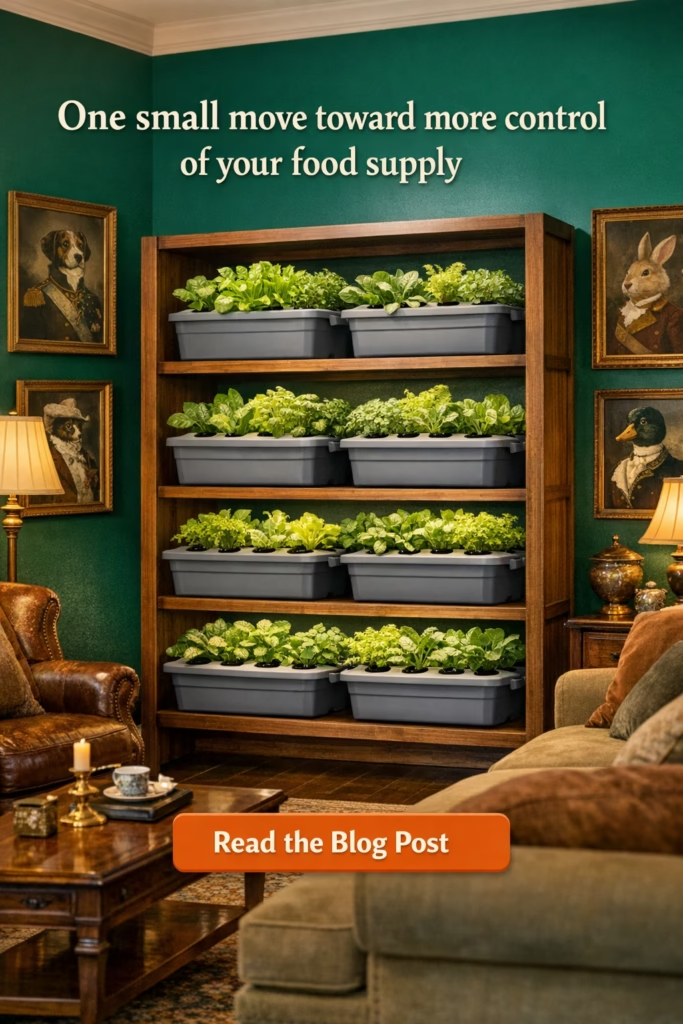
You don’t control corporate decisions.
You don’t control what your grocery store charges next month.
You do control whether you set up one simple tote and let it start producing for you.
The Indoor Mini Farm System is the clearest path I know to do that without:
- Moving
- Spending thousands
- Or turning your home into a jungle of cables and gadgets
If you’re even a little curious, here’s my suggestion:
Give yourself one tote, one month, and this system.
See what happens.
Worst case? You learn a new skill and prove to yourself you can grow real food.
Best case? You’ve got a kitchen table mini farm quietly cutting your grocery bill and giving you options.
Real Readers. Real Mini Farms.
These are everyday readers who started with one tote on a bookshelf and turned it into fresher food and extra cash.
“I was skeptical, but my first harvest more than covered the cost. Now my kids snack on greens instead of chips.”
I started with one tote next to our kitchen table. Once I saw how fast everything grew, I added two more and now I’m selling salad plants to three of my neighbors.
Sara C., Columbus, OH
“This gave me a simple plan I could follow after the kids went to bed.”
I don’t have space for a ‘real’ garden, but the mini farm system fits on a cheap bookshelf in our hallway. We eat off it every week, and I sell six totes a month to cover our internet bill.
Jen S., Houston, TX
“I’ve tried so many ‘systems’ that overpromised and fizzled out. This one quietly does what it says.”
I work full time and needed something low-maintenance. I spend maybe 10 minutes twice a week checking water levels and harvesting. The rest just… grows.
Sam L., Raleigh, NC
“We live in an apartment and I honestly didn’t think this would work.”
We’re on the third floor with no balcony. The totes fits next to our dining table and now my 7-year-old helps me harvest ‘our’ salad every night. It feels like cheating the grocery store.
Pam D., Boise, ID
About the Author
Tyler Brown runs ProfitableHomesteader.com, a site dedicated to sharing side hustle ideas at home – including how he builds tiny indoor mini farms, growing heirloom greens in plastic totes and selling them to local families.
After years of testing containers, crops, and pricing, he built the Indoor Mini Farm System so regular people could skip the trial-and-error and start growing real food (and side income) on a single shelf.
If you’re ready to set up your own pump-free mini farm and start growing food indoors without wasting money on gadgets, you can get the step-by-step guide here: