Growing Greens for Profit: The Home Grower’s Income Guide

Of all the crops a home grower can produce for income, leafy greens — lettuce, kale, spinach, arugula, watercress — offer one of the most favorable combinations of fast growth, high value, year-round demand, and minimal production cost.

The challenge with selling greens isn’t demand — it’s the model. Harvesting individual leaves and selling them by the pound is labor-intensive for modest return. But there’s a better way that most growers never consider: selling the living plant rather than the harvested crop.

This guide covers the most practical model for growing greens for profit at home — what to grow, how to grow it efficiently, how to sell it, and what you can realistically earn from a small indoor operation.

Table of Contents

Why Greens Are One of the Best Profit Crops

Fresh leafy greens check every box for a viable small-scale profit crop:

  • High grocery value. Organic lettuce runs $4–$7 per head. Specialty greens like watercress and arugula run $4–$8 per bunch. These are expensive relative to their weight — which means the margin for a grower is significant.
  • Short production cycle. Lettuce is ready to harvest in 30–45 days from transplant. That’s 8–12 crop cycles per year from the same growing space, compounding your annual production.
  • Year-round demand. Unlike summer squash or corn, salad greens are purchased every week by most families, regardless of season. The demand doesn’t stop in November.
  • Excellent indoor growing candidates. Greens grow just as well — often better — under LED grow lights as they do in a summer garden. That means year-round production from an indoor setup regardless of climate or season.
  • Low production cost. Seeds, nutrients, water, and electricity for a Kratky hydroponic setup cost $2–$4 per tote of 6 plants. The margin between production cost and retail value is exceptional.

The Living Plant Model: Why It Works Better Than Selling Cut Greens

The conventional model for selling greens is to harvest them, bag them, and sell them by weight. A bag of mixed salad greens sells for $5–$8. You spend significant time harvesting, washing, drying, and bagging. Your margin per hour of labor is modest.

The living plant model is different — and significantly more profitable per hour of work.

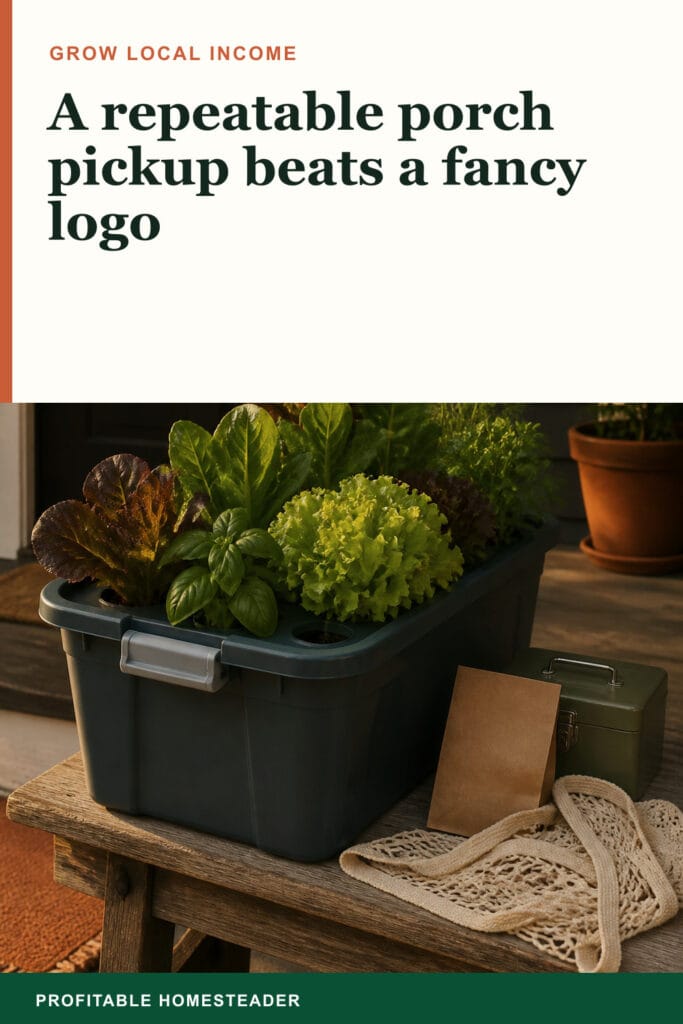
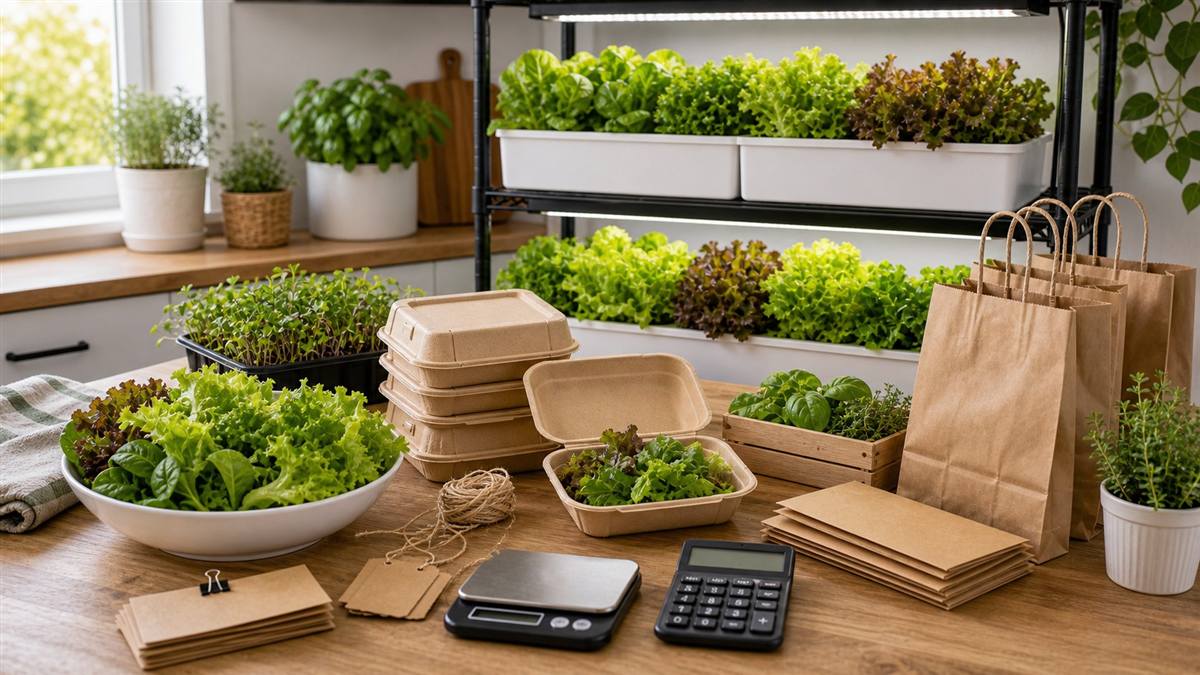
Instead of harvesting your greens, you sell the entire growing tote — plant, growing medium, and remaining nutrient solution — to your customer. They take it home, put it on a sunny windowsill or under a simple grow light, and harvest from it themselves for weeks. When the tote is spent, they come back for another.

Here’s why this model works so much better economically:

  • Higher price point. A living lettuce tote sells for $30–$50. The same plants harvested and bagged would sell for $8–$15. The living plant delivers ongoing value the customer can see — they’re willing to pay for it.
  • Less labor. You do zero harvesting, washing, or packaging. You grow the plants, hand the customer a tote, and immediately plant a new one. The customer does the harvesting work.
  • Longer “shelf life.” A bag of cut greens lasts 5–7 days. A living tote lasts 4–8 weeks on a customer’s windowsill. That longevity justifies the premium price and reduces the urgency pressure on your growing schedule.
  • Natural recurring sales. When the tote is done, the customer needs a new one. This creates an organic repeat purchase cycle without any marketing effort.

This is the exact model the Indoor Mini Farm System is built around — growing living plants efficiently and building a neighborhood customer base that generates consistent recurring income.

Best Greens to Grow for Profit

GreenDays to HarvestSell Price Per ToteNotes
Butterhead lettuce35–45$30–$45Classic, broad appeal. Most popular seller.
Romaine35–45$30–$45Familiar variety. Very productive per tote.
Mixed leaf lettuce30–40$30–$50Visual variety appeals to customers.
Kale50–60 (then ongoing)$35–$50Superfood appeal. Cut-and-come-again longevity.
Spinach40–50$30–$45Very popular. Prefers cooler temperatures.
Arugula30–40$35–$55Premium positioning. Less common, commands higher price.
Watercress20–30$35–$55Fastest growing. Rarely available fresh locally.
Swiss chard (rainbow)50–60$35–$50Visual appeal. Cut-and-come-again longevity.

Start with butterhead or romaine lettuce — they’re fast, reliable, and have the broadest customer appeal. Once you have a steady flow of lettuce customers, add kale or arugula as premium options for health-conscious buyers.

The Growing System: Kratky Hydroponics

The Kratky passive hydroponic method is the ideal production system for a living plant selling operation. Here’s why:

  • No pump required. No pump means no electricity cost beyond the grow light, no equipment maintenance, no noise.
  • Self-contained totes. Each tote is a complete, portable unit. When you sell a tote, you hand the customer the entire self-contained system — the plant, the growing medium, and the remaining nutrient solution. The customer doesn’t need to do anything except put it in a light.
  • Minimal maintenance. Check pH and water level every 3–4 days. That’s genuinely all the active maintenance required during a grow cycle.
  • Scales simply. Add more totes as demand grows. No additional infrastructure beyond shelf space and grow lights.

The full setup — shelving unit, LED grow lights, totes, net pots, nutrients, and pH kit — runs $150–$250 for a system that produces 2–3 totes per week. That’s the complete capital investment for a production system generating $240–$450 per month at market prices.

For a detailed setup guide, the indoor hydroponic garden setup guide covers everything from equipment to first harvest. And if you want to understand nutrient management for a production system, the hydroponic nutrients guide covers what you need.

Production Math: What You Can Actually Earn

Let’s run the numbers honestly.

Single Tote Production Cycle

ItemCost
Seeds (lettuce, 6 plants)$0.30
Nutrients (per tote)$0.50
Electricity (grow light, 35 days)$1.50
WaterNegligible
Growing medium (amortized)$0.50
Total production cost per tote~$2.80
Selling price per tote$35–$45
Gross margin per tote$32–$42

Monthly Production Scenarios

Totes Sold Per WeekMonthly RevenueMonthly Production CostNet Monthly Income
2$280–$360~$22$258–$338
4$560–$720~$45$515–$675
8$1,120–$1,440~$90$1,030–$1,350

The time to produce and sell 4 totes per week — planting, monitoring, and delivery — is approximately 2–3 hours. That’s an effective hourly rate of $170–$225 per hour of work. These are genuinely exceptional economics for a home-based operation.

The limiting factor isn’t usually production capacity — it’s customer demand. Building from 2 totes/week to 8 requires finding and maintaining 8–10 recurring customers. That process takes a few months of consistent effort but compounds: happy customers refer neighbors, and each referral adds to a growing passive income stream.

How to Find Buyers

Start With Your Immediate Network

Your first customers are almost certainly people you already know. Tell your neighbors what you’re doing. Bring a tote to a neighbor’s door and offer it at a discount for their first try. Word of mouth from one enthusiastic customer is worth more than any marketing you’ll do.

Nextdoor and Neighborhood Facebook Groups

A simple post — “I’m a local grower producing organic living lettuce totes ready to harvest from your windowsill — $35, I deliver within [X] miles” — reaches hundreds of nearby households instantly. A photo of a lush, ready-to-harvest tote does the selling. This is the most effective single marketing channel for a neighborhood selling operation.

Local Facebook Marketplace

List your totes as a local pickup or delivery item. Consistent presence in local food groups builds name recognition over time. Respond promptly to inquiries — speed of response is one of the biggest factors in whether a marketplace inquiry converts to a sale.

Farmers Markets

A living lettuce tote display at a farmers market is genuinely unusual — most vendors sell cut produce. The novelty draws attention and creates conversations that lead to sales. More importantly, every market customer who buys a tote is a potential weekly neighbor customer. Follow up with a card that includes your contact info and encourage them to reach out directly for future orders.

Local Restaurants and Cafes

Restaurants that focus on fresh, local ingredients are worth approaching — especially for specialty greens like arugula, watercress, and herb varieties they struggle to source fresh. A consistent weekly supply is more valuable to a restaurant buyer than occasional availability. Pricing for restaurant sales is typically below direct consumer pricing but the volume and reliability offset the lower margin.

Scaling Up

Once your initial customer base is established and you’re consistently selling your current production, scaling is a matter of adding shelf capacity and grow lights — the same infrastructure, more of it.

A second shelving unit doubles production with no additional customer acquisition cost if your existing customers have referred others. The marginal cost of additional capacity is low; the marginal revenue from existing customers at higher production is high.

At larger scale — 20+ totes per week — you’ll want to think about production scheduling more systematically: staggering plantings so you have 3–4 totes ready every week rather than 20 all at once, optimizing your nutrient mixing routine, and possibly adding a subscription model so customers pre-commit to regular deliveries.

The full system for building from first customer to a consistent weekly production and selling operation is exactly what the Indoor Mini Farm System walks through — from growing setup through customer acquisition and the subscription model that makes it genuinely passive income.

Frequently Asked Questions

Is growing greens for profit realistic from a home?

Yes — it’s one of the most realistic small-scale agricultural income models available. The economics are straightforward: low production cost, high retail value, short production cycle, and year-round demand. The living plant model specifically is well-suited to home growing because it eliminates the labor-intensive harvesting and packaging steps that make cut produce sales less efficient at small scale.

How much can you make growing lettuce at home?

A home operation selling 4 living lettuce totes per week at $35–$45 each generates $560–$720 per month in revenue with production costs under $50/month. At 2–3 hours of work per week, that represents an effective hourly rate of $150–$225. Scaling to 8 totes per week at the same pricing generates $1,100–$1,400 per month from a spare bedroom shelf system.

What greens are most profitable to grow?

Butterhead and romaine lettuce sell most consistently due to broad customer appeal and fast production cycles. Arugula and watercress command premium prices ($35–$55 per tote) due to their specialty positioning and limited local availability. Kale totes have strong appeal to health-conscious buyers and last longer than lettuce, justifying their price point. Starting with lettuce and adding specialty greens as your customer base grows is the optimal progression.

Do I need a license to sell home-grown greens?

In most states, selling fresh produce and living plants directly to consumers requires no license at small scale. See the guide to selling produce from home legally for a full breakdown of what’s required in your state and situation.


Growing greens for profit is one of the most accessible home-based income streams available — fast to start, inexpensive to set up, and genuinely excellent economics per hour of work. The Indoor Mini Farm System is the complete guide to building the production and selling system that makes it work consistently.