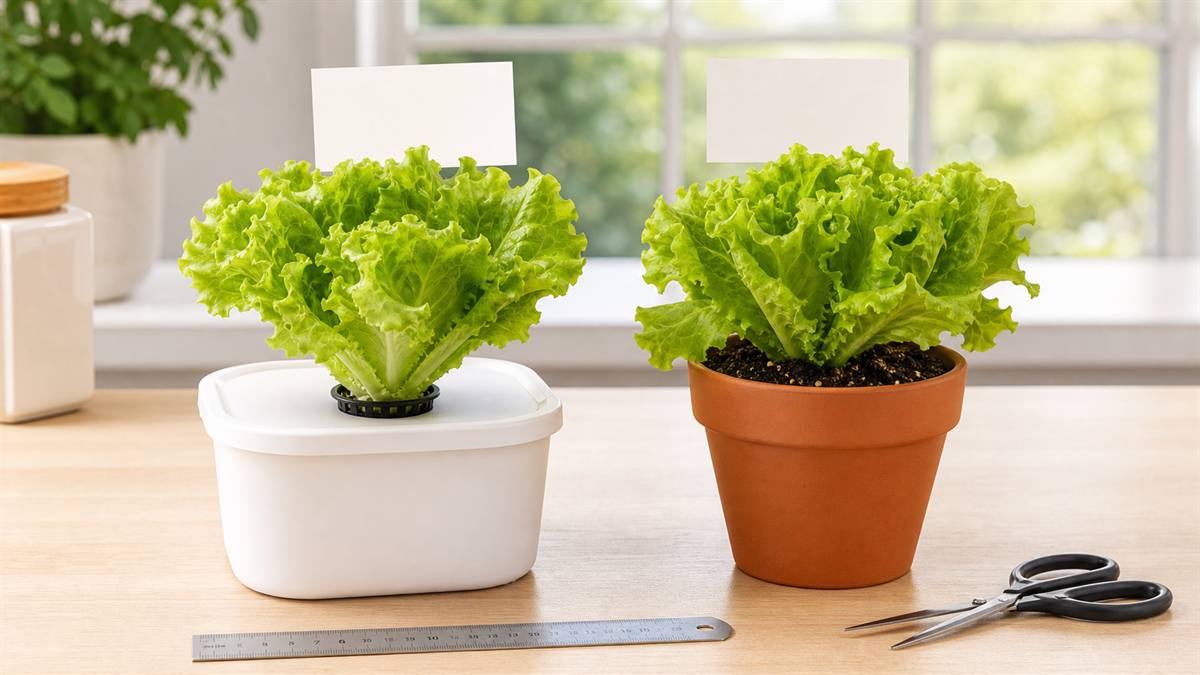
If you’ve ever grown lettuce in a garden bed and waited 60–80 days for a decent head, you might be surprised to learn that the same lettuce grown hydroponically is typically ready in 30–45 days. That’s not a typo, and it’s not marketing fluff — it’s the consistent experience of home growers who’ve done both.
But speed isn’t the only difference. Taste, nutrition, water use, cost, and year-round availability all look different depending on how you grow. Here’s an honest comparison of both methods so you can decide which one makes sense for your situation.
Growth Speed: Hydroponics Wins — By a Lot
This is the most dramatic difference between the two methods, and it comes down to one thing: how hard a plant has to work to eat.
In soil, lettuce roots spend significant energy pushing through the growing medium searching for nutrients and water. Those nutrients are locked in the soil in forms the plant can’t always access efficiently, and the plant has to rely on microbial activity to break them down first.
In a hydroponic system, nutrients are dissolved directly in water and delivered right to the roots. The plant doesn’t have to work to find food — it just grows. All that energy that would have gone into root searching goes into leaf production instead.
The result:
- Soil lettuce: 55–80 days to full head, depending on variety and conditions
- Hydroponic lettuce: 30–45 days to the same size head under a grow light
That’s roughly 30–50% faster. For a home grower on a schedule — or someone selling plants to neighbors who expect consistent delivery — this matters enormously.
Yield Per Square Foot: Hydroponics Wins Again
Soil gardening requires spacing plants to allow root spread and prevent competition. A standard lettuce plant needs about 8–12 inches of space in a garden bed.
In a hydroponic tote, root systems stay contained in net cups and don’t compete the same way. You can fit 6–8 lettuce plants in a single 18-gallon tote (roughly 1.5 square feet of lid space) and all of them grow to full size simultaneously.
That’s 4–6x the yield per square foot compared to a garden bed — before you even factor in vertical stacking. Put two totes on a wire rack shelf and you’ve got 12–16 plants producing in the space of a small end table.
Taste and Texture: Surprisingly, Hydroponics Wins Here Too
Many people assume soil-grown food tastes better. For tomatoes and root vegetables, that may be true — complexity of flavor in those crops comes partly from soil microbiome interactions. But for lettuce and leafy greens, the opposite tends to be true.
Hydroponic lettuce is:
- Crisper — plants are never stressed by drought or inconsistent watering, so cell walls stay turgid
- Less bitter — bitterness in lettuce often comes from bolting stress; indoor hydroponic lettuce in stable temperatures bolts much more slowly
- Cleaner — no soil splash, no grit, no aphids or slugs. You can harvest and eat without washing if you want to
This is one of the reasons living hydroponic plants sell so well to neighbors. Once someone harvests a bowl of butterhead from a Kratky tote on their windowsill, bagged grocery store lettuce feels like a downgrade.
Nutrition: Roughly Equal, With an Edge to Hydroponics
The nutritional content of lettuce is primarily determined by variety, harvest timing, and how fresh it is when you eat it — not by growing method. A head of butterhead harvested and eaten the same day is nutritious regardless of whether it grew in soil or water.
Where hydroponics can pull ahead: freshness at the point of eating. Grocery store lettuce is typically harvested 7–14 days before you buy it, then stored. A living hydroponic plant harvested 30 seconds before dinner is at peak nutrition. That gap matters more than the growing method itself.
Some studies have shown that hydroponic lettuce can have slightly higher levels of certain vitamins and minerals when nutrient solutions are optimized — but for a home grower using a standard nutrient mix, the practical difference is small. The freshness advantage, on the other hand, is real and consistent.
Water Use: Hydroponics Uses 90% Less Water
This surprises most people. A system with the word “hydro” in its name uses less water than soil gardening?
Yes — because in a Kratky or similar passive system, water is enclosed in a reservoir and taken up directly by plants. There’s no evaporation from open soil, no runoff, no watering the space between plants. The water that isn’t consumed in one grow cycle can be replenished rather than wasted.
A standard soil garden bed for lettuce uses 1–2 gallons of water per plant per week. A Kratky tote with 8 lettuce plants uses roughly 2–3 gallons of nutrient solution for the entire 30–45 day grow cycle. The math is stark.
Cost to Grow: Soil Wins the First Year, Hydroponics Wins Long-Term
Starting a soil garden is genuinely cheap: seeds, some bagged soil or compost, a few containers or a garden bed. You can get growing for $20–$30.
A first hydroponic tote costs $60–$80, including the grow light. That’s a higher upfront number.
But year two looks different. Soil needs to be replenished with compost and amendments each season. Garden beds need weeding, pest management, and often replanting infrastructure. Hydroponic totes require only seeds ($3–$5/cycle), a tiny amount of nutrients ($1–$2/cycle), and electricity for the light (~$2/month). The ongoing cost per head of lettuce drops to nearly nothing.
And if you’re selling plants, the economics flip completely. A $70 setup that produces $45 totes pays for itself in two sales.
Year-Round Growing: Hydroponics Wins Decisively
This is the biggest practical advantage for most people reading this, especially anyone in a northern climate or without outdoor growing space.
Soil gardening is seasonal. Lettuce in the ground is a spring and fall crop in most of the US — summer heat causes bolting, winter freezes everything. You get a few productive months per year.
An indoor hydroponic setup with a grow light runs 365 days a year. Temperature is controlled. Seasons don’t matter. You can harvest fresh lettuce in January in Minnesota or August in Texas with equal reliability. That consistency is what makes the neighbor subscription model work — customers can count on a fresh tote every month, not just in spring.
Convenience: Hydroponics Wins for Busy People
A soil garden needs regular weeding, watering, pest monitoring, and seasonal prep. It’s rewarding work, but it’s work — and it ties you to a schedule and a location.
A Kratky tote needs roughly 5–10 minutes of attention every 2–3 days: check the water level, check for any yellowing, harvest if ready. There are no weeds. There are no pests (indoor growing all but eliminates the bug problem). You can leave for a long weekend without worrying about irrigation.
For parents, renters, and anyone with limited outdoor space or time, this convenience gap is what makes hydroponics actually sustainable as a long-term habit rather than a seasonal project that gets abandoned.
So Which Should You Choose?
Soil gardening is wonderful and worth doing if you have the outdoor space and enjoy the process. It builds different skills, connects you to seasons, and works great for crops that don’t do as well hydroponically (root vegetables, sprawling crops, fruit trees).
But for lettuce, herbs, and leafy greens specifically — especially if your goal is fast results, year-round production, or selling to neighbors — hydroponics wins on almost every practical measure. Faster. More productive per square foot. Easier to maintain. Cheaper to run long-term. Usable in any space, any season.
The Indoor Mini Farm System ($47) is built around exactly this — a simple Kratky-style tote setup that beginners can have running and harvesting within a month, with a clear path to turning the surplus into neighbor sales if you want to.