The answer most people find online is somewhere between “almost nothing” and “thousands of dollars,” which isn’t helpful when you’re trying to decide whether this is worth trying.
So here’s the real breakdown — what you actually need to spend to get started, what’s optional, and where the costs go if you decide to scale up and sell what you grow.
The short version: you can start a working hydroponic setup for under $100, and if you sell even a few plants to neighbors, it pays for itself in the first month.
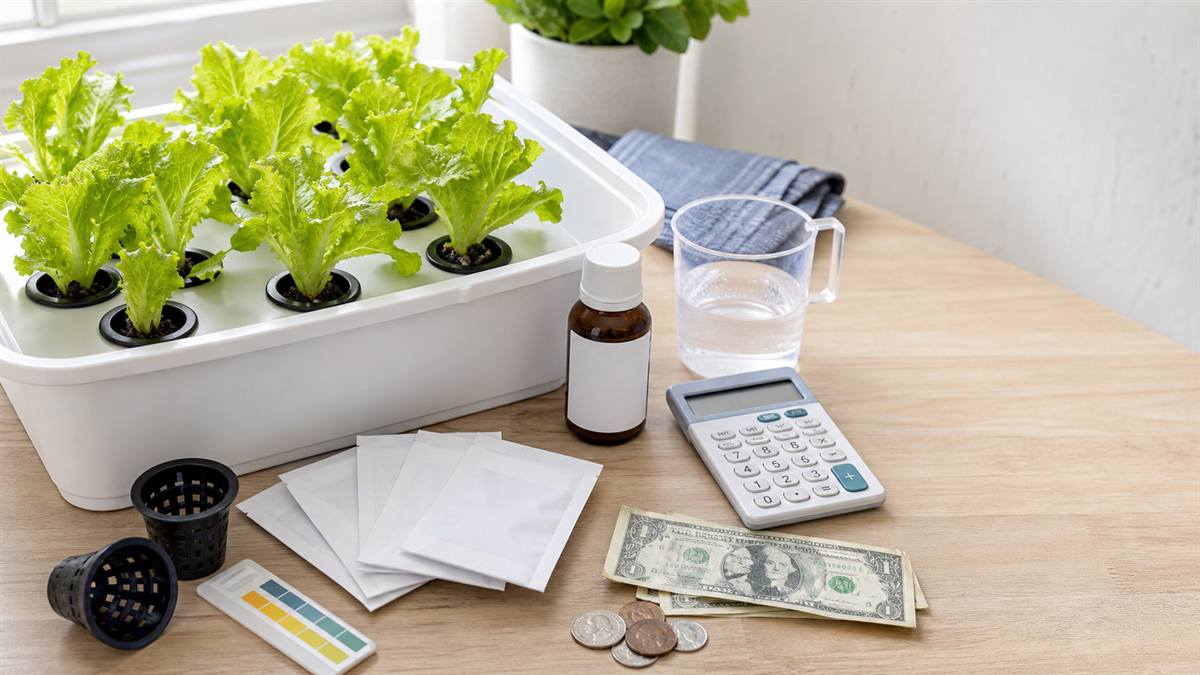
The Minimum Viable Hydroponic Setup: ~$60–$80
To grow your first batch of lettuce or herbs hydroponically, here’s everything you actually need and what it costs:
Storage tote with lid — $10–$15
A standard 18–27 gallon dark-colored storage tote from any hardware or big-box store. Dark color matters — it blocks light from your nutrient solution and prevents algae growth. Rubbermaid and Sterilite both work. You’ll cut holes in the lid for net cups.
Net cups (pack of 10–25) — $4–$8
Small mesh cups (2-inch or 3-inch) that hold your plants in the lid holes. Available at any hydroponic supply store or online. A pack of 25 costs around $5–$6 and will last through many grow cycles.
Hydroponic nutrients — $15–$25
A basic two-part or three-part liquid nutrient solution is all you need. General Hydroponics FloraSeries, MaxiGro, or similar beginner-friendly formulas work well. A small bottle set costs $15–$25 and will last you through dozens of tote refills — this is not a recurring monthly cost.
pH test kit or pH drops — $8–$15
Keeping your nutrient solution in the right pH range (5.5–6.5 for most greens) is the single most important thing you can do for healthy plants. Basic pH test drops cost about $8. A digital pH pen costs $12–$20 and is more accurate and easier to use. Worth spending the extra few dollars.
pH up and pH down solution — $8–$12
Small bottles of pH adjusters let you dial in your solution’s acidity. You’ll use very small amounts — a few drops at a time — so one set lasts a long time.
Growing medium — $8–$12
Clay pebbles (hydroton), rockwool cubes, or coco coir to fill your net cups and support the plant roots. A bag of clay pebbles is reusable: rinse and sterilize between grows. Initial cost is $8–$12; ongoing cost is essentially zero.
Seeds — $3–$6
A packet of lettuce, basil, arugula, or spinach seeds is $3–$6 and contains hundreds of seeds. Even if you lose half your germinations (which won’t happen if you follow the steps), the cost per plant is still just a few cents.
Total for first tote: $56–$93
That range covers everything from the budget end (one tote, basic supplies, pH drops) to the nicer end (digital pH pen, better nutrients, a few seed varieties). Most people land around $70–$80 for their first setup.
The One Optional Item Worth Buying: A Grow Light (~$25–$60)
You technically don’t need a grow light if you have a bright south-facing window that gets 6+ hours of direct sun. But most indoor spaces — especially in fall, winter, and spring — don’t provide enough natural light for fast, consistent growth.
A basic LED grow light panel costs $25–$45. A higher-quality full-spectrum LED that will last 5+ years and support 2–3 totes costs $50–$70. This is the one piece of equipment that most growers say they wish they’d bought first instead of trying to make do with window light.
If you’re planning to sell plants, a grow light is essentially required — you need consistent, predictable growth cycles to deliver plants to customers on schedule.
What You Don’t Need (That People Often Buy)
Hydroponic supply stores and Amazon make it easy to spend a lot of money on equipment that beginner growers genuinely don’t need. Here’s what to skip:
- Air pumps and air stones: Not needed for Kratky/passive systems. The air gap that forms naturally as the water level drops provides oxygen to the roots. Save the pump for if you decide to build a deep water culture system later.
- Expensive hydroponic kits: Pre-built hydroponic systems range from $80 to $500+. They’re fine, but a DIY storage tote does the same job for a fraction of the price.
- TDS meter: Useful but not essential for beginners. Focus on pH first. A TDS meter (measures nutrient concentration) is a $12–$15 upgrade for later once you’re comfortable.
- Climate control equipment: Most leafy greens grow fine at normal room temperature (60–75°F). Unless your space is unusually hot or cold, you don’t need fans, humidifiers, or thermostats to start.
- Expensive growing media: Rockwool and clay pebbles both work. Don’t spend extra on premium media for your first grow.
Ongoing Monthly Costs: Much Lower Than You Think
After the initial setup, the ongoing cost to keep one tote growing is minimal:
- Water: Nearly free (tap water is fine; filtered or distilled is better but optional)
- Nutrients: About $1–$2 per tote per grow cycle. One set of nutrient bottles lasts for many, many refills.
- Seeds: Pennies per plant
- Electricity for grow light: A standard 45W LED panel running 14 hours/day costs about $1.50–$2.00/month at average US electricity rates
Total ongoing cost per tote per month: roughly $3–$5.
If you’re selling plants, a single tote sale at $40–$45 covers a month of operating costs for your entire setup — ten times over.
What Does It Cost to Scale Up?
Once you have one tote running and want to grow more, each additional tote costs significantly less than the first because the fixed costs (grow light, pH kit, nutrients, growing media) are already covered.
- Second and third tote: ~$20–$25 each (just the tote + net cups + seeds)
- Second grow light (if adding more than 3 totes): $30–$60
- Shelving to stack totes vertically: $25–$60 for a standard wire rack that holds 3–4 totes
Most people running 5–10 totes (enough for a meaningful neighbor subscription income) have a total equipment investment of $200–$300. At $45 per tote per month in subscription income, that’s paid back in a single month of sales at modest scale.
The Cost of Not Starting
The average American family spends $800–$1,200 per year on fresh produce — much of it on the greens and herbs that are cheapest and easiest to grow hydroponically at home. A single $70 tote setup can produce enough lettuce and herbs to replace $30–$50/month of grocery spending. It pays for itself in two or three months just from what you don’t have to buy.
Add a few neighbor sales, and the economics become even clearer.
The Indoor Mini Farm System ($47) includes a complete linked shopping list that takes the guesswork out of what to buy. No hunting for compatible parts, no buying the wrong net cup size — just a tested list of exactly what’s needed, updated regularly when products change. Most people who use it spend $60–$75 getting set up and are harvesting their first round of greens within a month.