Revealed: How anyone can turn 5 square feet into a productive indoor food garden.
Lucy stared at the sad basil plant on her windowsill like it was personally mocking her.
She had tried. Really tried.
Watered it. Forgot to water it. Overwatered it. Moved it to the “good window.”
It still died like clockwork.
Which would have been fine… except grocery prices kept climbing, and every week she felt the same thought creep in:
“I should be able to grow something.”
Not a big garden. Not a homestead fantasy.
Just a small, sane backup.
Something that quietly feeds her family.
But she didn’t have time for weeding, watering, bugs, and weather roulette.
So she did what tired people do.
She scrolled.
And that’s when she saw a photo that stopped her thumb:
A shelf.
Not filled with books.
Filled with food.
The indoor garden that works for people who kill plants
The caption said: “No green thumb required.”
And underneath it, someone wrote:
“This basically waters itself. I only touch it once a week.”
That was exactly what she needed.
Because if you’ve ever tried to grow anything while juggling real life, you already know the truth:
You don’t forget to feed your kids.
You do forget to water your plants.
Every time.
What Lucy was looking at wasn’t a cute hobby.
It was a system.
A tiny indoor mini farm designed to keep producing food even when you’re busy, tired, or inconsistent.
Why most indoor gardening fails (and why this doesn’t)
Most “indoor gardening” dies for three boring reasons:
- Water isn’t consistent
- Light isn’t consistent
- Nutrients aren’t consistent
That’s it.
So instead of asking you to become a plant whisperer, the Indoor Mini Farm method does something smarter:
It builds a setup where water and light and nutrients stop depending on your mood and memory.
That’s why it works even when you don’t have a green thumb.
Real Readers. Real Mini Farms.
These are everyday readers who started with one tote on a bookshelf and turned it into fresher food and extra cash.
“I was skeptical, but my first harvest more than covered the cost. Now my kids snack on greens instead of chips.”
I started with one tote next to our kitchen table. Once I saw how fast everything grew, I added two more and now I’m selling salad plants to three of my neighbors.
Sara C., Columbus, OH
“This gave me a simple plan I could follow after the kids went to bed.”
I don’t have space for a ‘real’ garden, but the mini farm system fits on a cheap bookshelf in our hallway. We eat off it every week, and I sell six totes a month to cover our internet bill.
Jen S., Houston, TX
“I’ve tried so many ‘systems’ that overpromised and fizzled out. This one quietly does what it says.”
I work full time and needed something low-maintenance. I spend maybe 10 minutes twice a week checking water levels and harvesting. The rest just… grows.
Sam L., Raleigh, NC
“We live in an apartment and I honestly didn’t think this would work.”
We’re on the third floor with no balcony. The totes fits next to our dining table and now my 7-year-old helps me harvest ‘our’ salad every night. It feels like cheating the grocery store.
Pam D., Boise, ID
The method in plain English
Here’s the concept:
- A clean indoor grow zone that doesn’t turn your house into a dirt project
- A consistent light setup so plants stop stretching and stalling
- A simple routine that keeps water + nutrients on track without daily babysitting
No land required.
No outdoor weather required.
No daily babysitting required.
Inside the Indoor Mini Farm System, I show you the exact setup I use (including the linked supply list and the simple routine that keeps it idiot-proof).
Because the difference between “I tried indoor plants” and “I grow food indoors” is not motivation.
It’s having a repeatable system.
What you can grow first
If you want quick confidence, start with easy greens that forgive mistakes:
- loose-leaf lettuce
- baby greens
- spinach
- a few herbs
The System includes the exact “start here” plan so you don’t waste weeks on crops that are harder than they look.
“But I kill every plant I touch.”
Perfect. That was the exact problem I was dealing with too. I wanted to grow food to feed my family. Be able to avoid pesticides, maximize nutrients… but the reality was I’d neglect the raised beds and before I knew it, rabbits had stolen what little I’d managed to grow.
So I started testing hydroponic approaches because they’re lower maintenance and can be kept indoors where it’s easier to keep an eye on the plants. I didn’t expect such a learning curve, though! And after investing in one pre-built system that grows just a few tiny plants, I knew I couldn’t buy enough hydroponics systems to make it worthwhile.
Month by month, experiment by experiment I built the mini farm system, learning from other hydroponic approaches like Kratky and deep water culture (DWC) and more, I made tweaks and adjustments along the way to determine how to best keep my plants growing, healthy, and thriving. And ultimately, I developed the Indoor Mini Farm System.
This is built for people who:
- forget things
- get busy
- do not want a second job called “plant care”
- still want real food that doesn’t come from a truck
It’s quiet preparedness without the bunker energy. (And yes, I mean that literally.)
The side benefit nobody expects
Once you can grow food indoors reliably, something interesting happens:
You stop thinking like a consumer.
You start thinking like someone who can produce.
And if you ever decide to sell, the model is simple and local.
Not funnels. Not webinars. Not being a guru.
Just food, for people who live down the street.
(If you want the “sell it” path, my hydroponic side hustle write-up breaks down why subscriptions work so well.)
Here’s What You Get
Indoor Mini Farm System (PDF)
Every step you need to create your indoor mini farm in just a few hours. From which totes to buy to how high to hang your lights to which seeds to plant first.
Linked Supply List (PDF)
Instead of opening twenty tabs and guessing, you get a simple list with direct links to exactly what you need. You can be done shopping in minutes.
Perpetual Planner (PDF)
This is the piece that keeps black thumbs alive. A simple perpetual planner that tells you, week by week, what to do so you never miss a refill or harvest.
Just $47 for everything
About the Author
Tyler Brown runs ProfitableHomesteader.com, a site dedicated to sharing side hustle ideas at home – including how he builds tiny indoor mini farms, growing heirloom greens in plastic totes and selling them to local families.
After years of testing containers, crops, and pricing, he built the Indoor Mini Farm System so regular people could skip the trial-and-error and start growing real food (and side income) on a single shelf.
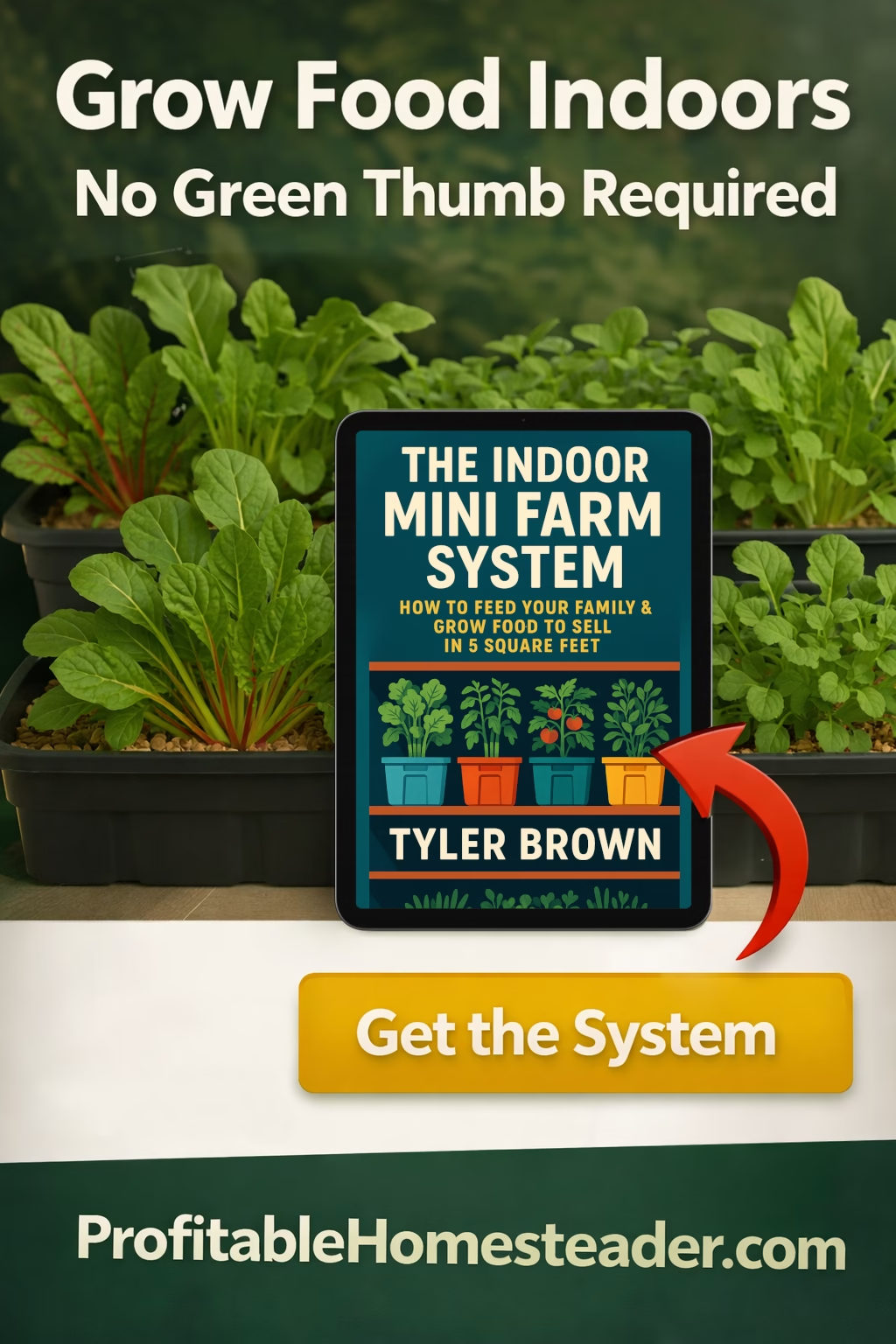
If you’re ready to set up your own pump-free mini farm and start growing food indoors without wasting money on gadgets, you can get the step-by-step guide here: