Walk into any garden center and you’ll find dozens of lettuce varieties. Walk into a hydroponic supply store and the selection gets even more overwhelming. Which ones actually perform indoors under a grow light? Which ones taste the best? Which ones do neighbors want to buy?
This guide cuts through the noise. Every variety here has been grown successfully in indoor hydroponic setups — most of them in simple Kratky storage totes — and each one has something specific going for it, whether that’s speed, flavor, appearance, or sell-ability.
The Four Types of Lettuce (And How They Behave Indoors)
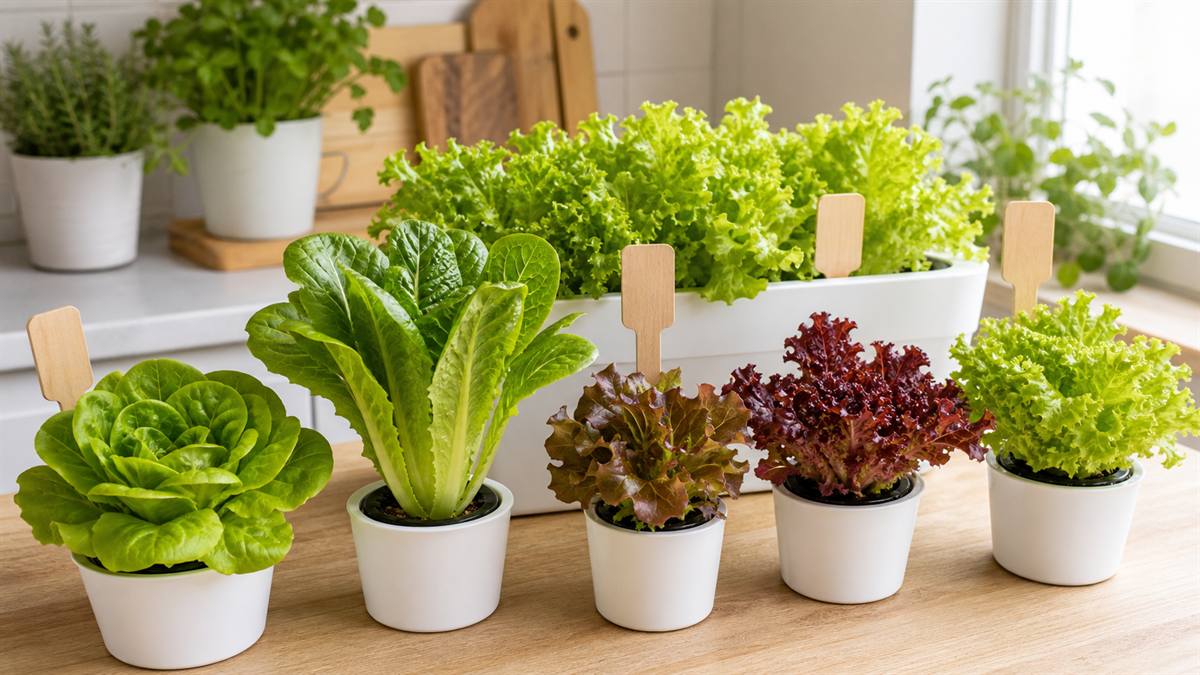
Before the variety list, a quick orientation. Lettuce falls into four main categories, and each behaves a little differently in a hydroponic tote:
- Butterhead (Bibb) — Forms soft, loose heads. Fast, forgiving, beautiful at harvest. Best overall for beginners and for selling.
- Loose-leaf — Doesn’t form a head; produces abundant individual leaves. Fastest to harvest, best for cut-and-come-again, highest yield per tote.
- Romaine (Cos) — Forms upright, elongated heads. Takes slightly longer but produces substantial, crisp leaves. Great for customers who make Caesar salads.
- Crisphead (Iceberg) — The dense, crunchy grocery store staple. Technically growable hydroponically but takes the longest and doesn’t perform as well indoors as the other types. Skip it for now.
Best Butterhead Varieties for Indoor Hydroponics
Buttercrunch
Days to harvest: 28–35 days
Why it’s great: The single most popular hydroponic lettuce variety for a reason. Buttercrunch forms compact, tight rosettes with thick, buttery leaves that hold up well after harvest. It tolerates heat better than most butterheads, which means it bolts slowly even under grow lights that run warm. A reliable, beautiful producer that customers recognize and love.
Tom Thumb
Days to harvest: 35–40 days
Why it’s great: A miniature butterhead that forms perfect golf-ball-sized heads. Ideal for tote growing because you can fit more plants per lid and each head is a perfect single-serving size. Customers find the small heads charming — they’re also easier to sell individually at $5–$8 a head than a full-size head that needs to be divided.
Speckled Amish (Flashy Trout’s Back)
Days to harvest: 30–40 days
Why it’s great: Green leaves splashed with dark red spots — one of the most visually striking lettuces you can grow. Taste is mild and buttery. A tote of Speckled Amish looks like something from a specialty grocer and is easy to sell at a premium. Excellent conversation starter for neighbor sales.
Best Loose-Leaf Varieties for Indoor Hydroponics
Black Seeded Simpson
Days to harvest: 28 days
Why it’s great: One of the fastest-maturing lettuces available, period. Light green, ruffled leaves with a mild flavor. Bolt-resistant and heat-tolerant for a loose-leaf variety. If you need a tote ready quickly — for a new customer, for your own kitchen, for a farmers market — Black Seeded Simpson is your go-to.
Red Sails
Days to harvest: 30–35 days
Why it’s great: Deep burgundy-red ruffled leaves that make any tote look dramatic and high-end. Mild, slightly sweet flavor. Extremely bolt-resistant — one of the best red varieties for indoor growing where lights can raise temperatures. Mix it with green varieties in a single tote for visual contrast that sells itself.
Oak Leaf (Green and Red)
Days to harvest: 30–40 days
Why it’s great: Distinctive lobed leaves that look nothing like supermarket lettuce. Oak leaf varieties are tender, slow to bolt, and produce prolifically with cut-and-come-again harvesting. The red oak leaf variety is especially beautiful — dark, almost wine-colored — and photographs extremely well for any social media or local selling posts.
Salanova (Multileaf) Types
Days to harvest: 35–45 days
Why it’s great: Salanova is a relatively newer category of lettuce bred specifically for easy harvesting — each head is made up of dozens of small, uniform leaves that can be harvested all at once with a single cut. They look extraordinarily full and lush in a tote, making them among the most impressive-looking plants you can sell. Available in green butterhead, red butterhead, green frilly, and red frilly types.
Best Romaine Varieties for Indoor Hydroponics
Little Gem
Days to harvest: 35–40 days
Why it’s great: A compact romaine-butterhead cross that’s perfectly sized for a hydroponic tote. Produces dense, sweet, crisp little heads that look like miniature romaine hearts — which is exactly what restaurants pay a premium for. Customers who love Caesar salads go crazy for Little Gem. One of the best variety choices if you’re selling to food-savvy neighbors.
Coastal Star
Days to harvest: 40–50 days
Why it’s great: A full-size romaine that performs exceptionally well indoors — more heat-tolerant than most romaines, which makes it reliable under grow lights. Produces tall, upright heads with thick, crunchy ribs. Takes a bit longer than butterheads but the yield per plant is substantial.
The Best Mixes for a Selling Tote
If you’re growing to sell, a single-variety tote is less impressive than a mixed tote. Here are two combinations that work beautifully together (similar growth rates, same pH and nutrient needs) and look stunning at harvest:
The Classic Mix: Buttercrunch + Red Sails + Black Seeded Simpson
Green, red, and pale green — fast, reliable, universally appealing. Ready in 28–35 days.
The Fancy Mix: Little Gem + Speckled Amish + Red Oak Leaf
Three visually distinct varieties, all with interesting stories to tell customers. Ready in 35–40 days and sells for a premium.
What to Avoid for Indoor Hydroponic Growing
- Iceberg/crisphead varieties: Take 70–80 days, need cooler temperatures to head up properly, and the results are rarely as good as the other types indoors.
- Any variety described as “needs cold to head up”: Some specialty lettuces require cold temperatures to form proper heads — these won’t perform well under grow lights at room temperature.
- Generic “salad mix” seed packets: Often contain varieties with wildly different maturity dates, so half your tote is ready while the other half isn’t. Buy individual varieties and mix them yourself.
Where to Buy Hydroponic Lettuce Seeds
Most of the varieties above are available from Johnny’s Selected Seeds, High Mowing Organic Seeds, or Burpee. For the most variety selection specifically bred for hydroponic performance, Johnny’s is the gold standard — they trial varieties specifically for greenhouse and hydroponic production and note which ones perform best without soil.
Ready to Grow Your First Tote?
Any of the varieties on this list will perform well in a simple Kratky storage tote setup. The Indoor Mini Farm System ($47) walks you through the complete build — tote setup, nutrient mixing, light placement, and which crops to start with — so your first grow goes smoothly from seed to harvest.
Readers typically harvest their first tote within 30–40 days and are selling to neighbors shortly after. The average mini farm sells for around $45, with readers charging anywhere from $30–$60 depending on their local market.