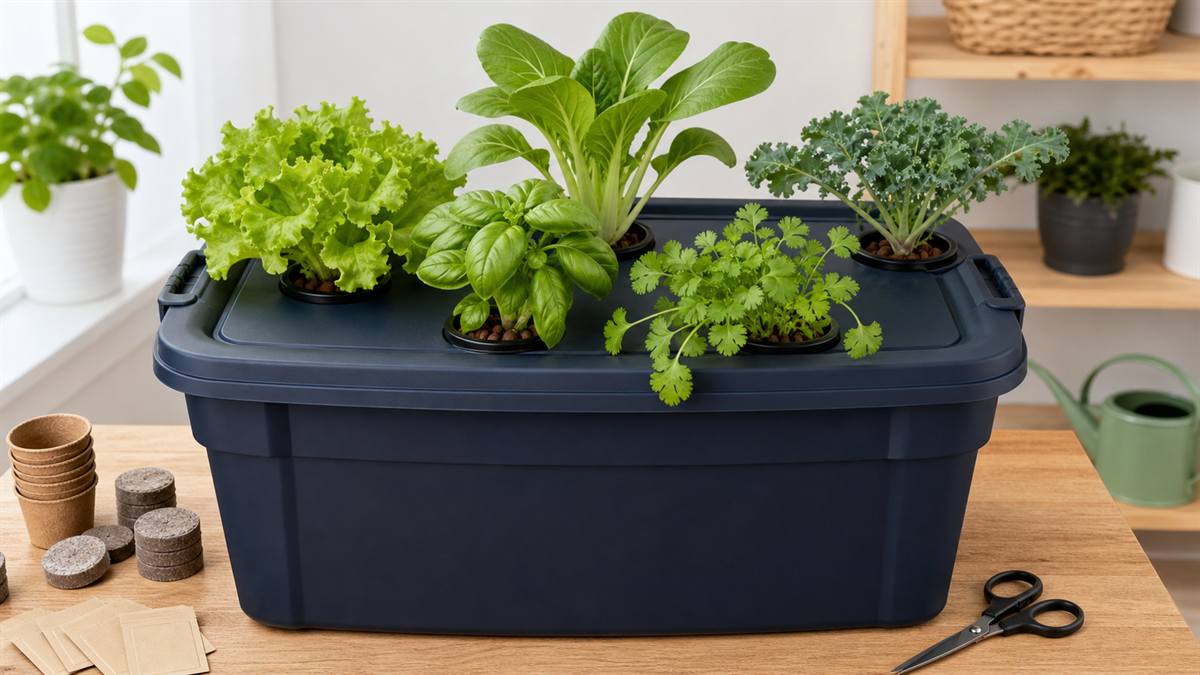
A standard plastic storage tote — the kind you probably already have in a closet — is one of the best hydroponic vessels you can use at home. It’s cheap, it’s the right size, it blocks light, and it holds enough nutrient solution that your plants don’t dry out between check-ins.
But not every crop is a good fit for a tote setup. The crops that thrive in this style of growing share a few things: they’re relatively compact, they grow well with their roots in a passive nutrient reservoir, and they reach harvest size in a reasonable timeframe.
Here are the ten best crops to grow in a hydroponic storage tote — with notes on how long they take, how much they yield, and whether they’re worth selling.
How the Storage Tote System Works
Before the crop list, a quick note on the method: most storage tote hydroponic setups use a variation of the Kratky method — a passive, pump-free approach where plants sit in net cups above a reservoir of nutrient solution. Roots hang into the water, and as the plant drinks it down, an air gap forms that delivers oxygen to the upper roots.
This works beautifully for leafy greens and herbs. It’s low-maintenance, beginner-friendly, and surprisingly productive. The Indoor Mini Farm System uses a refined version of this method with a few tweaks that make it more reliable and easier to scale.
The sweet spot for a standard 18–27 gallon tote: 6–8 net cup holes in the lid, a good grow light overhead, and crops from the list below.
1. Butterhead Lettuce
Time to harvest: 30–40 days | Plants per tote: 6–8 | Sell value: High
The undisputed king of the hydroponic tote. Butterhead lettuce grows fast, looks beautiful at harvest, and produces soft, flavorful heads that customers love. Varieties like Buttercrunch, Bibb, and Tom Thumb are reliable and quick. Grow multiple varieties in the same tote for a mixed salad garden effect that photographs well and justifies a premium price.
2. Romaine Lettuce
Time to harvest: 35–45 days | Plants per tote: 6–8 | Sell value: High
Romaine grows upright, uses less horizontal space per plant than loose-leaf varieties, and produces hearty, crisp leaves that hold up well as cut-and-come-again. Little Gem romaine is especially well-suited to tote growing — compact, sweet, and ready in about 35 days. A tote of romaine at harvest looks full and lush, which makes it a strong selling product.
3. Loose-Leaf Lettuce (Red and Green)
Time to harvest: 25–35 days | Plants per tote: 6–8 | Sell value: High
Loose-leaf varieties — Red Sails, Oak Leaf, Green Salad Bowl — are the fastest-growing lettuces and produce the best cut-and-come-again results. You can start harvesting outer leaves at 25 days while the center keeps producing. A mixed tote of red and green loose-leaf is visually striking and one of the easiest beginner grows you can do.
4. Basil
Time to harvest: 3–4 weeks to first harvest, ongoing production | Plants per tote: 4–6 | Sell value: Very high
Basil is the highest-value crop on this list on a per-plant basis. A thriving hydroponic basil plant is something most grocery stores can’t compete with — it’s alive, it’s fragrant, and it produces daily harvests for months. Genovese is the classic, but Thai basil and lemon basil are worth growing for culinary customers who’ll pay more for something distinctive.
Note: basil needs more light than lettuce (14–16 hours) and warmer temperatures (above 65°F). Keep it in its own tote rather than mixing with cool-season crops.
5. Arugula
Time to harvest: 21–30 days | Plants per tote: 6–8 | Sell value: Medium-high
Arugula is one of the fastest crops on this list. At 21–25 days you can harvest baby arugula; by 30 days you have full-size peppery leaves. It grows well at the same temperature and pH as lettuce, so you can mix it into a lettuce tote if you want variety. It appeals to customers who cook — they use it on pizza, in pasta, and in salads — which gives it a slightly different (and loyal) customer base than plain lettuce.
6. Spinach
Time to harvest: 40–50 days | Plants per tote: 6–8 | Sell value: High
Spinach takes a little longer than lettuce but is consistently one of the most requested crops by customers. Everyone knows spinach is good for you, everyone buys it at the grocery store, and everyone is impressed by a living hydroponic spinach plant they can harvest fresh. Keep temperatures on the cooler side (55–70°F) and pH slightly higher (6.0–7.0) than your lettuce totes. Bloomsdale and Tyee are reliable varieties.
7. Bok Choy
Time to harvest: 30–45 days for baby varieties | Plants per tote: 6–8 | Sell value: Medium-high
Baby bok choy varieties like Toy Choi and Win-Win are excellent tote crops — compact, fast, and visually beautiful at harvest. They’re popular with customers who cook Asian food, stir fries, or soups, giving you a niche that doesn’t overlap much with your lettuce customers. A tote of baby bok choy at harvest looks like something from a high-end grocery store, which makes it easy to sell at a premium.
8. Kale
Time to harvest: 25 days (baby kale), 55–70 days (full size) | Plants per tote: 4–6 | Sell value: Medium-high
For fastest results, harvest kale as baby kale at 3–4 weeks — tender, mild, and sweet compared to mature kale. For selling living plants, let them grow to 5–6 weeks and sell the tote with full-size plants just entering peak production. Lacinato (dinosaur) kale and Red Russian are the most visually appealing and sell the best. One established kale plant produces outer leaves for months, making it excellent for customer subscriptions.
9. Watercress
Time to harvest: 14–20 days | Plants per tote: 6–8 | Sell value: Very high
Watercress is the fastest crop on this list and consistently one of the highest-value. It’s routinely ranked as one of the most nutrient-dense foods available, it’s hard to find fresh at most grocery stores, and it grows explosively in water — making it a near-perfect Kratky crop. Unlike most Kratky grows, watercress actually prefers its roots fully submerged rather than in a partial air gap, so keep your reservoir level high. Harvest at 2–3 weeks and sell the plant still growing in its cup for maximum impact.
10. Mint
Time to harvest: 4–6 weeks from cutting | Plants per tote: 4–6 | Sell value: Medium-high
Mint is started from cuttings rather than seed — take a stem from any grocery store bunch, strip the lower leaves, and put it in a net cup with the stem in nutrient solution. It roots in a week and grows vigorously. Peppermint and spearmint are classics; mojito mint and chocolate mint command higher prices from customers who recognize them. A tote of mint is low-maintenance, produces abundantly, and is popular with customers who make tea, cocktails, and summer drinks.
Crops to Save for Later
A few crops that do well hydroponically but aren’t ideal for a standard storage tote:
- Tomatoes and peppers — Need deeper systems, much more light, and 3–5 months to harvest. Great for intermediate growers; not a beginner tote crop.
- Cucumbers — Need significant vertical space and a more robust nutrient delivery system. Worth exploring once you’re comfortable.
- Microgreens — Actually easier in trays with a thin layer of growing medium than in a Kratky tote. If you want to grow microgreens, use a dedicated shallow tray system instead.
Building Your First Tote
The best starting lineup for a single tote: a mix of butterhead, romaine, and arugula. All three grow at similar speeds, tolerate the same pH and nutrient concentration, and produce a visually varied, ready-to-sell tote within 30–40 days.
Once you’re comfortable, add a dedicated basil tote and a spinach tote. At three totes you have a product line that appeals to a wide range of customers and gives you enough variety to keep neighbor subscriptions interesting month after month.
The Indoor Mini Farm System ($47) covers the complete tote setup — what to buy, how to build it, what to grow first, and how to sell the surplus to neighbors for $35–$55 per tote. It includes a linked supply list so you’re not guessing what to order, and a planting planner so you always know what stage each tote is at.