CSA Business Plan: How to Start a Small Homestead Subscription

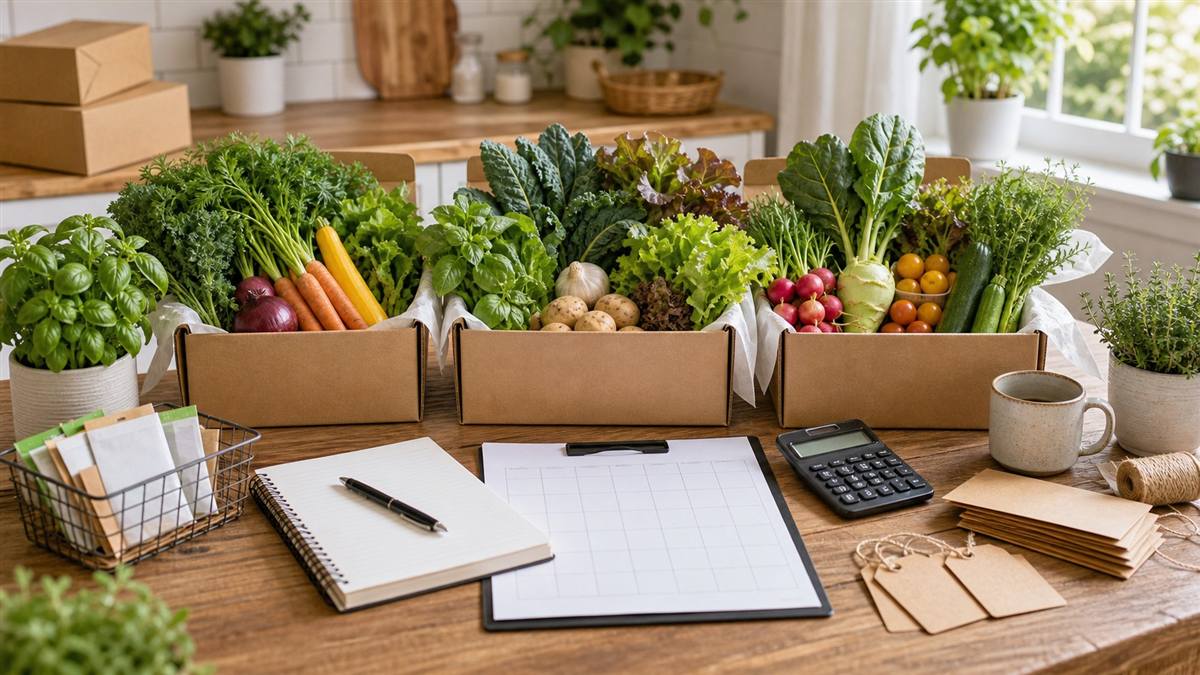
A CSA — Community Supported Agriculture — is one of the most elegant small farm business models ever devised. Customers pay you at the beginning of the season before you’ve planted anything. You get working capital when you need it most. They get a season of fresh, local food and a direct connection to where it comes from.

For a small homestead or backyard grower, the traditional CSA model needs some adaptation — you’re not a farm with a certified commercial kitchen or a dedicated delivery vehicle. But the core principle translates perfectly, and in some ways the small-scale version works better than the large one.

This guide covers how to set up a simple, profitable CSA or subscription model from a small homestead — what to grow, how to structure shares, what to charge, and how to find your first members.

Table of Contents

What Is a CSA and How Does It Work?

In a traditional CSA, customers (“members” or “shareholders”) pay upfront at the start of the season — typically $400–$800 for a full season — in exchange for a weekly box of produce throughout the growing season. The customer shares in the farm’s harvest: good weeks bring abundance, difficult growing weeks might bring less.

The genius of the model for growers is cash flow: you collect payment in March or April, when you need money for seeds and supplies, and deliver product from June through October. You’re not chasing invoices or worrying about weekly sales. The money is already there.

For members, the appeal is access to genuinely fresh local food and a direct relationship with who grows it. Many CSA members will tell you the CSA box changed how they cook — forced to use whatever the farm produced, they discovered vegetables they’d never tried and became more adventurous in the kitchen.

Adapting the CSA Model for a Small Homestead

A traditional full-season CSA requires significant production volume — you’re feeding 20–100 families every week for 20+ weeks. That’s a commercial farming operation, not something most backyard homesteaders can deliver.

But the CSA model scales down beautifully. A micro-CSA — 5–15 members, a focused product selection, neighborhood-scale distribution — is achievable from a backyard garden plus an indoor growing system. The adaptation looks like this:

  • Fewer members: 5–15 is manageable for one person; 20+ requires significant time commitment
  • Focused product: Rather than 10–15 different vegetables per week, offer 3–5 consistent items you produce reliably
  • Smaller shares: $25–$50 per week rather than the $20–$40 from large CSAs (small-scale premium pricing)
  • Shorter season or year-round: Outdoor CSAs are seasonal; adding indoor growing extends to year-round delivery
  • Neighborhood distribution: No truck or delivery route needed when all your members live within a mile

Subscription Model vs. Traditional CSA: Which Is Better for You?

For most small homesteaders, a subscription model works better than a traditional CSA. Here’s the difference:

Low (cash collected upfront)
Traditional CSASubscription Model
Payment timingFull season upfrontMonthly or per-delivery
Member commitmentFull seasonMonthly, cancel anytime
Grower riskHigher (ongoing collection)
Member acquisitionHarder (large upfront ask)Easier (lower commitment)
FlexibilityLowHigh
Year-round viabilitySeasonal for most growersYear-round with indoor growing

A monthly subscription — “I’ll deliver one living lettuce tote and a fresh herb plant to your door once a month for $55” — is easier to sell than a $600 season commitment, runs year-round with an indoor system, and builds the same recurring relationship. For a small homestead, this is usually the better model.

What to Grow for a CSA

The key to a small homestead CSA is reliability. You’re promising your members a consistent delivery. That means growing crops you can produce predictably every week, not crops that might or might not produce depending on weather or pests.

Most reliable for a small CSA:

  • Indoor hydroponic greens — Lettuce, kale, spinach, arugula. Completely weather-independent, 30–45 day production cycle, consistent quality every week of the year.
  • Fresh herbs — Basil, cilantro, mint, chives. High perceived value, continuous harvest from established plants, year-round indoors.
  • Cherry tomatoes — Reliable producers through a long summer season. Freeze the surplus for winter share additions.
  • Cucumbers — Prolific summer producers. Consistent enough for weekly shares during the outdoor season.
  • Specialty garlic — One large annual harvest that stores for months — include in fall and winter shares.

Avoid in a CSA until you’re experienced: Crops with highly variable yields (melons, peppers in marginal climates), crops prone to pest damage that could wipe out a week’s supply, and anything you haven’t grown successfully for at least one full season.

How to Structure Your Shares

A simple share structure works better than a complex one. Here are three models that work for small homesteads:

The Salad Subscription

Monthly delivery of one living lettuce tote + two herb plants. $45–$60/month. Year-round with indoor growing. Low production complexity — you’re delivering the same product consistently, making planning simple. This is the most scalable model for an indoor grower.

The Seasonal Produce Box

Weekly or bi-weekly box during the outdoor growing season (typically 16–24 weeks). Contents vary with what’s ready to harvest: greens, herbs, tomatoes, cucumbers, beans. $25–$45 per box. Classic CSA format. Requires more production variety but gives members more variety per delivery.

The Hybrid Year-Round

Year-round subscription with indoor greens and herbs as the consistent base, supplemented by outdoor produce during the growing season. Members receive indoor-grown items year-round plus the bonus of seasonal outdoor produce in summer and fall. $35–$55/month. The most comprehensive model — requires both indoor and outdoor growing infrastructure.

How to Price Your CSA Shares

Start with your production costs and work outward:

  1. Calculate what each weekly or monthly delivery costs to produce (seeds, nutrients, electricity, growing medium)
  2. Add your time at a fair hourly rate (minimum $20/hour for growing and delivery)
  3. Add packaging and delivery costs
  4. Apply a 3–5x markup on production costs, aiming for retail value of the produce included
  5. Compare to what the same products would cost retail — your CSA price should be competitive with specialty grocery pricing, not discount pricing

A monthly salad subscription delivering one living lettuce tote ($35–$45 retail value) and two herb plants ($8–$12 retail value each) has a total retail equivalent of $51–$69. Pricing the subscription at $50–$60/month is fair, offers slight savings versus retail, and leaves you with good margins. Members who understand the value will find this reasonable — you’re delivering convenience, freshness, and a relationship, not just produce.

Finding Your First Members

Your first CSA members are almost certainly people you already know. Here’s the sequence that works:

  1. Start with a test delivery. Give a sample box to 2–3 neighbors. Let the product sell itself. Follow up a week later and ask if they’d like to sign up for a monthly subscription.
  2. Post on Nextdoor. “Starting a neighborhood CSA — local organic greens and herbs delivered monthly. Limited spots available.” The scarcity framing (limited spots) is accurate — you can only serve a finite number of members — and creates appropriate urgency.
  3. Ask for referrals. Your first satisfied member is your best marketing. “Do you have any friends who might be interested in the same delivery?” often yields your next 2–3 members from a single conversation.
  4. Local Facebook groups. Neighborhood food and buying groups, local parenting groups, and health-focused community groups are all good places to announce a neighborhood CSA.
  5. Build a waiting list. Once you have more interested people than production capacity, create a waiting list. This creates social proof and gives you a pipeline for growth.

Running Your CSA Week to Week

The operational simplicity of a small CSA is one of its main advantages. For a 10-member monthly subscription:

  • Production: Plant totes on a rolling schedule so 10 are ready to sell at the same time each month. This takes planning upfront but becomes routine after the first cycle.
  • Communication: Send a simple message to members the week of delivery — what’s in their share, when to expect it. This takes 15 minutes.
  • Delivery or pickup: Neighborhood delivery takes 1–2 hours for 10 members. Pickup at your home takes zero additional time. Many small CSAs offer both options.
  • Billing: Monthly auto-pay via Venmo, PayPal, or Stripe makes collection effortless. Set it up once and it runs automatically.

The Indoor Growing Advantage for CSAs

The biggest limitation of a traditional CSA is seasonality — you’re delivering produce for 20 weeks, not 52. Members cancel in October and you start over in April with a new membership round.

An indoor hydroponic growing system changes this entirely. Lettuce, herbs, kale, and spinach grown indoors under grow lights produce just as well in December as in June. Your CSA runs 12 months a year. Members stay subscribed through winter. Your income doesn’t stop in October.

For a small homestead CSA, combining outdoor summer production with indoor year-round greens production is the model that delivers the best member experience and the most consistent grower income. The Indoor Mini Farm System is the complete guide to the indoor production side of that equation — from setup through to running a consistent weekly supply for CSA members.

Frequently Asked Questions

How many members do I need for a CSA to be profitable?

For a small homestead operation, 5–10 members is a viable and manageable starting point. At $45–$60/month per member, 10 members generates $450–$600/month in recurring revenue. That’s meaningful supplemental income from a manageable production volume. Scale to 15–20 members as your growing infrastructure expands.

How do I start a small CSA from home?

Define your product, set your price, find your first 3–5 members through your personal network, deliver consistently, and ask for referrals. Start with a subscription model (monthly payment) rather than a full upfront seasonal commitment — it’s easier to sell and builds the same recurring relationship. Grow your member base as your production capacity allows.

What’s the difference between a CSA and a subscription box?

A traditional CSA collects full payment upfront at the beginning of the season and delivers weekly for a fixed number of weeks. A subscription model collects monthly and is easier to cancel — lower commitment for members, slightly less cash flow security for the grower. For small homestead operations, the subscription model is usually easier to sell and more flexible to manage.

What should I include in a CSA share?

Prioritize crops you can produce reliably every week over variety for its own sake. A weekly share of living lettuce tote + two herb plants + whatever outdoor produce is ready is simpler and more consistent than trying to include 8–10 different items. Members value freshness and reliability over variety — focus on delivering both.


A small homestead CSA or subscription model is one of the most satisfying income streams available — you’re building real relationships with people who value what you grow. Start with a handful of neighbors, deliver consistently, and let the model grow through word of mouth. If you’re building the indoor production system that makes year-round delivery possible, the Indoor Mini Farm System is the complete guide.