Revealed: How even people in apartments can grow food indoors, all year round.
One night I opened the fridge and did the same depressing math.
A bag of greens. Again.
Wilted by day three. Again.
And somehow… more expensive every time.
That’s when it hit me.
Most people are trying to “grow food” the hard way.
Outside. In dirt. With weeds, bugs, weather, and a calendar that never cooperates.
But what if you could grow food indoors… on one shelf… like it’s just part of your house?
Not a hobby.
Not a farm.
A system.
Real Readers. Real Mini Farms.
These are everyday readers who started with one tote on a bookshelf and turned it into fresher food and extra cash.
“I was skeptical, but my first harvest more than covered the cost. Now my kids snack on greens instead of chips.”
I started with one tote next to our kitchen table. Once I saw how fast everything grew, I added two more and now I’m selling salad plants to three of my neighbors.
Sara C., Columbus, OH
“This gave me a simple plan I could follow after the kids went to bed.”
I don’t have space for a ‘real’ garden, but the mini farm system fits on a cheap bookshelf in our hallway. We eat off it every week, and I sell six totes a month to cover our internet bill.
Jen S., Houston, TX
“I’ve tried so many ‘systems’ that overpromised and fizzled out. This one quietly does what it says.”
I work full time and needed something low-maintenance. I spend maybe 10 minutes twice a week checking water levels and harvesting. The rest just… grows.
Sam L., Raleigh, NC
“We live in an apartment and I honestly didn’t think this would work.”
We’re on the third floor with no balcony. The totes fits next to our dining table and now my 7-year-old helps me harvest ‘our’ salad every night. It feels like cheating the grocery store.
Pam D., Boise, ID
Download your copy and start your mini farms today
The real problem with “just start a garden”
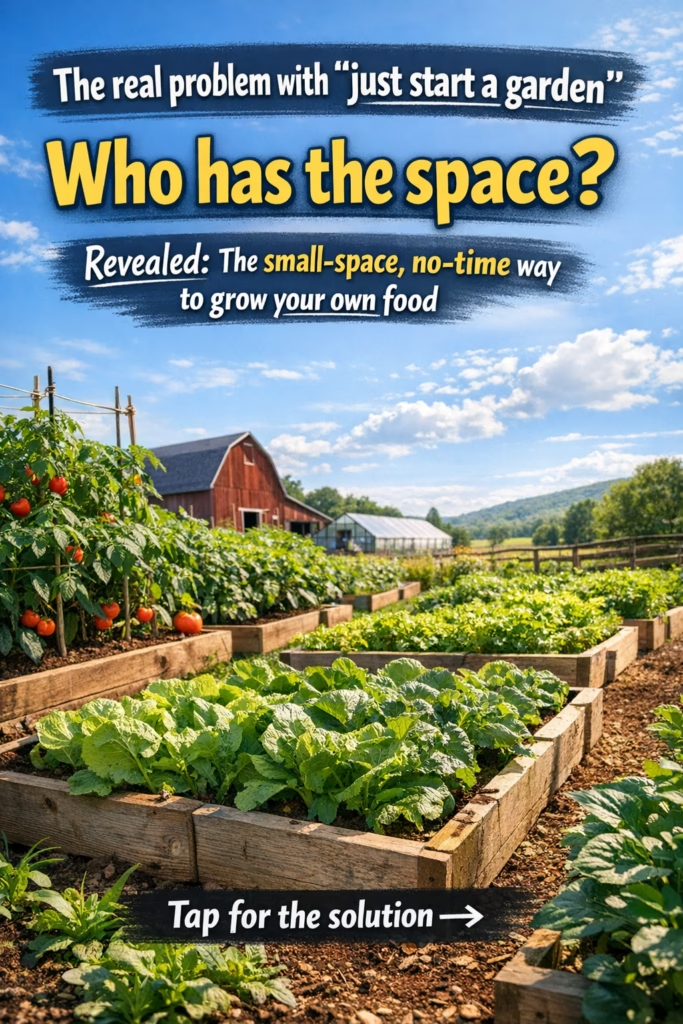
Outdoor gardening is great if you:
- have land
- have time
- have decent weather
- like weeding and watering
- can protect plants from pests
Most people do not have that.
And even if you do, winter shows up like a bill collector.
So the promise has to change.
Not “grow everything.”
Just grow the one thing you always buy.
Greens.
How to grow food indoors without a garden
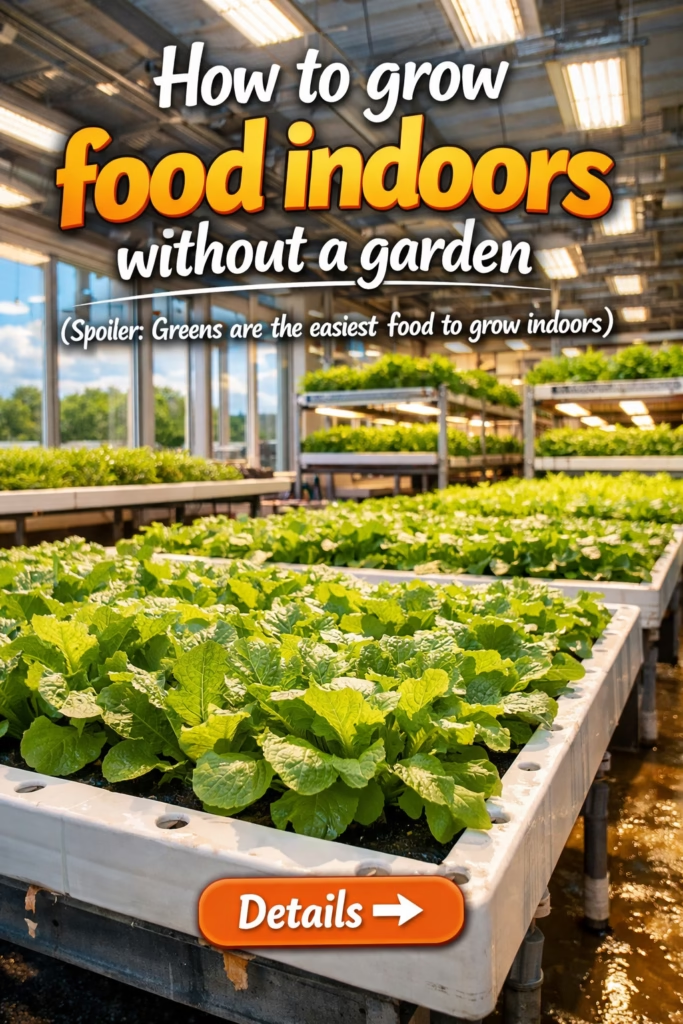
Here’s the simple truth:
If you want to grow food indoors without a garden, greens are the easiest choice to start with. That’s why I suggest starting with something that thrives hydroponically like bok choy or tatsoi or chard. Greens are a great food to grow indoors because they:
- grow fast
- don’t need deep roots
- don’t need a backyard
- can thrive in small containers
The trick is making it repeatable.
Not “try this once.”
But “this is how my vegetable garden works now.”
The 1-Shelf Salad Plan (what it is)
Picture this:
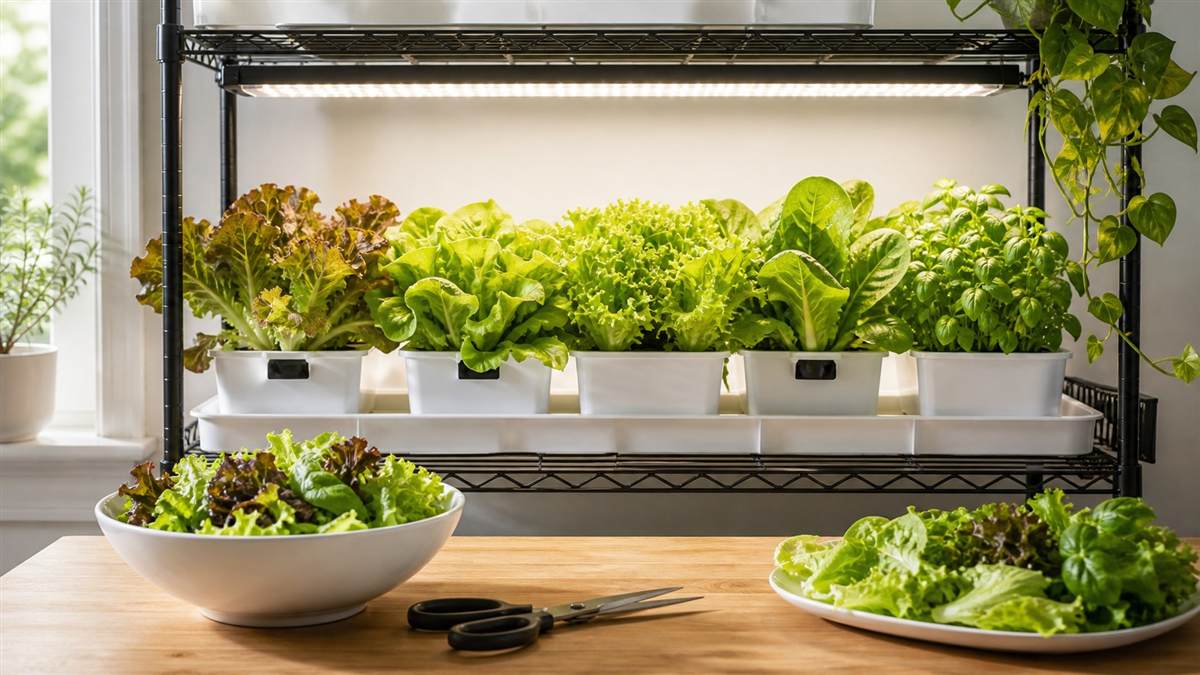
A basic shelf in a spare corner.
A couple of simple grow bins.
A clean routine you can do in minutes.
That’s it.
No dramatic greenhouse.
No mud.
No “I guess I’ll water tomorrow.”
And yes, this works in winter.
People have been growing indoor salad greens year-round for a long time and you’ll be able to do it to. Just focus on stable systems.
The part nobody tells you
Most beginners fail for one reason:
They build a “project.”
Not a system.
A project depends on motivation.
A system depends on defaults.
So instead of giving you 47 random tips, I built a setup that has:
- a clear start and reset
- a simple way to keep plants fed
- a predictable harvest rhythm
- minimal mess
That’s why it keeps working when life gets loud.
Here’s What You Get
Indoor Mini Farm System (PDF)
Every step you need to create your indoor mini farm in just a few hours. From which totes to buy to how high to hang your lights to which seeds to plant first.
Linked Supply List (PDF)
Instead of opening twenty tabs and guessing, you get a simple list with direct links to exactly what you need. You can be done shopping in minutes.
Perpetual Planner (PDF)
This is the piece that keeps black thumbs alive. A simple perpetual planner that tells you, week by week, what to do so you never miss a refill or harvest.
Just $47 for everything
“Do I need pumps or complicated equipment?”
No.
You do not need a loud, high-maintenance machine to grow indoors.
Plenty of successful indoor setups run without pumps, with less to break and less to manage.
My approach is built around that same idea: fewer moving parts, more consistency.
What you can grow with a tiny indoor salad setup
This is not where I promise you indoor watermelons.
This is about the staples that make grocery trips hurt less:
- salad greens
- herbs
- baby greens you can cut and regrow
- “add-to-everything” greens
The kind of food that makes dinner feel fresh even when you’re exhausted.
The biggest objection: “I don’t have a green thumb”
Good. You don’t need one.
You need:
- a beginner-proof setup
- a short checklist
- a rhythm that’s hard to mess up
That’s what the Indoor Mini Farm System is.
It’s the exact layout + routine I wish someone handed me at the start.
Get the Indoor Mini Farm System
If you want the complete build (the parts, the layout, the routine, the “don’t mess this up” checklist), here it is:
You’ll stop guessing.
You’ll stop starting over.
And your house will start producing food.
FAQs about growing food indoors in small spaces
Can you really grow lettuce indoors?
Yes. Salad greens are one of the easiest indoor crops when your setup supports consistency.
How do you grow food indoors in winter?
When you grow indoors, you can row all year round instead of being at the mercy of the weather (or sun patterns). Creating a stable indoor environment and a building a repeatable routine means your plants will thrive. Most locations will require artificial light in the winter, but almost all plants will benefit from artificial light all year round.
Do I need a backyard to grow food?
No. People grow food without a yard using small-space methods, including indoor approaches. It’s easier than you might think to set up a DIY indoor hydroponic vegetable garden and I’ll show you exactly how I do it in the Indoor Mini Farm System.
Do I need a pump?
No. I designed my system to be pump-free because I wanted to be able to get my plants up and running as quickly and cheaply as possible. The great thing about not needing pumps is that it makes it easier to install your system anywhere. You’ll still likely need an outlet for your lights, but when you add pumps, you’re increasing both the amount of electricity you need and the amount of maintenance your DIY hydroponic system will take.
What’s the easiest food to grow indoors?
When you’re looking for high nutrient vegetables to grow indoors in hydroponics, I highly recommend starting with dwarf greens and herbs. What makes dwarf varieties so great is they tend to grow fast and grow compactly. Herbs thrive in easy hydroponic systems so you’ll have immediate wins that way.
How much space do I need?
Most families can grow food security in a 5 square foot footprint. The secret is to grow up not out. A vertical vegetable garden packs the maximum efficiency into a small space. What’s great about this small space vegetable garden is that it’s also a lot easier to maintain because the footprint is so compact. That’s what makes the Indoor Mini Farm System ideal for urban homesteaders and apartment dwellers who want a vegetable garden.
Grab your copy of the Indoor Mini Farm System today
About the Author
Tyler Brown runs ProfitableHomesteader.com, a site dedicated to sharing side hustle ideas at home – including how he builds tiny indoor mini farms, growing heirloom greens in plastic totes and selling them to local families.
After years of testing containers, crops, and pricing, he built the Indoor Mini Farm System so regular people could skip the trial-and-error and start growing real food (and side income) on a single shelf.
If you’re ready to set up your own pump-free mini farm and start growing food indoors without wasting money on gadgets, you can get the step-by-step guide here: